
Emergency Drain Cleaning in Dayton, Ohio
Active water damage compounds by the hour — a licensed OH plumber is on call for Dayton right now.
Local plumbing data for Dayton, OH
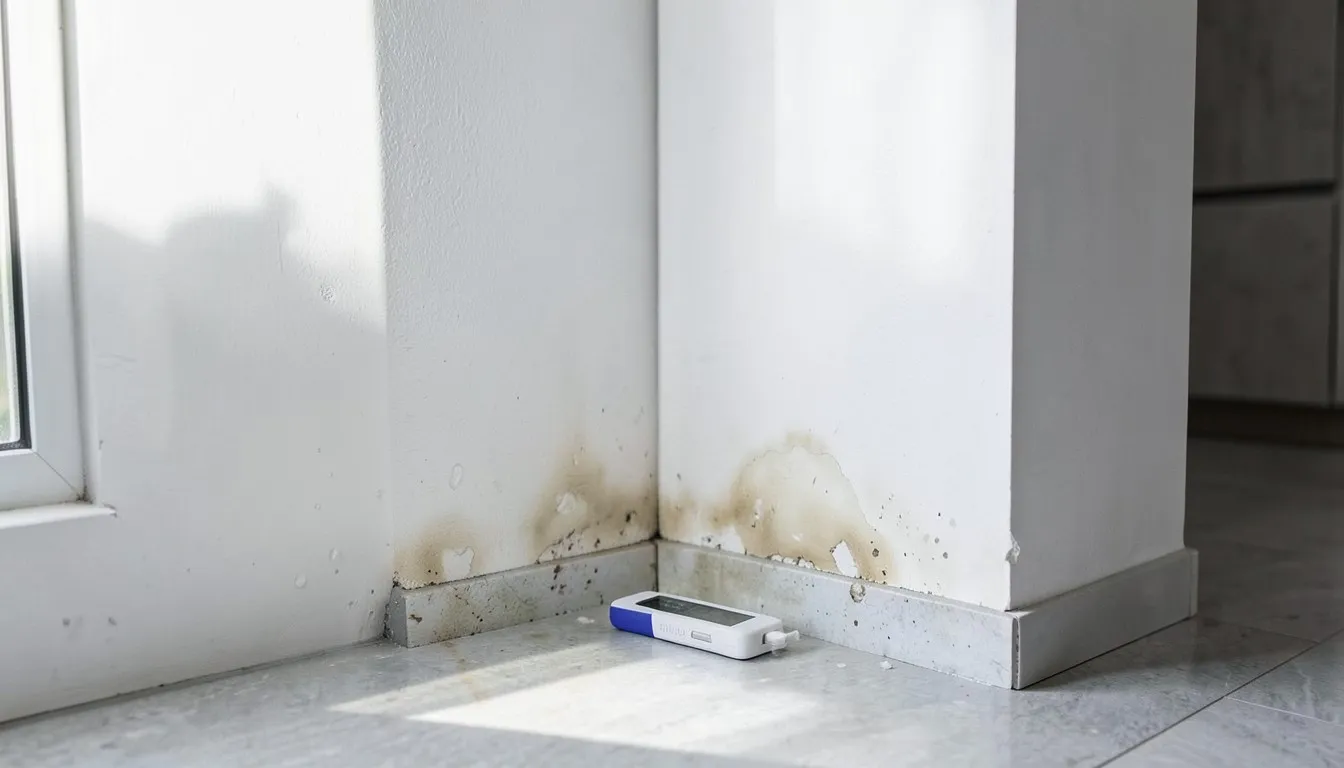
Seeing these conditions at your place in Dayton? A state-licensed plumber can confirm it over the phone — free, no obligation.
Pipe conditions in Dayton, OH
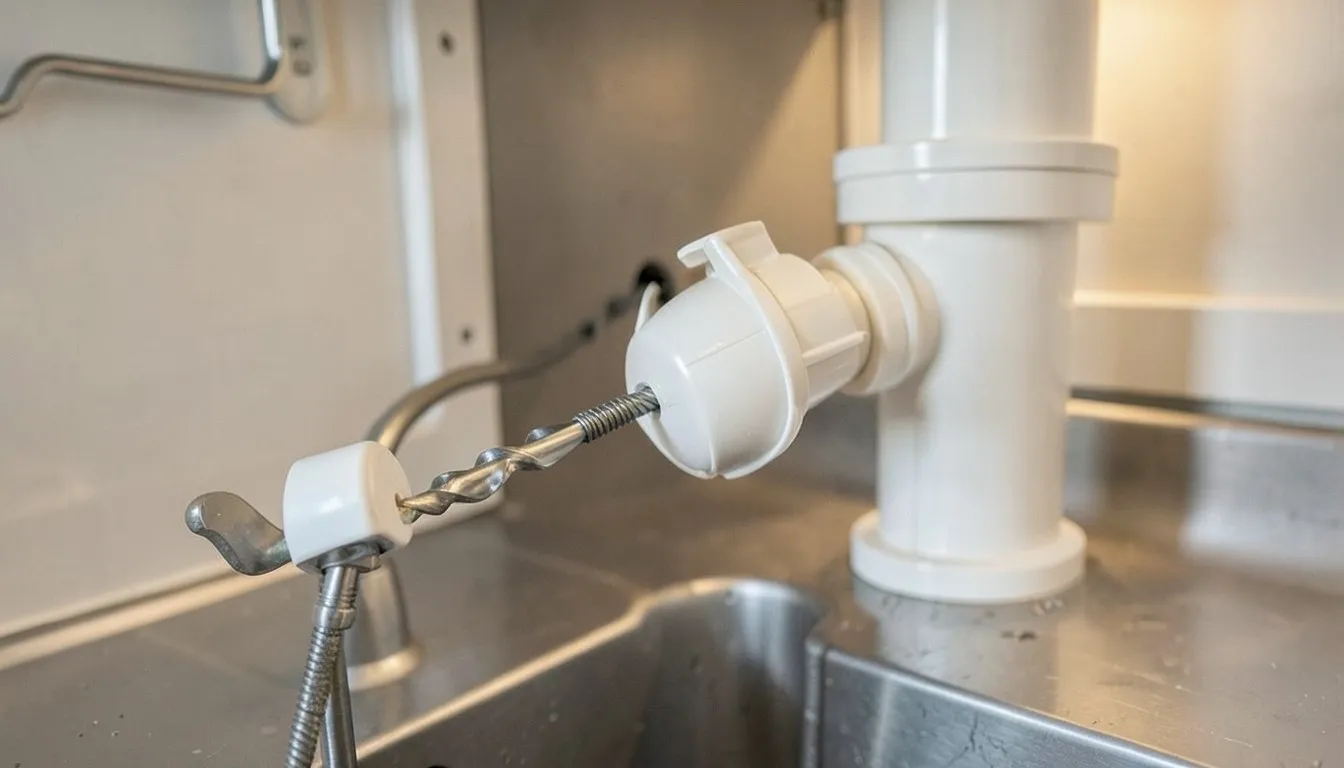
Drain cleaning in Dayton addresses two distinct problems: immediate blockage clearance (snake or jet, same day) and the underlying condition causing recurring clogs (root intrusion, scale buildup, pipe belly, or grease accumulation requiring treatment beyond a single service call). The right approach depends on the root cause — a cable machine clears the blockage without revealing what caused it; a camera scope adds $100–$200 but determines whether the drain will re-block in weeks or hold for years. AlertPlumber routes your request to an Ohio-licensed plumber who provides both options upfront. Freeze events and frost-depth requirements add pipe insulation, exterior faucet winterization, and burst-risk assessment to service calls in this climate.
Dayton's water utility maintains an active lead service line (LSL) replacement program. With a median home age of 79 years, a portion of the housing stock may still have lead service laterals connecting the water main to interior supply — a consideration during any work near the service entry point. A licensed plumber can confirm whether supply-side work requires utility coordination.
Very hard water in Dayton is a primary driver of accelerated appliance failure: water heater anode rods exhaust in 2–3 years instead of 6–8, scale deposits at fixture connections form within months of installation, and tankless heat exchangers accumulate mineral buildup that can reduce lifespan by half without regular descaling. A softener or whole-house conditioner is strongly recommended alongside any appliance service call.
Frost line depth in Dayton means supply lines and outdoor plumbing must be installed below the freeze threshold — typically 32 — to prevent pipe burst during cold events. Exterior hose bibs, irrigation shutoffs, and any exposed pipe runs are the most common winterization service points in freeze-risk markets.
- Median home age
- 79 yrs
- Water hardness
- 15 gpg
- Frost line
- 32 in.
- Permit
- $75
A licensed OH plumber reads these conditions the moment you describe the symptom.
What shapes plumbing demand in Dayton, OH
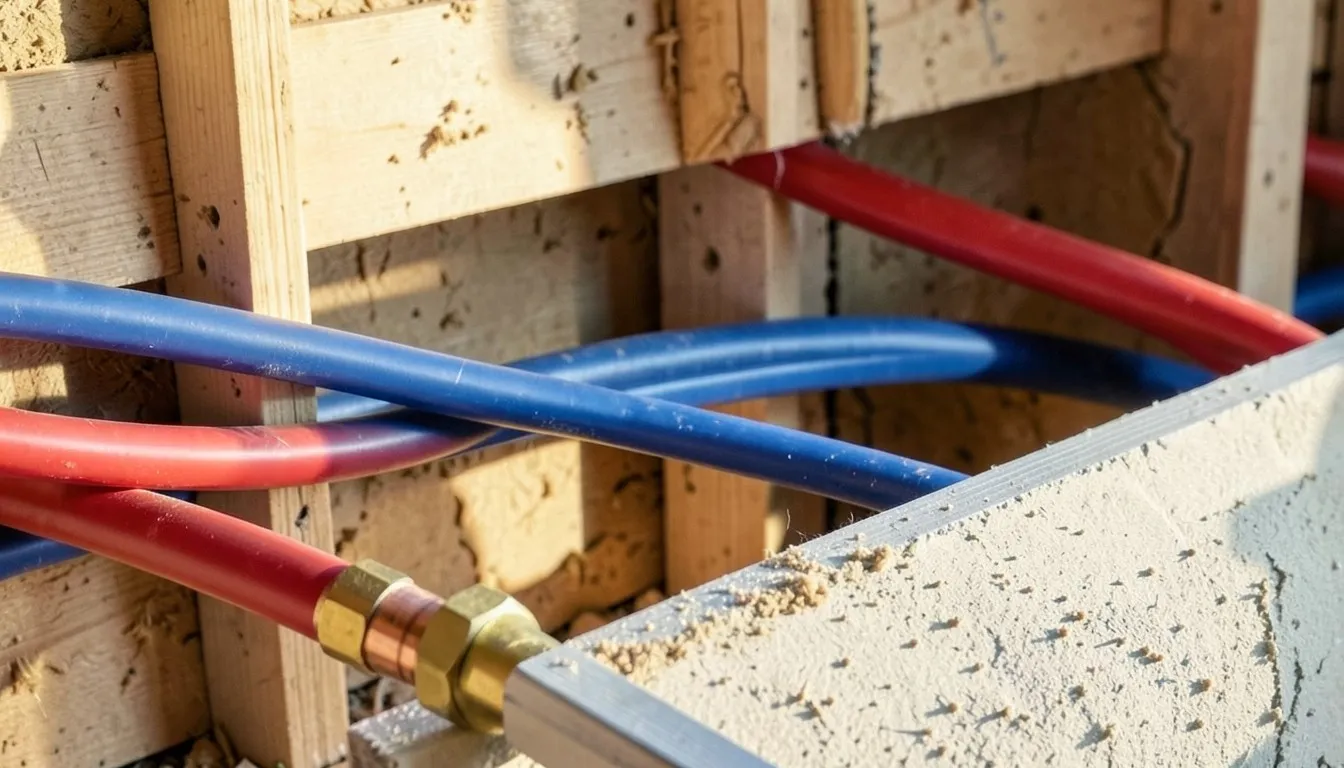
Galvanized supply lines and cast iron drain systems from the 1880s–1940s are past their 40–70-year design life across much of Dayton. Interior rust scale progressively narrows pipe bore. Plumbers here routinely scope supply lines before quoting any repair — the underlying pipe condition often makes full replacement more cost-effective than patching.
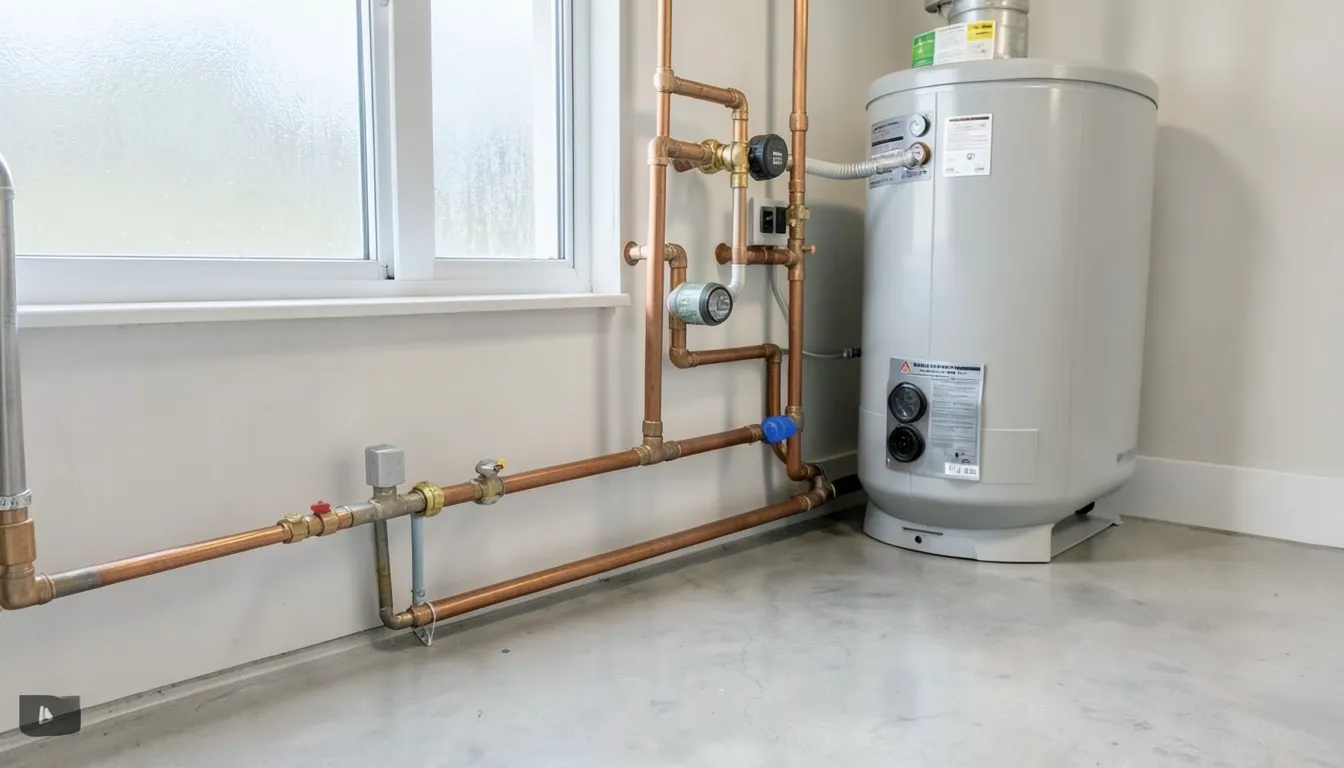
At 15–20+ GPG, calcium scale forces compressed equipment cycles in Dayton: tank heaters average 6–9 years vs. the 10–12-year national benchmark, and tankless units require annual descaling. Anode rods calcify within 12–18 months. Most plumbers here assess heater age against the local scale timeline — not the manufacturer's service life.
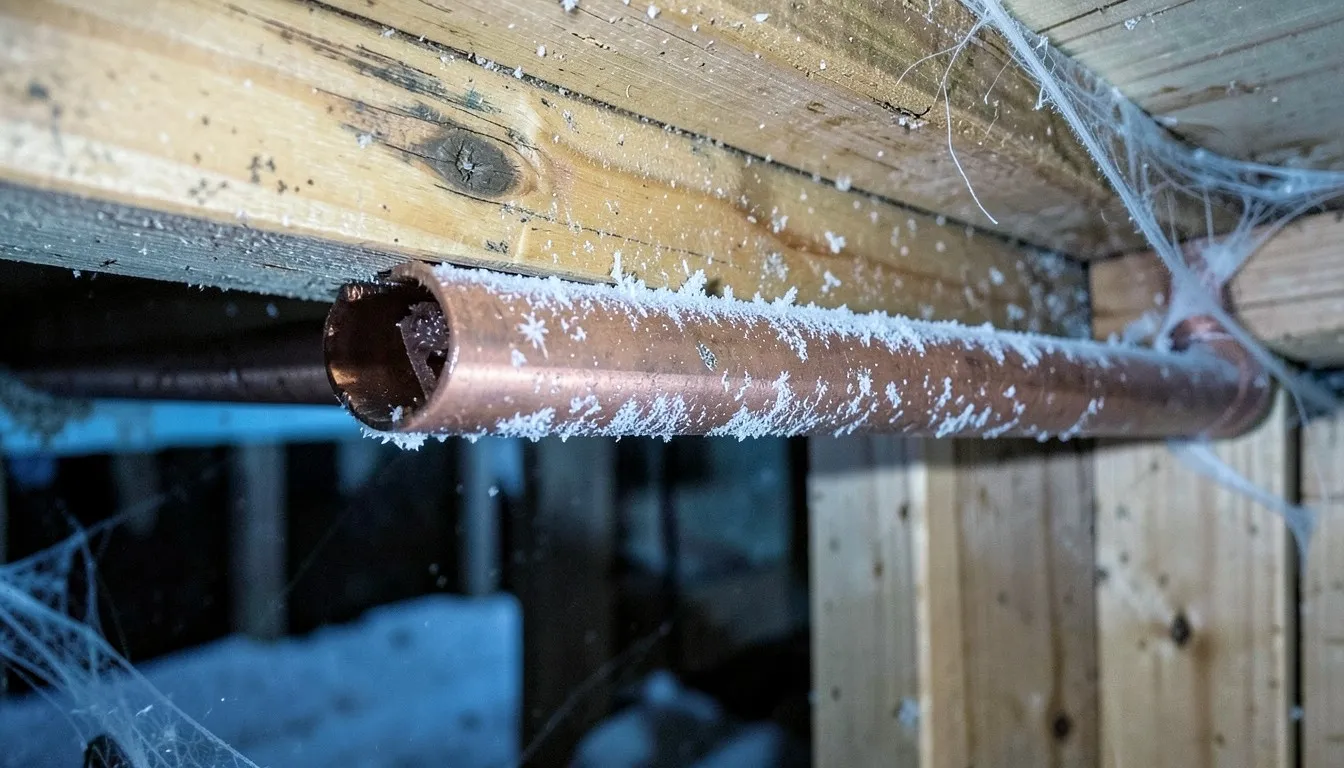
The primary surge in Dayton runs January–March, with a secondary wave at the spring thaw — when pipes that held through the freeze rupture as pressure is restored above 32°F. Scheduling competition peaks exactly when emergency calls are highest. Homeowners who wait for visible damage compete for the same limited plumber slots at the worst possible time.
Active damage in Dayton: contain, assess, restore
Submit your Dayton address and describe the active damage — flooding, failed shutoff, burst or frozen line. AlertPlumber marks the request as priority and an OH-licensed plumber confirms receipt within 15 minutes, without routing through a national call center.
The plumber arrives with a confirmed ETA, locates the nearest shutoff, and maps the damage boundary — affected lines, access points, material condition. You receive a verbal assessment of what requires immediate containment and what can wait until the full repair scope is confirmed.
You approve a written containment and repair scope before any work begins. Temporary isolation is priced separately from full restoration. No phase proceeds without your explicit sign-off.
Drain Cleaning cost calculator — Dayton
Pre-filled for drain cleaning in Dayton. Adjust the ZIP for a neighboring area, or change the service to compare. Calculator pulls from the city's scraped permit-fee + state plumber-density data.
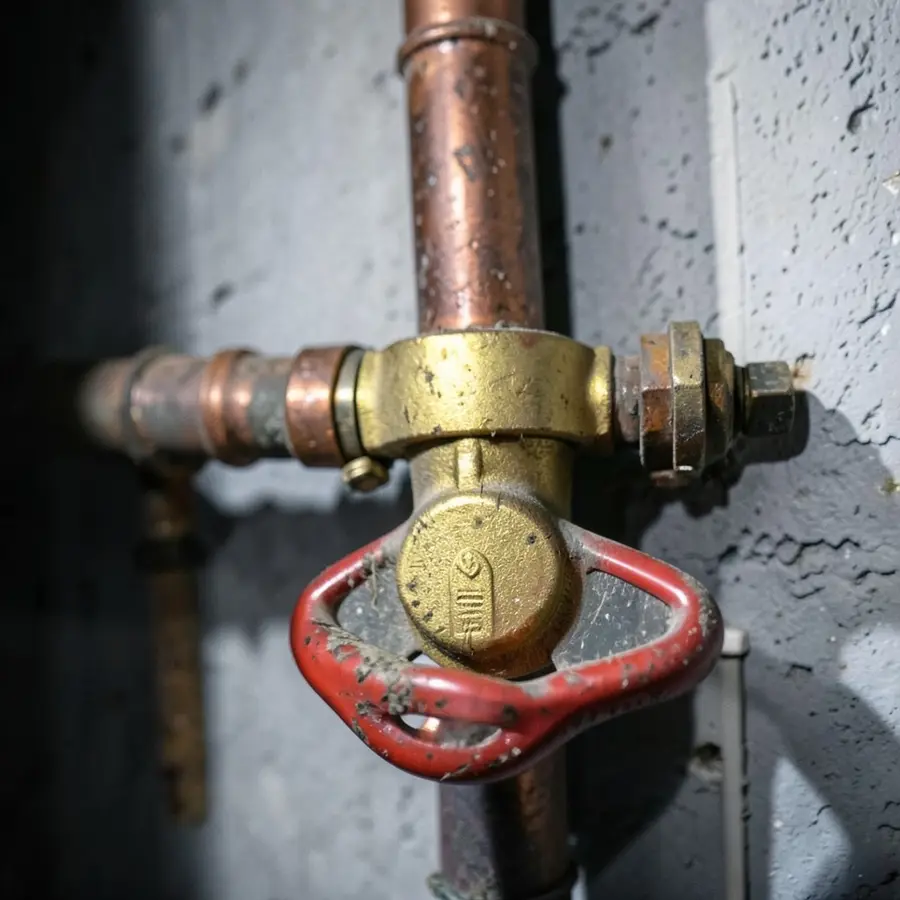
Drain Cleaning in Dayton — the longer it runs, the more it costs.
Slow failures compound: soft pipe walls, root penetration, mineral buildup. A verified plumber calls back with a scope-first estimate before anything is dug up.
Drain Cleaning in Dayton — frequently asked
What does a Dayton drain cleaning actually cost on a 1945-median home?
Dayton drain pricing breaks per-fixture because the 79-year median building age means cleanout layouts vary wildly between an 1880s St. Anne's Hill Italianate and a 1955 Belmont ranch. Bathroom-sink P-trap cabling runs $135–$235 since the trap arm is short and the verified plumber works straight from below the basin. Kitchen-sink branch through a South Park 1900s galvanized supply-and-cast-iron-waste configuration runs $195–$345 — the 1.5" original branch sizing layers FOG against existing internal scale and needs two or three cable passes with progressively larger cutter heads. Toilet auger work on an Oregon District 1850s flange runs $185–$295 because the flange itself is sometimes lead-and-oakum and the closet auger has to work around an unsquared bowl seat. Mainline cabling through a basement floor-drain access or stack cleanout on a McPherson Town pre-1913 home runs $385–$625, vs $295–$475 on a Five Oaks 1910s craftsman with an accessible basement two-way cleanout. Camera scope adds $165–$265 and is recommended on any property predating the 1913 Great Miami flood since lateral debris is documented on Dayton DPW records. The $75 City of Dayton Building Services permit plus $50 inspection only attach when scope crosses into replacement — cabling alone is permit-exempt maintenance. AlertPlumber routes the call to an OH OCILB plumber holding active Dayton municipal residential authorization who confirms the per-fixture quote on the callback.
How fast does a Dayton plumber arrive for an after-hours drain backup in the Miami Valley?
Realistic Miami Valley response by ZIP. Inside 45402, 45403, 45404, 45405, 45406, 45410 (the Dayton city ring covering Oregon District, St. Anne's Hill, South Park, McPherson Town, Five Oaks): 75–135 minutes weekday business hours, 95–185 minutes 2 a.m.–5 a.m. Outer Montgomery County 45414, 45415, 45417, 45419, 45420, 45424, 45426, 45429, 45439, 45449, 45458 (Kettering, Centerville, Huber Heights, Trotwood, West Carrollton, Riverside): 95–175 minutes weekday, 145–225 minutes overnight. Wright-Patterson region addresses in 45431, 45432, 45433, 45434 (Beavercreek, Fairborn, base housing): 105–195 minutes since Greene County dispatch overlap with Montgomery County affiliates is thinner. The 120 annual freeze days mean late-Dec through Feb dispatch grids stretch 25–45 minutes longer because basement-stack thaw-water emergencies fill the queue. AlertPlumber confirms ETA on the callback so you can stage towels, shut a branch isolation valve, or pull standing water out of a basement floor drain before the truck arrives.
Do I need a Dayton permit for drain cleaning and what's the City of Dayton process?
No. Drain cabling, hydro-jetting, or auger work on existing piping is permit-exempt maintenance under the Ohio adoption of IPC § 707, maintenance procedures. The $75 City of Dayton Building Services plumbing permit plus the $50 inspection fee only attach when scope crosses into replacement — pulling and replacing a section of failed cast-iron stack in a St. Anne's Hill 1880s Italianate, replacing a clay-tile lateral on a South Park 1900s build, adding a cleanout to bring an Oregon District 1820s property into IPC § 708 two-way cleanout compliance, or repiping a Five Oaks kitchen branch. The verified plumber pulls the permit through City of Dayton Building Services Division on West Third Street and itemizes both the $75 permit and $50 inspection separately on the written quote. Dayton issued 3,420 residential permits in 2024 across all trades so inspector turnaround typically runs 5–9 business days from filing. Greene County addresses (Beavercreek, Fairborn) go through county building services on a parallel fee schedule.
Why do Dayton drains clog the way they do — what's the local pathology?
Five overlapping pathologies. (1) St. Anne's Hill / South Park / McPherson Town 1870s-1910s clay laterals. Original vitrified clay tile laterals with mortared bell-and-spigot joints run from the property line to the building foundation — root intrusion at joint gaps, mineral precipitate buildup, and offset/deflection from 110+ years of soil cycling drive recurring backups. (2) South Park galvanized supply transitions. Dayton's largest historic district retains 1880s-1910s galvanized iron supply lines that have lost 40–60% effective diameter to rust tubercles — when those branches feed kitchen disposals, FOG combines with rust flake debris and packs the first 25 ft of waste branch. (3) 15 gpg very hard sole-source water. The Great Miami Buried Valley Aquifer (EPA-designated sole-source under the SDWA § 1424(e)) delivers 15 grains-per-gallon hardness — well above the 7 gpg "hard water" threshold per USGS hardness classification. That precipitates calcium-soap concretion on every horizontal cast-iron run. (4) 1913 Great Miami flood debris legacy. Pre-1913 properties downtown and in McPherson Town carry residual silt-and-debris loads in stack bottoms and lateral bellies that periodically re-mobilize under heavy flow. (5) 120 freeze days plus 32" frost line. Continental winter rim-joist freezes drive thaw-water debris pulses Dec–Feb. The pre-job NASSCO PACP-format camera scope identifies which pathology drives your specific call.
Cable, jet, or scope first — how does the Dayton plumber decide?
Decision tree the matched OH OCILB plumber follows on a Dayton residential call. Cable first for any acute single-fixture clog and any first-time mainline backup where the homeowner has no recurrence pattern: 3/8" cable for bathroom and kitchen branches, 5/8" to 3/4" sectional for the mainline. Cabling clears roughly 70–80% of Dayton residential calls outright. Camera scope when (a) the cable returns clean but the drain still backs up, (b) the homeowner has had 3+ clearings on the same line in 18 months, (c) the mainline serves a pre-1913-flood property in St. Anne's Hill, Oregon District, or McPherson Town where 1913 debris-legacy is plausible, or (d) the home is on an original clay-tile lateral in South Park or Five Oaks where root intrusion at bell-and-spigot joints recurs on a known interval. Hydro-jetting only after the scope confirms grease, 15 gpg calcium-precipitate scale, or root mass that cable can't fully evacuate. Jetting a deteriorated McPherson Town cast-iron stack without scoping first is how plumbers blow holes in 1895 pipe — Dayton's 79-year median build means a meaningful share of housing predates the safe-to-jet threshold without imaging first.
Will my Ohio HO-3 cover the drain backup damage in Dayton?
Standard Ohio HO-3 policies exclude the drain cleaning labor itself but typically cover water-damage consequences (drywall, finished-basement flooring, contents, baseboard) when a clog-driven backup originates inside the dwelling — only if you carry the sewer/drain backup endorsement, which is sold separately and is not automatic on most Dayton policies. For St. Anne's Hill, South Park, McPherson Town, or Oregon District properties with finished basements on pre-1913 clay laterals, the endorsement is the difference between an $850 cabling bill and a $16k restoration bill. Documentation requirements: itemized invoice showing cable footage, machine size, and identified clog cause; camera-scope MP4 if scope was performed; photographs of the water line on drywall before remediation begins; and submission within the 14–30 day window your specific carrier mandates. Pre-1913 flood-stock properties in McPherson Town and downtown Dayton sometimes carry exclusions for "ancient pipe failure" language in newer endorsement riders — read the schedule before assuming coverage. Routine maintenance cabling on a chronically clogged line is denied as preventable.
When should I cable a Dayton drain myself versus call a verified plumber?
DIY makes sense for: hair clog in a bathroom-sink trap (unscrew the P-trap by hand, clean physically, $0 in tools); pop-up stopper coated in soap scum (lift, clean, reinstall); single toilet bowl clog cleared with a flange plunger or hardware-store $25 closet auger. Stop and call the verified plumber when: (1) a 25 ft drugstore hand-snake won't reach the obstruction — anything past that needs a powered cable, (2) two or more fixtures are simultaneously slow which indicates mainline involvement, (3) any basement floor drain backs up under any condition, (4) you live in a pre-1920 St. Anne's Hill, South Park, McPherson Town, or Oregon District property — chemical drain cleaners destroy lead-and-oakum joints and tubercle-scaled cast-iron and aggressive DIY cabling can punch the cable through deteriorated pipe wall causing a buried-pipe puncture, (5) you've cleared the same drain twice in 90 days which indicates the system needs imaging not another cable pass, or (6) it's December through February during the 120-freeze-day window and your basement laundry standpipe is backing up — that's thaw-water-plus-clog combination requiring thermal assessment. EPA Safer Choice enzymatic maintenance products are the only DIY chemicals appropriate for pre-1920 Dayton plumbing stock.
How does South Park's 1900s galvanized supply load Dayton kitchen branches differently than newer stock?
South Park is Dayton's largest historic district — 1880s-1910s brick Victorians and shotgun cottages laid out on narrow lots with original galvanized iron supply lines feeding undersized 1.5" cast-iron waste branches. After 110+ years, those galvanized risers have lost 40–60% of their effective internal diameter to rust tubercles, and the periodic shedding of tubercle flakes into the waste stream means the verified plumber finds rust debris layered into kitchen-sink FOG concretion when cabling. The clog profile is denser and more abrasive than typical FOG — a 3/8" cable with a standard cutter head clears it but the work is slower and recurrence is shorter than in 1990s+ PVC stock. Compare to St. Anne's Hill 1870s Italianates which more commonly retain original clay laterals but had supply re-piped to copper between 1950–1980, so the supply-side debris contribution is lower while the lateral root-intrusion contribution is higher. The matched plumber asks the homeowner about visible rust staining at the sink and the year of the last supply repipe on the callback so the truck loads the right cable diameter and cutter selection.
How does AlertPlumber confirm a Dayton plumber holds the right credentials for OH and Montgomery County?
Ohio operates a split credential system that's important to understand. The state-level Ohio OCILB (Construction Industry Licensing Board) lists roughly 5,800 active commercial plumbing contractors statewide — that credential is required for commercial work but residential plumbing licensure is administered at the municipal level. In Dayton specifically, residential plumbers register with the City of Dayton Building Services Division and Montgomery County. AlertPlumber routes calls to plumbers who hold OH OCILB commercial standing where applicable plus active Dayton or Montgomery County residential registration depending on the work address. Greene County (Beavercreek, Fairborn, Wright-Patterson region) operates a parallel residential registration. AlertPlumber doesn't independently verify each plumber on every call — confirm OH OCILB status through the Ohio Department of Commerce industrial compliance lookup and confirm Dayton municipal residential registration through City of Dayton Building Services before authorizing any work beyond cabling. The matched plumber provides their OCILB number and municipal registration number on the callback.
What Dayton ZIP codes does AlertPlumber cover for drain cleaning calls?
AlertPlumber's Miami Valley dispatch grid covers the full 137,644-resident City of Dayton footprint plus the Montgomery County and Greene County ring. Inside-city ZIPs: 45402, 45403, 45404, 45405, 45406, 45410, 45417 (downtown core, Oregon District, McPherson Town, St. Anne's Hill, South Park, Five Oaks, Belmont, west-side). Montgomery County suburban ring: 45414, 45415, 45419, 45420, 45424, 45426, 45429, 45439, 45449, 45458 (Kettering, Centerville, Huber Heights, Trotwood, West Carrollton, Riverside, Moraine, Oakwood). Wright-Patterson region in Greene County: 45431, 45432, 45433, 45434 (Beavercreek, Fairborn, base housing). The 9,800 documented Dayton service lines flagged as lead under the LCRR concentrate in pre-1940 stock across the 454xx inside-city blocks — St. Anne's Hill, South Park, McPherson Town, and Five Oaks each show elevated LSL inventory in the City of Dayton Department of Water service-line inventory. Local context. Miami Valley metropolitan core atop the Great Miami Buried Valley Aquifer (EPA-designated sole-source), 15 gpg very hard water at $3.85 per 1,000 gallons, 120 freeze days, 32" frost line. City of Dayton Department of Water is the operating utility for inside-city addresses with Montgomery County and Greene County districts handling suburban service.
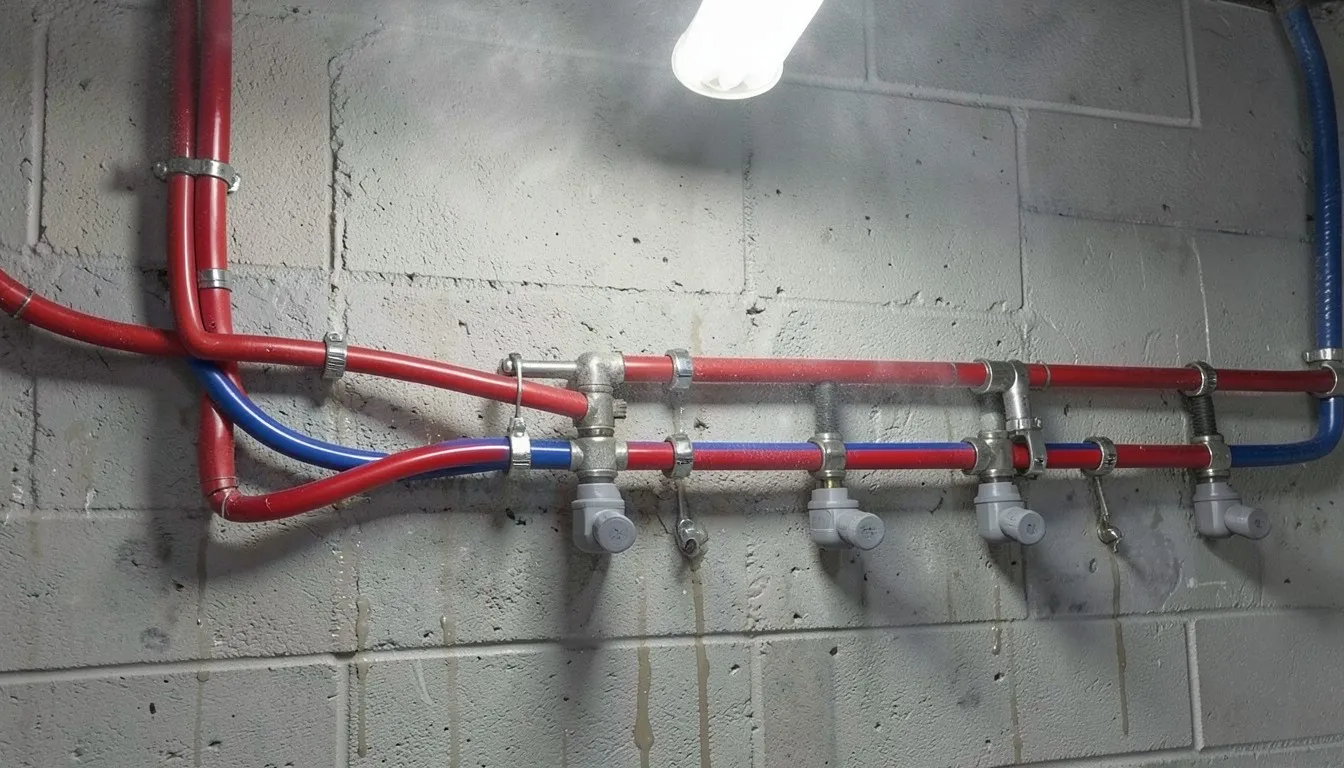
The fix gets cheaper the sooner a plumber sees it.
Degradation problems compound quietly. Call now, or use the form below and a licensed Ohio plumber calls you back with a no-obligation estimate for the drain cleaning.
Request a drain cleaning callback in Dayton
In a meeting, with the kids, or just prefer not to hold? Drop your ZIP and number below. AlertPlumber routes your request to a verified plumber in your area — they’ll call you back directly.
- 1 Submit your info. ZIP, phone, and what kind of work you need.
- 2 AlertPlumber matches you with a verified plumber serving your area.
- 3 The plumber calls you back with a written estimate, no obligation.
Drain Cleaning in Dayton — catch it early
Degradation-driven failures worsen over time and cost more to fix the longer they run. A verified OH plumber in Dayton diagnoses your specific condition and provides a written scope before any work begins.