
Frost Line
The maximum depth at which the ground freezes in a given climate. Water service lines, sewer laterals, and outdoor plumbing must be buried below the frost line to prevent freeze damage.
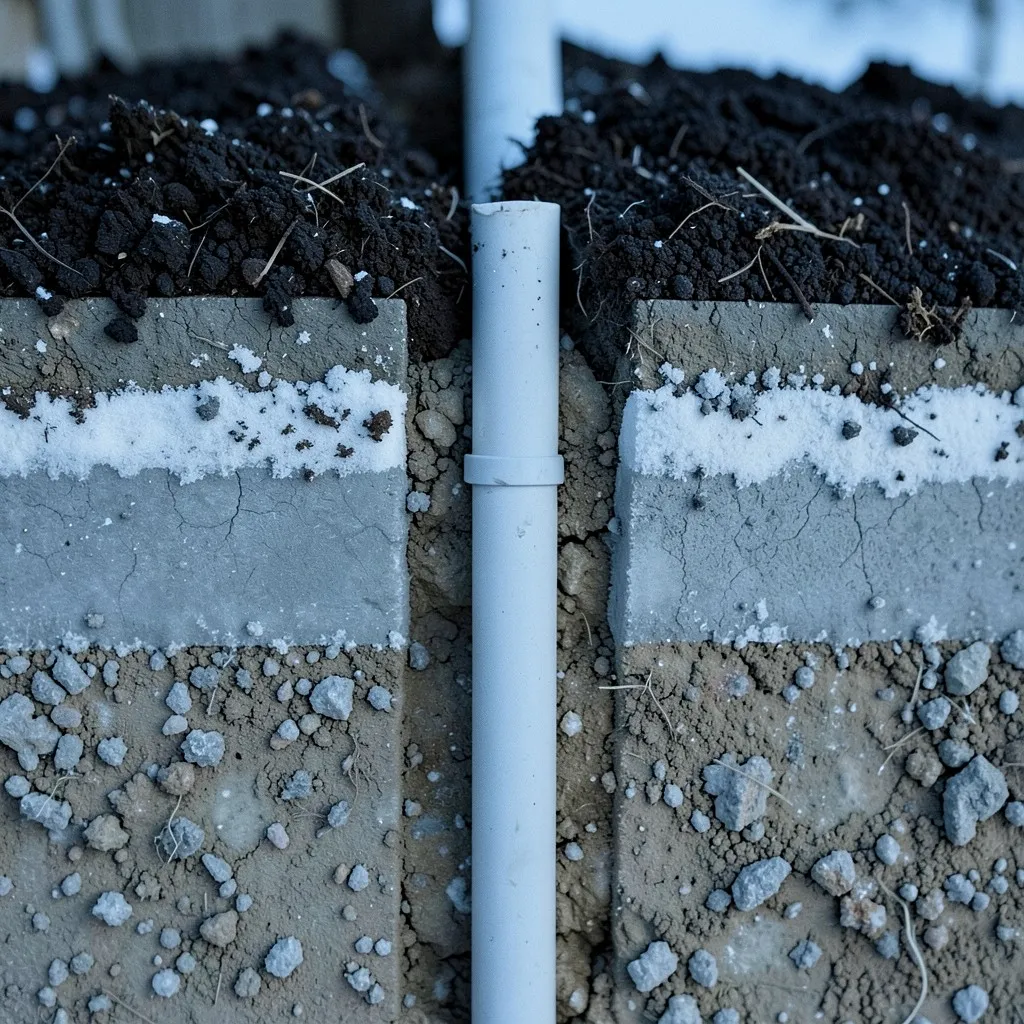
The frost line (also called frost depth or freezing depth) is the maximum depth at which soil reaches 32°F (0°C) during winter in a given climate. Plumbing buried above the frost line is at risk of freezing, expanding, and bursting.
How do frost-line depths vary by climate?
- Phoenix, AZ — 0 inches (no freeze risk)
- Atlanta, GA — 5 inches
- St. Louis, MO — 36 inches
- Boston, MA — 48 inches
- Minneapolis, MN — 60 inches
- Fairbanks, AK — 100+ inches
Local building codes require water and sewer pipes to be buried at minimum 6 inches below the published frost line for the jurisdiction. NOAA NCEI maintains the authoritative frost-depth dataset.
Which plumbing has to sit below the frost line?
Anything holding water year-round: the water service from the meter or well, the sewer lateral, irrigation mains, and the supply to any yard hydrant. Hose bibs are the common exception — a frost-proof sillcock keeps its shutoff inside the heated envelope and drains the barrel when closed, which is why it survives at wall height while a standard bib in the same wall splits.
How is frost depth set for a permit?
The published figure is a design depth adopted by the local jurisdiction, not a measurement taken on the day. Inspectors work from the code-adopted number for the county, which is generally conservative relative to a typical winter, and most jurisdictions add a cover requirement on top of it. Because the adopted depth can differ between neighbouring counties, the number that governs a job is the one in the permitting authority's own code, not a regional map.
What should homeowners do about frost-line depth?
If you live in a climate with 30+ inches of frost line and are renovating, ask your plumber to confirm pipe burial depth and add insulation to any pipes near the frost-line boundary or in unheated spaces (rim joists, crawl spaces, attics).
Researching the term is one thing — hiring for it is another. See frozen pipe repair services for scope, timelines, and what drives the price, or call (888) 530-4445 for a no-cost estimate.
For the full picture — materials, process, timelines and what drives the cost — read Frozen Pipe Repair: Complete Guide.
What related terms should you know?
What sources back this up?
Need a verified plumber for frozen pipe repair?
AlertPlumber matches you with a licensed plumber for frozen pipe repair. Written estimate before any work begins.