
P-Trap
Curved pipe under sinks, tubs, and showers that holds a pool of water to block sewer gas from entering the home.
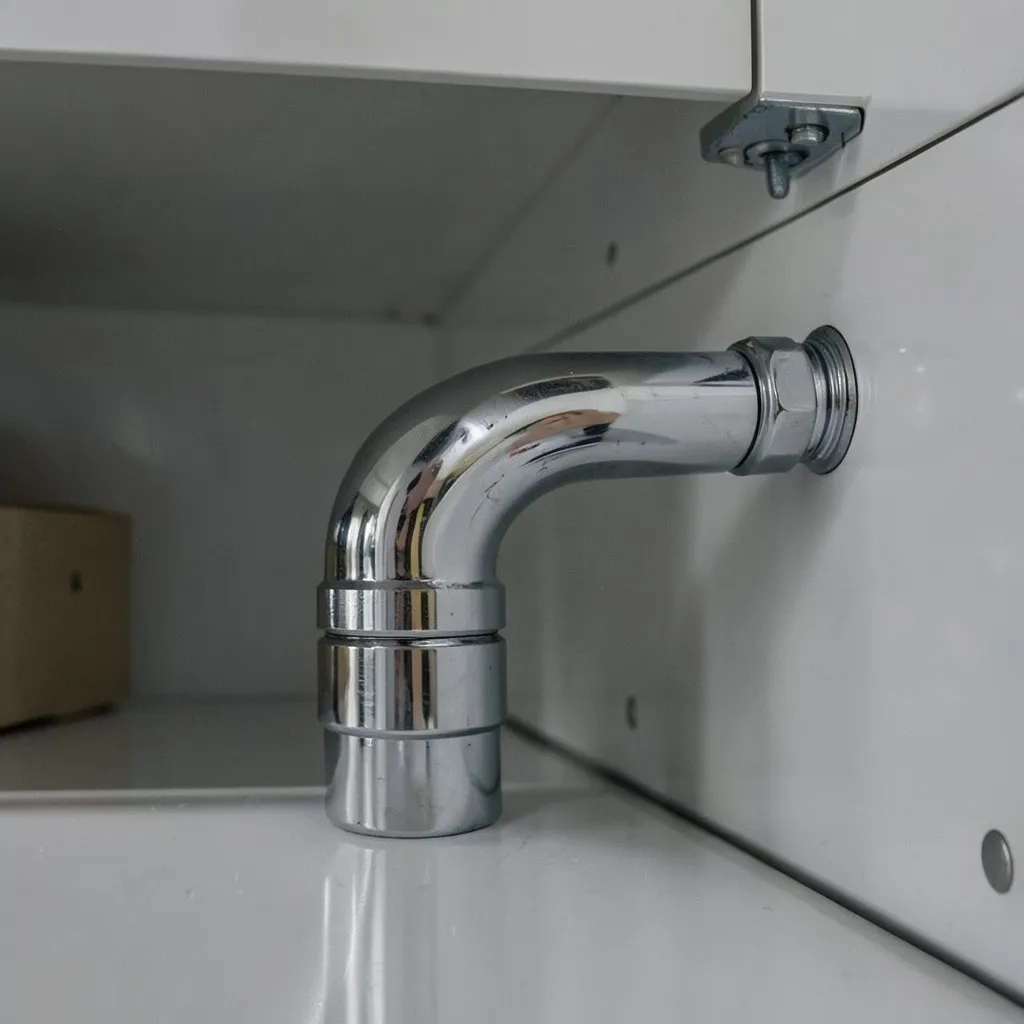
A P-trap is the U-shaped or J-shaped section of pipe installed directly beneath every plumbing fixture that connects to a drain. Its name comes from the sideways letter 'P' formed by the curved trap arm and the vertical drop into the drain line. The trap holds approximately two inches of standing water at all times, and that small reservoir, called the trap seal, is what prevents methane, hydrogen sulfide, and other sewer gases from rising up the drain pipe and into the living space.
How it works is simple. Each time a fixture drains, used water flushes through the curve and refills the seal. Between uses, the water sits in the bend, physically blocking the drain opening. The 2024 International Plumbing Code (IPC) § 1002 and the IAPMO Uniform Plumbing Code both require a trap on every fixture, with a seal depth of at least two inches and no more than four inches. Most modern P-traps are 1-1/4 inch for bathroom sinks and 1-1/2 inch for kitchen sinks and tubs, made from PVC, ABS, or chrome-plated brass.
The most common failure mode is the trap drying out. This happens when a fixture sits unused for several weeks, allowing the water seal to evaporate. The result is an unmistakable rotten-egg smell rising from the drain. Other failure signs include:
- Persistent sewer or sulfur odor near the fixture
- Gurgling sounds when other drains in the house are used
- Visible water dripping from the trap connections under the fixture
- Slow drainage caused by hair, grease, or soap scum trapped in the bend
- Cracks in plastic traps or corrosion pinholes in older metal traps
Remedies depend on the cause. A dried-out trap is fixed in seconds by running water for thirty seconds to refill the seal. For floor drains and rarely-used basement fixtures, pouring a cup of water plus a tablespoon of mineral oil slows future evaporation because the oil floats on top of the seal. Clogged traps can usually be cleaned by unscrewing the slip nuts on either end of the curve and emptying the contents into a bucket. A cracked or corroded trap should be replaced rather than repaired; a new PVC P-trap kit costs $8 to $20 at any hardware store, and replacement takes about fifteen minutes with a pair of channel-lock pliers.
Professional service calls for trap-related issues typically run $125 to $275 in 2026, depending on accessibility and whether the rough-in plumbing inside the wall is involved. If the smell persists after the trap is verified to be holding water, the next likely culprit is a blocked or undersized vent stack, which prevents the trap from refilling properly and can siphon the seal during normal drainage.
Researching the term is one thing — hiring for it is another. See drain cleaning services for scope, timelines, and what drives the price, or call (888) 530-4445 for a no-cost estimate.
For the full picture — materials, process, timelines and what drives the cost — read Drain Cleaning: The Complete Guide.
What related terms should you know?
What sources back this up?
Need a verified plumber for drain cleaning?
AlertPlumber matches you with a licensed plumber for drain cleaning. Written estimate before any work begins.