
Repipe (Whole-House Repipe)
Complete replacement of a home's interior supply lines — typically switching from failing galvanized steel or polybutylene to PEX or copper. Usually triggered by recurring leaks, low pressure, or discolored water.
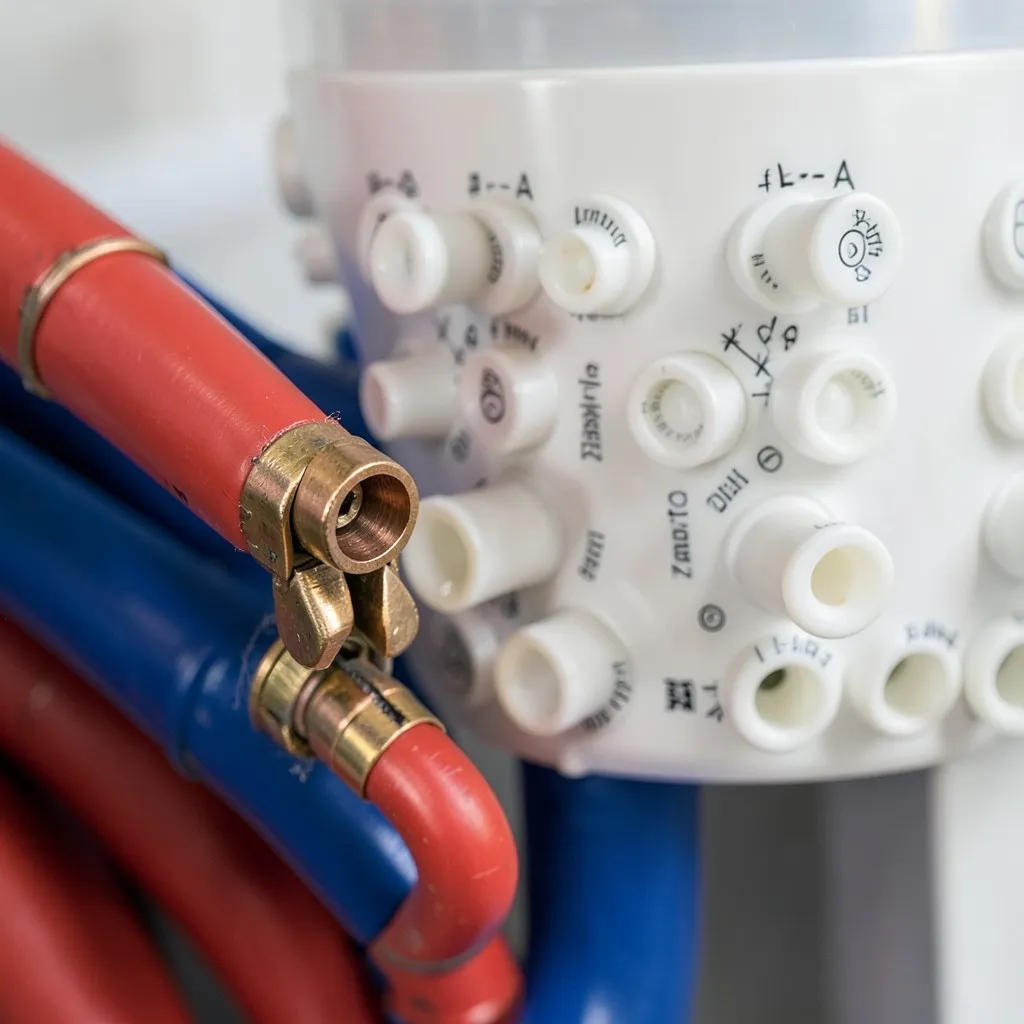
A repipe (or whole-house repipe) is the complete replacement of a home's interior water supply lines — hot and cold — from the main shutoff to every fixture. The old pipes are abandoned in place or removed, and new pipe is run through walls, floors, and ceilings to all fixtures.
It does not include the drain, waste and vent pipes, which are a separate job. New pipe is routed to every sink, shower, toilet, appliance and hose bibb, ending in a new shutoff valve at each one. People search for this when a house has started to fail in several places at once, or when they have just learned what their pipes are made of. This page covers when a repipe is the right answer rather than another repair, which pipe to choose, what the job includes, how it runs day to day, the permit, and what moves the price.
What are common reasons to repipe a house?
- Galvanized steel pipes (common in homes built before 1970) corrode from the inside out, reducing flow and eventually leaking. When water runs orange or brown after periods of non-use, galvanized corrosion is the likely cause.
- Polybutylene pipe (installed approximately 1978–1995) is prone to micro-fracturing, especially at fittings. If your home has gray plastic supply pipes, a repipe is strongly recommended — many insurance companies refuse to cover polybutylene homes.
- Repeated slab leaks — two or more slab leaks in a copper system within 5 years indicates the entire pipe run is failing and a repipe is more cost-effective than repeated spot repairs.
- Pinhole leaks throughout copper pipes in hard-water cities (Phoenix, Las Vegas, Tucson) indicate systemic corrosion.
- Leaks in more than one place. A second pinhole leak in copper, or a second slab leak, within a couple of years means the whole run is corroding from the inside, not one bad joint. See slab leak.
- Low pressure at several fixtures at once. Galvanized steel narrows as rust builds inside it; when the shower, the kitchen tap and the washer all run weak, the pipe bore is closing, not a single valve. See galvanized steel pipe and polybutylene plumbing.
- Lead anywhere in the supply. EPA has set the maximum contaminant level goal for lead in drinking water at zero, because lead can be harmful even at low exposure. Among homes without a lead service line, EPA names brass or chrome-plated brass faucets and plumbing with lead solder as the most common problem; a repipe with lead-free materials removes the solder joints (EPA, read 2026-10-01).
The signs your house needs a repipe guide goes through each of these with what to look for and what a plumber will check.
Should you repipe with PEX or copper?
PEX is the dominant choice in 2026. It costs 30–50% less than copper, installs faster (fewer joints), resists freeze damage, and is immune to hard-water corrosion. Copper is still specified in some markets by code or by homeowner preference.
Both are approved water-distribution materials under the International Plumbing Code, and which is right depends on the house, the water and the climate more than on price alone:
| PEX | Copper | |
|---|---|---|
| What it is | Cross-linked polyethylene tubing, made to ASTM F876 and F877 | Drawn copper tube in types K, L and M; Type L is the usual choice for water distribution inside a house |
| How it is joined | Expansion, crimp or clamp fittings; no heat or solder | Soldered or press fittings; solder and flux must be lead-free |
| Routing | Flexible, so it bends around framing with fewer fittings and fewer wall openings | Rigid lengths; every change of direction is a fitting, so more openings are cut |
| Water chemistry | Not affected by the corrosive or hard water that pits copper | Can pit again in the same aggressive water that caused the first leaks |
| Freezing | Tolerates some expansion when water freezes inside it | Splits when frozen |
| Sunlight | Must not be left exposed to sunlight; outdoor runs need protection or a different material | Unaffected |
| Cost | Lower material cost and a faster install | Higher material cost and more labor per joint |
If the original copper failed because of the water, copper again will face the same water. If the house is in a hard-freeze region, PEX's tolerance for freezing matters. If a run is outdoors or in sunlight, that section should not be bare PEX. The PEX vs copper comparison goes deeper on each of these.
What does a whole-house repipe include?
The scope is what separates two quotes that look alike. A written repipe scope normally names:
- Which lines are replaced — every hot and cold supply line from the main shutoff, or only some branches (a partial repipe, below).
- The material and brand — PEX type or copper type, and the fitting system.
- Every fixture connection — sinks, tubs and showers, toilets, the dishwasher, the washing machine box, the ice maker line, hose bibbs, and the water heater's supply connections. Ask about each one by name.
- New shutoff valves — a stop valve at each fixture, and whether a manifold with a labeled shutoff per branch is part of the plan.
- Insulation — on hot lines and on any line in unheated space.
- The permit and inspection — who pulls the permit and whose fee it is.
- Wall openings — how many, who patches them, and whether texture and paint are included or left to a separate trade.
- The old pipe — removed or abandoned in place.
What happens during a whole-house repipe?
- Walkthrough and quote. The plumber maps every fixture, decides the pipe route (attic, crawlspace, basement or through walls), picks the material, and writes a scope. Ask whether drywall repair and painting are in the quote or a separate trade.
- Permit. Replacing a home's supply piping is the kind of work that normally needs a plumbing permit and an inspection before the walls are closed. Confirm with your local building department which permit applies and who pulls it.
- Access openings. Openings are cut in drywall or ceilings where the new pipe has to pass and where the old pipe has to come out. Flexible pipe needs fewer openings than rigid pipe.
- New lines run. New hot and cold lines are routed to every fixture, often from a central manifold with a labeled shutoff for each branch, and a new stop valve is fitted at each fixture. Hot lines and any lines in unheated space are insulated.
- Pressure test and inspection. The new system is pressurized and checked for loss before anything is covered, and the inspector looks at it while the openings are still open.
- Fixtures reconnected, walls repaired. Faucets, toilets, appliances and water heater are connected to the new stops, then the openings are patched, textured and painted.
How long does a whole-house repipe take?
Bob Vila's repipe cost guide (updated April 24, 2023; read 2026-10-01) puts it this way: "Repiping an entire house can take anywhere from a few days to a few weeks, depending on the house’s size and the project’s extent." The same page adds that more pipes or hard-to-reach pipes take longer, and that the material affects the timeline. The plumber's own schedule for your house is the number to plan around, so ask for it in the written scope: days on site, days for the inspection, and days for wall repair if that is a separate trade.
Can you stay in the house during a repipe?
That depends on the job, and it is a question for the plumber before the start date rather than a yes or no in general. Ask:
- How many hours a day the water will be off, and whether it is restored each evening.
- Whether at least one bathroom and the kitchen will work at night.
- Which rooms will have open walls or ceilings, and on which days.
- How dust is contained and furniture protected, and what you should move out of the way beforehand.
- Whether pets or anyone working from home need to be elsewhere on the noisiest days.
The answers differ a lot between a small single-story PEX job and a multi-story copper job.
Do you need a permit to repipe a house?
Treat the answer as yes unless your building department tells you otherwise. The permit is what puts an inspector's eyes on the pipe, the joints, the fixture stops and the insulation before drywall hides them, and the closed permit is the record a future buyer or insurer will ask for. The International Plumbing Code sets out the materials and joints allowed for water distribution piping in its Chapter 6; local amendments vary, so the plumber's quote should name the permit being pulled and its fee.
What does a repipe cost in 2026?
The price depends on the size of the home and the material: a two-bath home costs less than a three-bath home, and copper costs more than PEX for the same house. Current ranges by home size and material are on the whole-house repipe cost guide, which is kept on a separate page on purpose. Six things move the price more than anything else:
- Size of the house — the number of fixtures and bathrooms, and the length of pipe to reach them.
- Material — copper costs more in material and in labor per joint than PEX.
- Access — a house on a slab with no attic needs more cutting than one with a crawlspace or an open basement.
- Number of stories — each floor adds routing and openings.
- Drywall and paint — sometimes in the plumbing quote, often a separate trade; ask.
- Permit and inspection fees — set by the city.
Many repipe quotes include patching the drywall access holes; others leave it to a separate trade, so ask which. Permits are required in most jurisdictions — the quote should say who pulls the permit and whether its fee is included.
Can you repipe part of a house?
Yes. A partial repipe replaces one section — a bathroom group, the hot side only, or the polybutylene branches while newer PEX stays. It makes sense when the failures are confined to one area or one material. When leaks have appeared in different parts of the house, or the whole system is one aging material, partial work tends to be followed by the next leak somewhere else, and the full repipe ends up cheaper over a few years than repairs one at a time.
How long does a repipe last?
Both PEX and copper are sold as multi-decade materials; manufacturers publish their own warranties, and the plumber's workmanship warranty is separate. Ask for both in writing, keep the permit paperwork, and ask for the pressure-test result. Those three documents are what a warranty claim or a home sale will rest on years later.
Where are the local whole-home repipe pages?
Each city page covers repiping in that city and connects you with an independent local plumber. These are the city pages searchers have found most often:
- Whole-home repipe in Greenville, SC
- Whole-home repipe in Arvada, CO
- Whole-home repipe in Great Falls, MT
- Whole-home repipe in Gainesville, FL
- Whole-home repipe in Boulder, CO
- Whole-home repipe in Renton, WA
- Whole-home repipe in Lakewood, CO
- Whole-home repipe in Murrieta, CA
- Whole-home repipe in Cary, NC
- Whole-home repipe in Palm Bay, FL
- Whole-home repipe in Port Saint Lucie, FL
- Whole-home repipe in Dayton, OH
Not listed? The whole-home repipe service page links every city.
Researching the term is one thing — hiring for it is another. See whole-home repipe services for scope, timelines, and what drives the price, or call (888) 530-4445 to talk to a local plumber about the job.
For the full picture — materials, process, timelines and what drives the cost — read Whole-Home Repipe: The Complete Guide.
What related terms should you know?
What sources back this up?
- EPA Lead and Copper Rule — pipe materials
- PHCC Repiping Best Practices
- EPA — Basic Information about Lead in Drinking Water (read 2026-10-01)
- ICC — 2024 International Plumbing Code, Chapter 6 Water Supply and Distribution (read 2026-10-01)
- Plastics Pipe Institute — TN-17, Crosslinked Polyethylene (PEX) Pipe and Tubing Systems (read 2026-10-01)
- ASTM F876 — Standard Specification for Crosslinked Polyethylene (PEX) Tubing (read 2026-10-01)
- Copper Development Association — Copper Tube Handbook (read 2026-10-01)
- Bob Vila — How Much Does It Cost to Repipe a House? (updated 2023-04-24; read 2026-10-01)
Need a plumber for whole-home repipe?
Calls are connected to independent licensed local plumbers in our partner's network for whole-home repipe. Ask for the license number and a written estimate before any work begins.