
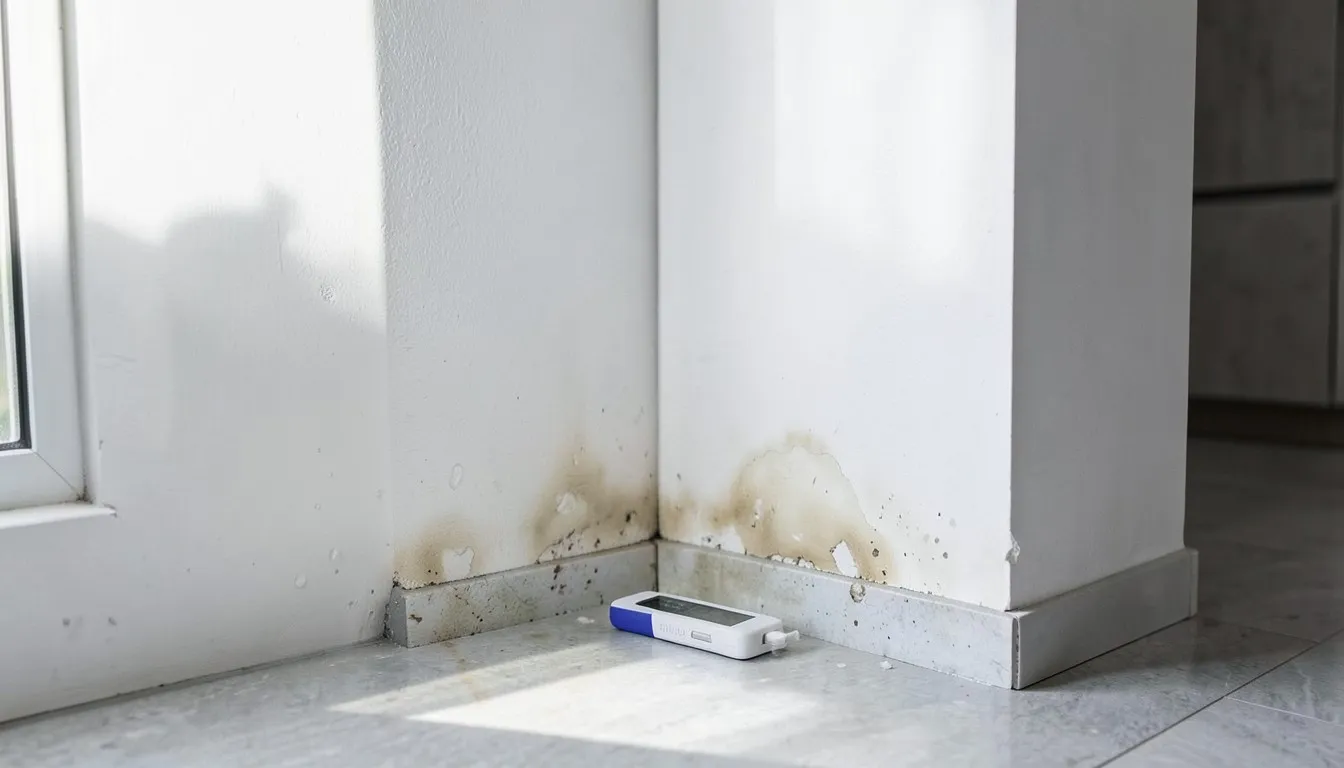
Emergency Leak Detection in Dayton, Ohio
Camera first, quote second — know exactly what's wrong in your Dayton home before you approve a dollar.
Local plumbing data for Dayton, OH
Seeing these conditions at your place in Dayton? A state-licensed plumber can confirm it over the phone — free, no obligation.
Pipe conditions in Dayton, OH
Non-invasive leak detection uses acoustic amplification, thermal imaging, and pressure isolation to locate water loss in supply lines and drain systems without opening walls or floors. Dayton homes with galvanized or older copper supply runs face the highest pinhole leak incidence — a slow leak inside a wall cavity can cause mold and structural damage for months before becoming visible. A professional leak detection prevents unnecessary demolition by confirming the exact break location before any drywall is cut. AlertPlumber connects you with an Ohio-licensed plumber who locates first and opens second.
Dayton's water utility maintains an active lead service line (LSL) replacement program. With a median home age of 79 years, a portion of the housing stock may still have lead service laterals connecting the water main to interior supply — a consideration during any work near the service entry point. A licensed plumber can confirm whether supply-side work requires utility coordination.
Very hard water in Dayton is a primary driver of accelerated appliance failure: water heater anode rods exhaust in 2–3 years instead of 6–8, scale deposits at fixture connections form within months of installation, and tankless heat exchangers accumulate mineral buildup that can reduce lifespan by half without regular descaling. A softener or whole-house conditioner is strongly recommended alongside any appliance service call.
Frost line depth in Dayton means supply lines and outdoor plumbing must be installed below the freeze threshold — typically 32 — to prevent pipe burst during cold events. Exterior hose bibs, irrigation shutoffs, and any exposed pipe runs are the most common winterization service points in freeze-risk markets.
- Median home age
- 79 yrs
- Water hardness
- 15 gpg
- Frost line
- 32 in.
- Lead lines
- Active replacement
- Permit
- $75
A licensed OH plumber reads these conditions the moment you describe the symptom.
What shapes plumbing demand in Dayton, OH
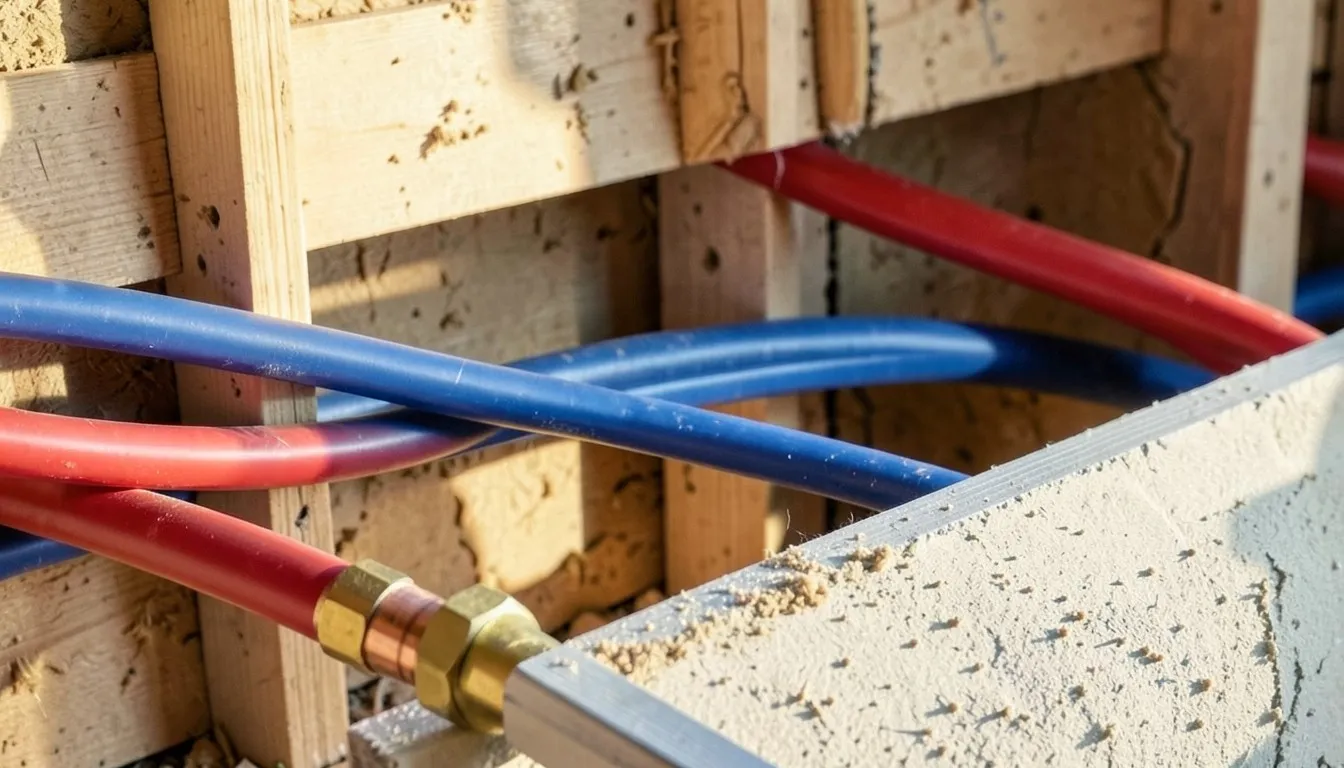
Galvanized supply lines and cast iron drain systems from the 1880s–1940s are past their 40–70-year design life across much of Dayton. Interior rust scale progressively narrows pipe bore. Plumbers here routinely scope supply lines before quoting any repair — the underlying pipe condition often makes full replacement more cost-effective than patching.
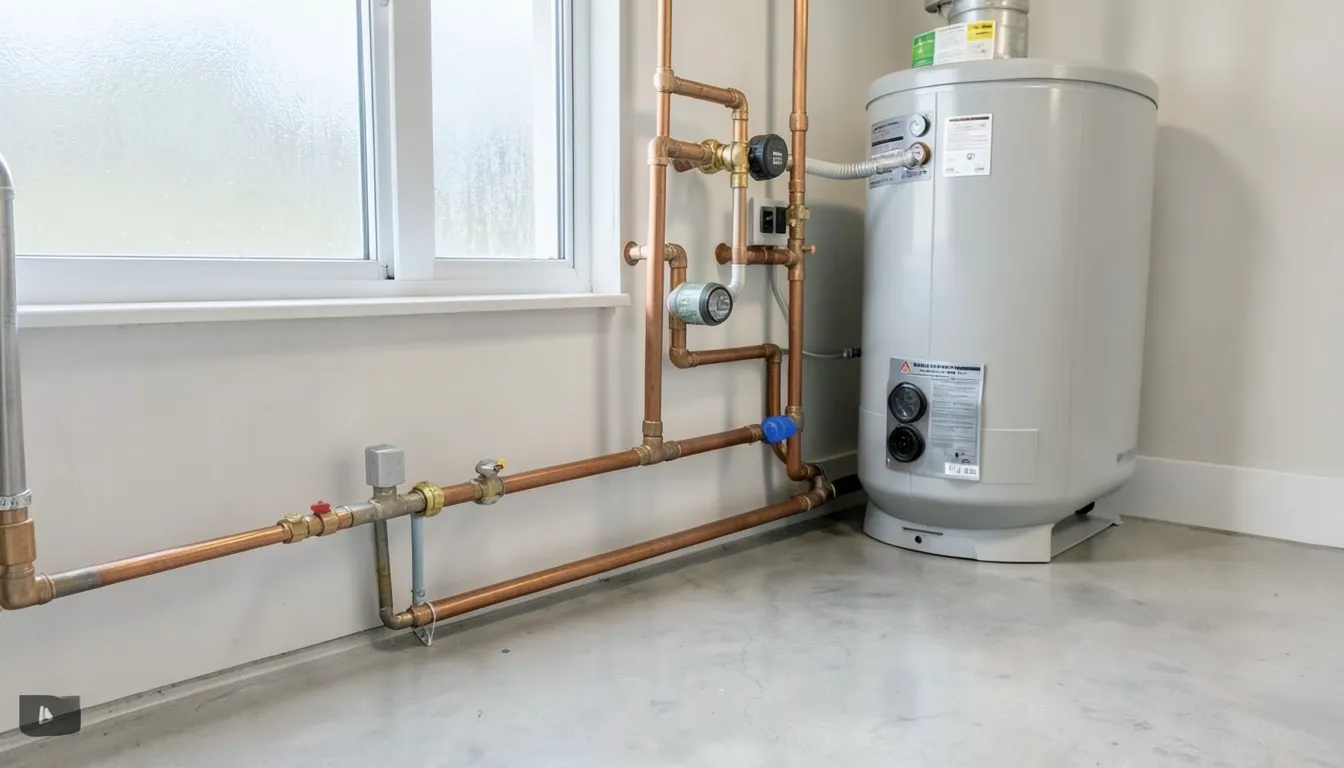
At 15–20+ GPG, calcium scale forces compressed equipment cycles in Dayton: tank heaters average 6–9 years vs. the 10–12-year national benchmark, and tankless units require annual descaling. Anode rods calcify within 12–18 months. Most plumbers here assess heater age against the local scale timeline — not the manufacturer's service life.
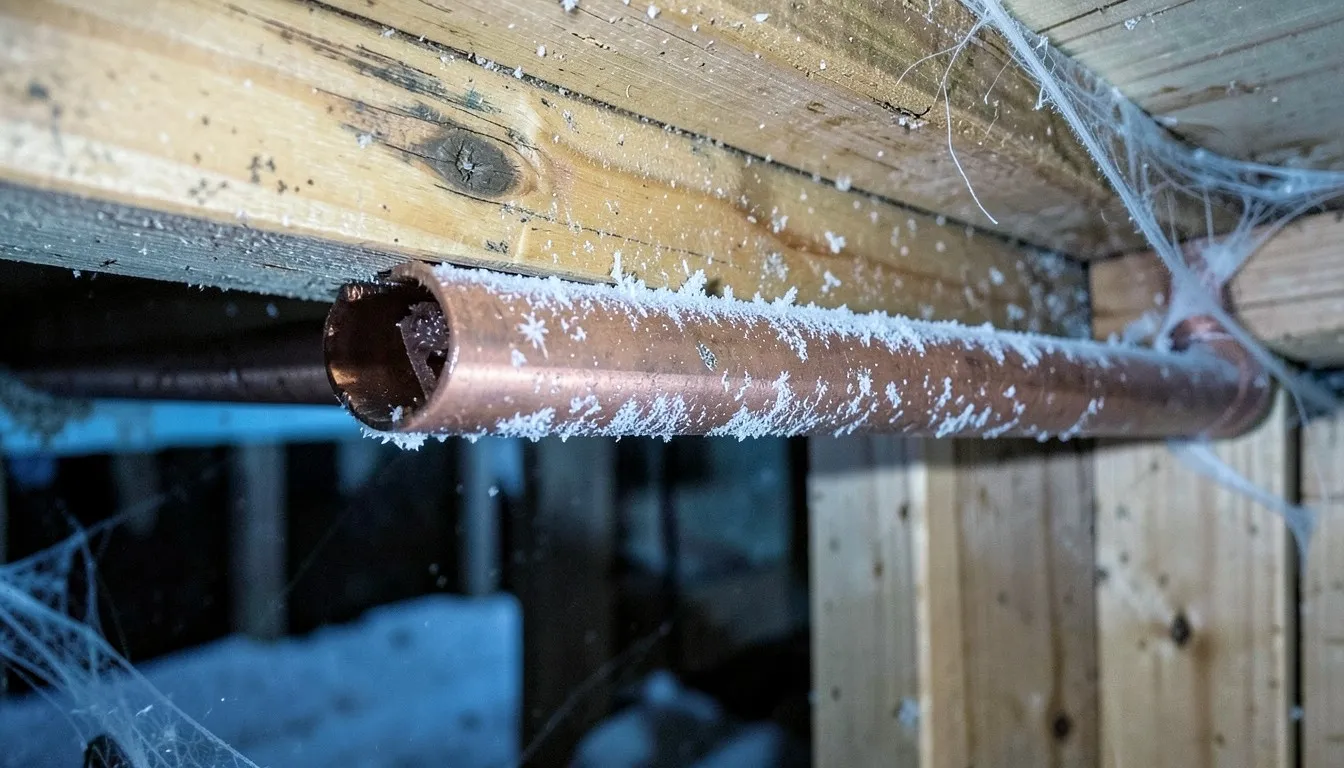
The primary surge in Dayton runs January–March, with a secondary wave at the spring thaw — when pipes that held through the freeze rupture as pressure is restored above 32°F. Scheduling competition peaks exactly when emergency calls are highest. Homeowners who wait for visible damage compete for the same limited plumber slots at the worst possible time.
Dayton: diagnose first, repair second
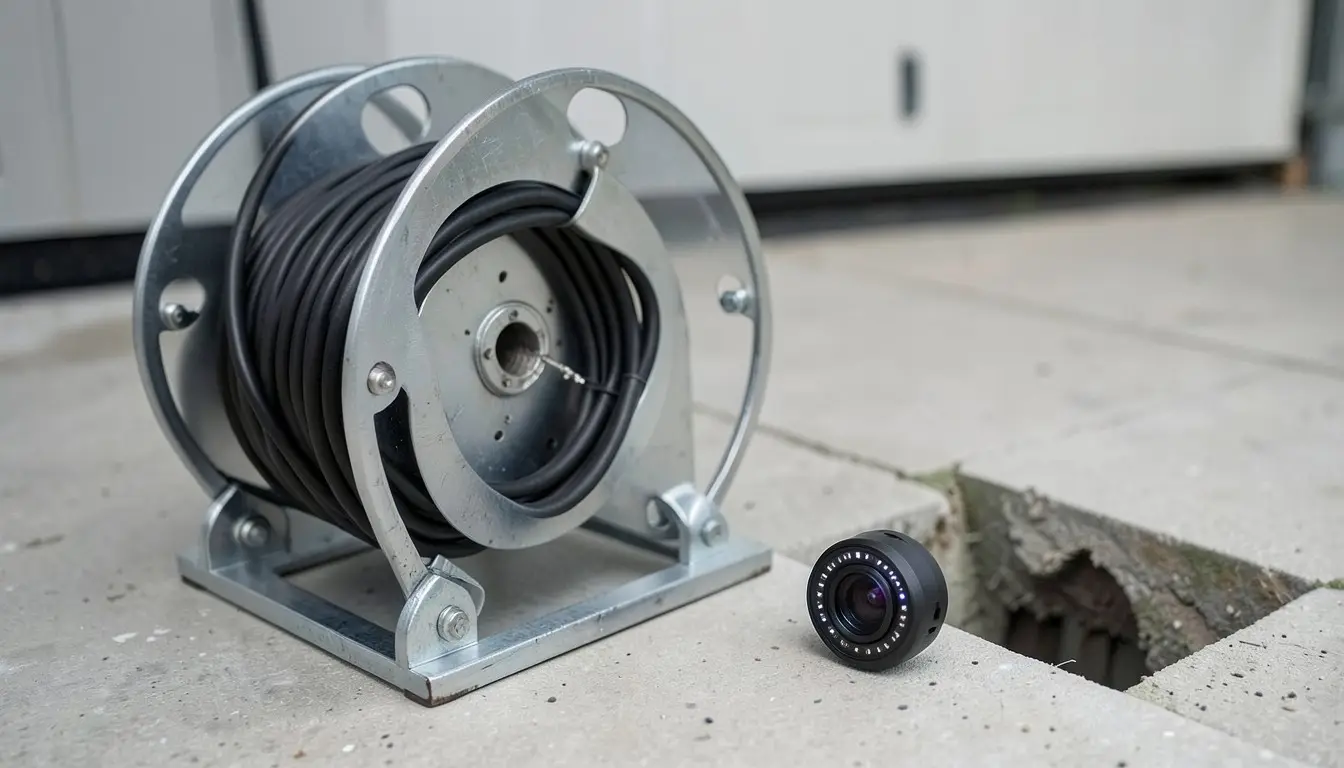
Describe the symptom — not the repair. AlertPlumber routes to an OH-licensed plumber trained in diagnostics. The site visit uses camera tracing, acoustic detection, or hydrostatic pressure testing — matched to the reported failure type.
The plumber delivers a written diagnostic report: confirmed failure location, available repair methods, and tradeoffs — disruption level, material durability, long-term cost, and whether a Dayton building permit applies to the selected method.
You select the repair path. The Ohio-licensed plumber proceeds on the authorized method with a fixed scope and price. Where required, the permit application to Dayton is handled by the contractor.
Leak Detection cost calculator — Dayton
Pre-filled for leak detection in Dayton. Adjust the ZIP for a neighboring area, or change the service to compare. Calculator pulls from the city's scraped permit-fee + state plumber-density data.

Leak Detection in Dayton — the longer it runs, the more it costs.
Slow failures compound: soft pipe walls, root penetration, mineral buildup. A verified plumber calls back with a scope-first estimate before anything is dug up.
Leak Detection in Dayton — frequently asked
What does electronic leak detection cost in Dayton on a 79-year-median home?
Dayton leak detection prices reflect the 79-year median build and the mix of detection methods needed across the Miami Valley housing stock. Acoustic pinhole detection on a South Park 1900s galvanized riser (the most common Dayton call) runs $345–$485 — the matched plumber works with ground microphones and pipe-mounted geophones to triangulate the leak position behind plaster walls without opening drywall blind. Pressure-decay testing on a Five Oaks 1910s craftsman copper-and-galvanized supply system runs $245–$385 per zone. Thermal-imaging detection on basement and crawlspace runs in pre-1913 McPherson Town or Oregon District homes runs $385–$525 because the thermal contrast between 15 gpg precipitate-clogged sections and clean copper is subtle. Tracer-gas detection (hydrogen-nitrogen blend) for slab-section pre-1960 ranch additions runs $485–$745. Camera-scope inspection for waste-line leak suspects adds $185–$285. AlertPlumber routes to an OH OCILB plumber holding active Dayton municipal residential registration who confirms the per-method quote on the callback.
How fast can a Dayton leak-detection truck arrive for an active leak?
Active-leak detection moves up the priority queue when there's documented water loss. Realistic Miami Valley response by ZIP for an active-leak call (homeowner reporting water meter spinning with no fixtures on): inside-city Dayton 45402, 45403, 45404, 45405, 45406, 45410, 45417: 95–165 minutes weekday business hours, 145–225 minutes 2 a.m.–5 a.m. Outer Montgomery County 45414, 45415, 45419, 45420, 45424, 45426, 45429, 45439, 45449, 45458 (Kettering, Centerville, Huber Heights, Trotwood, West Carrollton): 125–195 minutes weekday, 175–265 minutes overnight. Wright-Patterson region 45431, 45432, 45433, 45434 (Beavercreek, Fairborn, base housing): 145–225 minutes — Greene County leak-detection equipment overlap with Montgomery County affiliates is thinner. December–February 120-freeze-day window stretches every ETA by 25–45 minutes since burst-pipe calls fill the queue and detection trucks have to thaw exterior cleanout caps before deploying equipment. AlertPlumber confirms the detection method on the callback so you can clear access to the suspected leak area.
Do I need a Dayton permit for leak detection and what attaches when scope expands?
No. Leak detection itself is non-invasive diagnostic work and is permit-exempt under the Ohio adoption of the International Plumbing Code. The $75 City of Dayton Building Services plumbing permit plus the $50 inspection fee only attach when scope expands from detection into repair — replacing a pinhole-leaking South Park galvanized riser, pulling a section of failed copper supply line in a Five Oaks 1910s craftsman, repiping a Belmont 1950s slab-section pipe run that detection localized, or replacing the corroded section of a McPherson Town pre-1913 cast-iron stack identified through acoustic survey. The verified plumber pulls the permit through City of Dayton Building Services Division on West Third Street and itemizes both the $75 permit and $50 inspection separately on the written quote covering both detection and follow-on repair. Of the 3,420 residential permits Dayton issued in 2024, post-detection repair permits run a typical 5–9 business day inspector turnaround. Greene County addresses follow a parallel county-level process.
Why are pinhole leaks so common in South Park galvanized risers and what's the corrosion pathology?
South Park is Dayton's largest historic district — 1880s-1910s brick Victorians and shotgun cottages that retained their original galvanized iron supply systems through the post-war decades. After 110+ years of service on 15 gpg very hard Great Miami Buried Valley Aquifer water, three corrosion mechanisms converge to drive pinhole formation. (1) Internal tubercle formation. Galvanized iron exposed to hard mineral-rich water builds up rust nodules (tubercles) that locally concentrate dissolved oxygen and accelerate pitting underneath. The pinhole forms at the tubercle base, hidden by the nodule until pressure breaks through. (2) Galvanic transition points. South Park homes were partially re-piped in copper during the 1960s-1980s, but galvanic-isolation dielectric unions weren't always installed — the copper-galvanized junction becomes a galvanic cell where the galvanized side corrodes preferentially. (3) 15 gpg precipitate deposition. The sole-source aquifer's calcium and magnesium carbonate concentrations deposit hard scale on the inner wall that periodically spalls, exposing fresh metal to attack. Acoustic detection at 200–800 Hz frequency band picks up the characteristic pinhole hiss with the home's main pressure intact. Once located, the matched plumber recommends section replacement or full riser repipe based on the rest-of-system scope condition.
How does Oregon District's 1820s narrow-lot construction affect acoustic detection technique?
The Oregon District is Dayton's oldest surviving residential district — 1820s-1860s Federal and Greek Revival stock built on narrow lots with shared lot-line conditions. Three constraints shape the acoustic-detection technique. (1) Pre-WPC plaster-and-lath wall construction. Walls are dense limestone-aggregate plaster over hand-split lath rather than modern drywall — the dense matrix transmits acoustic signals differently and the matched plumber uses lower-frequency geophones (50–250 Hz band) tuned to penetrate the wall mass without the high-frequency reflections that confuse standard pinhole-detection setups. (2) Narrow-lot acoustic crosstalk. With buildings 10–14 feet from neighboring foundations, plumbing-system noise from adjacent properties can register on the detector and create false positives — the matched plumber asks neighbors to shut their main supply during the detection window or schedules detection during low-water-use hours (10 p.m.–6 a.m.). (3) Stone-and-brick foundations. Pre-1860 stone-rubble foundations transmit acoustic signals through the building structure itself, requiring contact-point geophone surveys at multiple foundation points rather than just at suspected leak locations. Per EPA WaterSense leak guidance, undetected pinhole leaks in pre-1900 stock can drive 9,000+ gallons of annual water loss before homeowners notice on the bill.
Will my Ohio HO-3 cover the leak detection charge in Dayton?
Standard Ohio HO-3 policies treat leak detection as a diagnostic prerequisite to a covered repair claim and the rules vary by leak class. Sudden and accidental leaks (a burst supply line, a failed water-heater connection, a punctured slab-section pipe) typically trigger HO-3 coverage for both the detection fee and the consequential water damage, subject to your deductible — keep the detection invoice and method documentation as part of the claim package. Gradual seepage from chronic pinhole leaks in pre-1980 South Park galvanized risers or Five Oaks early-copper supply is routinely denied as preventable maintenance regardless of detection scope. Slab-section leak detection on Belmont or Westwood mid-century ranch additions sits in a coverage gray zone — the detection fee is sometimes reimbursable if the leak itself is classified sudden, but slab repair is often subject to access-and-repair coverage caps. Sole-source aquifer corrosion-driven leaks on pre-1980 galvanized stock are increasingly excluded under newer endorsement language. Documentation requirements: itemized detection invoice with method specified, before-and-after water-meter readings, and photographs of any visible damage before remediation. Submit within the 14–30 day window your carrier mandates.
When should I attempt DIY leak finding versus call a verified Dayton plumber?
DIY makes sense for: a visible drip under a sink (tighten the trap nut, check the supply-stop compression fitting); a wax-ring leak at the base of a toilet (replace the wax ring, $8 and 45 minutes); a water-heater drain valve weeping (snug the valve, replace if it doesn't seat). Stop and call the verified plumber when: (1) your water meter spins with all fixtures off — that's an active supply-side leak that needs acoustic or pressure-decay localization, (2) you see staining on a ceiling or basement wall but can't trace the source above it — gravity drainage from a pinhole or waste-line failure often presents 6–15 feet horizontally from the actual leak, (3) you live in a pre-1920 South Park, St. Anne's Hill, McPherson Town, or Oregon District home and suspect a supply pinhole — wall-opening exploration in these structures damages original plaster and trim that costs $1,500+ to restore properly, (4) you smell musty mildew without a visible drip — chronic seepage in wall cavities of 1900s-era construction requires thermal-imaging or moisture-meter survey, or (5) your annual water bill jumped 30%+ without changed habits and you can't find a visible leak. Per EPA WaterSense, the average undetected household leak wastes 10,000 gallons per year.
Acoustic, thermal, tracer-gas, or pressure-decay — how does the Dayton plumber choose the method?
Method selection follows a Dayton-specific decision tree. Acoustic pinhole detection (200–800 Hz ground microphone) is the first-line method for South Park galvanized risers, Five Oaks early-copper supply, and any wall-cavity leak in pressurized supply piping — works with the home's main pressure intact and localizes to within 6–18 inches. Pressure-decay testing applies when the suspected leak is in a section that can be isolated by closing branch valves — quantifies the leak rate and pinpoints which branch loop is the source. Thermal imaging (FLIR or equivalent) is best for hot-water-side pinhole leaks where the water-temperature contrast against ambient wall temperature reads cleanly — common application is detecting slab-section leaks under Belmont or Westwood mid-century ranch additions where the hot-water line runs through the slab pour. Tracer-gas detection (hydrogen-nitrogen 95/5 blend) is reserved for slab-section, buried, or otherwise inaccessible runs where acoustic and thermal both fail — the gas migrates through the leak and a surface sniffer locates the escape point. Camera scope is the right tool for waste-line leak suspicions, not supply-side pinholes. The matched plumber asks pressure-side versus drain-side, hot versus cold, and home build year on the callback to load the right detection kit.
How does AlertPlumber confirm a Dayton plumber holds the right credentials for leak detection work?
Ohio's split credential framework applies to leak detection the same way it applies to other plumbing work. State-level Ohio OCILB (Construction Industry Licensing Board) lists roughly 5,800 active commercial plumbing contractors statewide — that credential is required for commercial leak detection work but residential plumbing licensure is administered at the municipal level. In Dayton specifically, residential plumbers register with the City of Dayton Building Services Division and Montgomery County. Greene County (Beavercreek, Fairborn, Wright-Patterson region) operates a parallel residential registration. AlertPlumber routes detection calls to plumbers holding OH OCILB commercial standing where applicable plus active Dayton or Montgomery County residential registration matched to the work address. Detection equipment proficiency (acoustic geophones, thermal imagers, tracer-gas sniffers) is not a separate Ohio credential — it's a contractor-level training matter and AlertPlumber prioritizes affiliates with documented manufacturer training on at least two detection methods. Confirm OH OCILB status through the Ohio Department of Commerce industrial compliance lookup and Dayton municipal registration through City of Dayton Building Services before authorizing detection work.
What Dayton ZIP codes does AlertPlumber cover for leak detection calls?
AlertPlumber's Miami Valley leak-detection grid covers the full 137,644-resident City of Dayton footprint plus the Montgomery County and Greene County suburban rings. Inside-city ZIPs: 45402, 45403, 45404, 45405, 45406, 45410, 45417 (downtown core, Oregon District, McPherson Town, St. Anne's Hill, South Park, Five Oaks, Belmont, west-side). Montgomery County ring: 45414, 45415, 45419, 45420, 45424, 45426, 45429, 45439, 45449, 45458 (Kettering, Centerville, Huber Heights, Trotwood, West Carrollton, Riverside, Moraine, Oakwood). Wright-Patterson region in Greene County: 45431, 45432, 45433, 45434 (Beavercreek, Fairborn, base housing). The 9,800 LSL service lines documented under the LCRR concentrate in 454xx inside-city blocks — St. Anne's Hill, South Park, McPherson Town, and Five Oaks all show elevated LSL inventory which means lead-side service connections require detection technique adapted to soft-metal joints. Local context. Miami Valley atop the Great Miami Buried Valley Aquifer (EPA-designated sole-source under SDWA § 1424(e)), 15 gpg very hard water at $3.85 per 1,000 gallons, 120 freeze days, 32" frost line. City of Dayton Department of Water is the operating utility for inside-city addresses with Montgomery County and Greene County districts handling suburban service.
The fix gets cheaper the sooner a plumber sees it.
Degradation problems compound quietly. Call now, or use the form below and a licensed Ohio plumber calls you back with a no-obligation estimate for the leak detection.
Request a leak detection callback in Dayton
In a meeting, with the kids, or just prefer not to hold? Drop your ZIP and number below. AlertPlumber routes your request to a verified plumber in your area — they’ll call you back directly.
- 1 Submit your info. ZIP, phone, and what kind of work you need.
- 2 AlertPlumber matches you with a verified plumber serving your area.
- 3 The plumber calls you back with a written estimate, no obligation.
Leak Detection in Dayton — catch it early
Degradation-driven failures worsen over time and cost more to fix the longer they run. A verified OH plumber in Dayton diagnoses your specific condition and provides a written scope before any work begins.