
Emergency Sewer Line Repair in Dayton, Ohio
Camera first, quote second — know exactly what's wrong in your Dayton home before you approve a dollar.
Local plumbing data for Dayton, OH
Seeing these conditions at your place in Dayton? A state-licensed plumber can confirm it over the phone — free, no obligation.
Pipe conditions in Dayton, OH
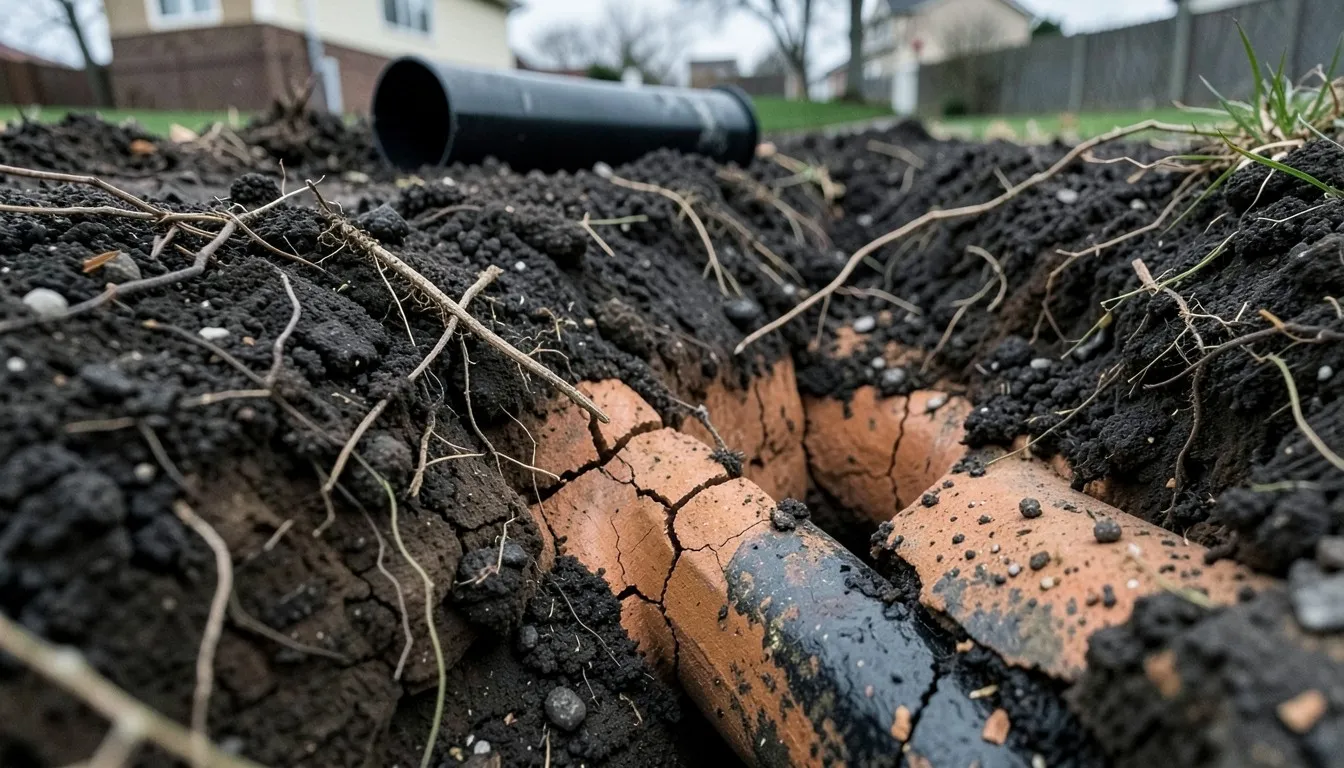
Sewer line failures in Dayton follow predictable patterns by pipe material and installation era: clay tile joints separate and admit root intrusion; Orangeburg pipe (1940s–1960s) compresses under soil load; cast iron corrodes at horizontal runs where standing water accelerates deterioration. A camera scope before excavation is critical — it confirms whether a spot repair is viable or whether replacement of the full lateral is the smarter investment. AlertPlumber routes your request to an Ohio-licensed plumber who completes the scope before quoting the repair. Freeze events and frost-depth requirements add pipe insulation, exterior faucet winterization, and burst-risk assessment to service calls in this climate.
Dayton's water utility maintains an active lead service line (LSL) replacement program. With a median home age of 79 years, a portion of the housing stock may still have lead service laterals connecting the water main to interior supply — a consideration during any work near the service entry point. A licensed plumber can confirm whether supply-side work requires utility coordination.
Very hard water in Dayton is a primary driver of accelerated appliance failure: water heater anode rods exhaust in 2–3 years instead of 6–8, scale deposits at fixture connections form within months of installation, and tankless heat exchangers accumulate mineral buildup that can reduce lifespan by half without regular descaling. A softener or whole-house conditioner is strongly recommended alongside any appliance service call.
Frost line depth in Dayton means supply lines and outdoor plumbing must be installed below the freeze threshold — typically 32 — to prevent pipe burst during cold events. Exterior hose bibs, irrigation shutoffs, and any exposed pipe runs are the most common winterization service points in freeze-risk markets.
- Median home age
- 79 yrs
- Water hardness
- 15 gpg
- Frost line
- 32 in.
- Permit
- $75
A licensed OH plumber reads these conditions the moment you describe the symptom.
What shapes plumbing demand in Dayton, OH
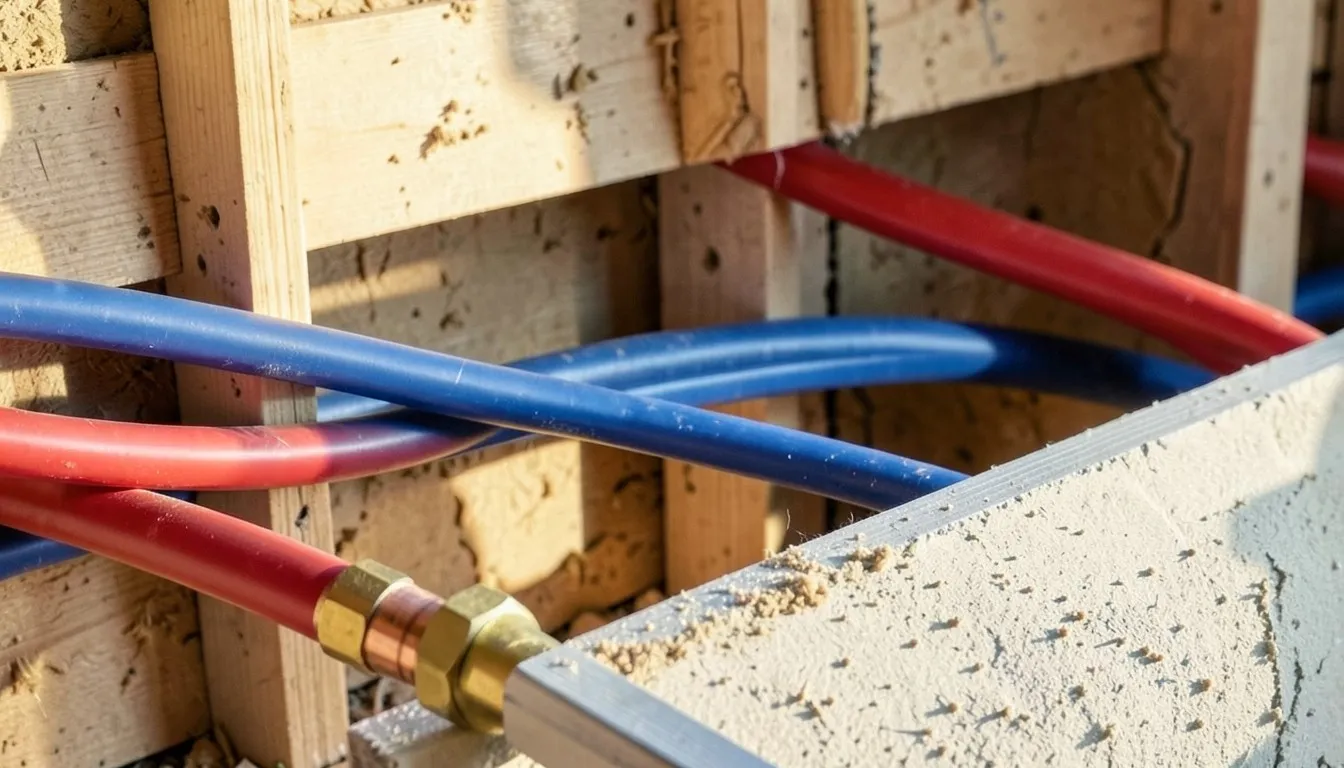
Galvanized supply lines and cast iron drain systems from the 1880s–1940s are past their 40–70-year design life across much of Dayton. Interior rust scale progressively narrows pipe bore. Plumbers here routinely scope supply lines before quoting any repair — the underlying pipe condition often makes full replacement more cost-effective than patching.
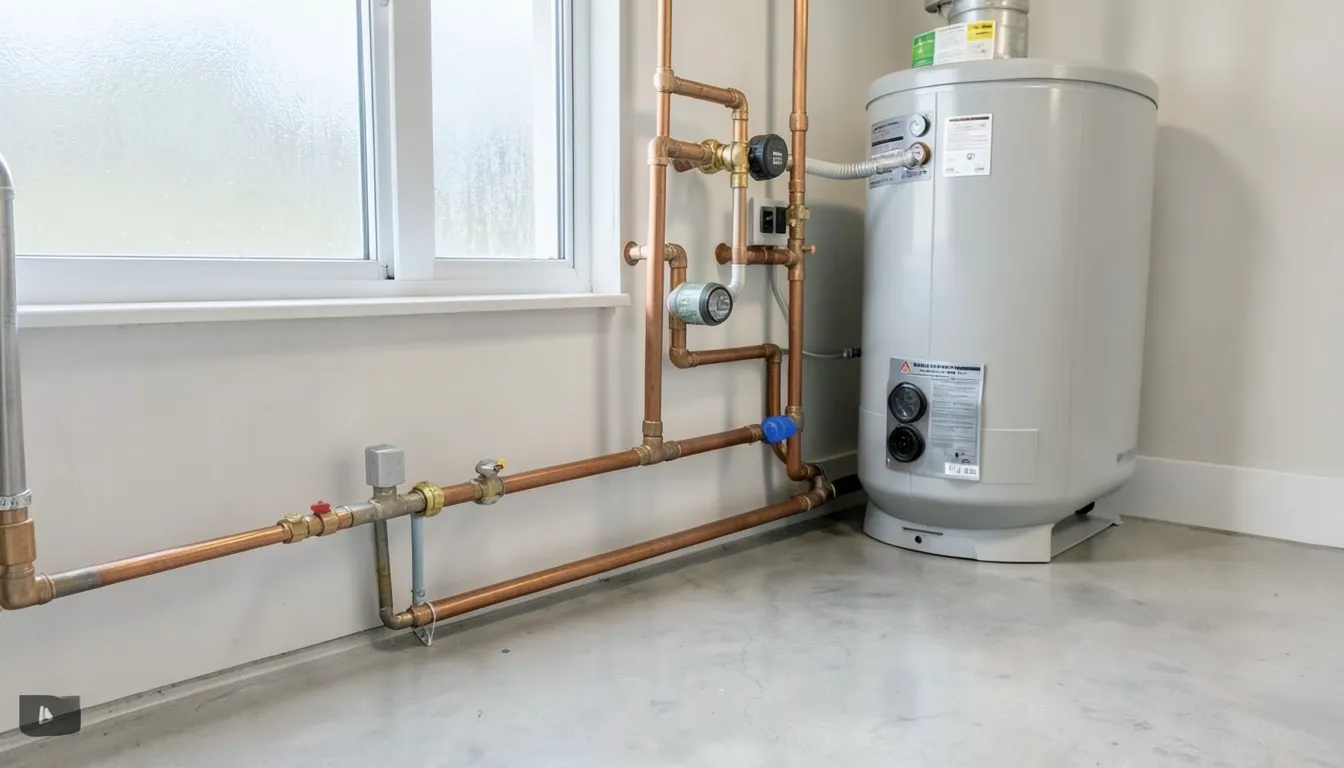
At 15–20+ GPG, calcium scale forces compressed equipment cycles in Dayton: tank heaters average 6–9 years vs. the 10–12-year national benchmark, and tankless units require annual descaling. Anode rods calcify within 12–18 months. Most plumbers here assess heater age against the local scale timeline — not the manufacturer's service life.
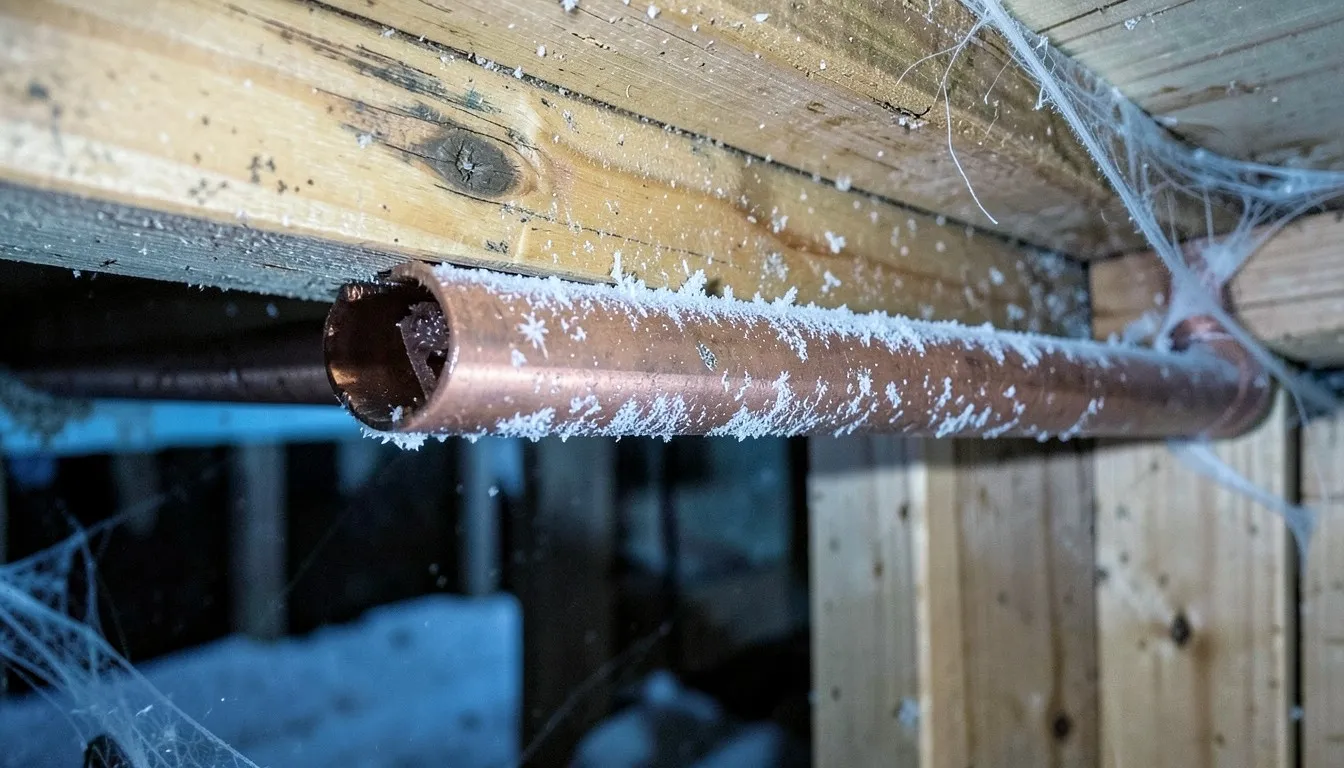
The primary surge in Dayton runs January–March, with a secondary wave at the spring thaw — when pipes that held through the freeze rupture as pressure is restored above 32°F. Scheduling competition peaks exactly when emergency calls are highest. Homeowners who wait for visible damage compete for the same limited plumber slots at the worst possible time.
Dayton: diagnose first, repair second
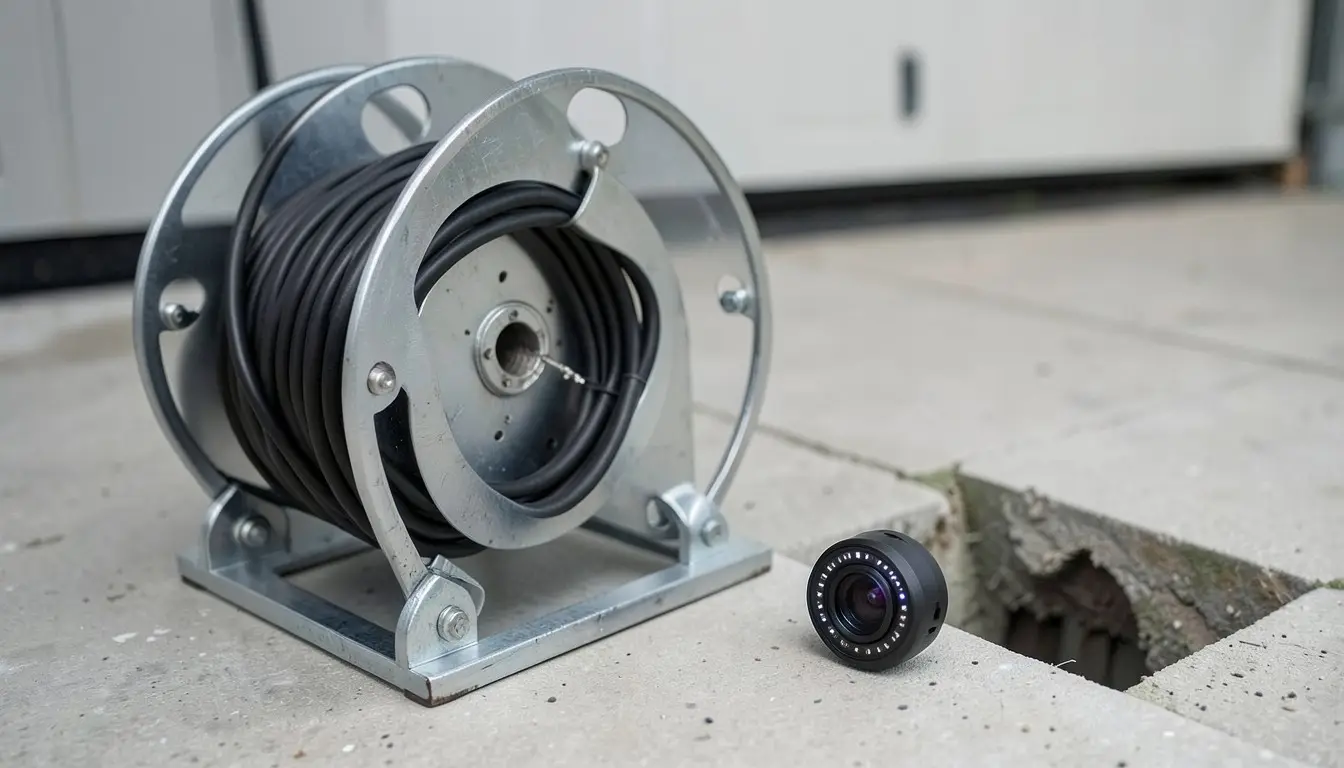
Describe the symptom — not the repair. AlertPlumber routes to an OH-licensed plumber trained in diagnostics. The site visit uses camera tracing, acoustic detection, or hydrostatic pressure testing — matched to the reported failure type.
The plumber delivers a written diagnostic report: confirmed failure location, available repair methods, and tradeoffs — disruption level, material durability, long-term cost, and whether a Dayton building permit applies to the selected method.
You select the repair path. The Ohio-licensed plumber proceeds on the authorized method with a fixed scope and price. Where required, the permit application to Dayton is handled by the contractor.
Sewer Line Repair cost calculator — Dayton
Pre-filled for sewer line repair in Dayton. Adjust the ZIP for a neighboring area, or change the service to compare. Calculator pulls from the city's scraped permit-fee + state plumber-density data.
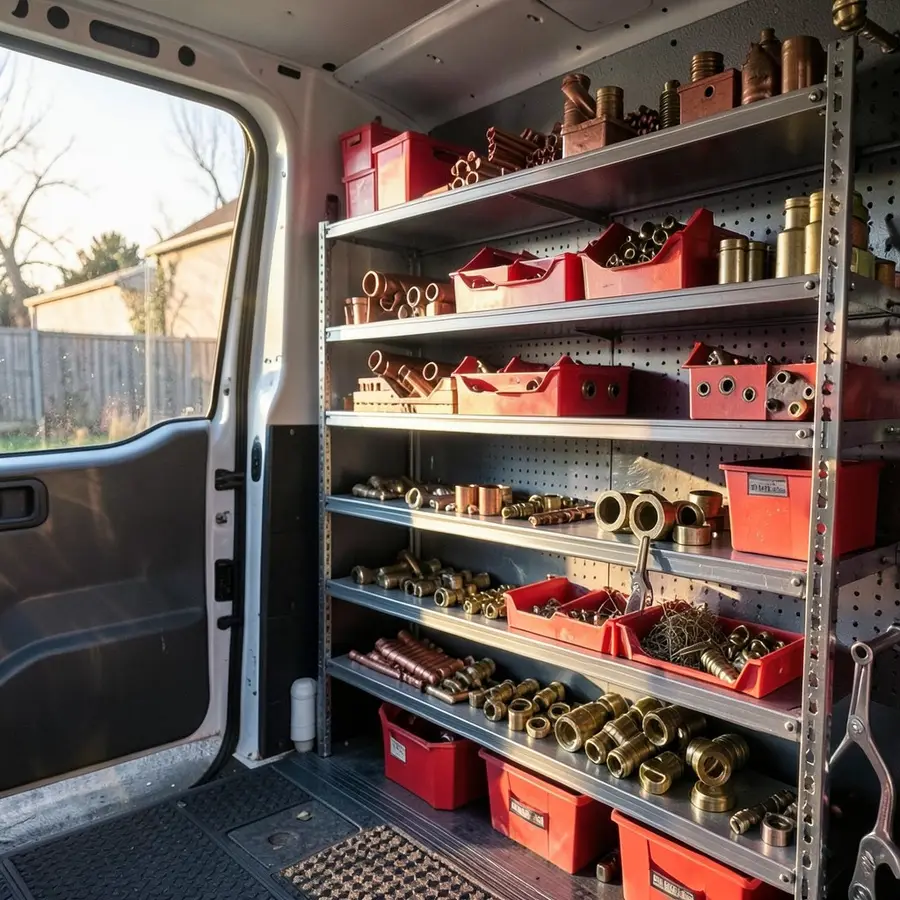
Sewer Line Repair in Dayton — the longer it runs, the more it costs.
Slow failures compound: soft pipe walls, root penetration, mineral buildup. A verified plumber calls back with a scope-first estimate before anything is dug up.
Sewer Line Repair in Dayton — frequently asked
What does sewer-line repair cost in Dayton on a Miami Valley pre-1940 home?
Dayton sewer-line repair pricing reflects the 79-year median build and the dominance of 1880s-1940s clay-tile laterals across Oregon District, St. Anne's Hill, South Park, McPherson Town, and Five Oaks. Spot-repair (single section, 6–12 feet of lateral excavation and replacement) on a Five Oaks 1910s craftsman runs $3,485–$5,985. Full traditional dig-and-replace on a 50–75 foot lateral run from house to Dayton DPW main tap runs $9,485–$16,985 depending on depth, paving disturbance, and the 32" frost-line excavation requirement. Trenchless pipe-bursting (PE pipe pulled through the existing lateral path) runs $11,485–$22,985 — preferred on St. Anne's Hill 1870s Italianates and Oregon District 1850s blocks where excavation through historic streetscape carries surface-restoration penalties. Cured-in-place pipe (CIPP) lining runs $9,485–$18,985 on viable host pipes that aren't fully collapsed. Lead-jointed service-line replacement under LCRR § 141.84 on Five Oaks LSL inventory runs $5,485–$9,485 with potential City of Dayton replacement assistance. The $75 City of Dayton Building Services permit plus $50 inspection apply on all replacement scope. AlertPlumber routes to an OH OCILB plumber with active Dayton municipal residential authorization.
How fast can a Dayton sewer-line crew arrive for an active backup with property damage?
Active-backup sewer-line emergencies (visible sewage in basement floor drain or yard surface) move to the highest priority tier. Realistic Miami Valley response by ZIP. Inside-city Dayton 45402, 45403, 45404, 45405, 45406, 45410, 45417: 95–145 minutes weekday business hours for a diagnostic crew, 145–225 minutes 2 a.m.–5 a.m. Repair excavation crew with equipment trailer follows in 6–18 hours depending on permit pull, utility locate, and equipment scheduling. Outer Montgomery County (Kettering, Centerville, Huber Heights, Trotwood, West Carrollton, Riverside, Moraine, Oakwood): 125–195 minutes for diagnostic, 24–48 hours for excavation crew. Wright-Patterson region (Beavercreek, Fairborn, base housing): 145–225 minutes for diagnostic, 36–72 hours for excavation since Greene County dispatch overlap with Montgomery County affiliates is thinner. The 120 annual freeze days and 32" frost line mean Dec–Feb excavation work requires thaw-mat staging that adds 24–48 hours to most jobs. AlertPlumber confirms diagnostic ETA on the callback and the matched plumber provides the excavation-crew schedule after the initial scope.
Do I need a Dayton permit for sewer-line repair and what's the City of Dayton process?
Yes. Any sewer-line repair beyond temporary spot patching requires a $75 City of Dayton Building Services plumbing permit plus a $50 inspection fee — both attach to dig-and-replace, pipe-bursting, CIPP lining, lateral replacement, and lead-jointed service-line replacement work. The verified plumber pulls the permit through City of Dayton Building Services Division on West Third Street, files the lateral location and pipe-material specification, and itemizes both fees separately on the written quote. The inspection is scheduled after excavation and before backfill — the inspector confirms pipe material, joint method, slope (1/4" per foot per IPC § 712), cleanout placement, and connection to the Dayton DPW main tap. Of the 3,420 residential permits Dayton issued in 2024, sewer-line permits average a 9–13 business day total cycle from filing to final inspection. Greene County addresses route through Greene County Building Department on a parallel schedule. Lead-jointed service line replacement may qualify for partial cost coverage under City of Dayton LCRR replacement assistance programs.
Why do Oregon District 1820s-1860s lateral taps fail and what's the typical replacement path?
The Oregon District is Dayton's oldest surviving residential district — 1820s-1860s Federal and Greek Revival stock connected to municipal sewer infrastructure that pre-dates standardized clay-tile manufacturing. Three lateral-failure modes dominate Oregon District calls. (1) Original lead-jointed bell-and-spigot clay tile. Pre-1880 laterals used poured-lead joint seals that crack and separate over 170+ years of soil cycling and freeze-thaw. The matched plumber identifies these failures via camera scope showing visible joint gaps and infiltration. (2) Tap-saddle deterioration at the DPW main. The tap connection where the lateral meets the municipal sewer was originally a mortared masonry saddle on pre-1890 mains — these saddles erode and the lateral-to-main connection becomes a chronic infiltration and root-intrusion point. (3) Lateral path under post-1913 surface restoration. The 1913 Great Miami flood drove citywide infrastructure rebuild and many Oregon District laterals were re-routed during the rebuild — original lateral paths shown on city plats don't always match the as-built configuration. Replacement strategy is typically trenchless pipe-bursting through the existing lateral path with new PE pipe and modern fusion-welded joints, plus a new cleanout at the property line to bring the home into IPC § 708 compliance. Trenchless preserves the historic district's brick streetscape that traditional dig-and-replace would tear up.
What's the Five Oaks LSL replacement scenario under the federal Lead and Copper Rule Revisions?
Five Oaks is one of Dayton's neighborhoods with elevated documented Lead Service Line (LSL) inventory among the 9,800 LSLs City of Dayton Department of Water reports under the federal LCRR § 141.84 service-line inventory rule. LSL replacement isn't strictly sewer-line work — it's the potable supply-side service line from the City of Dayton main to the home — but it's commonly bundled with sewer lateral replacement when excavation is already happening at the property line. Replacement options: (1) Full replacement from main to meter to the home's interior shut-off — the gold-standard approach per EPA LCR guidance, runs $5,485–$9,485 typical. (2) Partial replacement (city side only, leaving the homeowner-side LSL in place) — discouraged under LCRR because it can mobilize lead through joint disturbance. The City of Dayton may offer cost-share assistance for full LSL replacement under federal IIJA funding through the SRF program. The matched plumber coordinates the LSL replacement timing with the City of Dayton Department of Water inspector and provides post-replacement flushing protocol per EPA guidance.
Why are McPherson Town 1913-flood-era clay tile laterals failing now?
McPherson Town is a small pre-1913 enclave of two-story Italianates with stone foundations and cast-iron stacks. The 1913 Great Miami flood drove the largest civic-infrastructure rebuild in Ohio history — McPherson Town's lateral system was extensively re-laid in the immediate post-1913 reconstruction with the era's standard vitrified clay tile and lead-and-oakum bell-and-spigot joints. That stock is now 110+ years into service and three failure mechanisms dominate. (1) Joint separation from cumulative soil cycling. 110+ years of clay-soil shrink-swell cycles around the lateral path have separated 30–50% of the original bell-and-spigot joints by more than 1/4 inch, creating chronic root-intrusion and groundwater-infiltration points visible on camera scope. (2) Mid-pipe cracking from 1937 and later flood-event stress. Post-1913 flood-control improvements weren't complete until the 1922 Miami Conservancy District levee system was fully built — lateral stress from the 1937 Ohio River basin flood and subsequent high-water events accumulated in the McPherson Town lateral inventory. (3) 1913-rebuild debris legacy. Silt and debris from the original 1913 flood embedded in lateral bellies periodically re-mobilizes under high-flow events. Replacement strategy is typically full lateral replacement via trenchless pipe-bursting since spot-repair on this stock recurs within 24–48 months.
Will my Ohio HO-3 cover sewer-line repair damage in Dayton?
Standard Ohio HO-3 policies don't cover the sewer-line repair labor itself but typically cover consequential water and sewage damage (drywall, finished-basement contents, flooring, contents) when a lateral failure backs up into the dwelling — only with the sewer/drain backup endorsement, which is sold separately and not automatic on most Dayton policies. Three coverage-specific considerations for Dayton owners. (1) Underground service-line endorsement (separate from sewer backup) covers the lateral pipe itself — increasingly important for Oregon District, McPherson Town, and South Park stock where lateral replacement runs $9k–$22k. This endorsement runs $40–$90/year for $10k–$25k coverage and is widely available on Ohio HO-3 forms. (2) Service-line interruption coverage covers temporary housing and food-spoilage costs during multi-day excavation work. (3) 1913-flood-era exclusions. Pre-1913-rebuild McPherson Town and downtown Dayton laterals are sometimes excluded from underground-service-line coverage under newer carrier policy language citing "ancient infrastructure" — read the schedule before assuming coverage. Documentation requirements: NASSCO PACP-format camera scope showing failure mode, itemized excavation invoice, permit and inspection records, photographs of conditions before remediation. Submit within the 14–30 day window your specific carrier mandates.
Pipe-bursting, CIPP lining, traditional excavation, or spot repair — how does the Dayton plumber choose?
Method selection follows a scope-driven decision tree for Dayton lateral work. Spot repair (excavate and replace a single 6–12 foot section) when NASSCO PACP scope shows one localized failure — a single offset joint, a single crushed section, a single root-mass intrusion — and the rest of the lateral grades 1 or 2. Runs $3,485–$5,985 typical, fastest turnaround. Traditional dig-and-replace for the full lateral when (a) multiple failure points along the run, (b) lateral pitch is wrong and needs re-grading, or (c) lateral material is original 1880s-1910s clay tile rated grade 4 or 5 across most of its length. Runs $9,485–$16,985, requires the longest property disturbance window. Trenchless pipe-bursting (PE pipe pulled through existing path with a bursting head) for Oregon District, St. Anne's Hill, and McPherson Town historic-district properties where surface restoration on brick streetscape, original sidewalks, or mature 80+ year trees makes traditional excavation prohibitive. Runs $11,485–$22,985 but preserves historic surface conditions. CIPP cured-in-place pipe lining for laterals where the host pipe still maintains structural integrity but has hairline cracks, minor offsets, or surface deterioration — the resin-saturated felt liner inverts through the host pipe and cures into a new pipe-within-pipe. Runs $9,485–$18,985. NASSCO PACP grade 4 or 5 disqualifies CIPP because the host pipe can't support the lining process — pipe-bursting or dig-and-replace are the only options at that grade.
How does AlertPlumber confirm a Dayton plumber holds the right credentials for sewer-line replacement?
Sewer-line replacement is the most credential-sensitive Dayton plumbing scope because it crosses both interior building plumbing (regulated by the City of Dayton Building Services Division) and exterior public-right-of-way work where the lateral connects to the municipal main (regulated by the Dayton Department of Public Works under separate municipal authorization). Ohio's split credential framework requires: state-level Ohio OCILB Construction Industry Licensing Board commercial plumbing credential (roughly 5,800 active statewide) for the trade work, plus active City of Dayton municipal residential registration for the work address, plus a Dayton Department of Public Works right-of-way permit if excavation crosses into public right-of-way for the main tap connection. For Greene County addresses (Beavercreek, Fairborn, Wright-Patterson region), the parallel credential is Greene County residential registration plus county engineer right-of-way authorization. AlertPlumber routes sewer-line calls to plumbers documented as holding all three layers of authorization for the work address. Confirm OH OCILB status through the Ohio Department of Commerce industrial compliance lookup and municipal authorization through City of Dayton Building Services before authorizing excavation work.
What Dayton ZIP codes does AlertPlumber cover for sewer-line repair calls?
AlertPlumber's Miami Valley sewer-line dispatch grid covers the full 137,644-resident City of Dayton footprint plus the Montgomery County and Greene County suburban rings. Inside-city ZIPs: 45402, 45403, 45404, 45405, 45406, 45410, 45417 (downtown core, Oregon District, McPherson Town, St. Anne's Hill, South Park, Five Oaks, Belmont, west-side). Montgomery County ring: 45414, 45415, 45419, 45420, 45424, 45426, 45429, 45439, 45449, 45458 (Kettering, Centerville, Huber Heights, Trotwood, West Carrollton, Riverside, Moraine, Oakwood). Wright-Patterson region in Greene County: 45431, 45432, 45433, 45434 (Beavercreek, Fairborn, base housing). 99% of Dayton-metro addresses connect to municipal sewer — the rare exceptions are fringe Greene County and Montgomery County properties on private on-site wastewater systems. The 9,800 documented LSLs under LCRR concentrate in the 454xx inside-city blocks and lateral replacement work in those blocks is commonly bundled with LSL replacement when excavation is already at the property line. Local context. Miami Valley atop the Great Miami Buried Valley Aquifer (EPA-designated sole-source under SDWA § 1424(e)), 15 gpg very hard water at $3.85 per 1,000 gallons, 120 freeze days, 32" frost line. City of Dayton Department of Water is the operating utility for inside-city addresses with Montgomery County and Greene County districts handling suburban service.
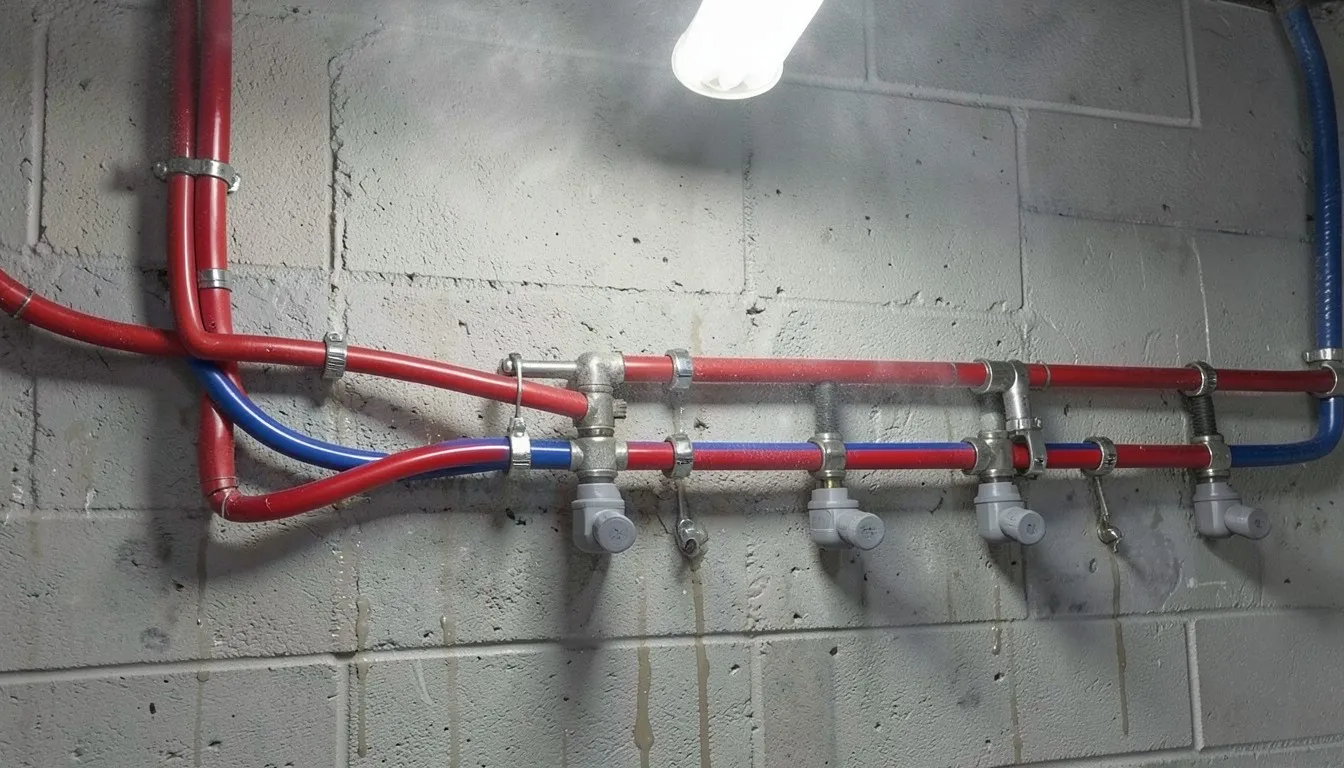
The fix gets cheaper the sooner a plumber sees it.
Degradation problems compound quietly. Call now, or use the form below and a licensed Ohio plumber calls you back with a no-obligation estimate for the sewer line repair.

Request a sewer line repair callback in Dayton
In a meeting, with the kids, or just prefer not to hold? Drop your ZIP and number below. AlertPlumber routes your request to a verified plumber in your area — they’ll call you back directly.
- 1 Submit your info. ZIP, phone, and what kind of work you need.
- 2 AlertPlumber matches you with a verified plumber serving your area.
- 3 The plumber calls you back with a written estimate, no obligation.
Sewer Line Repair in Dayton — catch it early
Degradation-driven failures worsen over time and cost more to fix the longer they run. A verified OH plumber in Dayton diagnoses your specific condition and provides a written scope before any work begins.