
Galvanized Pipe
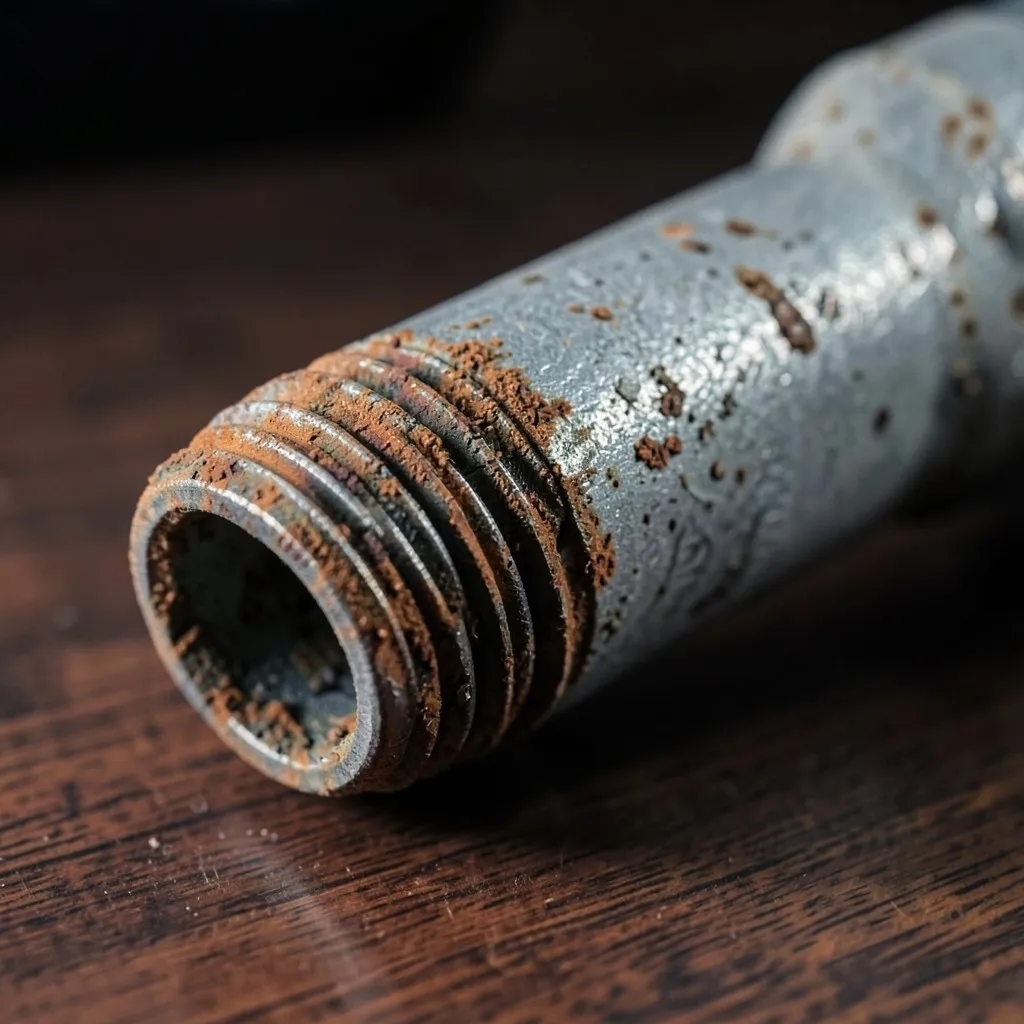
Galvanized pipe is steel pipe coated with a layer of zinc to slow corrosion. From the 1880s through the early 1960s it was the dominant water supply material in American homes, replacing lead and preceding copper as the standard. While the zinc coating effectively protects the exterior from rust, the interior of the pipe is exposed to water and gradually deteriorates from the inside out. By the time most galvanized systems reach 50 to 70 years of age, the interior is heavily scaled, the original bore is significantly restricted, and the joints are leaking or about to.
Identification: Galvanized pipe has a distinctive dull silver-gray color when new and weathers to a darker gray with rust spots over time. It is connected exclusively with threaded fittings, never soldered or glued, and the joints use cast iron or galvanized steel couplings, elbows, and tees. Pipe diameters in homes typically range from 1/2 inch to 1 inch for branches and 3/4 inch to 1-1/4 inch for trunk lines. A simple field test is to scratch the surface with a screwdriver: galvanized reveals silver-gray steel underneath, while copper reveals reddish-brown copper. A magnet sticks to galvanized but not to copper or brass.
Lifespan and failure modes: Typical service life is 40 to 60 years, though water chemistry and pressure can extend or shorten that significantly. The dominant failure modes are interior scaling that chokes flow at fixtures (especially hot water lines, where the high temperature accelerates mineral deposition), pinhole leaks through the pipe wall as rust eats through from the inside, and joint failures where water seeps from threaded connections. A secondary concern is lead leaching: galvanized pipe installed before the 1986 federal ban on lead solder and lead-bearing fittings can absorb and slowly release lead from the original coating impurities and from any upstream lead service line.
Replacement framing: Spot repairs to galvanized systems are rarely cost-effective because adjacent sections typically fail within months. A whole-house repipe in copper or PEX is the standard remediation. Costs vary widely by region, home size, and access, but typical residential repipes run $4,500 to $15,000 for a single-family home. Triggers for repipe include reduced flow at upper-floor fixtures, rust-colored water on first draw in the morning, repeated pinhole leaks, or any planned renovation that opens walls.
Code reference: The International Plumbing Code no longer lists galvanized as an approved water supply material in new construction (IPC Section 605.3). The EPA Lead and Copper Rule (40 CFR Part 141 Subpart I) governs the public-water-side requirements for lead exposure where galvanized pipe is part of the service line.
Researching the term is one thing — hiring for it is another. See whole-home repipe services for scope, timelines, and what drives the price, or call (484) 603-3302 for a no-cost estimate.
Related terms
Sources
Whole-Home Repipe — verified plumbers available
AlertPlumber matches you with a licensed plumber for whole-home repipe. Written estimate before any work begins.