
Drain Cleaning: The Complete Guide
How professional drain cleaning works — snake vs. hydro jetting, main line vs. branch, cost by method, when cleaning isn't enough. Sourced data.
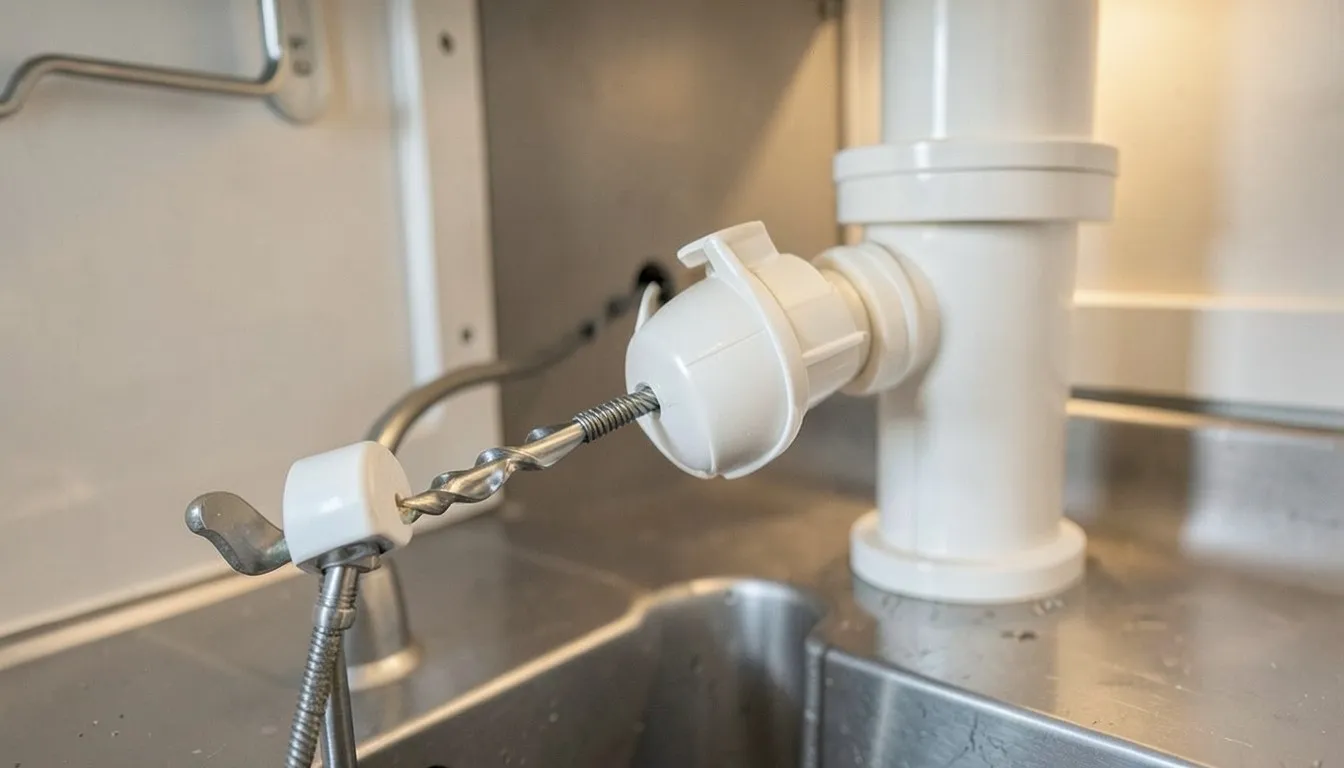
Professional drain cleaning costs $150–$900 depending on method and drain type: mechanical snaking runs $150–$350 for a branch drain; hydro jetting runs $350–$900 for a residential main sewer line per BuildZoom 2024 contractor data. Single-fixture slow drains are branch drain problems. Multiple fixtures backing up simultaneously indicates a main sewer line blockage that requires professional access through the cleanout per IPC § 708. A camera inspection before jetting any line over 20 years old is standard practice per NASSCO jetting standards.
What is professional drain cleaning?
Professional drain cleaning is the mechanical or hydrostatic removal of blockages, buildup, and debris from residential drain, waste, and vent (DWV) systems. Unlike DIY chemical treatments or plunging, professional drain cleaning uses specialized equipment — cable drain machines, hydro jetting units, and video inspection cameras — to physically clear or scour pipes rather than dissolving partial clogs.
The DWV system is a separate network from supply plumbing. Per IPC Chapter 7 (sanitary drainage), the sanitary drainage system carries waste from fixtures (sinks, toilets, tubs, showers, dishwashers, washing machines) through branch drains to a main building drain, which exits the structure via a sewer lateral to the municipal sewer or private septic tank. Vent pipes run from drain lines up through the roof, allowing air movement to prevent vacuum locks that would stop drainage. Professional drain cleaning may address any part of this network — from a single fixture branch to the full main sewer lateral.
The three professional methods
- Mechanical snaking (cable drain machines) — A rotating steel cable is fed into the drain until it reaches the blockage. An auger head at the tip either punctures through the clog or hooks into it. Standard drum machines handle branch drains (1¼" to 3"). Sectional machines handle 3" to 6" main sewer lines. Per NASSCO equipment classification guidelines, cable diameter must match pipe diameter — undersized cable misses pipe walls; oversized cable risks getting stuck.
- Hydro jetting (high-pressure water jetting) — A hose with a specialized nozzle is inserted into the pipe via cleanout and high-pressure water (1,500–4,000+ PSI residential) is pumped through. Forward-facing and rear-facing jets cut through and flush debris downstream. Per NASSCO jetting standards, jetting scours the pipe interior — it removes scale, grease film, and root debris that snaking cannot. The result is a cleaner pipe, not just a cleared path.
- Enzymatic/biological treatment — Monthly maintenance products, not emergency cleaning. Live bacteria or enzymatic concentrates digest organic waste accumulation slowly over weeks. Per EPA SDWA guidance, enzymatic products are non-corrosive and safe for pipes and septic systems, but they cannot clear an active blockage.
Branch drain vs. main sewer line: the critical distinction
The most important diagnostic decision in drain cleaning is whether the problem is in a branch drain or the main sewer line. Branch drains serve individual fixtures — the 1¼"–2" line under a bathroom sink, the 3" branch from a toilet, the 2" line from a tub or shower. The main sewer line is the 4" or 6" pipe (in most residential construction per UPC § 703) that runs from where all branch drains converge to the city connection or septic tank.
This distinction matters because: a branch drain clog affects only one fixture or fixture group; a main sewer line clog backs up multiple fixtures simultaneously. Main sewer line work requires access through the cleanout per IPC § 708 and typically costs 50–100% more than branch drain work because of the longer cable run and larger machine required per BLS plumber labor benchmarks.
What causes drain blockages, and how are they treated?
Not all drain blockages respond to the same treatment. The cause determines the correct method — and whether cleaning alone will resolve the problem.
Fats, oils, and grease (FOG) — kitchen drains
FOG is the primary cause of kitchen drain clogs. Hot grease poured down a drain travels a few feet before cooling and solidifying against pipe walls. Per EPA combined sewer overflow guidance on FOG, FOG contributes to approximately 47% of all sanitary sewer overflows in the US annually. FOG responds well to hydro jetting, which melts and flushes the grease. Snaking typically punches a hole through FOG without removing it from pipe walls — the clog recurs within weeks. For heavy FOG accumulation, hydro jetting is the preferred treatment per NASSCO jetting protocol for FOG.
Hair and soap scum — bathroom drains
Hair binds with soap residue to form fibrous mats in shower and tub drains. These typically occur at the drain screen or in the P-trap within the first 12–18 inches of the drain line. A hair removal tool, plunger, or short snake run can clear them. Hair deeper in the branch responds well to snaking. Hydro jetting for a simple hair clog is cost-excessive per BuildZoom drain cleaning method benchmarks.
Tree root intrusion — main sewer line
Tree roots enter sewer pipes through joint separations, existing cracks, or construction access points. Per NASSCO Pipeline Assessment Certification Program, root intrusion is the most common finding in sewer camera inspections for homes 20+ years old with clay or cast iron laterals. Root intrusion is a two-stage problem: (1) roots must be mechanically cut with a root-cutting auger; (2) severed root debris must be flushed downstream with jetting. Snaking alone typically only cuts an opening through the roots without removing them, leading to re-growth within months. Per AWWA water loss and infrastructure condition reporting, roots entering at joint separations indicate a repairability limit — recurring root intrusion at the same joint almost always requires CIPP lining or pipe bursting to permanently seal the entry point.
Mineral scale — hard water markets
In hard water markets (USGS water hardness data by aquifer — groundwater hardness above 7 GPG affects roughly 85% of US households), mineral scale accumulates in drain lines over time. Hydro jetting is the preferred descaling method — the high-pressure stream physically removes mineral deposits that chemical treatments can't reach in drain lines.
Foreign objects
Flushed items (wipes, cotton swabs, dental floss, toys) and dropped objects create instant or gradual blockages. Per CPSC consumer product safety guidance, "flushable" wipe products are a documented contributor to sewer blockages — the CPSC has issued guidance on the gap between labeling and actual municipal system compatibility. Foreign object blockages typically require snaking to hook and retrieve the item.
Structural failures cleaning cannot fix
- Pipe belly (negative grade) — A section of pipe has settled below the drain line, creating a low spot where waste accumulates. Jetting temporarily flushes the belly but it refills over weeks. Repair (excavation and re-grading, or CIPP lining) is the only permanent fix per NASSCO PACP defect classifications.
- Offset joints — Pipe sections have shifted out of alignment. Debris catches repeatedly at the lip. Minor offsets can sometimes be managed; severe offsets create progressive blockage per NASSCO joint assessment standards.
- Collapsed pipe — Structural failure common in orangeburg, severely corroded cast iron, or clay with ground settlement. No amount of cleaning fixes a collapsed section — only excavation and replacement or pipe bursting per UPC § 714 rehabilitation requirements.
- Orangeburg pipe — Fiber-reinforced bitumen pipe used 1940s through early 1970s. It deforms into an oval cross-section over decades. High-pressure jetting can further collapse orangeburg — camera inspection is required before any jetting attempt per NASSCO pipe rehabilitation technology standard.
What are the signs you need drain cleaning?
Most drain problems develop gradually. Recognizing early signs prevents emergency calls and water damage.
Slow drain — single fixture
A single fixture draining slowly is almost always a localized branch drain problem — hair/soap accumulation in the P-trap or first 12–24 inches of the line. Note: a "slow drain" that also emits sewer odor may be a P-trap seal problem rather than a clog — per IPC § 1001 (trap requirements), all fixtures require a P-trap water seal.
Slow drain or backup — multiple fixtures
Multiple slow or backed-up fixtures simultaneously — especially when fixtures on different floors or in different rooms are affected — is the primary indicator of a main sewer line blockage. Per NASSCO residential drain diagnostic guidelines, when the kitchen sink backs up while the washing machine runs, or the first-floor toilet backs up when the second-floor shower drains, the blockage is in the main sewer lateral.
Gurgling sounds
Gurgling in a drain when water runs in a nearby fixture indicates a venting or drainage restriction. Per IPC Chapter 9 (vents), drain lines require adequate venting to allow air in as water exits — without venting, negative pressure can siphon out P-trap water seals, creating both gurgling sounds and sewer gas access to the interior.
Sewage odors
- Dry P-trap — A rarely-used drain whose P-trap has dried out. Fix: pour a gallon of water down the drain monthly. Not a blockage problem — does not require cleaning.
- Venting failure — A blocked vent stack allows sewer gas to be pulled into the home. Requires camera or smoke test diagnostic.
- Organic blockage — Decomposing hair or grease in a partially blocked drain emits hydrogen sulfide. Professional cleaning resolves this per CDC waterborne disease and sanitation guidance.
- Sewer line damage — Cracked or offset pipe below grade can allow sewer gas migration. Camera inspection is required.
Sewage backup into fixtures
Water or sewage appearing in fixtures during use elsewhere — shower fills with water when toilet is flushed — is a main line emergency. Per IPC § 708 (cleanout requirements), immediate professional service is warranted. Sewage overflow creates both a health hazard and significant water damage.
The water meter test
- Turn off all water-using appliances and fixtures.
- Note the meter reading and the leak indicator dial.
- Wait 15 minutes without using any water.
- If the indicator moved, water is actively moving through the supply system — indicating a supply-side leak, not typically a drain issue.
Per EPA WaterSense water audit guidance, the meter test identifies supply leaks; it doesn't directly detect drain blockages. But if the meter is clean and multiple fixtures drain slowly, the main sewer line is the most likely culprit.
Urgency tiers
- Immediate (same day): Active sewage backup into fixtures, toilet won't flush, main line completely blocked.
- Schedule within 48 hours: Multiple slow fixtures, recurring clogs in the same drain within weeks, drain odors not resolved by flushing P-traps.
- Monitor or schedule routine: One gradually-worsening slow fixture, minor hair clog a plunger partially cleared.
Drain snake vs. hydro jetting: complete comparison
The two primary professional drain cleaning methods have different strengths, costs, and application ranges.
How drain snaking works
A cable drain machine uses a rotating steel cable to mechanically break up or hook blockages:
- Drum machines — Handle 1¼"–3" branch drains. Cable lengths 25–75 feet. Auger heads: C-spiral (general debris), bulb head (soap/hair), spade head (pushing through). Standard for bathroom and kitchen branch drains per NASSCO equipment sizing guidelines.
- Sectional cable machines — Handle 3"–6" main sewer lines. Cable added in sections for 75–300+ foot runs. Auger heads include root-cutting heads with blades or chains. Standard for main sewer lateral work per NASSCO main line equipment standards.
What snaking does well: Punctures through soft organic blockages, retrieves foreign objects, cuts through root masses.
What snaking doesn't do well: Creates a path through the blockage but does not remove debris from pipe walls. After snaking a grease-blocked main line, the walls still have grease accumulation — the clog recurs faster than after jetting.
How hydro jetting works
A hydro jetter pumps water at 1,500–4,000 PSI through a flexible hose inserted via cleanout. Specialized nozzles have forward-cutting jets and rear-facing propulsion jets that push the hose upstream and move debris downstream. Per NASSCO jetting standards and nozzle specifications, nozzle selection is critical: a debris-flush nozzle will not effectively cut roots; a root-cutting nozzle is not optimal for FOG.
Residential hydro jetting PSI ranges:
- Light soft blockage (kitchen sink, tub) — 1,500–2,000 PSI
- Heavy FOG in 4" main line — 2,500–3,500 PSI
- Root debris removal (post root-cutting) — 3,000–4,000 PSI
PSI safety by pipe material
Per NASSCO pipe material compatibility standards for jetting, pressure must match pipe condition:
- Schedule 40 PVC (good condition) — 3,500+ PSI, no concern.
- Cast iron (good condition) — 2,500–3,500 PSI standard; avoid impact nozzles on joints.
- Clay tile (good condition) — 2,000–2,500 PSI. Camera inspection required first — hairline cracks may worsen under pressure.
- Orangeburg — DO NOT JET. High-pressure water further collapses orangeburg. Camera inspection required before any cleaning attempt.
- Heavily corroded cast iron — Low-pressure flush only (1,000–1,500 PSI); full jetting force can break through corrosion pockets.
| Pipe Material | Safe Jetting Pressure | Note |
|---|---|---|
| Schedule 40 PVC (good condition) | 3,500+ PSI | No concern |
| Cast iron (good condition) | 2,500–3,500 PSI | Avoid impact nozzles on joints |
| Clay tile (good condition) | 2,000–2,500 PSI | Camera inspection required first — hairline cracks may worsen under pressure |
| Orangeburg | Do not jet | High-pressure water further collapses orangeburg; camera inspection required before any cleaning attempt |
| Heavily corroded cast iron | 1,000–1,500 PSI (low-pressure flush only) | Full jetting force can break through corrosion pockets |
This is why reputable plumbers require a camera inspection before hydro jetting any line over 20 years old per NASSCO pre-jetting inspection requirement.
The "clearing vs. cleaning" distinction
Industry shorthand: snaking clears a drain; hydro jetting cleans a drain. Clearing means a path is open and water flows. Cleaning means the pipe interior is restored to near-original condition. Both are legitimate — the right choice depends on blockage type, pipe condition, and how long you want the result to last per NASSCO service level definitions. For a hair clog you get every six months, clearing is sufficient. For a FOG-blocked kitchen line you want clean for 2+ years, the additional jetting cost is typically lower than 2–4 future service calls over the following years per BuildZoom drain cleaning ROI analysis.
Compare both methods in detail at the hydro jetting vs. drain snake comparison guide.
What happens during a professional drain cleaning visit?
Understanding the professional process helps you evaluate the service you're receiving and ask informed questions.
Step 1: Diagnostic assessment
Before any equipment is run, a licensed plumber should assess: which fixtures are affected (branch vs. main line distinction), when the problem started and how it's progressed, prior drain work history, home age and pipe material (for PSI safety in jetting), and cleanout location and accessibility per IPC § 708 cleanout access requirements. If no accessible cleanout exists, the plumber must plan for toilet removal or roof vent access (higher cost).
Step 2: Camera inspection (when required)
A camera inspection before cleaning is standard of care for main sewer line work and for any recurring blockage. The NASSCO Pipeline Assessment Certification Program (PACP) defines a standardized rating system used by certified inspectors to classify pipe condition and defects. Key findings that affect cleaning approach:
- Root presence and density — Determines auger head selection and whether post-cut jetting is needed.
- Pipe material and condition — Determines safe jetting pressure (or whether jetting is contraindicated).
- Structural defects — Cracks, collapses, severe offsets may indicate that cleaning alone cannot fix the problem.
- Blockage location — Knowing exact footage from the camera enables efficient treatment and verification afterward.
Camera inspection is typically billed separately ($100–$250) or bundled with cleaning per BuildZoom drain camera inspection cost data.
Step 3: Method selection and cleaning
Based on assessment and camera findings, the plumber selects method, equipment, and auger/nozzle type. Snaking a 3" bathroom branch takes 20–40 minutes. Hydro jetting a residential main sewer line takes 45–90 minutes including setup. Complex jobs with root cutting, post-cut flushing, and verification camera runs can take 2–3 hours.
Step 4: Post-cleaning verification
After cleaning, a professional plumber should: run water from affected fixtures to verify flow rate restoration; perform a second camera pass on main line work; identify any structural findings requiring follow-up; and document the service with a written report for main line work. Per NASSCO post-service reporting standards, NASSCO-certified inspectors provide camera footage and PACP defect coding to the property owner on request.
Red flags — what a professional should NOT do
- Hydro jet without camera inspection first on an older home
- Recommend repair immediately without attempting cleaning first (unless camera clearly shows structural failure)
- Provide only a verbal quote with no written documentation
- Not verify flow restoration after cleaning
- Use a residential-grade handheld snake on a main sewer line (insufficient cable diameter and torque per NASSCO equipment specification standards)
Is it a main sewer line clog or a branch drain clog?
Getting this diagnostic call right is the most important step in drain cleaning — wrong diagnosis means treating the wrong problem.
Anatomy: how residential drain systems flow
Per IPC Chapter 7 (sanitary drainage system design), the system works like this:
- Fixture branches — Individual drain pipes from each fixture (sink: 1¼"–2", toilet: 3", tub/shower: 1½"–2").
- Soil/waste stack — Vertical pipe (3"–4") collecting branches and carrying waste down to the building drain.
- Building drain — Horizontal pipe at the stack base. Minimum ¼" drop per foot per UPC § 708 slope requirements.
- Sewer lateral — The pipe from the building to the municipal sewer main (typically 4"–6"). Most subject to root intrusion and structural age failures.
Diagnostic: branch clog vs. main line clog
The cardinal rule: one fixture slow = branch problem; multiple unrelated fixtures slow or backing up = main line problem.
- Run the washing machine — if the toilet gurgles or floor drains bubble, the main line is restricted.
- Flush the toilet — if water comes up in the tub or shower, the main line is blocked.
- Run the kitchen sink — if only the sink backs up, it's a kitchen branch issue.
- Check basement floor drains — the lowest fixture shows main line backup first per IPC § 412 (floor drains).
Cleanout access: what it is and where to find it
Per IPC § 708 (cleanouts), code requires cleanout access points at specific intervals. The cleanout is a capped access port allowing cable insertion or camera inspection without removing a toilet. Common locations:
- Near the foundation inside (utility room, garage, crawlspace) — access to the building drain just before it exits the home.
- Near the foundation outside (in the yard) — access to the sewer lateral between the home and municipal connection.
Homes built before cleanout code requirements may have no accessible cleanout — access is then through a pulled toilet or roof vent, adding $75–$200 to the service call per BuildZoom cleanout access cost factors.
Tree root intrusion: timeline and entry mechanics
Per NASSCO root intrusion analysis, root intrusion typically begins at joint separations in clay tile or cast iron pipes. Initial root entry is microscopic — hair-fine tendrils penetrate cracks too small to see in a camera. Over 2–5 years, those roots expand inside the pipe, eventually forming masses that intercept waste and cause progressive blockage. Trees most frequently implicated per AWWA water main root intrusion data: willow (most aggressive), oak, poplar, maple, and large shrubs with deep root systems. The risk radius is typically 1.5× the mature tree height.
When main line cleaning isn't enough
Camera findings that indicate cleaning alone cannot resolve the problem: joint separation where roots are entering (roots regrow without sealing the joint); pipe belly creating a permanent low-accumulation point; collapsed pipe section; multiple structural defects across the lateral length. In these cases, NASSCO rehabilitation technology selection guidance recommends PACP assessment findings to determine whether CIPP lining, pipe bursting, or open-cut replacement is appropriate. See the complete sewer line repair guide for the decision framework.
Should you DIY drain cleaning or call a professional?
Not every drain problem requires a plumber. Understanding the honest scope and limitations of DIY options saves money on small issues while preventing costly mistakes on main line problems.
Chemical drain cleaners: what they do and why they fail
Chemical drain cleaners (Drano, Liquid-Plumr) use one of two active chemistries:
- Caustic (lye/sodium hydroxide) — Generates heat and dissolves hair and grease. Works on partial soft organic blockages in accessible P-traps. Per EPA water quality and drain product safety guidance, caustic cleaners can cause chemical burns on skin and eyes, warp PVC plastic traps, and create fumes in poorly ventilated spaces.
- Oxidizing (sodium hypochlorite/bleach-based) — Weaker formula; better for maintenance than active clearing.
The fundamental failure of chemical cleaners: they work only on material at the front of the blockage — rarely penetrating deeper than 18–24 inches from the drain opening. Repeated chemical treatment creates a false-resolution cycle where the drain clears temporarily, the homeowner considers the problem solved, the blockage rebuilds, and the cycle repeats without removing the underlying accumulation per NASSCO drain chemical treatment effectiveness data.
Plunging: correct technique and scope
A plunger creates hydraulic pressure — push and pull — to loosen a blockage. Correct technique:
- Cover the overflow drain with a wet rag — redirects hydraulic pressure toward the clog rather than venting through the overflow.
- Add enough water to submerge the plunger cup.
- Deliver sharp, rapid push-pull strokes — hydraulic shock is what moves the clog.
- Pull up sharply at the end to release pressure.
Appropriate for: toilet clogs from waste/paper localized in the trap; sink clogs where a partial blockage hasn't fully set. Not appropriate for: main sewer line blockages (the clog is too far downstream), root intrusion, solid objects, or deeply-set blockages.
Handheld drain snakes (DIY/rental)
Inexpensive handheld crank snakes (25–50 feet, 3/16"–¼" cable) can clear hair and soft soap clogs in bathroom drain branches. Limitations:
- Cable diameter too small for main sewer work — insufficient torque to penetrate heavy blockages or cut roots.
- Short cable limits access to the first 25–50 feet — insufficient for sewer lateral work (typically 40–150+ feet from cleanout).
- Risk of cable tangling or breaking in older corroded pipes per NASSCO DIY equipment safety guidance.
When to call a professional — non-negotiable scenarios
- Multiple fixtures affected simultaneously
- Main sewer line backup
- Recurring clog in the same drain within weeks despite clearing
- Any sewer drain odor throughout the home (not just from a specific fixture)
- Sewage appearing in unexpected places (floor drains, washing machine, bathtub)
- Home with unknown pipe material or over 40 years old
The cost comparison: DIY cycle vs. one professional cleaning
For a recurring kitchen branch clog: four bottles of chemical cleaner over 18 months (~$40) vs. one professional hydro jet ($400). The jetting removes the grease buildup entirely — the cycle doesn't restart. Per BuildZoom drain cleaning cost cycle analysis, homeowners who invest in a professional jetting service on a historically-recurring drain average 2.3 fewer professional service calls over the following 3 years. The jetting typically pays for itself within 18 months.
What does drain cleaning cost?
Drain cleaning pricing varies based on method, drain type and access, geographic labor market, and emergency vs. scheduled service.
Service call pricing structure
Most residential drain cleaning is quoted flat-rate. If quoted hourly for simple drain cleaning, ask for a flat-rate estimate instead. Per BLS Occupational Employment Statistics — plumbers, the median national hourly wage for plumbers is approximately $59/hour (2024), but billed rates including overhead, insurance, licensing, and vehicle costs typically run $85–$150/hour.
Cost by service type
- Branch drain snaking (bathroom sink, tub, shower) — $150–$275 per BuildZoom drain service cost benchmarks.
- Kitchen drain snaking — $175–$350. Kitchen branch is slightly more expensive because FOG buildup often requires more cable rotation time.
- Toilet auger — $100–$200. Closet auger (curved snake designed for toilet drain geometry) is the standard tool.
- Main sewer line snaking (from cleanout) — $250–$500 per BuildZoom main sewer service cost data. Larger machine, longer cable run, more time.
- Hydro jetting (branch) — $350–$600. Jetting equipment costs more to operate; results last significantly longer in FOG-heavy applications.
- Hydro jetting (main sewer line) — $450–$900 per BLS plumber labor cost benchmarks.
- Camera inspection (standalone) — $100–$250 per BuildZoom sewer camera inspection pricing. Often discounted when bundled with cleaning in the same visit.
Access cost factors
Standard pricing assumes accessible cleanout entry. Additional costs apply for:
- No accessible cleanout — Requires toilet pull (+$75–$150), roof vent access (+$100–$200), or cut-in cleanout installation ($150–$400 to add a permanent cleanout per IPC § 708 cleanout requirements).
- Slab access — Drain lines under a concrete slab may require special long cable runs or alternative access. Adds $50–$200 to service call.
- Distance or difficult routing — Very long laterals (150+ feet), tight bends, or crawlspace access add service time and cost.
Emergency and after-hours surcharges
Per BLS wage premium data for after-hours service, after-hours, weekend, and holiday service typically carries a $75–$200 surcharge. For a main sewer line backup at 11pm on a Saturday, expect to pay 30–50% more than weekday business-hours rates.
Regional labor variation
Per BLS Occupational Employment Statistics geographic wage data, the highest-paid plumber labor markets (San Francisco, New York, Boston, Chicago, Seattle) have median billed rates 40–60% above the national median. A main sewer line snake that costs $275 in Phoenix or Memphis may cost $450 in San Francisco or Boston.
How do you prevent drain blockages?
Most residential drain blockages are preventable. A consistent maintenance routine eliminates the need for professional drain cleaning for the majority of homeowners.
Physical prevention (zero cost)
- Hair catchers on all shower and tub drains — A $5–$15 silicone screen or strainer catches hair before it enters the drain. Clean weekly. Eliminates 90%+ of bathroom drain clogs.
- Grease disposal discipline — Never pour cooking oil, bacon grease, or butter down any drain. Let it solidify, then discard in the trash. Per EPA FOG prevention guidance, this single practice eliminates the primary cause of kitchen drain clogs.
- The "3 Ps" flushing rule — Only pee, poop, and paper. Wipes (even "flushable"), cotton swabs, dental floss, and paper towels are the primary contributors to fixture-level main drain blockages per AWWA flushable products public guidance.
Monthly enzyme treatment
Monthly enzyme or bacterial drain treatments introduce cultures that digest organic accumulation in P-traps and the first few feet of branch drains. These are non-corrosive, non-heat-generating, and safe for pipes and septic systems per EPA septic system maintenance guidance. Key limitation: enzyme treatments work on gradual accumulation, not active clogs. Use them monthly as prevention, not as a clearing agent when something is already blocked. Cost: $10–$20/month for a whole-home treatment.
Root prevention near sewer laterals
Chemical root barriers (copper sulfate foaming treatments) flushed through sewer cleanouts annually can inhibit root re-entry after a root-cutting service. Per AWWA root control guidance for residential laterals, copper sulfate root inhibitors are effective at slowing root regrowth but should be used only after mechanical cutting. Do not plant trees or large shrubs within 15–20 feet of a sewer lateral.
Preventive camera inspection schedule
Per NASSCO residential maintenance schedule guidelines, recommended inspection frequency:
- Homes under 20 years old, PVC laterals — Inspect every 5 years or after any significant drain issue.
- Homes 20–40 years old, unknown pipe material — Inspect every 3 years. Use the first inspection to identify material and condition, then adjust schedule.
- Homes over 40 years old, clay or cast iron laterals — Annual inspection or after any main line cleaning. These materials are at active risk of joint separation and root intrusion.
| Home Age / Pipe Material | Recommended Inspection Frequency |
|---|---|
| Under 20 years old, PVC laterals | Every 5 years, or after any significant drain issue |
| 20–40 years old, unknown pipe material | Every 3 years; use the first inspection to identify material and condition, then adjust |
| Over 40 years old, clay or cast iron laterals | Annual, or after any main line cleaning — active risk of joint separation and root intrusion |
When does a drain need repair instead of just cleaning?
Not every drain problem can be permanently solved with cleaning. Recognizing the legitimate indicators for repair — and distinguishing them from overselling — is critical for homeowners facing expensive decisions.
Camera findings that trigger repair
Per NASSCO PACP defect severity scoring, these findings indicate cleaning cannot be the sole treatment:
- Root intrusion at joint separations — Joint separation means the pipe connection has physically failed. Cutting roots produces re-growth within 1–2 years. CIPP lining seals the joint; pipe bursting replaces the pipe.
- Collapsed pipe — Structural failure in orangeburg or severely corroded cast iron. No cleaning method can restore a collapsed section. Excavation and replacement or pipe bursting is required.
- Severe pipe belly with flat or negative grade — A section that has settled creates a permanent waste-collection point. Even after jetting, the belly refills. Correction requires excavation and re-grading or bypass lining.
- Multiple high-severity defects across the lateral — When joint problems, root intrusion, and pipe deformation exist across the full lateral length, individual repairs become less cost-effective than full rehabilitation per NASSCO rehabilitation cost-effectiveness guidelines.
The recurring-clog threshold
If the same drain has required professional snaking or jetting more than twice in 12 months, cleaning is treating the symptom rather than the cause. Per BuildZoom repair-vs-clean cost analysis, the crossover point — where cumulative cleaning costs exceed the one-time repair cost — typically occurs between 2–4 annual service calls on the same drain, depending on regional labor rates.
Repair options after cleaning failure
- CIPP lining — A resin-impregnated liner cured inside the existing pipe, creating a new pipe within the old one. No excavation. Addresses joint separations and root entry points. Cost: $2,500–$7,000 per BuildZoom CIPP lining cost data.
- Pipe bursting — A bursting head fractures the existing pipe outward while pulling new HDPE pipe through. No excavation (just two access pits). Cost: $3,000–$8,000 per NASSCO pipe bursting cost data.
- Open-cut replacement — Traditional excavation. Most disruptive but allows complete access for complex repairs. Cost: $3,000–$15,000 depending on length and depth per BuildZoom excavation replacement cost data.
Evaluating a repair recommendation
When a plumber recommends repair after cleaning, ask for: the camera footage (you should see what they saw); specific PACP defect codes found; why cleaning is not viable for this specific defect type; and a written estimate with scope description. Per IPC licensing and disclosure requirements, licensed plumbers are required to provide written estimates before performing work in most states. A plumber who refuses to show camera footage before recommending repair is a red flag.
Do you need a permit for drain cleaning or repair?
Most drain cleaning services don't require permits — clearing a blockage is maintenance, not construction. But when cleaning reveals a problem requiring repair, permit requirements apply.
What doesn't need a permit
- Drain snaking (branch or main sewer line)
- Hydro jetting (branch or main sewer line)
- Camera inspection
- Cleanout cap replacement
Per IPC § 106.2 (work exempt from permit), maintenance and repair of existing drain systems — clearing blockages, replacing cleanout plugs — is typically permit-exempt as minor repair work.
What typically requires a permit
- Drain pipe replacement (any length)
- Adding or relocating drain lines
- Sewer lateral replacement (always permitted in most jurisdictions)
- CIPP lining (varies by municipality)
- Adding a new cleanout
Per City of Boston Inspectional Services Department plumbing permit requirements and City of Phoenix Development Services Department permit requirements, sewer lateral replacement always requires a permit and inspection. Always check local building department requirements before any drain repair work.
Licensed plumber requirements
Per UPC § 106 (licensed contractor requirements), drain cleaning and repair may only be performed by a licensed plumber in most states. Key states:
- California — CSLB C-36 plumbing license: Class C-36 plumbing license required for all pipe installation or replacement.
- Texas — Texas State Board of Plumbing Examiners: Licensed plumber required for all drain work beyond simple trap cleaning.
- Massachusetts — Massachusetts Board of State Examiners of Plumbers: All drain work other than clearing a P-trap requires a licensed plumber.
Hiring an unlicensed drain cleaner creates problems: insurance may deny claims for water damage done by unlicensed work, and unpermitted drain repairs may trigger code violations when the home is sold.
How do you choose a drain cleaning plumber?
Drain cleaning is one of the most common residential plumbing services — and unfortunately one of the most frequently subject to misleading quotes and unlicensed work.
License verification — always first
Verify the plumber's license through your state's contractor licensing board before scheduling:
- California: CSLB License Check
- Texas: TSBPE License Verification
- Florida: Florida DBPR License Verification
- Arizona: Arizona ROC Contractor Search
- Minnesota: Minnesota DLI License Lookup
Questions to ask before booking
- "Do you provide a camera inspection before recommending repair?" — Legitimate plumbers never recommend repair without showing you camera footage of the specific defect.
- "What's the full flat-rate cost, including all equipment?" — Hidden fees for "disposal," "travel," or "equipment setup" are warning signs.
- "Will you provide a written quote before starting?" — Required by most state licensing boards for repairs.
- "Are you NASSCO-certified for camera inspection?" — NASSCO PACP certification means the technician is formally trained in standardized pipe assessment.
Red flags to avoid
- Immediate repair recommendation without camera — No objective basis for the recommendation without camera verification.
- Vague cost estimates ("it depends") — Experienced plumbers can give firm flat-rate quotes for standard cleaning services.
- Pressure to decide immediately — You're entitled to a written estimate and a few minutes to evaluate it.
- No license number provided — Decline.
AlertPlumber routes callback requests to verified licensed plumbers in your local market. The matched plumber calls you back, confirms the service type and access details, and provides a quote before driving out. Verify license status against your state's contractor board — links above.
Need a drain cleaning callback?
ZIP, phone, kind of work. AlertPlumber routes to a verified plumber for an over-phone estimate.
Drain Cleaning by city
City-specific pricing, code references, climate-driven pathology, and frequently-asked questions for the 12 cities where AlertPlumber ships drain cleaning pages today.
- Drain Cleaning in Phoenix, AZ →
- Drain Cleaning in Boston, MA →
- Drain Cleaning in Minneapolis, MN →
- Drain Cleaning in Atlanta, GA →
- Drain Cleaning in Seattle, WA →
- Drain Cleaning in New York, NY →
- Drain Cleaning in Los Angeles, CA →
- Drain Cleaning in Chicago, IL →
- Drain Cleaning in Dallas, TX →
- Drain Cleaning in Houston, TX →
- Drain Cleaning in Philadelphia, PA →
- Drain Cleaning in San Jose, CA →
What else do people ask about drain cleaning?
How often should I have my drains professionally cleaned?
Can I use Drano or chemical drain cleaners on my pipes?
What's the difference between drain snaking and hydro jetting?
How long does professional drain cleaning take?
My drain keeps clogging even after professional cleaning — why?
What does a sewer camera inspection reveal that cleaning doesn't?
How do I know if I have tree roots in my sewer line?
Can hydro jetting damage older pipes?
What should I do if my main sewer line is completely backed up?
Is drain cleaning covered by homeowner's insurance?
Why does my drain gurgle when I flush the toilet or run the washing machine?
How do I know if I have a main sewer line clog vs. a branch drain clog?
What causes drain odors, and will cleaning fix them?
Is it worth getting a camera inspection before drain cleaning?
How do I maintain my drains between professional cleanings?
Sources
- International Plumbing Code (IPC) — Chapter 7: Sanitary Drainage
- International Plumbing Code (IPC) — § 708: Cleanouts
- International Plumbing Code (IPC) — Chapter 9: Vents
- International Plumbing Code (IPC) — § 1001: Trap Requirements
- International Plumbing Code (IPC) — § 412: Floor Drains
- International Plumbing Code (IPC) — § 106.2: Work Exempt from Permit
- Uniform Plumbing Code (UPC) — § 703: Building Drain Sizing
- Uniform Plumbing Code (UPC) — § 708: Drain Slope Requirements
- Uniform Plumbing Code (UPC) — § 714: Rehabilitation Requirements
- Uniform Plumbing Code (UPC) — § 106: Licensed Contractor Requirements
- NASSCO — Pipeline Assessment Certification Program (PACP)
- NASSCO — Jetting Standards and Nozzle Specifications
- NASSCO — Pipe Material Compatibility Standards for Jetting
- NASSCO — Root Intrusion Analysis and Control
- NASSCO — Post-Service Reporting Standards
- NASSCO — Pipe Rehabilitation Technology Selection Guidance
- NASSCO — PACP Defect Severity Scoring
- NASSCO — Residential Maintenance Schedule Guidelines
- EPA — Combined Sewer Overflows: FOG Contribution Data
- EPA — Safe Drinking Water Act: Water Quality and Drain Product Safety
- EPA — WaterSense: Water Audit Guidance for Homeowners
- EPA — Septic System Maintenance Guidance
- CDC — Waterborne Disease and Sanitation Guidance
- USGS — Water Hardness Data by Aquifer Region
- AWWA — Water Loss and Infrastructure Condition Reporting
- AWWA — Root Control Guidance for Residential Laterals
- AWWA — Flushable Products Public Guidance
- BLS — Occupational Employment Statistics: Plumbers, Pipefitters, Steamfitters
- BLS — Geographic Wage Variation Data for Plumbing Services
- BLS — After-Hours and Emergency Wage Premium Data
- BuildZoom — Drain Service Pricing Benchmarks 2024
- BuildZoom — Main Sewer Line Service Cost Data
- BuildZoom — Sewer Camera Inspection Pricing
- BuildZoom — CIPP Lining and Pipe Bursting Cost Data
- BuildZoom — Repair vs. Clean Cost Analysis
- BuildZoom — Cleanout Access Cost Factors
- BuildZoom — Drain Cleaning ROI Analysis
- CPSC — Consumer Product Safety: Flushable Wipes Guidance
- Insurance Information Institute — Water Backup Coverage Guidance
- City of Boston Inspectional Services — Plumbing Permit Requirements
- City of Phoenix Development Services — Permit Requirements
- CSLB — California Contractor State License Board: C-36 Plumbing
- Texas State Board of Plumbing Examiners — License Verification
- Massachusetts Board of State Examiners of Plumbers — Licensing
- Florida DBPR — License Verification
- Arizona ROC — Contractor License Search
- Minnesota DLI — Plumber License Lookup
- OSHA — Confined Space Entry Regulations (sewer access)
- International Residential Code (IRC) — Sanitary Drainage Requirements