
Polybutylene (PB)
Gray or blue plastic supply pipe used 1978-1995; failure-prone after 10-15 years; insurance often denies coverage.
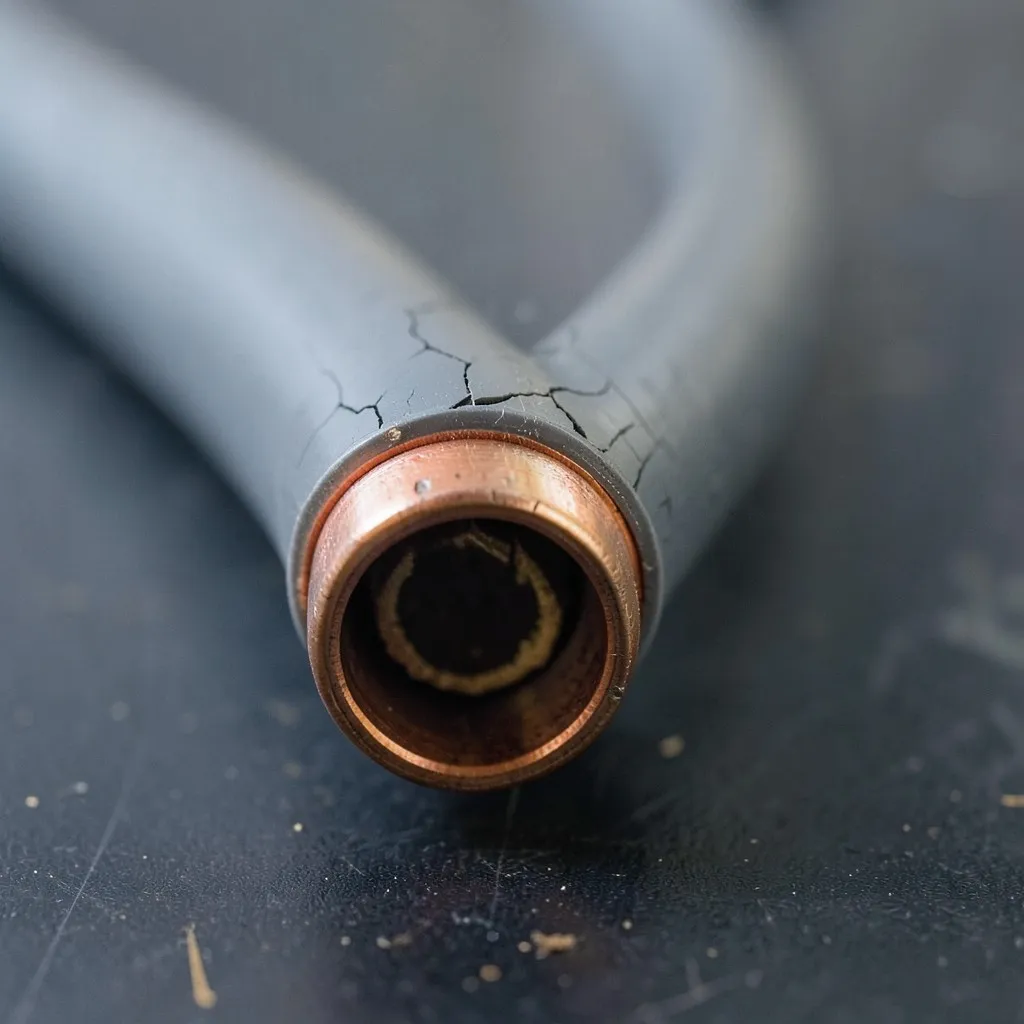
Polybutylene (PB) is a flexible plastic resin pipe manufactured between roughly 1978 and 1995 and installed in an estimated 6 to 10 million U.S. homes during that period. It was marketed as a low-cost, easy-to-install alternative to copper for potable water supply lines, particularly in the Sun Belt, Mid-Atlantic, and Pacific Northwest. Trade names included Quest, Vanguard, and Qest. The pipe is typically gray, blue, or sometimes black, with a dull non-glossy finish, and is stamped with the resin code PB2110 on the exterior.
How do you identify polybutylene pipe?
The two strongest visual cues are color (uniform gray or blue, occasionally white in mobile homes) and the PB2110 marking printed every few feet along the pipe. Fittings are usually gray plastic (acetal/Celcon) or copper crimp rings. PB is often confused with PEX, but PEX is more flexible, comes in red/blue/white with cross-linked polyethylene markings, and uses different fitting systems. Inspectors also check at the water heater, main shut-off, and exposed runs in basements, crawl spaces, and under sinks.
What causes polybutylene pipe to fail?
Chlorine and other oxidants in municipal water react with the polybutylene resin and acetal fittings, causing micro-fractures, scale, and embrittlement that progress from the inside out. Joints typically fail first, often without warning, producing pinhole leaks or full pipe ruptures. Mean time to first failure is commonly 10 to 15 years, though some systems have lasted longer in low-chlorine water. There is no reliable way to test remaining service life.
What are the litigation and insurance issues with polybutylene pipe?
The Cox v. Shell Oil class-action settlement paid claims through the Consumer Plumbing Recovery Center until it closed in 2009. No active replacement fund exists today. Many homeowners insurance carriers either decline new policies on PB-plumbed homes, exclude PB-related water damage, or non-renew at discovery. Real-estate disclosure is required in several states, and PB is routinely flagged on standard home inspection reports.
What does polybutylene pipe replacement involve?
Spot repairs are not considered a durable solution because adjacent pipe and fittings carry the same defect risk. The accepted remedy is a full repipe of all PB supply lines using PEX, copper, or CPVC. Scope typically includes hot and cold trunk lines, branch runs, fixture stub-outs, and replacement of the manifold or tee fittings. Drywall access patches, fixture R&R, and pressure testing are part of the work order. Whole-home repipe pricing varies by region and access difficulty but is broadly in the $4,000 to $15,000 range for a single-family home.
Code reference: Both the IPC and UPC removed PB2110 from the list of approved potable water materials decades ago, and AHJs no longer permit new PB installations. Existing systems are not retroactively prohibited, but any alteration triggers a code-compliant material substitution.
Researching the term is one thing — hiring for it is another. See whole-home repipe services for scope, timelines, and what drives the price, or call (888) 530-4445 for a no-cost estimate.
For the full picture — materials, process, timelines and what drives the cost — read Whole-Home Repipe: The Complete Guide.
What related terms should you know?
What sources back this up?
Need a verified plumber for whole-home repipe?
AlertPlumber matches you with a licensed plumber for whole-home repipe. Written estimate before any work begins.