
Emergency Water Heater Repair in Indianapolis, Indiana
Active water damage compounds by the hour — a licensed IN plumber is on call for Indianapolis right now.
Local plumbing data for Indianapolis, IN
Seeing these conditions at your place in Indianapolis? A state-licensed plumber can confirm it over the phone — free, no obligation.
What are the pipe conditions in Indianapolis, IN?
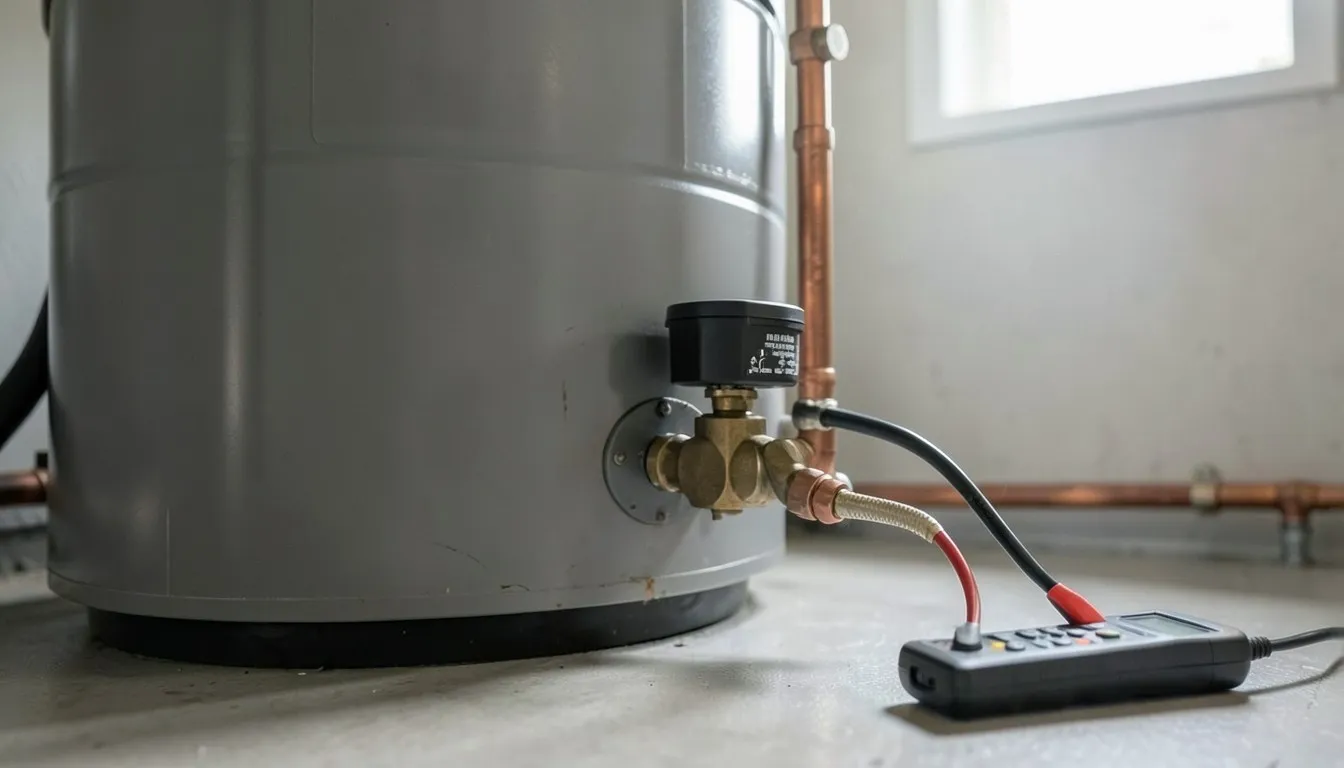
Water heater repair in Indianapolis starts with isolating the failure mode: a unit producing no hot water usually has a failed heating element or thermostat (electric) or a pilot or gas valve issue (gas); a unit leaking at the base has a failed tank — a repair is not possible and replacement is immediate. Sediment flushing and anode rod replacement extend the life of units under 10 years significantly; units over 12 years are typically beyond economic repair. AlertPlumber routes your request to an Indiana-licensed plumber who diagnoses before recommending repair vs. replacement. Freeze events and frost-depth requirements add pipe insulation, exterior faucet winterization, and burst-risk assessment to service calls in this climate.
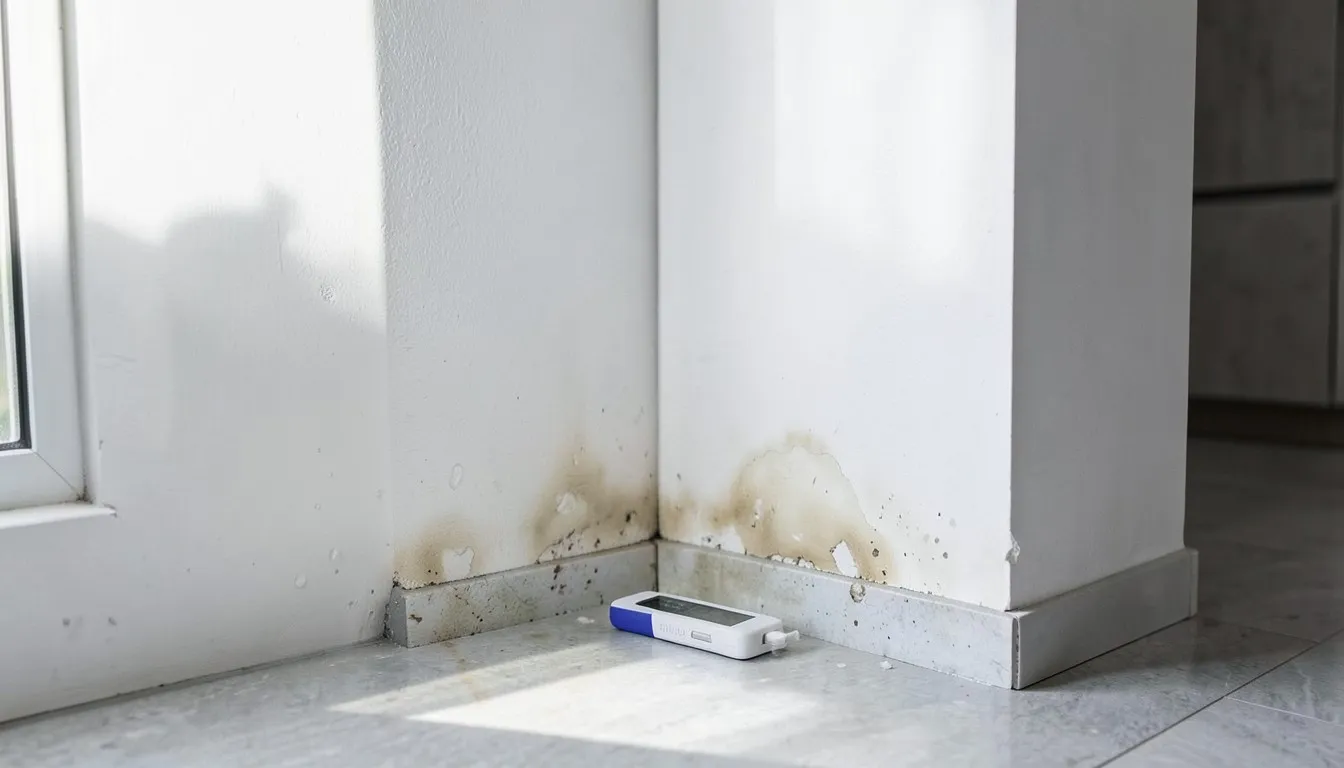
Indianapolis's housing stock spans multiple construction eras — median home age 54 years — meaning pipe materials and failure modes vary significantly by neighborhood and building vintage. An inspection-led approach that confirms pipe material before recommending a service path is standard practice for mixed housing profiles.
Very hard water in Indianapolis is a primary driver of accelerated appliance failure: water heater anode rods exhaust in 2–3 years instead of 6–8, scale deposits at fixture connections form within months of installation, and tankless heat exchangers accumulate mineral buildup that can reduce lifespan by half without regular descaling. A softener or whole-house conditioner is strongly recommended alongside any appliance service call.
Frost line depth in Indianapolis means supply lines and outdoor plumbing must be installed below the freeze threshold — typically 36 in — to prevent pipe burst during cold events. Exterior hose bibs, irrigation shutoffs, and any exposed pipe runs are the most common winterization service points in freeze-risk markets.
- Median home age
- 54 yrs
- Frost line
- 36 in
A licensed IN plumber reads these conditions the moment you describe the symptom.
What local infrastructure shapes Water Heater Repair in Indianapolis?
Indianapolis draws from White River and Fall Creek through Indianapolis Drinking Water, with supply from the karst limestone aquifers of the Silurian reef system underlying central Indiana. The result is approximately 18.7 grains per gallon — among the highest water hardness readings of any major Midwest city. At 18.7 GPG, sediment accumulation in tank water heaters compresses the 8-12 year rated service life to 5-7 years without regular flushing, and elements in electric resistance heaters encrust within 2-3 years without maintenance.
Indianapolis median housing age of 54 years reflects the post-war expansion across the 1960s-1970s Speedway, Beech Grove, and Lawrence corridors. Water heaters in that construction era are now well past rated service life. Indianapolis averages approximately 110 days at or below freezing annually — freeze-related water heater incidents (burst supply connections, cracked inlet fittings, thermal-shock tank failures) are a seasonal repair driver on top of the gradual sediment and anode-depletion failures that 18.7 GPG water drives year-round.
Indiana plumbing contractors must hold a current license through the Indiana CIDA licensing board. The permit fee for water heater installation runs $75-$150 in Indianapolis. The 18.7 GPG supply hardness means anode rod inspection every 2-3 years is the standard interval — half the schedule for soft-water markets. Descaling service for tankless units requires annual intervals at this hardness level, and licensed contractors familiar with central Indiana's water chemistry typically specify a softener as part of any tankless installation.
What shapes plumbing demand in Indianapolis, IN?
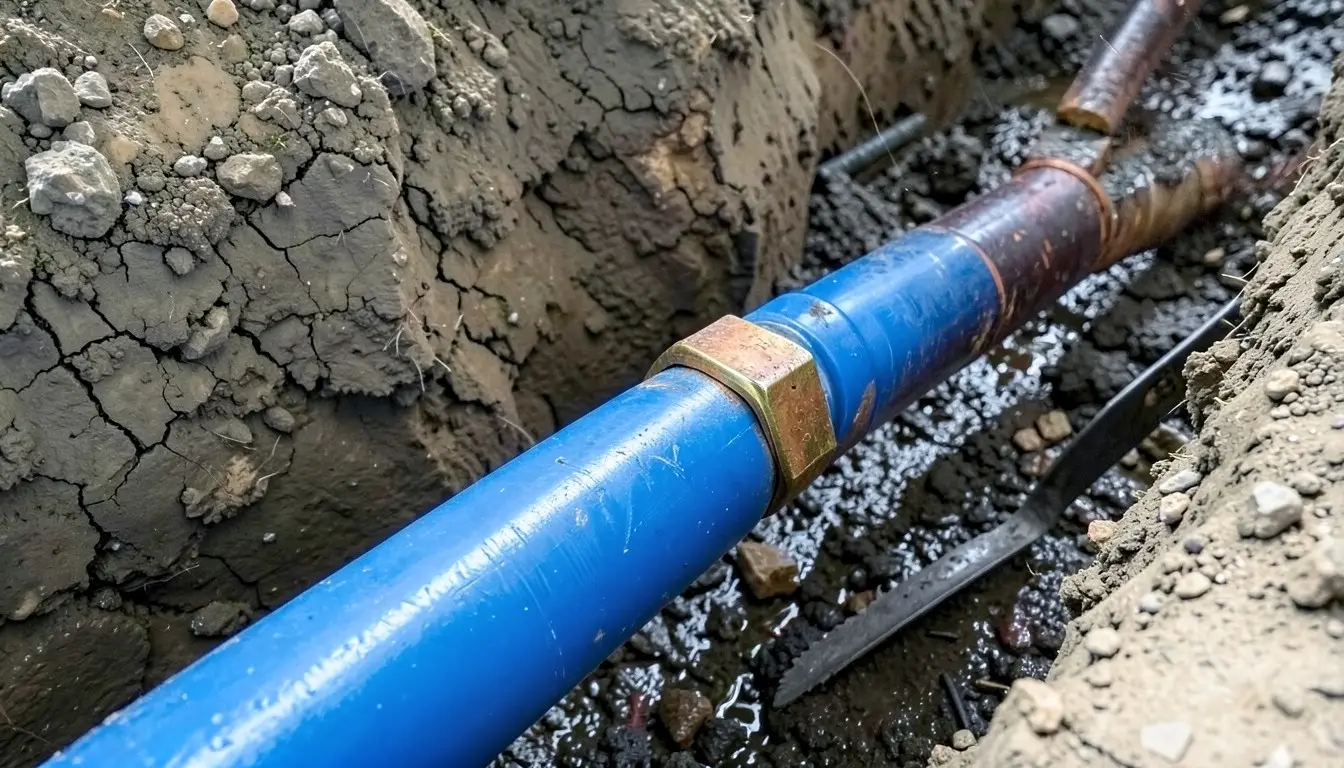
1950s–70s copper supply is now 50–70 years into its service cycle in Indianapolis. Thermal fatigue at fittings and slab-on-grade access complexity — common in Sun Belt construction — make repair vs. replacement a live decision on most jobs. This housing cohort is the active primary replacement wave in this market.
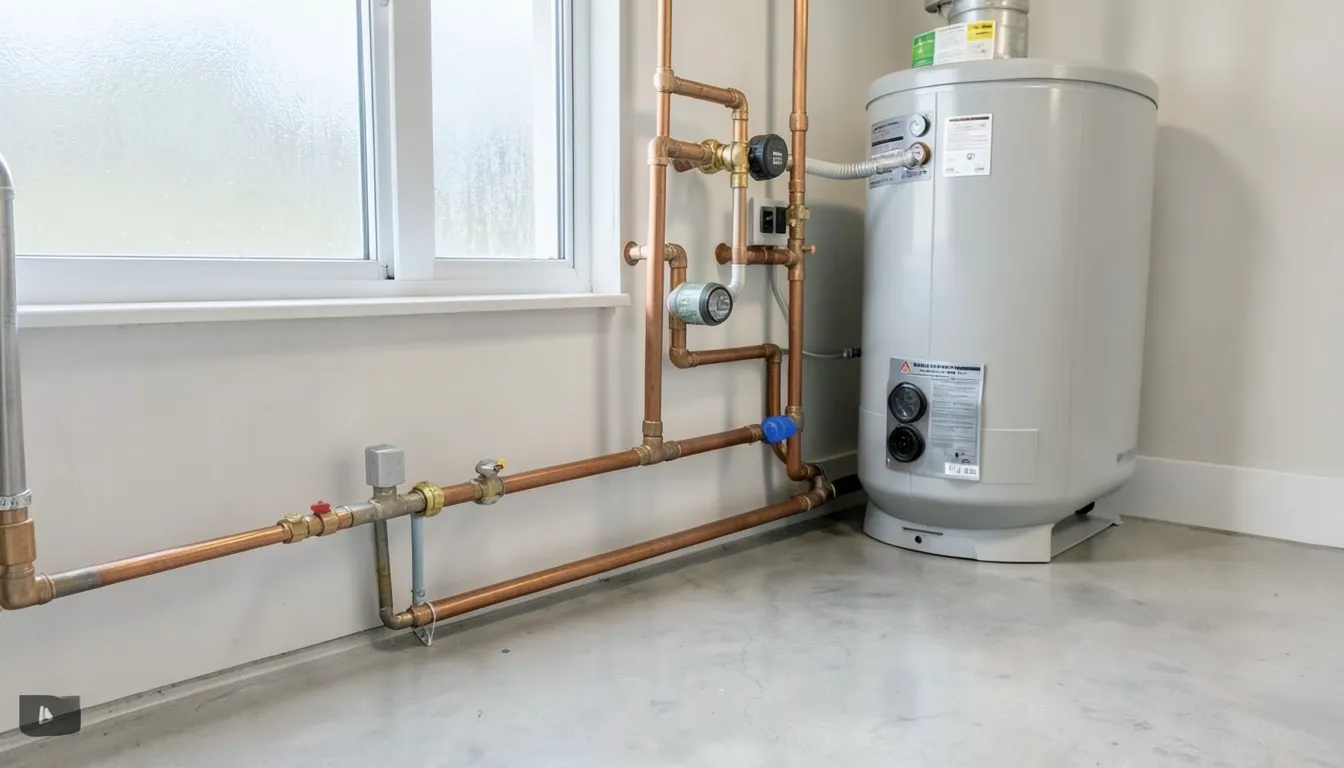
At 15–20+ GPG, calcium scale forces compressed equipment cycles in Indianapolis: tank heaters average 6–9 years vs. the 10–12-year national benchmark, and tankless units require annual descaling. Anode rods calcify within 12–18 months. Most plumbers here assess heater age against the local scale timeline — not the manufacturer's service life.
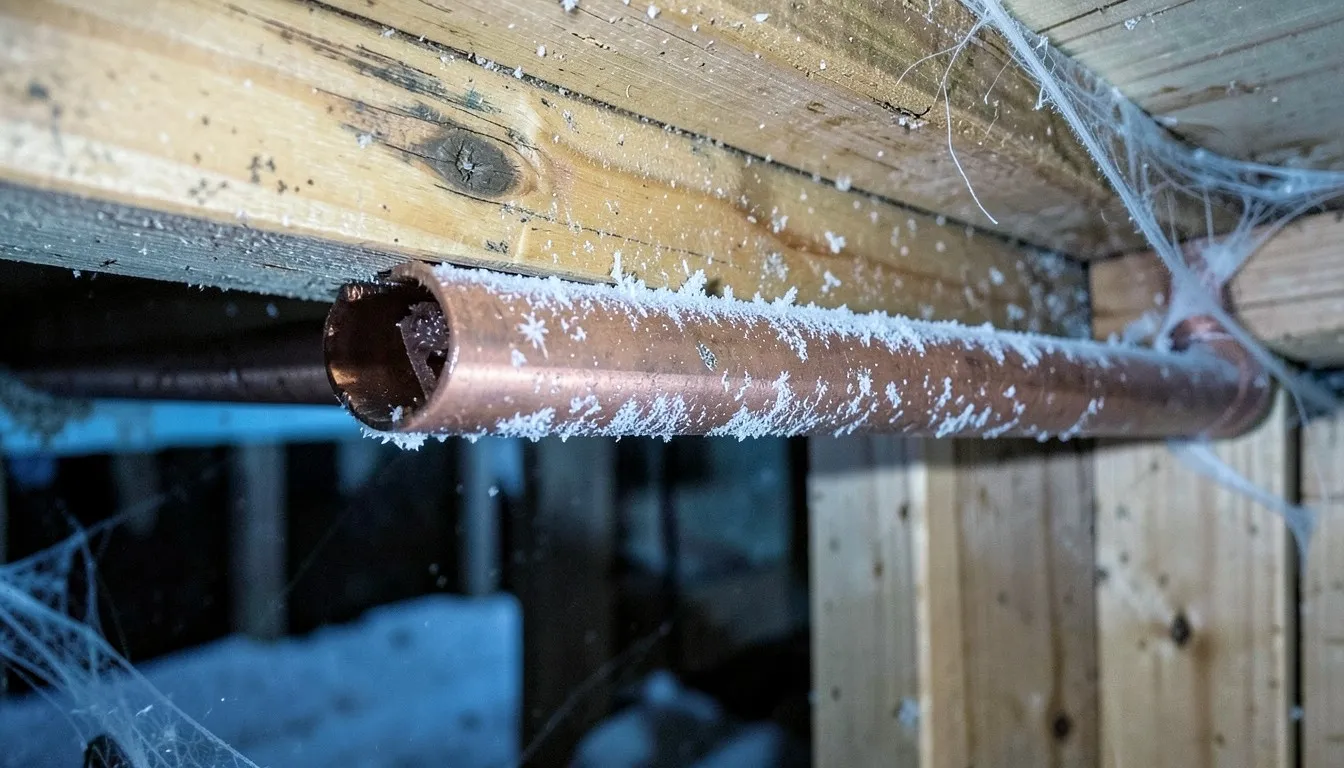
The primary surge in Indianapolis runs January–March, with a secondary wave at the spring thaw — when pipes that held through the freeze rupture as pressure is restored above 32°F. Scheduling competition peaks exactly when emergency calls are highest. Homeowners who wait for visible damage compete for the same limited plumber slots at the worst possible time.
Active damage in Indianapolis — how is it contained, assessed and restored?
Submit your Indianapolis address and describe the active damage — flooding, failed shutoff, burst or frozen line. AlertPlumber marks the request as priority and an IN-licensed plumber confirms receipt within 15 minutes, without routing through a national call center.
The plumber arrives with a confirmed ETA, locates the nearest shutoff, and maps the damage boundary — affected lines, access points, material condition. You receive a verbal assessment of what requires immediate containment and what can wait until the full repair scope is confirmed.
You approve a written containment and repair scope before any work begins. Temporary isolation is priced separately from full restoration. No phase proceeds without your explicit sign-off.
Water Heater Repair cost calculator — Indianapolis
Pre-filled for water heater repair in Indianapolis. Adjust the ZIP for a neighboring area, or change the service to compare. Calculator pulls from the city's scraped permit-fee + state plumber-density data.
Water Heater Repair emergency in Indianapolis?
Every hour without a repair increases structural risk and remediation cost. A verified plumber calls back with an ETA and a written estimate before any work begins.
Water Heater Repair in Indianapolis — frequently asked
How much does water-heater repair cost in Indianapolis, IN?
Indianapolis water-heater repair prices by failure mode. A thermocouple or gas control valve replacement on a natural-draft 40–50 gallon tank in a Meridian-Kessler 1920s Tudor basement runs $245–$485. Heating-element replacement on an electric tank in an Eagle Creek 1970s ranch utility closet runs $225–$425. Flush-and-anode service on a tank with 18.7 gpg scale buildup (mandatory at 4–6 year intervals on Citizens Energy Group water) runs $185–$345. Expansion-tank install or replacement (code requires one on closed-loop systems with check valves) runs $245–$425. Full 40-gallon natural-gas tank replacement in an Old Northside basement runs $1,650–$2,650 including the $32 Indy.gov application plus $75–$150 minor permit (per Indy.gov permit fees) and the Citizens Energy gas-side reconnection if applicable. Tankless conversion in a Broad Ripple bungalow runs $3,200–$5,400. AlertPlumber routes the call to an Indiana Plumbing Commission credentialed plumber for a written estimate.
Why do water heaters fail faster in Indianapolis than in soft-water cities?
Citizens Energy Group delivers Indianapolis water at 18.7 grains per gallon (320 ppm) — classified very hard per USGS hardness classification, sourced from the Niagaran reef limestone aquifer. That carbonate load precipitates as calcium-carbonate scale on the tank floor and the lower heating element (or above the burner on gas tanks) at roughly 2.5–4 mm per year without preventive flushing. Scale acts as a thermal blanket, forcing the burner or element to run longer and hotter to maintain set-point, which fatigues the steel tank wall and accelerates anode rod consumption. Typical Indianapolis tank lifespan on unmaintained units is 5–7 years — well below the 10–12 year manufacturer rating. Annual flush + anode inspection every 2–3 years extends service life back to the 10+ year range. Soft-water Pacific Northwest tanks routinely hit 15+ years; Indianapolis tanks do not, without active maintenance.
How often should I flush my Indianapolis water heater?
Annual flush is the minimum standard on Citizens Energy Group water at 18.7 gpg. Practical schedule: full tank drain-and-flush every 12 months, anode rod inspection at 24 months, anode replacement at 36–48 months depending on rod consumption (powered anodes last longer). Tank-bottom sediment depth tells you whether the schedule is right — if you pull a quart of cloudy sediment at 12 months, the schedule is correct. If you pull a gallon, accelerate to 6-month flush. Eagle Creek 1970s ranch tanks in unconditioned utility closets accumulate scale faster than basement tanks because temperature stratification is more pronounced. Tankless units need annual descaling with white-vinegar circulation cycle — manufacturer warranty typically requires documented descaling at Indianapolis hardness levels.
Tank or tankless for a Meridian-Kessler basement install in Indianapolis?
Both work, but constraints differ. Tank install in a Meridian-Kessler 1920s Tudor basement (typical 7-foot ceiling, central drain, existing 3-inch B-vent through chimney chase) costs $1,650–$2,650 installed, fits in the existing footprint, and tolerates Citizens Energy Group hardness with annual flushing. Tankless install runs $3,200–$5,400 and requires a 1-inch gas line upsize from the typical 3/4-inch run (Citizens Energy meter capacity check required), a stainless or PVC concentric vent through the rim joist or chimney chase, and aggressive descaling at the 18.7 gpg hardness level. Tankless wins on basement space recovery and continuous hot-water demand for larger Meridian-Kessler households. Tank wins on initial cost, simplicity, and the basement install with existing chimney venting. Broad Ripple bungalows with small mechanical rooms benefit most from tankless space savings.
Does Indianapolis 110-day freeze season affect water-heater siting?
Yes — meaningfully. ~110 freeze days annually and 36-inch frost depth (per NWS Indianapolis) make basement installs the default — basement temperatures stay 55–65°F year-round and protect the tank from freeze damage. Exterior or attached-garage installs need freeze protection (heat tape on the cold-water inlet, cabinet insulation, vacation drain protocol) that adds $185–$385 to install scope. Meridian-Kessler, Old Northside, Irvington, Broad Ripple, and Fountain Square pre-1940 stock virtually all run basement installs. Eagle Creek and Speedway 1970s+ stock includes a meaningful share of utility-closet and garage-adjacent installs that need freeze-protection retrofits during a Polar Vortex event. Citizens Energy Group recommends maintaining set-point above 120°F and never below 110°F during winter to keep the tank above freeze risk.
Will Indiana HO-3 homeowners insurance cover Indianapolis water-heater damage?
Standard Indiana HO-3 policies typically cover sudden-and-accidental water damage from a tank failure (basement carpet, drywall, hardwood, finished-basement contents) subject to deductible. They typically do NOT cover the tank replacement itself (classified as wear-and-tear infrastructure). Long-term seepage from a slow leak or a flooded pan is generally excluded after 14 days. Most Indiana carriers (State Farm, Erie, Indiana Farm Bureau, Allstate, Auto-Owners) cap unscheduled water-damage payouts at $5,000–$25,000 absent a specific endorsement. Old Northside, Meridian-Kessler, and Broad Ripple finished-basement homes face the largest claim exposure because basement carpet and drywall damage from a 40-gallon tank failure routinely hits $4,000–$9,000. Drip pan + pan-drain to a floor drain (separate $185–$425 scope) is the standard mitigation.
Repair or replace — which makes sense for an aging Indianapolis water heater?
Five decision factors on Marion County housing stock. First, age: under 8 years repair is typically right, over 10 years replacement is typically right given Indianapolis 5–7 year typical service life on unmaintained tanks. Second, failure mode: thermocouple, gas valve, or single heating element gets repaired. Tank-side rust streaks on the burner, weeping seam at the tank bottom, or audible sediment boil over the burner means replace. Third, anode condition: a rod consumed past 50% on a 6+ year tank predicts <24 month remaining life — replacement is the cleaner move. Fourth, energy upgrade case: 1990s 0.55 EF tanks waste meaningful gas vs current 0.68+ EF tanks — Citizens Energy Group commercial gas rate makes the payback period 6–9 years. Fifth, code triggers: any replacement requires expansion tank install if not present (Indiana code) and seismic strapping per IPC if seismic detail applies.
What does Indianapolis water heater installation actually involve?
Average install in a Meridian-Kessler 1920s Tudor basement takes 3.5–5 hours from arrival through fire-on. Sequence: gas shutoff and old tank drain (45 min), old tank disconnect and removal (35 min — basement stair routes complicate this on Old Northside Victorian and Fountain Square stock), new tank set on existing drip pan or new pan installation (25 min), cold/hot water connection at existing dielectric unions (40 min), gas connection at flex line with new sediment trap if missing (25 min), B-vent reconnection to chimney chase or new direct-vent install (35 min), expansion tank install if not present (30 min), pressure test of all connections (15 min), pilot light and burner test (20 min), set-point program and homeowner walkthrough (15 min). Add 30–60 minutes for the Indy.gov DBNS inspection on permitted scope.
Does Indianapolis require a permit for water-heater work, and who verifies the plumber?
Replacement requires the $32 Indy.gov application plus the $75–$150 minor permit at the Indy.gov Department of Business and Neighborhood Services (per Indy.gov permit fees) and a DBNS inspection. Citizens Energy gas-side reconnection requires a Citizens Energy meter-check appointment when a new gas line or upsized meter is involved. Repair work (thermocouple, valve, element, anode, flush) is permit-exempt as maintenance. On credentialing, every plumber routed through AlertPlumber in Marion County holds an active Indiana Plumbing Commission specialty credential — Indiana PLA Plumbing Commission lists roughly 11,620 credentialed plumbers statewide. Homeowners can verify the matched plumber's credential by name through the PLA lookup before authorizing work.
Gas or electric water heater in Indianapolis?
Natural gas dominates Indianapolis housing — Citizens Energy Group operates the gas distribution system across Marion County, and the bulk of pre-2000 housing stock runs natural-gas water heaters because Citizens Energy gas service mix favors gas heating economically. Gas tank install cost: $1,650–$2,650. Electric tank install cost: $1,250–$2,150 (lower because no gas-line work, B-vent, or sediment trap). Operating cost favor gas by roughly 35–55% on Citizens Energy current commodity rates. Electric makes sense in three scenarios: condo units without gas service, garage-adjacent installs where B-vent routing is impractical, and tankless heat-pump installs in conditioned basement space (heat pump units cut electric operating cost roughly in half). Most Meridian-Kessler, Old Northside, and Broad Ripple basement installs stay on gas at replacement.
How do I know my Indianapolis water heater is actually failing?
Six markers. First, rust-colored hot water on first draw, especially after vacation periods — anode rod consumed, tank-side corrosion underway. Second, audible sediment boil or popping during burner cycle (gas) or element cycle (electric) — Citizens Energy Group 18.7 gpg scale building on tank bottom. Third, recovery time slowing — 40 gallon tank taking 90+ minutes instead of 45–60 minutes to recover from a shower run signals scale insulation on burner. Fourth, weeping or rust streak at tank-bottom seam — replace within 30 days, do not wait for tank rupture. Fifth, set-point drift or pilot light failure on gas — thermocouple or gas valve repair candidate. Sixth, expansion tank water-logged or pressure-bladder failed (test by tapping the steel shell — solid sound on bottom half means waterlogged) — separate $245–$425 repair scope. Two or more markers warrants a Marion County matched-plumber assessment.
What ZIP codes around Indianapolis does AlertPlumber cover for water-heater service?
AlertPlumber covers all Marion County Indianapolis ZIP codes (462xx prefix covering downtown through Meridian-Kessler, Broad Ripple, Old Northside, Lockerbie Square, Irvington, Fountain Square, Eagle Creek, and Speedway) plus inner-ring Hamilton, Hendricks, Johnson, Boone, Hancock, Morgan, and Shelby County communities — Carmel, Fishers, Noblesville, Westfield, Greenwood, Plainfield, Avon, Brownsburg, Zionsville, and Greenfield. Citizens Energy Group gas service-area addresses route through the same intake form as electric-only properties. Per U.S. Census Bureau, Indianapolis population is 887,642.
Sixty seconds from now, a plumber can be working your problem.
Call and talk to dispatch, or put your number in the form below — a licensed Indiana plumber calls you back about the water heater repair and gives a written estimate by phone.
Request a water heater repair callback in Indianapolis
In a meeting, with the kids, or just prefer not to hold? Drop your ZIP and number below. AlertPlumber routes your request to a verified plumber in your area — they’ll call you back directly.
- 1 Submit your info. ZIP, phone, and what kind of work you need.
- 2 AlertPlumber matches you with a verified plumber serving your area.
- 3 The plumber calls you back with a written estimate, no obligation.
Water Heater Repair in Indianapolis — fast response
Acute plumbing failures cannot wait. AlertPlumber has verified Indiana plumbers available for water heater repair in Indianapolis — call now or submit the form above for rapid callback.