
Emergency Slab Leak Repair in Indianapolis, Indiana
Camera first, quote second — know exactly what's wrong in your Indianapolis home before you approve a dollar.
Local plumbing data for Indianapolis, IN
Seeing these conditions at your place in Indianapolis? A state-licensed plumber can confirm it over the phone — free, no obligation.
What are the pipe conditions in Indianapolis, IN?
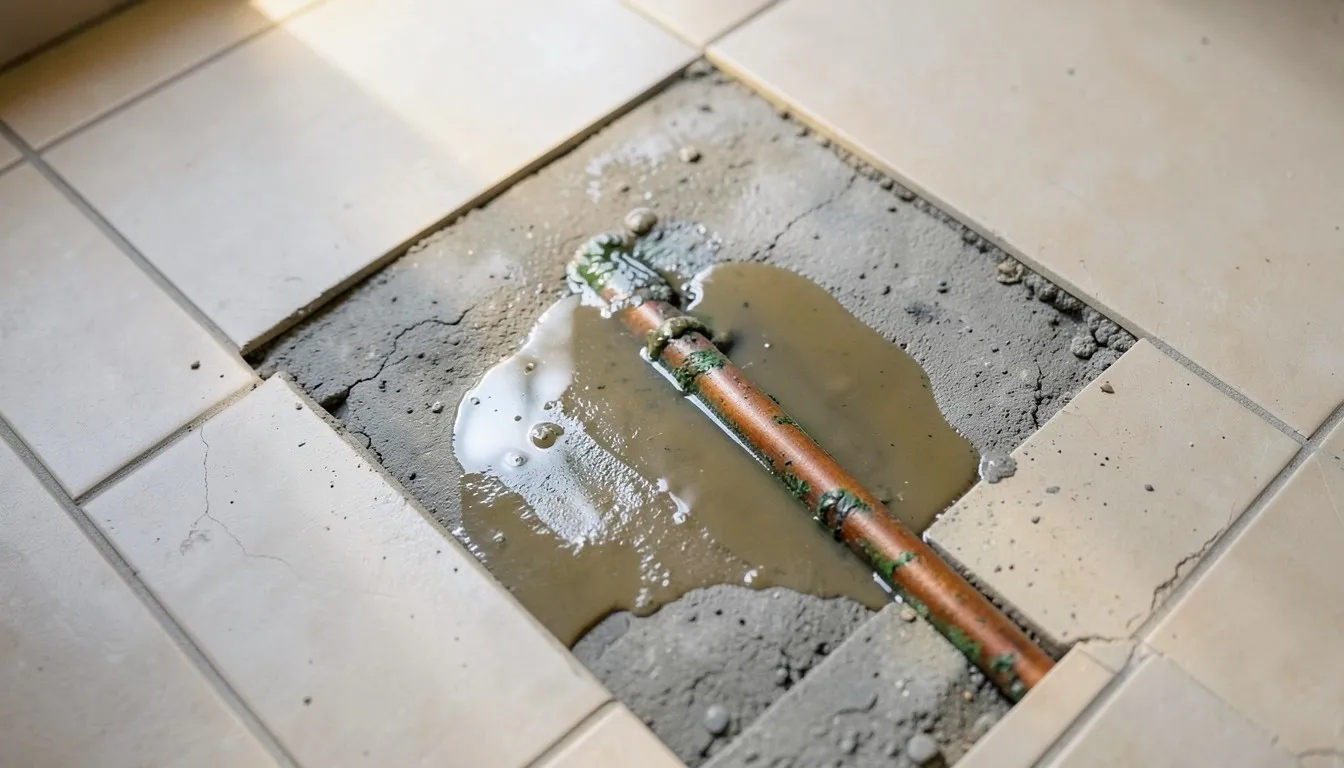
Slab leaks form when copper supply lines embedded in the concrete foundation develop pinholes from electrochemical corrosion, high-velocity water erosion, or slab movement. Indianapolis homes built during the 1960s–1980s on post-tensioned slabs face the highest slab-leak risk — copper installed at original construction is approaching or past the 50-year corrosion window. Early signs include warm or wet spots on the floor, unexplained water bill spikes, and the sound of running water when all fixtures are closed. AlertPlumber routes your request to an Indiana-licensed plumber for acoustic leak location before any slab cutting begins.
Indianapolis's housing stock spans multiple construction eras — median home age 54 years — meaning pipe materials and failure modes vary significantly by neighborhood and building vintage. An inspection-led approach that confirms pipe material before recommending a service path is standard practice for mixed housing profiles.
Very hard water in Indianapolis is a primary driver of accelerated appliance failure: water heater anode rods exhaust in 2–3 years instead of 6–8, scale deposits at fixture connections form within months of installation, and tankless heat exchangers accumulate mineral buildup that can reduce lifespan by half without regular descaling. A softener or whole-house conditioner is strongly recommended alongside any appliance service call.
Frost line depth in Indianapolis means supply lines and outdoor plumbing must be installed below the freeze threshold — typically 36 in — to prevent pipe burst during cold events. Exterior hose bibs, irrigation shutoffs, and any exposed pipe runs are the most common winterization service points in freeze-risk markets.
- Median home age
- 54 yrs
- Frost line
- 36 in
A licensed IN plumber reads these conditions the moment you describe the symptom.
What local infrastructure shapes Slab Leak Repair in Indianapolis?
Indianapolis slab construction concentrates in the 1950s-70s suburban ring — Broad Ripple, Meridian Hills, Lawrence, and Speedway corridor ranch-style developments. White River and Fall Creek source water delivers 18.7 GPG through Silurian limestone karst — the highest hardness among major Midwest cities. Scale deposits at copper elbows and tee fittings at this concentration accumulate at double or triple the rate of moderate-hardness cities, compressing the failure timeline for copper-in-slab supply lines.
Indiana limestone geology introduces an additional variable uncommon in most Midwest markets: karst dissolution voids can produce localized differential slab settlement in suburban areas where shallow bedrock is present. Differential settlement at 2-4 inches — below structural failure thresholds — is sufficient to stress slab-embedded copper joints. The 36-inch frost depth adds seasonal soil pressure cycling on top of the karst substrate context.
Indiana Plumbing Commission (PLA) licensing and a $75-150 permit fee apply. At 18.7 GPG, the repair-versus-reroute decision threshold arrives earlier in Indianapolis slab homes than in comparable-age properties in moderate-hardness markets — the combined scale and mechanical stress profile creates a narrower window for point-repair interventions. Citizens Energy Group is pursuing systematic lead service line replacement for approximately 75,000 customers under EPA Lead and Copper Rule Revisions compliance requirements.
What shapes plumbing demand in Indianapolis, IN?
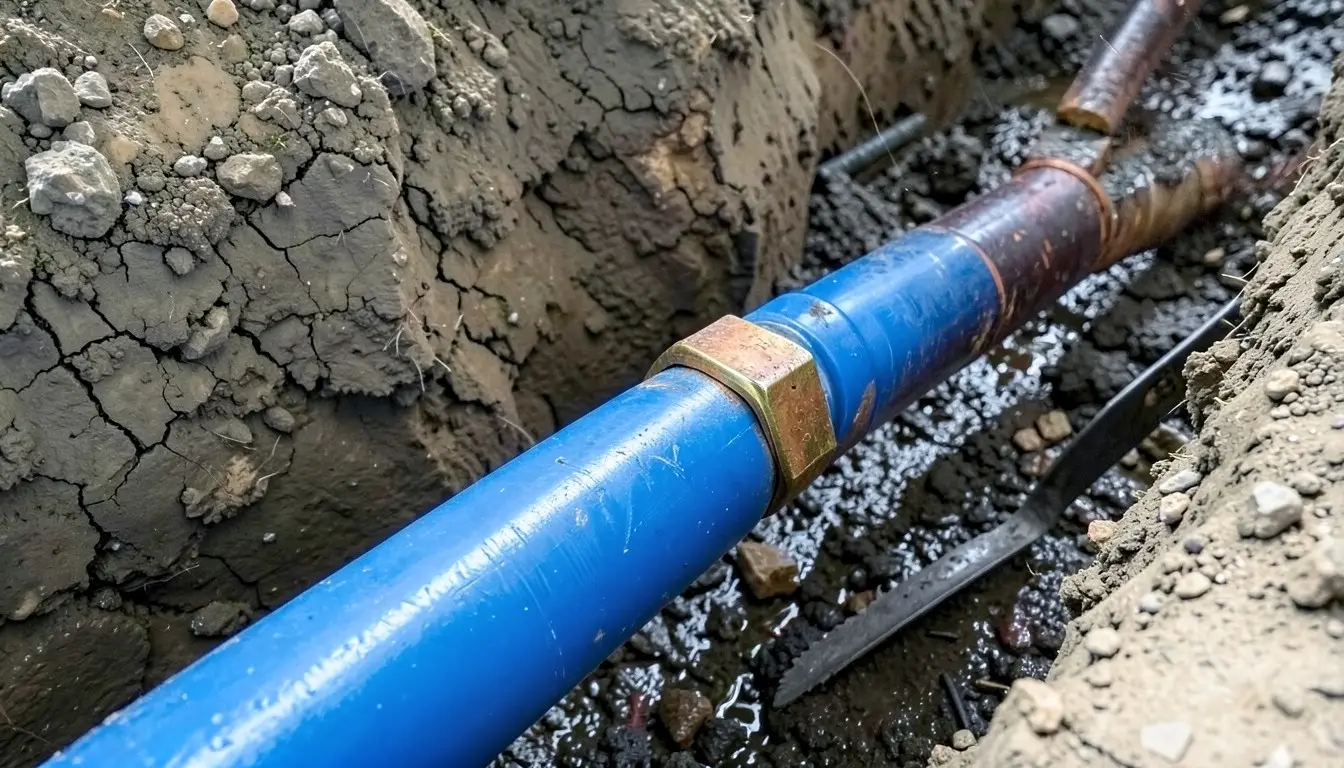
1950s–70s copper supply is now 50–70 years into its service cycle in Indianapolis. Thermal fatigue at fittings and slab-on-grade access complexity — common in Sun Belt construction — make repair vs. replacement a live decision on most jobs. This housing cohort is the active primary replacement wave in this market.
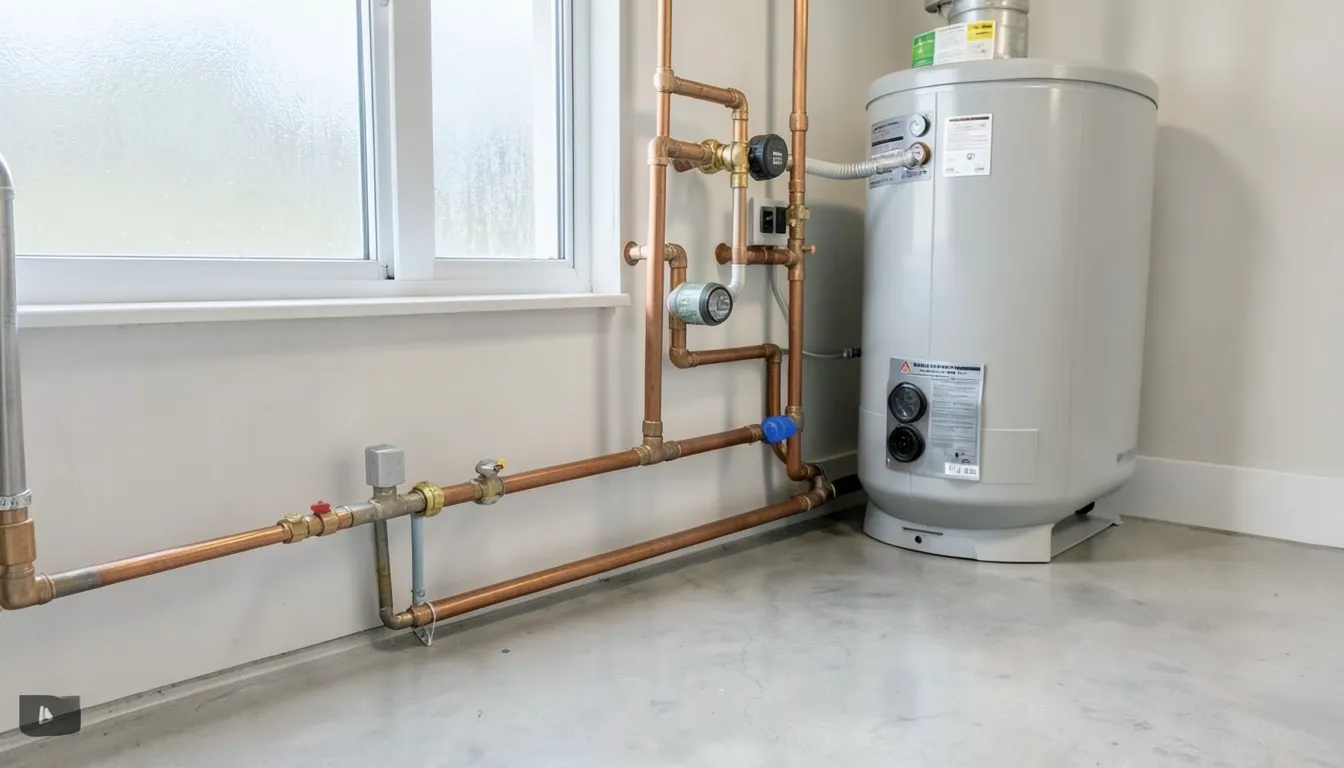
At 15–20+ GPG, calcium scale forces compressed equipment cycles in Indianapolis: tank heaters average 6–9 years vs. the 10–12-year national benchmark, and tankless units require annual descaling. Anode rods calcify within 12–18 months. Most plumbers here assess heater age against the local scale timeline — not the manufacturer's service life.
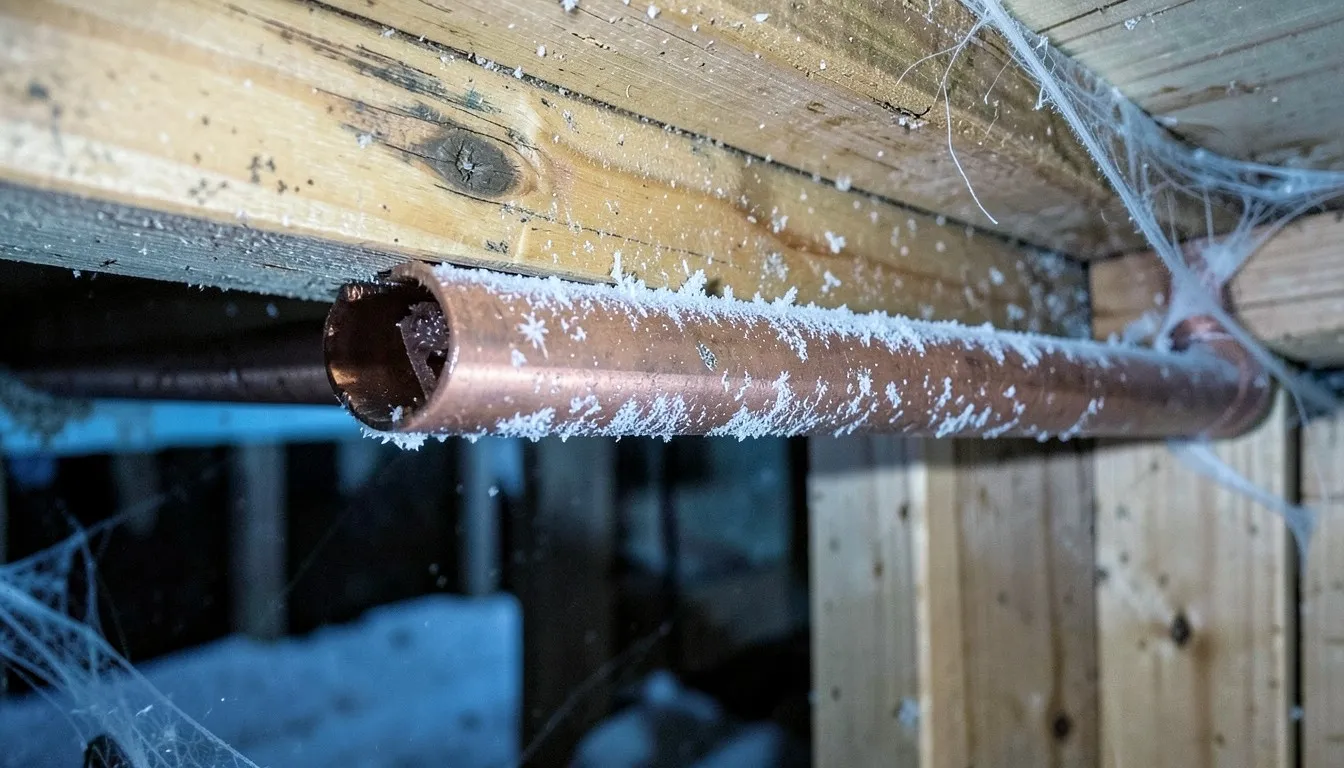
The primary surge in Indianapolis runs January–March, with a secondary wave at the spring thaw — when pipes that held through the freeze rupture as pressure is restored above 32°F. Scheduling competition peaks exactly when emergency calls are highest. Homeowners who wait for visible damage compete for the same limited plumber slots at the worst possible time.
Why diagnose before repairing in Indianapolis?
Describe the symptom — not the repair. AlertPlumber routes to an IN-licensed plumber trained in diagnostics. The site visit uses camera tracing, acoustic detection, or hydrostatic pressure testing — matched to the reported failure type.
The plumber delivers a written diagnostic report: confirmed failure location, available repair methods, and tradeoffs — disruption level, material durability, long-term cost, and whether an Indianapolis building permit applies to the selected method.
You select the repair path. The Indiana-licensed plumber proceeds on the authorized method with a fixed scope and price. Where required, the permit application to Indianapolis is handled by the contractor.
Slab Leak Repair cost calculator — Indianapolis
Pre-filled for slab leak repair in Indianapolis. Adjust the ZIP for a neighboring area, or change the service to compare. Calculator pulls from the city's scraped permit-fee + state plumber-density data.
Slab Leak Repair emergency in Indianapolis?
Every hour without a repair increases structural risk and remediation cost. A verified plumber calls back with an ETA and a written estimate before any work begins.
Slab Leak Repair in Indianapolis — frequently asked
Are slab leaks common in Indianapolis, IN?
Less common in central Marion County than the slab-dominant Sun Belt, but materially present in the 1970s+ tract belt. Most pre-1960 Indianapolis housing (Meridian-Kessler 1920s Tudor, Old Northside 1880s Victorian, Irvington 1870s+ craftsman, Lockerbie Square cobblestone-era, Fountain Square 1880s-1900s shotgun, Broad Ripple 1920s bungalow) sits over a full or partial basement on Indiana limestone foundation footings — those properties run cast-iron stacks and copper supply through joists and rim plates, not buried in concrete. Slab plumbing in Indianapolis concentrates in three places: Eagle Creek 1970s+ NW reservoir-area ranches, Speedway tract homes from the 1960s-80s, and Greenwood/Fishers/Carmel postwar build-outs. Slab leak diagnosis matters in those properties because Citizens Energy Group delivers 18.7 grains per gallon very hard water (per Citizens Energy Group water quality, Indianapolis) which accelerates pitting corrosion on Type-M copper buried in concrete.
How much does slab-leak repair cost in Indianapolis?
Indianapolis slab-leak repair prices by repair method and access. Acoustic + thermal-imaging detection alone runs $425–$715 on an Eagle Creek 1970s slab-on-grade ranch. Spot break-through repair — saw-cut tile or LVP, jackhammer concrete, copper section R&R, post-pour finish — runs $1,850–$3,650 on a Speedway slab. Through-wall PEX reroute (when geometry allows running the failed branch through wall cavity instead of opening the slab) runs $1,475–$2,950 and is the preferred method on finished hardwood or set tile. Full slab repipe (rerouting all hot-water supply through attic or wall cavity for a whole-house copper-leak pattern) runs $4,850–$9,200 across an average 1,800–2,400 sq ft Eagle Creek or Speedway home. The $32 Indy.gov application plus $75–$150 minor permit (per Indy.gov permit fees) is required on any slab break-through. AlertPlumber routes to an Indiana Plumbing Commission credentialed plumber for a written estimate.
What causes slab leaks in Broad Ripple and Eagle Creek 1970s homes?
Two dominant failure modes. First, Type-M copper supply buried in concrete reacts to 18.7 grains per gallon (320 ppm) very hard Citizens Energy Group water, which exceeds the USGS very hard threshold of 10.5 gpg (per USGS hardness classification). Pitting corrosion accelerates where the copper sits in damp concrete or contacts ferrous rebar — pinhole leaks appear most often at 25–40 years of pipe age (1970s-90s installs are now in that window). Second, Broad Ripple 1920s bungalow additions and Eagle Creek 1970s ranches sit on Niagaran reef limestone substrate with karst seam variability — uneven foundation settlement of 1/4 to 3/4 inch over 40 years stresses the copper at slab penetrations and creates fatigue failure at fittings. Both mechanisms produce hot-water side leaks first because heat accelerates the corrosion chemistry.
How do I know if I have a slab leak in my Indianapolis home?
Six markers on Marion County slab-on-grade housing. First, warm or hot spot on tile, LVP, or hardwood in a hallway, kitchen, or bathroom (hot-water leak under the slab). Second, sound of running water with all fixtures off — listen at the water heater and at the slab perimeter. Third, water bill jumping 20–50% with no change in usage — at Citizens Energy Group Rate No. 1 of roughly $4.50 per 1,000 gallons, a 0.8 gpm slab leak adds ~$115/month. Fourth, hairline foundation cracks lengthening on an Eagle Creek slab or new diagonal drywall cracks in a Speedway tract home (foundation movement from long-term water erosion of Niagaran limestone substrate). Fifth, mildew odor at the perimeter slab-to-wall joint. Sixth, water meter creep when all fixtures are off — leave the house for 30 minutes, return, check the meter dial. Two or more markers warrants acoustic + thermal survey.
Why does Indiana limestone karst substrate affect Indianapolis slab leaks?
Marion County slab-on-grade homes (Eagle Creek 1970s+ NW, Speedway, outer Greenwood/Fishers) sit on Niagaran reef limestone bedrock — fractured carbonate with seam-network solution voids (per USGS water resources). A long-term hot-water slab leak at 0.5–1.5 gpm doesn't just damage the slab — it actively erodes the limestone-karst substrate beneath the slab, creating localized voids that drop foundation support over months. The progression looks like: copper pinhole → hot spot on tile → hairline foundation crack at the perimeter → diagonal drywall crack at door corners → visible slab dishing. That's why slab-leak repair in Indianapolis on a confirmed-karst lot is more time-sensitive than the same leak in a sand-substrate Sun Belt market — every month of delay deepens the substrate damage.
Repair vs reroute — which slab-leak method is correct for my Indianapolis home?
Three decision factors. First, leak count: a single pinhole on a 1970s Eagle Creek slab gets spot break-through repair ($1,850–$3,650). Two or more pinholes in 24 months on the same hot-water loop signals system-wide copper failure and gets full reroute ($4,850–$9,200). Second, finish floor: set tile and hardwood are expensive to break and re-pour, so PEX reroute through wall cavity is preferred where attic or wall geometry allows. LVP, carpet, and unfinished concrete tolerate spot break-through better. Third, slab condition: an Eagle Creek slab with existing foundation settlement cracks warrants reroute regardless of leak count, because opening the slab releases existing stresses and can crack neighboring sections. The matched plumber walks the slab with the homeowner before committing scope.
Will Indiana HO-3 homeowners insurance cover Indianapolis slab-leak repair?
Standard Indiana HO-3 policies typically cover the access work — the slab break-through, drywall, and finish-floor repair — as sudden-and-accidental water damage subject to deductible. They typically do NOT cover the failed copper section itself (classified as wear-and-tear). Long-term seepage (defined by most Indiana carriers as 14+ days) is excluded entirely, which is why early detection matters. Most Indiana carriers (State Farm, Erie, Indiana Farm Bureau, Allstate, Auto-Owners) require the acoustic detection report and the matched plumber's invoice as part of the claim documentation. Eagle Creek and Speedway slab homes with foundation-settlement damage from long-term slab leaks face the largest claim denials because the damage is reclassified as wear-and-tear. Submit within 30 days of discovery.
How long does an Indianapolis slab-leak repair take?
Acoustic + thermal detection runs 85–135 minutes on an average Eagle Creek or Speedway slab home. Spot break-through repair runs 5–9 hours from saw-cut through copper R&R, pressure test, and concrete patch-pour cure setup — finish-floor restoration (tile reset, LVP plank replace, hardwood patch) adds 1–3 days. Through-wall PEX reroute runs 6–10 hours including drywall opening, PEX run, fitting transitions at the slab penetrations, and drywall repair. Full slab repipe (whole-house reroute through attic) runs 1.5–3 days. Marion County winter call surge (mid-November through early March, ~110 freeze days per NWS Indianapolis) stretches scheduling to 3–7 days as Indianapolis dispatch absorbs freeze-burst calls.
Eagle Creek 1970s ranch vs Greenwood newer slab — different leak patterns?
Different. Eagle Creek 1970s+ NW reservoir-area ranch shows Type-M copper supply buried in slab with ~50 years of 18.7 gpg hardness exposure, pinhole pattern at the hot-water loop, foundation settlement compounding from Niagaran limestone karst — repair is usually reroute on the second pinhole. Greenwood, Fishers, and Carmel post-2000 slab construction runs PEX or post-2010 Wirsbo-style PEX-A through the slab — failure mode shifts from corrosion pinhole to fitting failure at the manifold or wall penetration. Failure is rare in the first 15 years on PEX, but when it happens it's usually a single dramatic event rather than a slow seep. Detection method shifts from thermal imaging to acoustic correlation at the fittings, and repair is targeted fitting replacement.
Does Indianapolis require a permit for slab-leak repair, and who verifies the plumber?
Yes. Any work breaking through the slab or rerouting supply lines requires the $32 Indy.gov application plus the $75–$150 minor permit at the Indy.gov Department of Business and Neighborhood Services (per Indy.gov permit fees), and a DBNS inspection of the pressure test before re-pour or drywall close-up. Detection alone (acoustic, thermal-imaging) is permit-exempt. On credentialing, every plumber routed through AlertPlumber in Marion County holds an active Indiana Plumbing Commission specialty credential — Indiana PLA Plumbing Commission lists roughly 11,620 credentialed plumbers statewide. Homeowners can verify the matched plumber's credential by name through the PLA lookup before authorizing work.
How does Citizens Energy Group water hardness affect Indianapolis slab copper?
Citizens Energy Group delivers Indianapolis water at 18.7 grains per gallon (320 ppm), classified very hard per USGS hardness classification — the carbonate load originates from the Niagaran reef limestone aquifer underlying central Indiana. On Type-M copper supply buried in concrete, the hardness combined with chlorination byproducts produces a pitting-corrosion pattern: small interior cavities that progressively thin the pipe wall until a pinhole opens. Hot-water side fails first because heat accelerates the reaction kinetics — typical failure age is 25–40 years on 1970s-80s Eagle Creek and Speedway installs. Whole-house copper repipe through PEX reroute is the durable answer once two pinholes have appeared on the same supply loop, because additional failures on the same loop are statistically near-certain within 18–36 months.
What ZIP codes around Indianapolis does AlertPlumber cover for slab-leak repair?
AlertPlumber covers all Marion County Indianapolis ZIP codes (462xx prefix covering downtown through Eagle Creek, Speedway, Meridian-Kessler, Broad Ripple, and Irvington) plus inner-ring Hamilton, Hendricks, Johnson, Boone, Hancock, Morgan, and Shelby County communities — Carmel, Fishers, Noblesville, Westfield, Greenwood, Plainfield, Avon, Brownsburg, Zionsville, and Greenfield. The bulk of slab-on-grade Indianapolis addresses cluster in Eagle Creek NW, Speedway, and the Greenwood/Fishers/Carmel post-1970 build-out. Per U.S. Census Bureau, Indianapolis population is 887,642.
Sixty seconds from now, a plumber can be working your problem.
Call and talk to dispatch, or put your number in the form below — a licensed Indiana plumber calls you back about the slab leak repair and gives a written estimate by phone.
Request a slab leak repair callback in Indianapolis
In a meeting, with the kids, or just prefer not to hold? Drop your ZIP and number below. AlertPlumber routes your request to a verified plumber in your area — they’ll call you back directly.
- 1 Submit your info. ZIP, phone, and what kind of work you need.
- 2 AlertPlumber matches you with a verified plumber serving your area.
- 3 The plumber calls you back with a written estimate, no obligation.
Slab Leak Repair in Indianapolis — fast response
Acute plumbing failures cannot wait. AlertPlumber has verified Indiana plumbers available for slab leak repair in Indianapolis — call now or submit the form above for rapid callback.