
Pipe Bursting
Trenchless pipe-replacement method that pulls a new pipe through the existing one while a bursting head fragments the old pipe and pushes the pieces into surrounding soil.
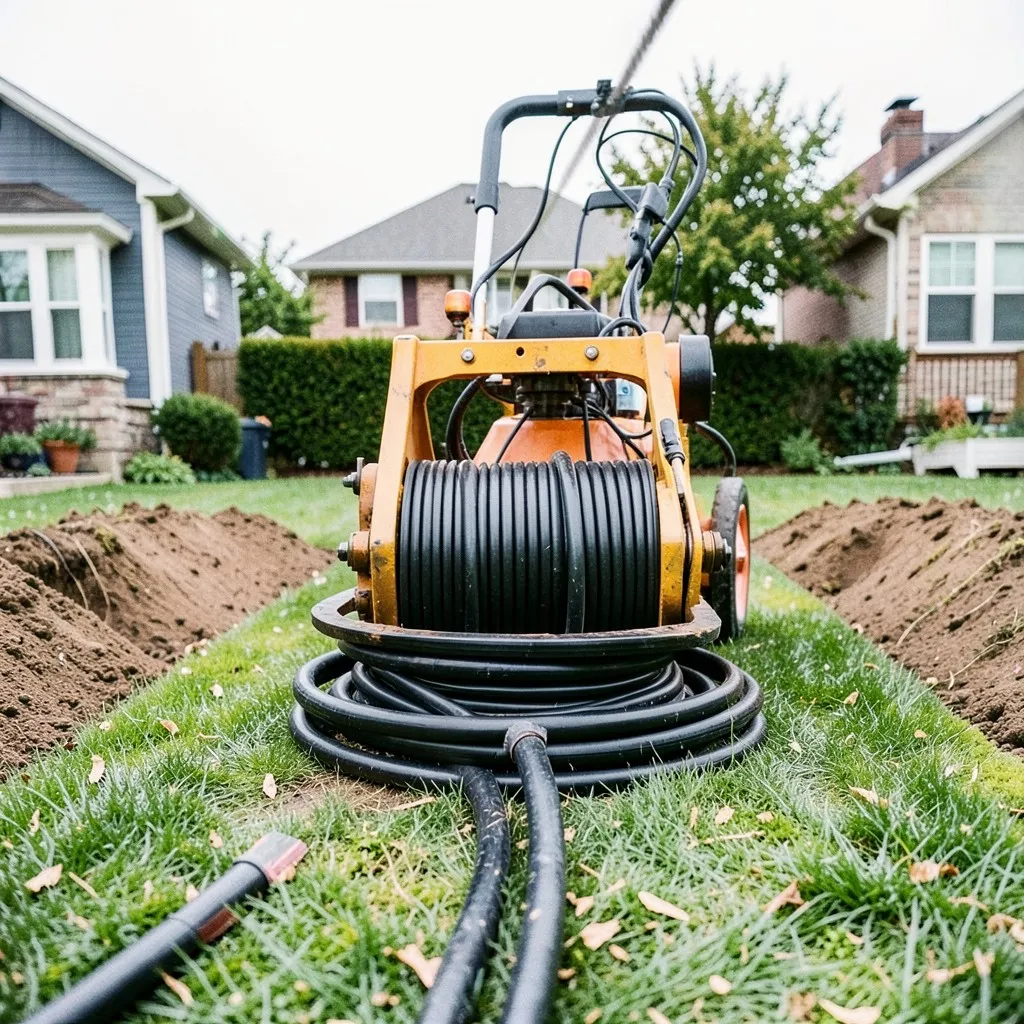
Pipe bursting is a trenchless replacement method used when the existing sewer lateral or water service line is too damaged for CIPP lining. A conical bursting head with a new HDPE (high-density polyethylene) pipe attached behind it is pulled through the old pipe by a hydraulic winch. The bursting head fragments the old pipe outward into the surrounding soil while the new pipe takes its place.
Why choose pipe bursting?
Handles fully collapsed or severely deteriorated pipes that CIPP cannot fix. Single-size or upsizing replacement (you can install a larger-diameter pipe than the original). Two small entry/exit pits required (typically 4×6 ft each), but no full trench across the lawn.
What are the limits of pipe bursting?
Requires soil conditions that allow the fragmented pipe to be pushed outward. Doesn't work well under streets with reinforced concrete or in extremely tight urban settings. Not suitable for pipes that share trenches with other utilities (gas, water, telecom) without careful planning.
How is the new pipe joined?
HDPE is heat-fused rather than glued or clamped. Pipe ends are faced square, heated against a plate until the material softens, then pressed together and held while the joint cools, producing a joint as strong as the pipe wall itself. Because the pulled-in run is fused into one continuous length before it enters the ground, there are no joints left underground for roots to find — which is the main reason a burst line tends to outlast the lateral it replaced.
What has to be located before bursting starts?
Every other utility sharing the corridor. The bursting head displaces the fragmented pipe outward into the surrounding soil, so a gas line, water service, or telecom duct running close alongside can be damaged by that displacement rather than by direct contact. A utility locate is mandatory, and in tight corridors a potholing pass to physically expose the neighbouring line is normal practice before the winch is set.
What does pipe bursting cost?
$5,500–$13,500 for a residential lateral, depending on length, soil conditions, and city restoration requirements (sidewalk, curb).
Researching the term is one thing — hiring for it is another. See sewer line repair services for scope, timelines, and what drives the price, or call (888) 530-4445 for a no-cost estimate.
For the full picture — materials, process, timelines and what drives the cost — read Sewer Line Repair: The Complete Guide.
What related terms should you know?
What sources back this up?
Need a verified plumber for sewer line repair?
AlertPlumber matches you with a licensed plumber for sewer line repair. Written estimate before any work begins.