
Overflow Drain
The secondary drain opening near the top of a bathtub or sink basin that prevents overflow by draining water before it spills over the edge.
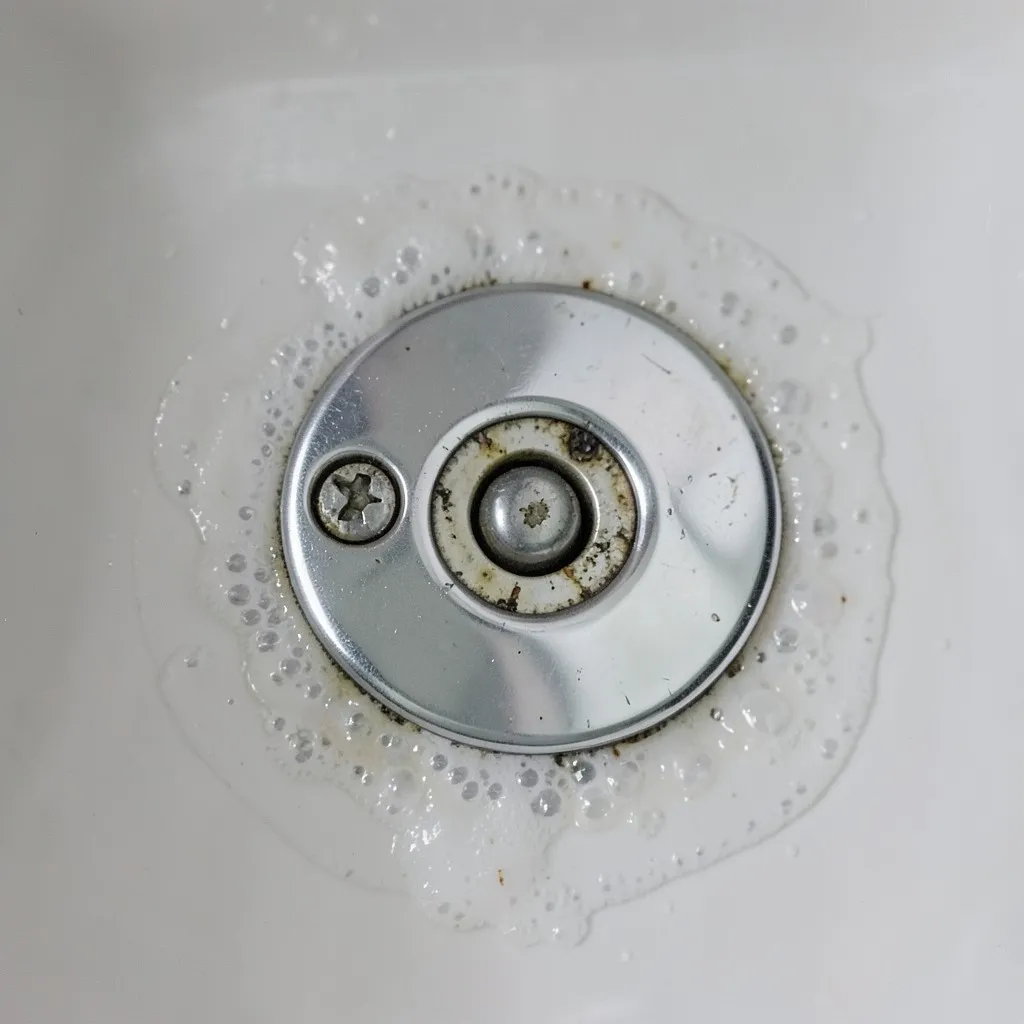
An overflow drain is a secondary drain opening positioned near the upper rim of a bathtub, sink, or basin. If water rises too high — because the primary drain is blocked and the faucet was left running — the overflow drain channels the excess water down through a port that connects to the drainpipe below, preventing the tub or sink from spilling onto the floor.
How do bathtub overflow drains work?
In a bathtub, the overflow is the oval or round faceplate near the top of the tub wall. Behind the faceplate is a vertical pipe (the overflow tube) that connects internally to the tub's main drain. Water that reaches the overflow level exits through this hole and drains through the overflow tube, bypassing whatever is blocking the main drain.
Trip-lever or push-pull — how do these drain connections differ?
Most tub overflow faceplates house either a trip-lever mechanism or a connection to a pop-up stopper:
- Trip-lever: a lever on the faceplate operates a plunger or rocker arm inside the overflow tube to open/close the drain. The drain itself is open; blocking happens in the overflow tube.
- Push-pull/toe-touch stopper: the stopper is in the drain opening itself; the overflow faceplate is cosmetic only (or houses no mechanism).
What maintenance and common issues affect overflow drains?
- Slow drain + hair clog: hair accumulates at the stopper mechanism inside the overflow body — remove the faceplate screws, pull out the assembly, and clean off hair and soap buildup
- Overflow seal gasket failure: the rubber gasket between the overflow faceplate and the tub can harden and allow water to leak inside the wall — replace the gasket (an inexpensive part) when resealing or recaulking the tub
- Trip-lever doesn't hold water: adjust the linkage rod length (usually a lock nut on the rod) to reposition the plunger
Sink overflow drains — the small hole(s) near the rim inside a pedestal or vessel sink — connect through a port in the sink's drain body and rarely require maintenance beyond keeping them free of soap buildup.
Researching the term is one thing — hiring for it is another. See drain cleaning services for scope, timelines, and what drives the price, or call (888) 530-4445 to talk to a local plumber about the job.
For the full picture — materials, process, timelines and what drives the cost — read Drain Cleaning: The Complete Guide.
What related terms should you know?
What sources back this up?
Need a plumber for drain cleaning?
Calls are connected to independent licensed local plumbers in our partner's network for drain cleaning. Ask for the license number and a written estimate before any work begins.