
Vent Stack
Vertical pipe extending through the roof that admits atmospheric air to the drain-waste-vent system, preventing trap siphonage.
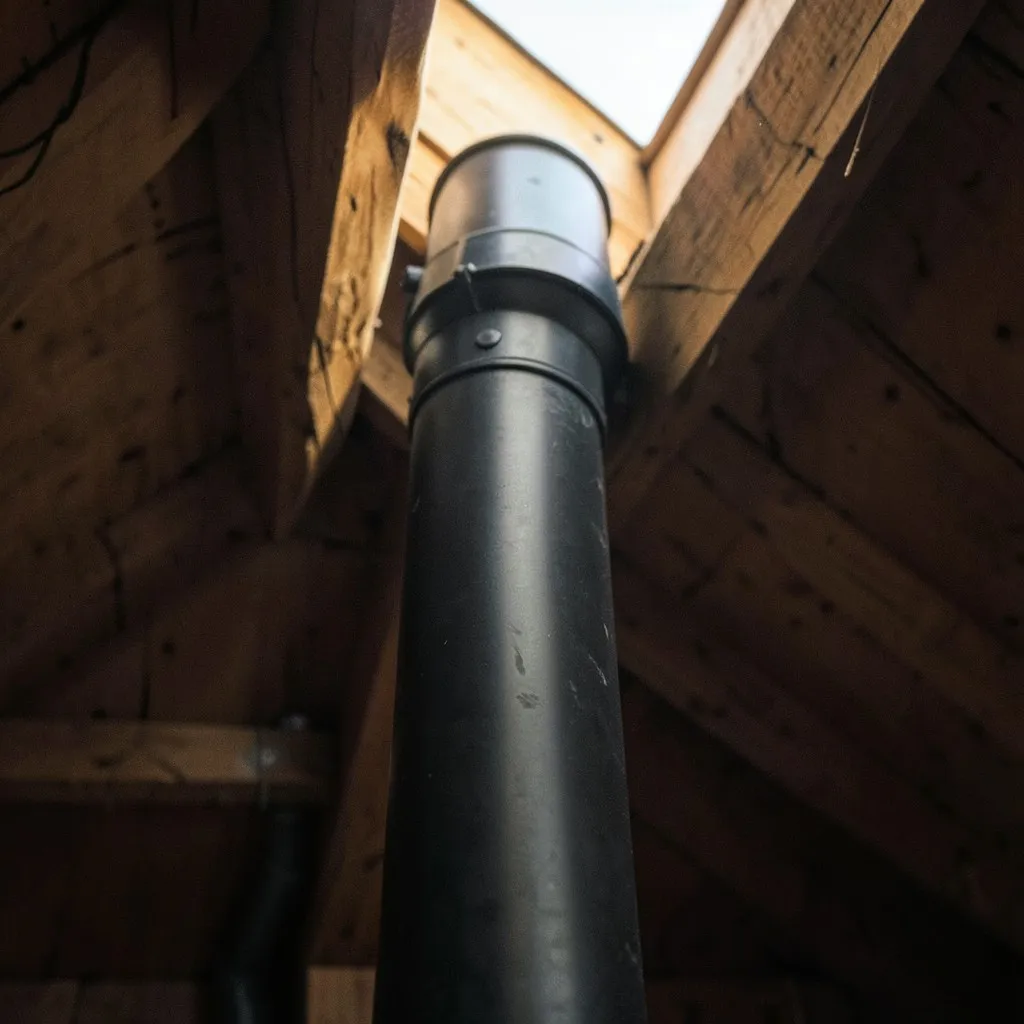
A vent stack is the vertical pipe in a drain-waste-vent (DWV) system that connects the drainage piping to the outside atmosphere, typically by terminating through the roof. Its function is to equalize pressure inside the drainage system. Without venting, water flowing down a drain creates a slug of negative pressure behind it that can pull the water seal out of nearby fixture traps, allowing sewer gas to enter the building.
The International Plumbing Code § 906 governs vent sizing and termination. The required size of a vent is based on the developed length of the vent and the total drainage fixture units (DFUs) carried by the drain it serves, looked up in IPC Table 906.1. For example, a 3-inch drain serving a typical residential bathroom group is commonly vented with a 2-inch stack, while a building drain handling many fixtures may require a 3 or 4-inch main vent. A vent may not be smaller than 1.25 inches and not less than half the diameter of the drain it serves.
Roof terminations have their own rules. The vent must extend at least 6 inches above the roof surface in most jurisdictions, and at least 12 inches in cold climates to prevent frost closure. Where the roof is used for any purpose other than weather protection, the vent must extend at least 7 feet above the roof. Terminations must be set back from windows, doors, and air intakes, generally a minimum of 10 feet horizontally or 3 feet above any opening within 10 feet.
Frost closure is a common cold-climate failure. When warm, moist sewer air rises through a small-diameter vent on a sub-zero night, the moisture freezes inside the pipe and gradually narrows the opening until the vent is sealed. The fix is to increase the vent diameter to 3 inches before it passes through the unconditioned attic, a transition required by code in much of the upper Midwest and Northeast.
Other failure modes include bird and squirrel nests inside the stack, ice dams forced over a low termination, and damaged pipe boots that allow roof leaks around the penetration. Symptoms of a venting problem are gurgling at fixtures, slow drains that clear when a nearby fixture is opened, and persistent sewer-gas odors. Air admittance valves (AAVs) are permitted in the IPC as a venting alternative for individual or branch venting where allowed by the local jurisdiction, but at least one open vent through the roof is still required for the building.
Researching the term is one thing — hiring for it is another. See drain cleaning services for scope, timelines, and what drives the price, or call (888) 530-4445 for a no-cost estimate.
For the full picture — materials, process, timelines and what drives the cost — read Drain Cleaning: The Complete Guide.
What related terms should you know?
What sources back this up?
Need a verified plumber for drain cleaning?
AlertPlumber matches you with a licensed plumber for drain cleaning. Written estimate before any work begins.