
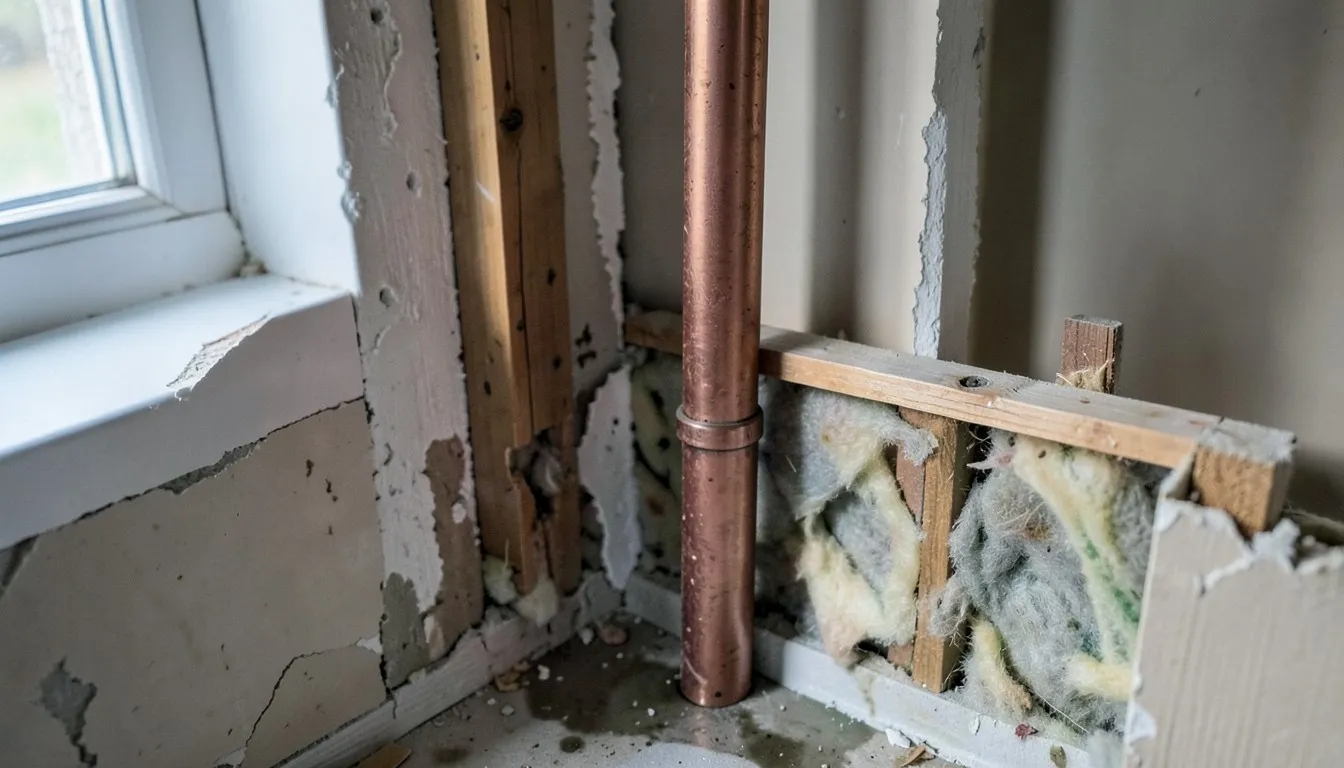
Emergency Burst Pipe Repair in Columbia, Missouri
Burst Pipe Repair in Columbia, Missouri is emergency repair for burst, cracked, or split pipes. Local conditions in Columbia: water measured at 15 gpg, a 20 in frost line and a median home age of 40 years.
Active water damage compounds by the hour — a licensed MO plumber is on call for Columbia right now.
What does the local plumbing data show for Columbia, MO?
Seeing these conditions at your place in Columbia? A state-licensed plumber can confirm it over the phone — free, no obligation.
What are the pipe conditions in Columbia, MO?
A burst pipe can release 100+ gallons per minute before the main shutoff is closed — structural and water damage accumulates in the first hour. Columbia homes with supply lines past their service life face the highest burst risk: galvanized steel corrodes from the inside out; polybutylene fittings fail at the acetal collar; copper pinhole failures escalate when the wall is disturbed. AlertPlumber routes your request to a Missouri-licensed plumber carrying mobile pipe inventory — couplings, push-fit fittings, and copper stock — for same-visit repair without an overnight parts run. Freeze events and frost-depth requirements add pipe insulation, exterior faucet winterization, and burst-risk assessment to service calls in this climate.
Columbia's housing stock spans multiple construction eras — median home age 40 years — meaning pipe materials and failure modes vary significantly by neighborhood and building vintage. An inspection-led approach that confirms pipe material before recommending a service path is standard practice for mixed housing profiles.
Very hard water in Columbia is a primary driver of accelerated appliance failure: water heater anode rods exhaust in 2–3 years instead of 6–8, scale deposits at fixture connections form within months of installation, and tankless heat exchangers accumulate mineral buildup that can reduce lifespan by half without regular descaling. A softener or whole-house conditioner is strongly recommended alongside any appliance service call.
Frost line depth in Columbia means supply lines and outdoor plumbing must be installed below the freeze threshold — typically 20 in — to prevent pipe burst during cold events. Exterior hose bibs, irrigation shutoffs, and any exposed pipe runs are the most common winterization service points in freeze-risk markets.
- Median home age
- 40 yrs
- Water hardness
- 15 gpg
- Frost line
- 20 in
- Permit
- $120
A licensed MO plumber reads these conditions the moment you describe the symptom.
What shapes plumbing demand in Columbia, MO?
CPVC becomes brittle in the 20–35-year range and snaps under thermal stress or incompatible pipe dopes. Early PEX fittings (pre-2010) may develop chloramine compatibility issues at 15–25 years. The 1980s–1990s housing stock in Columbia is entering its first wave of material-driven service calls — not from neglect, but from normal service-life progression.
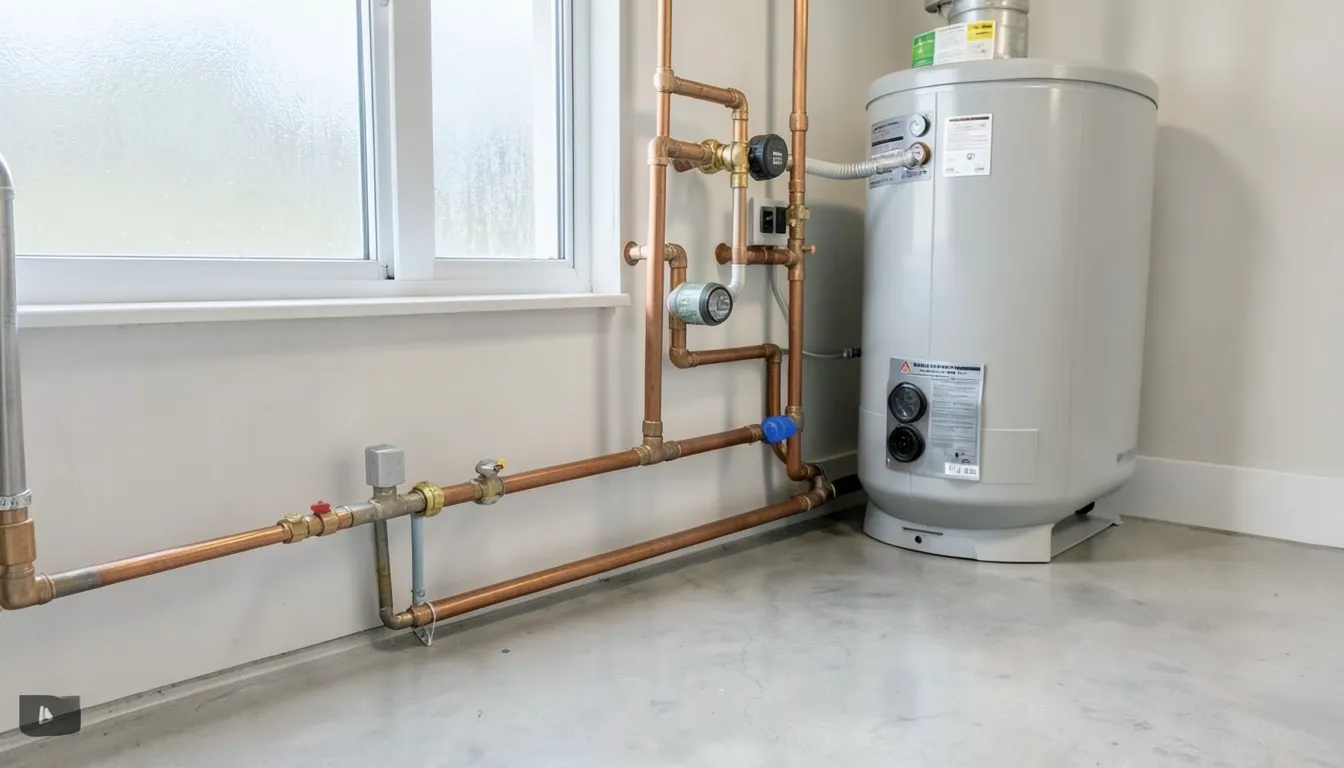
At 15–20+ GPG, calcium scale forces compressed equipment cycles in Columbia: tank heaters average 6–9 years vs. the 10–12-year national benchmark, and tankless units require annual descaling. Anode rods calcify within 12–18 months. Most plumbers here assess heater age against the local scale timeline — not the manufacturer's service life.
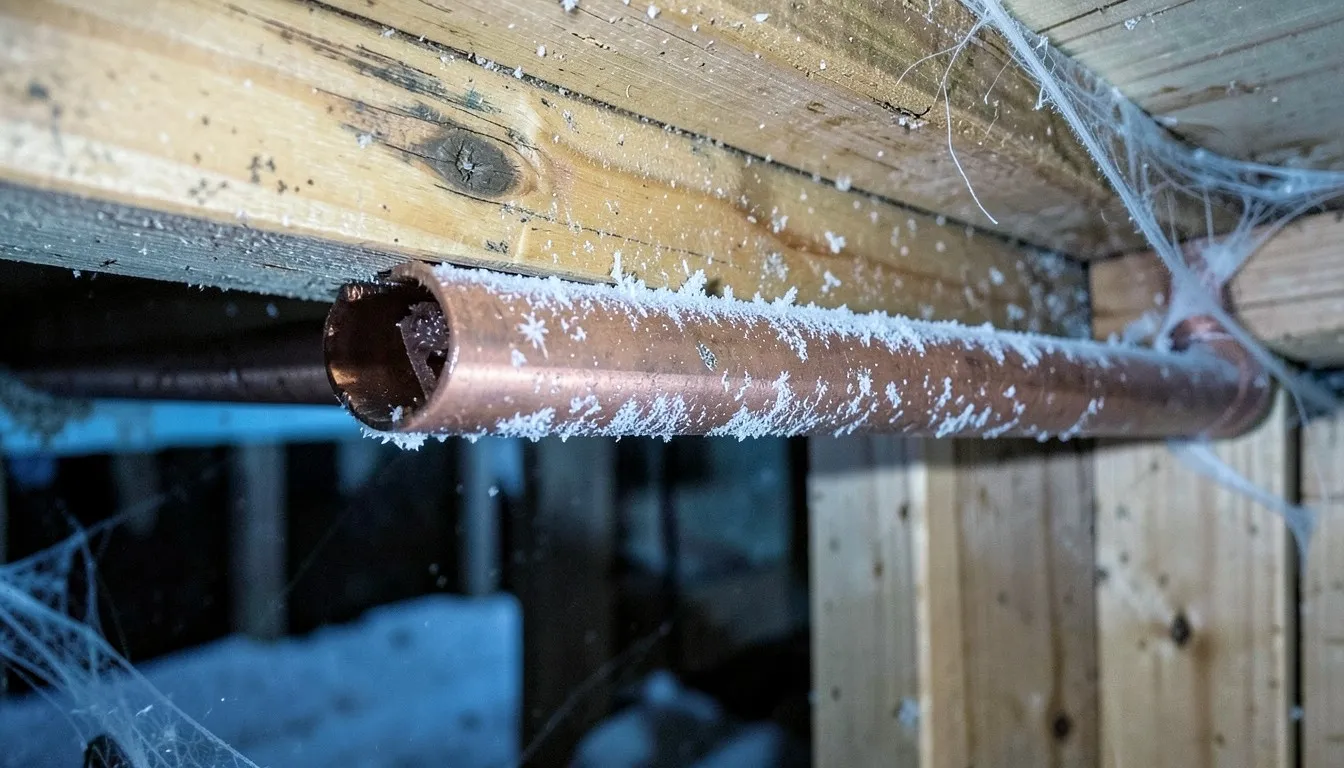
The primary surge in Columbia runs January–March, with a secondary wave at the spring thaw — when pipes that held through the freeze rupture as pressure is restored above 32°F. Scheduling competition peaks exactly when emergency calls are highest. Homeowners who wait for visible damage compete for the same limited plumber slots at the worst possible time.
Active damage in Columbia — how is it contained, assessed and restored?
Submit your Columbia address and describe the active damage — flooding, failed shutoff, burst or frozen line. AlertPlumber marks the request as priority and an MO-licensed plumber confirms receipt within 15 minutes, without routing through a national call center.
The plumber arrives with a confirmed ETA, locates the nearest shutoff, and maps the damage boundary — affected lines, access points, material condition. You receive a verbal assessment of what requires immediate containment and what can wait until the full repair scope is confirmed.
You approve a written containment and repair scope before any work begins. Temporary isolation is priced separately from full restoration. No phase proceeds without your explicit sign-off.
Burst Pipe Repair cost calculator — Columbia
Pre-filled for burst pipe repair in Columbia. Adjust the ZIP for a neighboring area, or change the service to compare. Calculator pulls from the city's scraped permit-fee + state plumber-density data.
Burst Pipe Repair emergency in Columbia?
Every hour without a repair increases structural risk and remediation cost. A verified plumber calls back with an ETA and a written estimate before any work begins.
What else do people ask about burst pipe repair in Columbia?
What's the going rate for burst pipe repair in Columbia, MO?
Burst pipe repair runs $450–$2,250 around Columbia — the national bracket is $500–$2,500, and this metro prices roughly 10% under that. Parts and labor make up the bulk of the bill; a plumber dispatched outside normal hours adds $150–$300 for the emergency call-out on top of that. Where your job falls in the range depends mostly on pipe location: an accessible basement run sits near the low end, a slab- or wall-buried section near the high end. Columbia's mix of newer subdivisions and older core housing means both scenarios come up regularly, so treat the on-site assessment as the real number, not the range.
How fast will an emergency plumber reach a burst pipe here?
AlertPlumber-matched crews target a 1–2 hour arrival window for an active burst anywhere in the Columbia metro. That window stretches when a hard freeze hits the whole region at once and every matched crew is already out on a call — Boone County logs roughly 65 sub-32°F nights a year, and a true cold snap can produce cluster events across the metro on the same night. Dispatch routes your call to whichever available crew is closest rather than holding to a fixed territory, which keeps response tight even when volume spikes.
A pipe just burst in my Columbia home — what do I do right now?
Find the main shutoff first — typically in the basement or a utility closet in Columbia housing stock — and close it fully; that single step stops the loss from compounding. Next, cut power at the breaker to any circuit feeding a flooded area, open the lowest faucet in the house to bleed remaining pressure out of the lines, and photograph the damage as it stands before anyone starts cleanup, since your insurer will want that record. Active flooding can run up thousands of dollars in damage per hour it keeps flowing, so the shutoff comes before the phone call.
Why do pipes burst in Columbia in the first place?
Freeze-thaw cycling drives most calls. Columbia sees roughly 65 nights a year below 32°F, and frost typically reaches 20 inches into the ground each winter — deep enough to hit uninsulated pipe in a crawlspace or an exterior wall cavity that was never properly sealed. Water expands about 9% as it freezes, and in a length of copper or PVC with nowhere for that expansion to go, the wall fails at its weakest point — often a joint, or a section already thinned by years of hard-water scale buildup.
Does a burst pipe get patched, or does the whole section need replacing?
A clean break in otherwise sound pipe is usually a same-visit fix: the plumber cuts out the damaged length and sets a push-fit coupling in under an hour. It's a different job when the surrounding run shows corrosion or scale, or when the failure sits at a joint in the 1980s–2000s PVC and copper that makes up most of Columbia's supply-line stock — at that point the plumber replaces the full run between fittings instead of patching one spot, because a second failure nearby is likely within the same season. That call gets made on-site once the plumber sees what's actually failing.
Will homeowners insurance pay for burst pipe damage in Columbia?
Missouri homeowners policies generally treat a burst pipe as sudden, accidental water damage, so the resulting drywall, flooring, and structural drying costs are typically covered subject to your deductible. What's usually excluded is the pipe itself — replacing the failed section is treated as a repair rather than damage, and comes out of pocket unless a service-line endorsement is on the policy. Slow leaks and freeze damage tied to a home sitting unheated are common denial reasons, so keeping interior temperatures above 55°F through Columbia's coldest stretches protects the claim as much as the pipe.
Which pipes in Columbia homes burst most often?
Columbia's housing splits into two risk pools. The metro's 40-year median home age puts most supply lines in 1980s–2000s PVC and copper, which fails at a scaled or corroded joint rather than along the run itself. The older core — the Benton-Stephens and Old Southwest neighborhoods among them — still has original galvanized steel dating to the 1880s–1940s in some houses, pipe that's typically been rusting from the inside for decades and sits past its practical replacement point regardless of whether it has burst yet. In both pools, crawlspace and exterior-wall runs carry the highest freeze risk each winter.
How long does a typical burst pipe repair visit take in Columbia?
An accessible break — basement, crawlspace, exposed wall — usually runs 1–3 hours from arrival to a tested repair. A run behind finished wall or under a slab adds 2–4 hours for opening access, making the repair, and pressure-testing before anything gets closed back up. Most Columbia calls fall into the first category, since crawlspace access is common across the metro's ranch and split-level housing stock. Drywall or flooring restoration afterward is a separate visit, usually a different trade, and isn't part of the plumbing repair window.
What can I do to stop pipes from bursting again next winter?
Prevention comes down to the same three moves every season: insulate crawlspace and exterior-wall pipe runs before the first hard freeze, keep interior temperatures above 55°F even in rooms that sit unused, and add heat tape to any exposed run in a home reaching down toward Columbia's 20-inch frost line. A leak-detection shutoff sensor ($80–$200) is worth adding on top of that — it closes the main automatically the moment it senses flow that doesn't match a normal-use pattern, which catches an overnight burst before it floods anything.
Are AlertPlumber-matched burst-pipe plumbers actually verified in Missouri?
Yes — every plumber AlertPlumber matches for burst-pipe work in the Columbia metro holds an active license from the Missouri Division of Professional Registration, and the matched crew stocks mobile burst-repair inventory including push-fit couplings and common fitting sizes. That inventory is what makes same-visit completion realistic on most calls rather than a return trip once parts arrive — worth confirming at booking if your situation is unusual, such as a buried line or multiple failure points.
Sixty seconds from now, a plumber can be working your problem.
Call and talk to dispatch, or put your number in the form below — a licensed Missouri plumber calls you back about the burst pipe repair and gives a written estimate by phone.
Need a burst pipe repair callback in Columbia?
In a meeting, with the kids, or just prefer not to hold? Drop your ZIP and number below. AlertPlumber routes your request to a verified plumber in your area — they’ll call you back directly.
- 1 Submit your info. ZIP, phone, and what kind of work you need.
- 2 AlertPlumber matches you with a verified plumber serving your area.
- 3 The plumber calls you back with a written estimate, no obligation.
Burst Pipe Repair in Columbia — fast response
Acute plumbing failures cannot wait. AlertPlumber has verified Missouri plumbers available for burst pipe repair in Columbia — call now or submit the form above for rapid callback.