
Main Shutoff Valve
The valve that controls all water flow into a building. Closing it immediately stops water to every fixture — essential during emergencies and repairs.
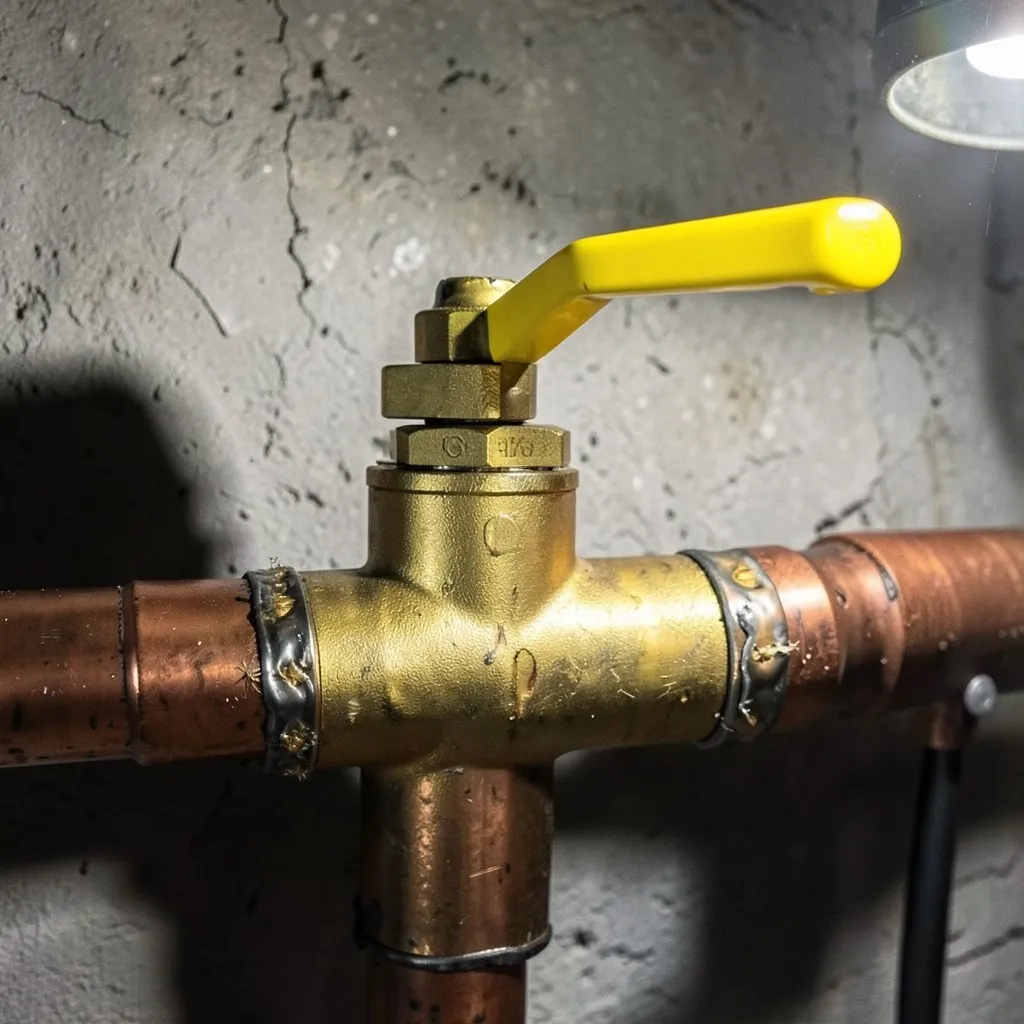
The main shutoff valve (also called the main water valve or main stop) is the single valve that controls all water flow entering your home or building. Closing it stops water to every fixture, appliance, and pipe inside — making it the first thing to locate in any plumbing emergency like a burst pipe, major leak, or flooding.
Where is the main shutoff valve located?
Location varies by climate and construction type:
- Basement or crawl space: on the wall facing the street, near where the water line enters the foundation — most common in cold-climate homes.
- Utility closet or mechanical room: in slab-foundation homes and condos.
- Outside near the foundation: in warm-climate states like Florida, California, and Texas.
- Curb box (street shutoff): a secondary shutoff in the sidewalk/yard, owned by the water utility — used by utility workers, requires a special key.
What types of main shutoff valves are there?
Ball valve: a quarter-turn lever handle; handle parallel to pipe = open, perpendicular = closed. The modern standard — fast, reliable, rarely fails. Gate valve: multi-turn wheel handle; takes 8–12 full rotations to close. Common in homes built before 1980. Gate valves can seize when unused for years and may not fully close if the gate corrodes — if yours is a gate valve, consider upgrading to a ball valve.
Why should you know where your main shutoff valve is?
Every second a burst pipe runs before the main is closed adds gallons of water damage. A pipe discharging at 8 gallons per minute floods 480 gallons in one hour. Every household member should know the location of the main shutoff and be able to close it in the dark.
What maintenance does a main shutoff valve need?
Exercise the valve (open and close it fully) once a year to prevent seizing. If the valve leaks at the stem or won't fully close, replace it — a licensed plumber charges $200–$600 for a main shutoff replacement including shutting off the water at the street. If your home is over 30 years old and still has a gate valve, upgrading to a ball valve during any planned repair is worthwhile.
Researching the term is one thing — hiring for it is another. See whole-home repipe services for scope, timelines, and what drives the price, or call (888) 530-4445 for a no-cost estimate.
For the full picture — materials, process, timelines and what drives the cost — read Whole-Home Repipe: The Complete Guide.
What related terms should you know?
What sources back this up?
Need a verified plumber for whole-home repipe?
AlertPlumber matches you with a licensed plumber for whole-home repipe. Written estimate before any work begins.