
Burst Pipe
A pipe that has ruptured due to pressure — most commonly from freezing, corrosion, or physical damage — releasing water that can cause thousands of dollars in structural damage within minutes.
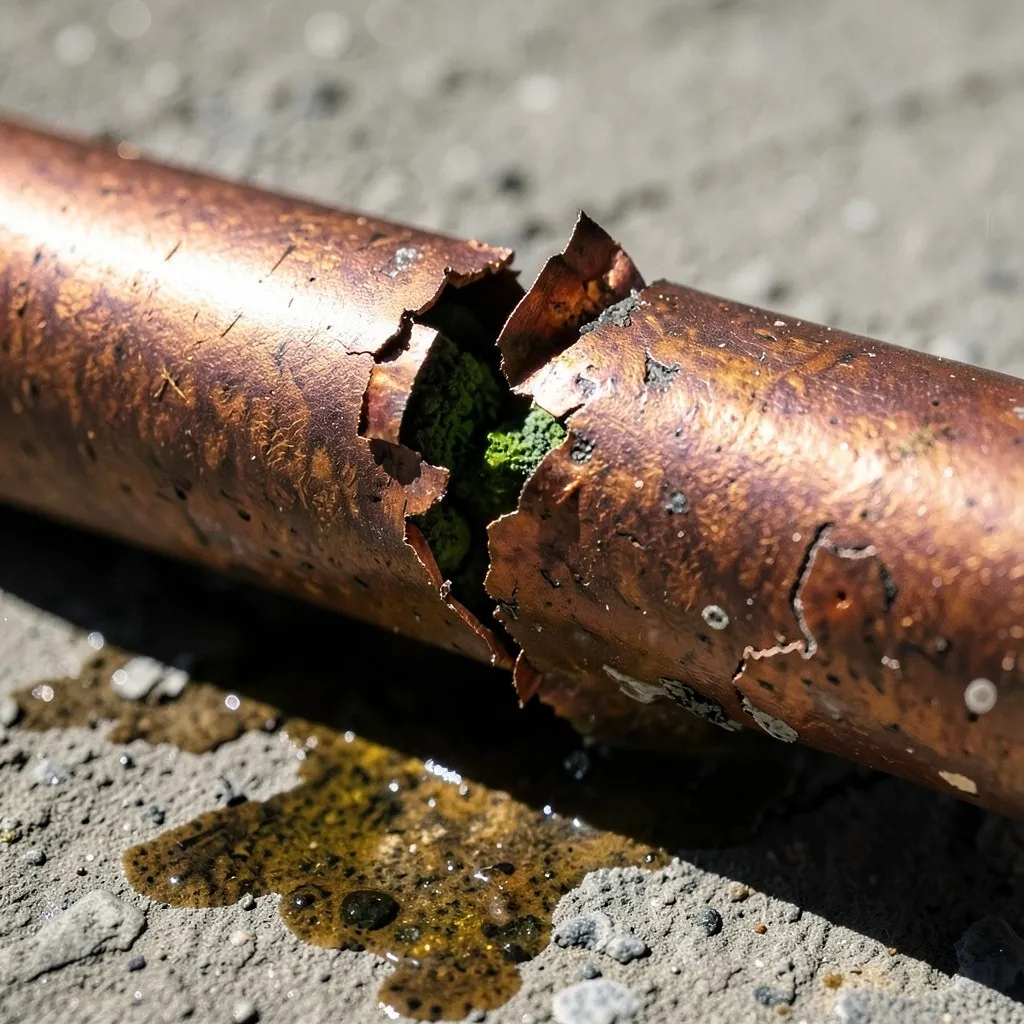
A burst pipe is a pipe that has ruptured, creating an uncontrolled release of water. Burst pipes are plumbing emergencies that can discharge hundreds of gallons per hour — a ¾-inch supply line at 60 PSI can release over 10 gallons per minute. Knowing how to respond in the first minutes dramatically limits the damage.
What causes pipes to burst?
- Freezing: the most common cause in cold climates. Water expands 9% when it freezes — in a rigid pipe, this pressure (up to 2,000 PSI) cracks or splits the pipe, which often doesn't appear until the ice thaws and water rushes out.
- Corrosion: galvanized steel pipes in older homes develop pinholes that grow into splits over time. Aggressive water chemistry (low pH, high chlorine) accelerates copper pitting.
- Water hammer: repeated hydraulic shock from fast-closing valves (solenoid valves, quick-closing fixtures) weakens pipe joints and fittings over time.
- High pressure: sustained pressure above 80 PSI stresses joints and fittings — a failed pressure reducing valve (PRV) can allow street pressure (80–150 PSI) to reach household pipes rated for 80 PSI maximum.
- Physical damage: construction, nail guns, and drilling accidents puncture pipes concealed in walls.
- Age and material: polybutylene pipes (installed 1978–1995) are notorious for splitting due to chlorine degradation — an estimated 10 million U.S. homes still have polybutylene supply systems.
What should you do immediately?
Water utilities advise: “Know where the main valve shut off is for your home. This valve is often found in a crawl space or basement on the wall near the front outside spigot or near the hot water heater in homes on a slab. If you have a pipe burst in your home, immediately close this valve to shut off the water supply to your home and help prevent further water damage.” — Clayton County Water Authority (Georgia), read 2026-09-29
The American Red Cross advises: “Learn how to use equipment safely. Do not touch electrical equipment if it is wet or if you are standing in water because you could get electrocuted.” — American Red Cross, read 2026-09-29
- Open all faucets to drain remaining water from the system and relieve pressure.
- Document damage with photos before cleanup.
- Call a plumber and, if damage is significant, your homeowner's insurance.
How is a burst pipe repaired?
A burst supply pipe requires cutting out the damaged section and replacing it — either with the same material (copper-to-copper, PEX-to-PEX) or a compatible material with appropriate transition fittings. Push-fit slip couplings (SharkBite) make emergency repairs fast without a torch. A straightforward burst pipe repair is a single plumber visit; extensive damage requiring wall access and drywall repair costs several times more (ranges in the burst pipe repair guide).
Researching the term is one thing — hiring for it is another. See burst pipe repair services for scope, timelines, and what drives the price, or call (888) 530-4445 to talk to a local plumber about the job.
For the full picture — materials, process, timelines and what drives the cost — read Burst Pipe Repair: Emergency Response Guide.
For the full picture — materials, process, timelines and what drives the cost — read Emergency Plumber: What to Expect.
What related terms should you know?
What sources back this up?
Need a plumber for burst pipe repair?
Calls are connected to independent licensed local plumbers in our partner's network for burst pipe repair. Ask for the license number and a written estimate before any work begins.