
Water Heater Replacement: The Complete Guide
How to replace a water heater in 2026 — tank vs. heat pump vs. tankless, sizing, IRS 25C credits, cost by type. Licensed plumber required.
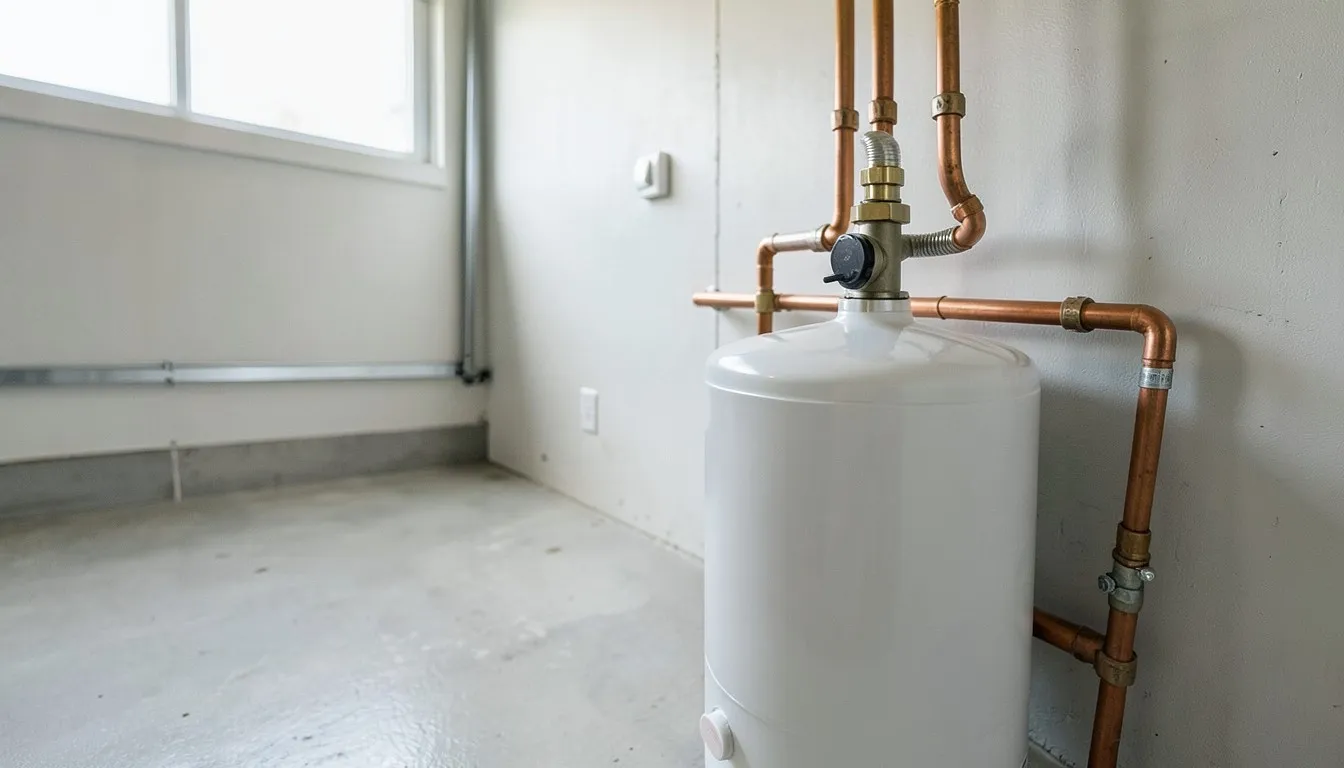
Water heater replacement costs $800–$1,800 installed for a gas tank unit; $700–$1,500 for electric; heat pump water heaters run $1,500–$4,000 but qualify for up to $600 in IRS Section 25C tax credits under the Inflation Reduction Act per IRS Energy Efficient Home Improvement Credit. Replacement triggers: age over 10–12 years for gas (12–15 for electric), rust-colored hot water, repeated T&P valve trips, or sediment rumbling that doesn't resolve after flushing. The matched plumber pulls permits, handles disposal, and provides a written estimate before starting per BLS plumber labor benchmarks.
What is water heater replacement and when is it necessary?
Water heater replacement is the removal of an existing water heating unit — tank or tankless — and installation of a new unit meeting current energy efficiency and plumbing code standards. It is the third most common significant residential plumbing service, after drain cleaning and pipe repair, per BLS occupational data for plumbers.
Unlike most appliance replacements, water heater installation has meaningful code requirements: proper venting (for gas units), T&P relief valve sizing and discharge piping, expansion tank requirements, seismic strapping in applicable zones, and permit/inspection requirements in most jurisdictions. Per IPC Chapter 5 (water heaters), water heater installation requires a licensed plumber in most states and a building permit in the majority of jurisdictions.
Repair vs. replacement: the core decision
Most water heater service calls are for repair — a failed thermocouple, a burned heating element, a deteriorating anode rod. The repair-vs-replace decision hinges primarily on age and failure type:
- Age under 6 years (gas) or 8 years (electric) — Repair almost always makes sense unless the tank itself is leaking.
- Age 6–10 years (gas) or 8–12 years (electric) — Evaluate repair cost vs. replacement cost. If repair exceeds $400 on a unit in this age range, replacement becomes competitive on total lifetime cost per DOE Energy Saver water heater replacement guidance.
- Age over 10 years (gas) or 12 years (electric) — Replacement is almost always the better economic decision. These units are in the final years of expected lifespan; a repair today may be followed by another failure within 12 months per DOE water heater lifespan data.
- Tank leak (any age) — Replace. A leaking tank cannot be repaired. Water from a leaking water heater tank is classified as clean water damage initially, but if unaddressed, tank failures can cause $5,000–$20,000 in structural water damage per Insurance Information Institute water damage cost data.
See the signs you need a new water heater guide for a detailed diagnostic checklist.
Water heater types: tank, heat pump, and tankless
The 2026 residential water heater market is defined by four major technology types, each with distinct installation requirements, operating costs, and lifespans. Replacing a failed unit with a straight like-for-like tank swap is often not the right long-term call — especially for homeowners replacing a gas tank with electricity access or in a climate-appropriate space for a heat pump unit.
Conventional storage tank water heaters
A conventional tank water heater maintains a reservoir of hot water (30–80 gallons) at a set temperature (typically 120°F per CDC Legionella prevention guidance: 120°F minimum) by continuously cycling a gas burner or electric elements to offset standby heat loss. The tank is insulated but loses heat to the surrounding environment continuously — this "standby loss" represents 20–40% of a typical household's water heating energy per DOE Energy Saver water heater efficiency data.
Conventional tanks are the default replacement in most situations because: lowest initial cost, fastest professional installation (2–4 hours), and widest availability of repair parts. Uniform Energy Factor (UEF) for conventional gas tanks is 0.59–0.70; for electric, 0.88–0.95 per EPA Energy Star water heater UEF ratings.
Heat pump water heaters (HPWHs)
A heat pump water heater moves heat from the surrounding air into the tank rather than generating heat directly — the same technology as a refrigerator running in reverse. This process is 2–4× more efficient than electric resistance heating, yielding UEF ratings of 3.2–4.0 per EPA Energy Star HPWH efficiency data. A household switching from an electric tank to an HPWH saves an average of $550 per year in water heating costs per DOE heat pump water heater energy savings analysis.
HPWHs have specific installation requirements:
- Space requirement — The unit needs a minimum of 700–1,000 sq ft of unconditioned or semi-conditioned space around it (garage, basement, utility closet with adjacent large space) to have sufficient air volume to draw heat from per DOE Energy Saver heat pump water heater installation requirements.
- Temperature range — HPWHs operate in ambient temperatures of 40°F–120°F. In cold climates, they may switch to electric resistance heating (less efficient) when ambient air drops below 40°F per EPA Energy Star HPWH operating conditions.
- Condensate drain — The dehumidification process produces condensate that must be routed to a drain per IPC § 504.7 heat pump water heater condensate.
- Electrical service — Most HPWHs require a 240V/30A circuit. Older homes wired for a 30-gallon standard electric tank may already have this circuit; verify before ordering the unit.
HPWHs qualify for a 30% federal tax credit (up to $2,000) under IRS Section 25C per IRS Energy Efficient Home Improvement Credit (25C). Gas tankless water heaters do NOT qualify for this credit — it applies only to heat pump units.
Tankless (on-demand) water heaters
Tankless water heaters heat water on demand rather than maintaining a standing reservoir. Gas units use a high-BTU modulating burner (150,000–200,000 BTU/hr for whole-home units); electric units use high-amperage resistance elements. Neither stores hot water, so standby losses are near zero. Full detail on tankless selection, installation, and ROI is covered in the tankless water heater installation cornerstone guide.
Key consideration when choosing between tank and tankless at replacement time: tankless requires higher upfront cost ($2,000–$5,000 installed for gas, $1,500–$4,000 for whole-home electric per BuildZoom tankless installation cost data) and may require gas line upgrades or electric panel upgrades. The payback period for the gas tankless upcharge vs. an efficient gas tank unit is typically 8–12 years per DOE tankless vs. tank ROI analysis. Use the tankless vs. tank comparison guide to evaluate whether the upgrade makes sense for your household.
Solar water heaters
Solar thermal water heating uses roof-mounted collectors to heat water circulated to a storage tank. A viable option in sunny markets with south-facing roof space. Installation cost is significantly higher ($2,500–$5,000+) and all systems require a backup heating element for low-sun periods. Per EPA Energy Star solar water heater program, solar thermal units are being displaced in some markets by the combination of heat pump water heaters plus solar PV — the electrical efficiency of HPWHs makes this combination cost-competitive with direct solar thermal in most US climates.
What are 7 signs your water heater needs replacement?
Most water heater failures don't happen suddenly — they signal their decline over weeks or months. Catching these signs early allows a planned replacement rather than an emergency repair.
1. Age past the expected lifespan threshold
Per DOE Energy Saver water heater lifespan data, design life for residential water heaters:
- Conventional gas tank: 8–12 years
- Conventional electric tank: 10–15 years
- Heat pump water heater: 12–15 years
- Gas tankless: 20+ years (with proper descaling maintenance)
| Water Heater Type | Expected Lifespan |
|---|---|
| Conventional gas tank | 8–12 years |
| Conventional electric tank | 10–15 years |
| Heat pump water heater | 12–15 years |
| Gas tankless | 20+ years (with proper descaling maintenance) |
You can find your unit's installation date on the data plate (usually on the side of the tank). The serial number often encodes the manufacturing date per manufacturer conventions (the first two digits or letters often indicate year and month). If your unit is beyond its lifespan threshold, proactive replacement avoids the 2am emergency call when it finally fails.
2. Rust-colored or metallic hot water
Rust in hot water — specifically rust that appears in HOT water but not cold — indicates internal tank corrosion. The sacrificial anode rod (a magnesium or aluminum rod designed to corrode in place of the tank) has depleted, and the steel tank is now corroding directly. Per EPA Lead and Copper Rule guidance on corrosive water, this condition produces hot water carrying rust particulates and potentially elevated heavy metal concentrations. Rust in hot water is an indicator for replacement, not repair — the anode depletion is irreversible in the tank once internal corrosion has begun. Exception: if the home also has galvanized supply pipes, the rust may originate from those pipes rather than the tank — run cold water for 30 seconds to check whether cold water is also slightly rusty.
3. Sediment rumbling or popping sounds
In hard water markets (USGS water hardness data — above 7 GPG affects ~85% of US households), mineral scale accumulates on the bottom of the tank over years. As the burner fires, water trapped under the sediment layer superheats and creates rumbling or popping sounds. Per EPA WaterSense water heater efficiency and scale guidance, heavy sediment accumulation reduces heating efficiency, increases fuel consumption, and stresses the tank bottom. A single sediment flush (draining the tank through the drain valve) can sometimes restore normal operation on younger units with mild accumulation. On units over 8 years old with heavy sediment, the flush may not improve operation significantly — the tank bottom may already have pitting from the long-term heat stress.
4. T&P valve trips or relief valve weeping
The Temperature and Pressure Relief (T&P) valve is a safety device that opens when the water temperature exceeds 210°F or pressure exceeds 150 PSI to prevent tank rupture per IPC § 504.6 T&P valve requirements. A T&P valve that has tripped or is weeping (dripping continuously) indicates one of two problems: the valve itself is faulty (needs replacement, typically $75–$150) or the system pressure or temperature is actually elevated (indicating a thermostat failure or PRV problem). A repeatedly tripping T&P valve — more than once or twice in a year — on an older unit often indicates a deteriorating thermostat driving elevated temperatures, which is a replacement indicator. Never cap or disable a T&P valve — tank explosion risk exists if the relief mechanism is blocked per CPSC water heater safety guidance.
5. Visible tank leak or puddle at the base
A puddle of water at the base of the tank, or rust staining on the tank exterior at the base, indicates the tank is leaking. A leaking tank cannot be repaired — the steel has failed and replacement is required. This is also an emergency because tank failures can cascade: a small bottom leak can suddenly accelerate and release 40–80 gallons onto the floor. Per Insurance Information Institute water damage data, water heater failures are among the top five causes of residential water damage claims. Before concluding the tank is leaking, verify that the puddle is not condensation (common on cold mornings when a hot tank is surrounded by cold air) or water dripping from the T&P relief valve discharge pipe.
6. Insufficient hot water or declining recovery rate
If the hot water supply that used to serve the household no longer does — shorter showers before cold, or the dishwasher running cold — either the household demand has increased or the heater's capacity has declined. Sediment accumulation reduces effective tank capacity (sediment takes up space that should be water). Heating element failure on electric units reduces recovery rate. On units over 10 years old, this often indicates multiple component deterioration rather than a single fixable failure — replacement is more reliable than trying to repair multiple aging components.
7. Rising energy bills without usage change
Water heating represents 14–18% of a typical home's energy use per DOE household energy use breakdown. As a tank water heater ages, sediment insulates the heat source from the water, requiring longer run times. A unit with heavy sediment can consume 25–30% more energy than when new per EPA Energy Star water heater efficiency data. If your gas or electric bills have increased without a corresponding change in usage patterns or fuel prices, your water heater may be the cause. A new Energy Star-certified unit at replacement restores efficiency.
How do you size a replacement water heater?
The most common mistake in water heater replacement is sizing by tank volume alone. The correct metric is first-hour rating (FHR) for storage tanks or flow rate (GPM) for tankless units.
First-hour rating (FHR): the right metric for tank heaters
Per DOE Energy Saver water heater sizing guide, the first-hour rating measures how many gallons of hot water a unit can supply in one hour starting with a full hot tank. It accounts for both the initial stored volume AND the unit's recovery rate (how fast it can heat new incoming cold water). A 40-gallon tank with a high BTU burner may have a higher FHR than a 50-gallon tank with a smaller burner. FHR is listed on the EnergyGuide label affixed to every unit.
Estimating household peak-hour demand
To size correctly, estimate your household's peak-hour hot water demand — the hour of highest simultaneous use:
- Shower: 10–15 gallons per shower (at standard flow rate)
- Bathtub: 30–40 gallons per fill
- Dishwasher: 6–12 gallons per cycle
- Clothes washer (hot): 25–40 gallons per cycle
- Kitchen sink: 2–4 gallons per use
Per DOE water heater sizing calculator methodology, household size general guidelines:
- 1–2 people: FHR 30–40 gallons (30–40 gallon tank)
- 2–3 people: FHR 40–50 gallons (40–50 gallon tank)
- 3–4 people: FHR 50–60 gallons (50 gallon tank typical)
- 5+ people: FHR 60–80 gallons (50–80 gallon tank, or two units, or tankless)
| Household Size | Recommended First-Hour Rating (FHR) |
|---|---|
| 1–2 people | 30–40 gallons |
| 2–3 people | 40–50 gallons |
| 3–4 people | 50–60 gallons |
| 5+ people | 60–80 gallons (or two units, or tankless) |
AHRI directory: verifying efficiency ratings
The AHRI Directory of Certified Products is the authoritative database of certified heating equipment efficiency ratings. Before accepting a plumber's equipment recommendation, look up the specific model in AHRI to verify the UEF rating and FHR. The AHRI-certified UEF is the value used to calculate Energy Star qualification and IRS 25C credit eligibility.
Sizing in hard water markets
In markets with water hardness above 11 GPG per USGS water hardness by region, consider sizing up by one unit (e.g., 50-gallon instead of 40-gallon) — scale accumulation will progressively reduce effective capacity over time. Alternatively, a water softener installed upstream of the water heater dramatically reduces scale accumulation and is the preferred long-term solution per EPA WaterSense water heater scale guidance. See the water softener installation service page for sizing guidance.
Gas vs. electric water heater: which is right for your home?
The gas vs. electric decision has energy cost, installation cost, and long-term efficiency implications. The right answer depends on your existing infrastructure, local energy prices, and climate.
Fuel cost comparison
Per EIA Annual Energy Outlook, the US average in 2024:
- Natural gas: $14–$16 per million BTU (varies widely by region)
- Electricity: $36–$44 per million BTU (at $0.13–$0.15/kWh)
This makes gas historically cheaper to operate per unit of heat delivered — a conventional gas tank typically costs $300–$500/year to operate vs. $400–$600/year for an equivalent conventional electric tank per DOE annual water heating cost comparison data. However, per EIA state-level electricity price data, electricity rates vary dramatically by state — in states with low electricity rates (the Pacific Northwest, parts of the Southeast), the cost differential narrows significantly. And when comparing gas to a heat pump water heater (not conventional electric), the equation reverses: heat pump units are typically 2–3× cheaper to operate than gas tanks in most US markets.
Infrastructure requirements
- Gas water heater — Requires an existing natural gas or propane line, a gas shutoff valve, and proper venting (atmospheric draft or power vent). Converting from electric to gas requires a gas line extension — cost varies from $200–$800+ depending on run length per BuildZoom gas line extension cost data. Gas water heaters also require venting for combustion exhaust per International Fuel Gas Code — venting requirements.
- Electric water heater (standard) — Requires a 240V/30A circuit. Most homes with an existing electric tank already have this circuit. Converting from gas to electric standard tank saves on installation complexity but increases operating cost in most markets.
- Heat pump water heater — Requires 240V/30A (same as standard electric tank), adequate space (700+ sq ft surrounding ambient air), ambient temperature above 40°F for efficient operation, and a condensate drain. Most straightforward in garages and basements.
Gas availability and future considerations
In most US markets, switching from gas to electric at water heater replacement is increasingly viable as electricity grid emissions intensity decreases and heat pump efficiency improves. Per EIA natural gas price trends, natural gas prices have shown significant volatility (2022: $6.45/MMBTU; 2023 average: $2.53/MMBTU). Homeowners in jurisdictions considering gas restrictions (some California cities and New York localities have banned new gas hookups) should factor this into replacement decisions. The IRS 25C heat pump credit provides a meaningful financial incentive to make the transition at replacement time per IRS Section 25C HPWH credit.
How do heat pump water heaters work, and what tax credits apply?
Heat pump water heaters are the highest-efficiency electric water heating option available in 2026 and are the primary beneficiaries of the IRS Section 25C tax credit under the Inflation Reduction Act. Understanding how they work — and whether your home can support one — is critical for any homeowner replacing an electric tank water heater.
How HPWHs achieve 3–4× efficiency
A conventional electric resistance water heater converts 1 kWh of electricity into 1 kWh of heat — 100% efficiency by definition. A heat pump water heater moves heat rather than generating it: for every 1 kWh of electricity consumed, an HPWH moves 3–4 kWh of heat from ambient air into the tank. This coefficient of performance (COP) of 3.0–4.0 makes HPWHs the most efficient electric water heating technology available per EPA Energy Star HPWH COP ratings.
The practical implication: a 50-gallon HPWH replaces a 50-gallon electric tank and uses approximately 1/3 to 1/4 of the energy per DOE HPWH energy consumption comparison. At the national average electricity rate of $0.15/kWh, a typical household saves $550–$700/year in water heating costs vs. a conventional electric tank.
IRS Section 25C tax credit: what qualifies and how much
Per IRS Energy Efficient Home Improvement Credit § 25C, the Inflation Reduction Act (effective 2023–2032) provides:
- 30% of the cost of qualified energy-efficient home improvements per year
- Annual cap of $2,000 for heat pump water heaters and heat pump HVAC combined
- Applies to the product cost and installation labor
- Not a refundable credit — it reduces tax liability but does not generate a refund if your tax bill is less than the credit amount
What qualifies: Heat pump water heaters meeting the efficiency standard in effect at the time of installation. The unit must be placed in service in your primary residence. Per IRS § 25C qualifying product requirements, the property must be placed in service in the US and used as a principal residence. The credit applies to units meeting Energy Star Most Efficient criteria per EPA Energy Star Most Efficient HPWH criteria.
Gas tankless water heaters do NOT qualify for the § 25C credit. The credit is specifically for heat pump technology. Gas water heaters (tank or tankless) are excluded per IRS § 25C exclusions.
Installation requirements and space planning
HPWHs have specific space requirements that don't apply to conventional tanks:
- Ambient air volume — The heat pump draws heat from surrounding air. Most manufacturers require a minimum of 700–1,000 sq ft of unconditioned or semi-conditioned space per DOE HPWH space requirements. A standard closet installation (common for electric tank replacement) doesn't have sufficient air volume — this is the most common HPWH installation error.
- Ambient temperature range — Operates efficiently between 40°F–120°F. Below 40°F, the unit switches to electric resistance mode (less efficient). In cold climates with an attached garage, verify winter temperatures stay above 40°F, or consider installing in a conditioned space per DOE HPWH climate zone guidance.
- Condensate drain — The dehumidification process produces condensate (typically 1–2 gallons per day in humid climates). Requires routing to a floor drain or condensate pump per IPC § 504.7 condensate disposal.
- Noise consideration — HPWHs operate at approximately 50–55 dB when running — similar to a dishwasher. This is a meaningful factor if the unit is near sleeping areas. Most installations in garages and utility rooms are not problematic.
Best and worst HPWH installation scenarios
Ideal: Replacing a conventional electric tank in a garage, unfinished basement, or large utility room with floor drain and 240V/30A service already in place. The installation is often 2–4 hours with no infrastructure upgrades required.
Challenging: Replacing an electric tank in a small interior closet — insufficient air volume. Requires either relocating the unit to a larger space or installing a ducted HPWH that draws air from an adjacent larger area.
Not viable without significant work: Replacing a gas tank with an HPWH when no 240V circuit exists in the installation location — requires electrical panel work and new circuit run.
What does the water heater installation process involve?
Understanding the installation process helps you evaluate what a plumber quote covers and ensure the work is being done correctly and to code.
Permit requirement (nearly universal)
Water heater replacement requires a permit in the vast majority of US jurisdictions. Per City of Boston Inspectional Services — water heater permit requirements and City of Phoenix Development Services — plumbing permits, water heater replacement is a permitted plumbing project requiring a licensed plumber and post-installation inspection. The permit ensures compliance with T&P valve discharge piping, seismic strapping (in applicable earthquake zones), clearance requirements, and fuel line integrity for gas units. A plumber who offers to "skip the permit" to save time is exposing you to future liability when the home is sold (permit records are checked in most states during real estate transactions) and to unverified safety compliance.
Removal of the old unit
Old unit removal involves draining the tank (25–80 gallons), disconnecting gas or electrical service, capping off and disconnecting water supply lines, and physically removing the old unit (which weighs 120–200+ pounds when partially full). A licensed plumber handles this as part of standard installation. Disposal is typically included in the installation quote — verify before booking.
Gas water heater installation specifics
- Gas connection — A flexible corrugated stainless steel connector (CSST) rated for gas connects the unit to the gas supply shutoff. Per IFGC § 310.2 appliance connectors, the connector must be an approved flexible appliance connector — rigid pipe directly into the unit is not code-compliant.
- Venting — Atmospheric draft water heaters use a B-vent (double-wall metal flue pipe) rising through the home to the roof or an exterior wall. Power vent units use PVC pipe to exhaust sideways through a wall via an electric fan. Direct vent units have a sealed combustion chamber with a concentric air intake/exhaust pipe. Each system has specific code requirements per IFGC Chapter 5 — venting.
- T&P valve and discharge pipe — A new T&P valve must be installed (sized to the water heater BTU rating) per IPC § 504.6 T&P valve requirements. The discharge pipe must run to within 6" of the floor or to a drain — never capped or terminated in a concealed space.
Electric water heater installation specifics
- Electrical connection — 240V/30A for most residential tanks. The circuit must be dedicated (no other appliances sharing it). A licensed electrician must be involved if a new circuit is needed per local code.
- Element and thermostat verification — New units come with elements and thermostats set at 120°F per CDC Legionella prevention: minimum 120°F. The plumber verifies both thermostats (upper and lower on most electric tanks) are set correctly and functioning before closing the job.
Code requirements for all water heater types
- Expansion tank — In closed plumbing systems (where a pressure reducing valve, backflow preventer, or check valve isolates the building from the street main), thermal expansion of heated water has nowhere to go. Per IPC § 607.3 thermal expansion, a thermal expansion tank must be installed on the cold supply to the water heater. Failure to install this in a closed system can cause T&P valve trips and premature tank failure.
- Seismic strapping — Required in seismic zone 3 and above (California, Pacific Northwest, parts of the Mountain West) per IRC P2801.8 seismic restraint requirements. Two straps at upper and lower thirds of the tank, anchored to wall studs or concrete.
- Overflow pan — Required by some jurisdictions when the water heater is located above a finished floor or in a location where a leak would cause damage. Pan must be piped to a drain per IPC § 504.7 pan requirements.
What does water heater replacement cost?
Water heater replacement cost varies by unit type, size, efficiency tier, local labor market, and code requirements. All ranges below are installed (equipment + labor + permit + disposal) per BuildZoom 2024 water heater replacement cost data and BLS plumber labor benchmarks.
Cost by unit type (installed, 2026 national average)
- Conventional gas tank (40–50 gallon, standard efficiency) — $900–$1,800. Mid-range units from brands like Bradford White, Rheem, and A.O. Smith in the $500–$900 unit cost range with 3–4 hours of labor.
- Conventional electric tank (40–50 gallon) — $700–$1,500. Lower unit cost, similar labor time to gas (no venting required).
- Heat pump water heater (50–65 gallon) — $1,500–$4,000 before tax credit; effectively $1,050–$2,800 after applying the 30% IRS § 25C credit. Unit cost: $900–$1,800; labor: $400–$800 (slightly more complex installation).
- Gas tankless (whole-home) — $2,000–$5,000. Full detail in the tankless installation cornerstone.
What drives the wide cost range within each type
- Unit size — A 40-gallon gas tank costs $400–$600 for the equipment; an 80-gallon gas tank costs $700–$1,100 per BuildZoom unit cost by size.
- Efficiency tier — Standard efficiency units (UEF 0.59–0.67) are significantly less expensive than high-efficiency units (UEF 0.80+). The upfront cost difference is often recovered in energy savings within 3–5 years for high-use households per DOE efficiency tier cost recovery analysis.
- Code upgrades required — An expansion tank, seismic strapping, or drain pan not previously present add $100–$400 to the job. These are code-required, not optional upsells.
- Venting modification (gas) — Switching from atmospheric draft to power vent (typically for installations where the flue run configuration has changed) adds $200–$600.
- Gas line upgrade — Upgrading from ½" to ¾" gas line if the supply is undersized for the new unit adds $150–$600 per BuildZoom gas line upgrade cost.
- Regional labor — Per BLS geographic wage data, plumber labor in San Francisco, New York, Boston, and Seattle runs 40–60% above the national median. The same 50-gallon gas tank installation that costs $1,100 in Phoenix may cost $1,600 in San Francisco.
Permit cost
Permit fees vary widely by municipality per BuildZoom permit fee data: $50–$150 in most mid-size cities, $150–$400 in major metros. A reputable plumber includes permit cost in the quoted price — verify before booking that the quote includes the permit and inspection.
How do you read UEF, Energy Star, and EnergyGuide ratings?
Every water heater sold in the US carries two key efficiency documents: the EnergyGuide label and, for qualifying units, the Energy Star certification. Understanding these helps you compare units beyond the sticker price.
Uniform Energy Factor (UEF)
UEF is the current (post-2017) federal efficiency standard that replaced the older Energy Factor (EF) metric. Per DOE UEF rulemaking documentation, UEF is calculated by simulating the unit's efficiency across typical daily draw patterns. Higher UEF = more efficient.
- Conventional gas tank: 0.59–0.70 UEF (higher-end units)
- Conventional electric tank: 0.88–0.95 UEF
- Heat pump water heater: 3.2–4.0 UEF
- Gas tankless: 0.87–0.99 UEF
Energy Star certification
Per EPA Energy Star water heater qualification criteria, Energy Star certifies water heaters meeting these minimums:
- Electric tanks (≥20 gallons): UEF ≥ 0.93
- Gas tanks (≥20 gallons): UEF ≥ 0.67
- Heat pump water heaters: UEF ≥ 2.0
- Gas condensing tankless: UEF ≥ 0.91
Energy Star certification is required for most utility rebate programs and for HPWH IRS § 25C credit eligibility per IRS § 25C product qualifying standards.
AHRI certification
The AHRI Directory of Certified Products is the third-party verification database for water heater UEF ratings. Manufacturer-claimed UEF ratings must be AHRI-certified to be used for rebate or tax credit claims. Before a plumber orders a unit on your behalf, the model number should be verifiable in the AHRI directory.
First-hour rating (FHR) on the EnergyGuide label
The EnergyGuide label shows both estimated annual operating cost and FHR. Per DOE EnergyGuide label explanation, the FHR is more important than tank volume for sizing — it tells you how much hot water you'll actually get in your busiest hour. Compare FHR values between units of different sizes or brands rather than comparing gallons alone.
How do you maintain a water heater to extend its lifespan?
A new water heater is a 10–15 year investment. Three maintenance tasks — almost never performed by homeowners without prompting — can extend lifespan by 3–5 years and prevent premature failure.
1. Anode rod inspection and replacement (every 3–5 years)
The anode rod is a magnesium or aluminum rod that sacrificially corrodes to protect the steel tank liner from corrosion. Per DOE water heater anode rod maintenance guidance, an anode rod that has fully depleted (corroded to the core cable) leaves the tank exposed to direct corrosion — the most common preventable cause of premature tank failure. In hard water markets (above 7 GPG per USGS water hardness data), anode rods deplete faster — check every 3 years rather than every 5. Replacement cost: $25–$75 for the rod, $75–$150 for a plumber to replace it.
2. Annual sediment flush
In hard water markets, sediment (calcium carbonate scale) accumulates on the tank bottom annually. An annual flush — draining 2–3 gallons from the drain valve with the power/gas off — removes loose sediment before it hardens and insulates the heating elements. Per EPA WaterSense water heater efficiency and maintenance, annual flushing can reduce energy consumption by 5–10% in moderate-hardness markets and significantly extend tank lifespan.
3. T&P valve test (annual)
Per CPSC water heater T&P valve testing guidance, the T&P valve should be lifted briefly once a year to verify it opens freely and closes fully. A T&P valve that won't open (corroded shut) is a safety failure — if temperature or pressure exceeds limits, the only release mechanism is disabled. A valve that opens but won't fully close (weeping) needs replacement. T&P valve replacement cost: $75–$150. Never operate a water heater with a disabled or non-functional T&P valve.
Temperature setting
Per CDC Legionella prevention: water heater temperature recommendation, the CDC recommends setting water heater temperature to at least 120°F to prevent Legionella growth in the tank. Some water heater thermostats default to 140°F — which is bacteriologically safe but increases scalding risk for children and the elderly. The consensus recommendation for households without immunocompromised members is 120–125°F: above the Legionella growth range (77°F–113°F) while reducing scalding risk.
What permits does water heater replacement require?
Water heater replacement is one of the most consistently permitted residential plumbing projects. Understanding what triggers permit requirements prevents being convinced to skip them.
When a permit is required
Per IPC § 106.1 permit requirements, water heater replacement requires a permit in most jurisdictions because it involves a fuel-burning appliance (gas units) or a high-voltage electrical connection (electric units), both of which trigger mandatory inspection requirements. Key states with uniform permit requirements:
- California — CSLB California water heater permit requirements: Permit always required; inspection typically includes T&P valve discharge, seismic strapping, and fuel line integrity.
- Texas — TSBPE water heater replacement requirements: Licensed plumber and permit required for all water heater replacements.
- Massachusetts — Massachusetts plumbing board water heater requirements: One of the most stringent inspection requirements — all water heater replacements inspected by a licensed plumbing inspector.
- Florida — Florida DBPR plumbing permit requirements: Permit required; significant seismic and hurricane-tie requirements in coastal zones.
Consequences of unpermitted water heater installation
Unpermitted water heater installations create real-world problems:
- Insurance claims for water heater failure-related water damage may be denied if the unit was not installed to code and inspected
- Real estate transactions may be delayed or complicated when permit records are reviewed and no permit is on file for a replacement unit
- Liability for injuries or property damage from a non-code-compliant installation (e.g., improper T&P valve discharge, inadequate seismic strapping) may not be covered by the contractor's insurance
Seismic strapping requirements
Per IRC P2801.8 seismic strapping for water heaters, homes in seismic zones 3 and above (most of California, coastal Pacific Northwest, and parts of the Mountain West) require two-point seismic strapping of all water heaters — upper strap at 2/3 the tank height, lower strap at 1/3 the tank height, anchored to wall studs or masonry. During a seismic event, an unstrapped water heater can tip over, rupture gas lines, and create fire hazards. Strapping hardware costs $15–$30; a plumber installs it in 20–30 minutes as part of the water heater replacement — it should always be included in the quote for applicable jurisdictions.
How do you choose a water heater installer?
Water heater replacement is a substantive plumbing job — not a task for unlicensed handymen or general contractors who don't pull permits. Here's how to evaluate your installer.
License and insurance verification
Verify the plumbing license through your state board before scheduling:
- California: CSLB License Check
- Texas: TSBPE License Verification
- Florida: Florida DBPR License Verification
- Arizona: Arizona ROC Contractor Search
- Minnesota: Minnesota DLI License Lookup
Questions to ask before booking
- "Does the quote include the permit and inspection?" — If no, ask why. This is nearly always required.
- "Does the quote include disposal of the old unit?" — Should always be included.
- "Are there any code upgrades required for my specific installation?" — Expansion tank, seismic strapping, T&P discharge pipe — these are not optional and should be disclosed before you commit.
- "What brand and model are you recommending, and what is the AHRI certification number?" — A plumber who can't answer this may be ordering a non-certified unit or a leftover unit from the prior season.
- "Is the unit Energy Star certified?" — If you want the IRS § 25C credit for an HPWH, this is required per IRS § 25C Energy Star requirement.
Red flags
- "We can skip the permit to save you money" — This exposes you to insurance, resale, and liability risk. Decline.
- Verbal-only quote with no written scope — You have no documentation of what was included if disputes arise.
- Recommending a unit that can't be verified in AHRI or Energy Star database — May be an uncertified or counterfeit unit.
- No mention of expansion tank, seismic strapping, or T&P discharge pipe — These are code requirements, not optional — a plumber who doesn't mention them may be omitting them from the job.
AlertPlumber routes your callback request to verified licensed plumbers in your local market. The matched plumber confirms the installation scope, unit recommendation, and permit requirements before scheduling. All matched plumbers carry active state plumbing licenses and general liability insurance.
Need a water heater installation callback?
ZIP, phone, kind of work. AlertPlumber routes to a verified plumber for an over-phone estimate.
Water Heater Installation by city
City-specific pricing, code references, climate-driven pathology, and frequently-asked questions for the 12 cities where AlertPlumber ships water heater installation pages today.
- Water Heater Installation in Phoenix, AZ →
- Water Heater Installation in Boston, MA →
- Water Heater Installation in Minneapolis, MN →
- Water Heater Installation in Atlanta, GA →
- Water Heater Installation in Seattle, WA →
- Water Heater Installation in New York, NY →
- Water Heater Installation in Los Angeles, CA →
- Water Heater Installation in Chicago, IL →
- Water Heater Installation in Dallas, TX →
- Water Heater Installation in Houston, TX →
- Water Heater Installation in Philadelphia, PA →
- Water Heater Installation in San Jose, CA →
What else do people ask about water heater replacement?
How long does a water heater typically last?
How do I know if my water heater just needs repair vs. full replacement?
What is a heat pump water heater and should I get one?
Does water heater replacement require a permit?
What size water heater do I need to replace my current one?
How much does water heater replacement cost in 2026?
Does a heat pump water heater qualify for the IRS tax credit?
How long does water heater installation take?
Can I replace my own water heater without a plumber?
What is an expansion tank and do I need one?
Why is the T&P valve on my water heater dripping?
How do I maintain my water heater to extend its life?
Should I replace my water heater with the same fuel type or switch?
What water heater brands are most reliable?
Sources
- International Plumbing Code (IPC) — Chapter 5: Water Heaters
- International Plumbing Code (IPC) — § 504.6: T&P Valve Requirements
- International Plumbing Code (IPC) — § 504.7: Condensate Disposal and Pan Requirements
- International Plumbing Code (IPC) — § 607.3: Thermal Expansion Control
- International Plumbing Code (IPC) — § 106.1: Permit Requirements
- International Residential Code (IRC) — P2801.8: Seismic Strapping for Water Heaters
- International Fuel Gas Code (IFGC) — Chapter 5: Venting
- International Fuel Gas Code (IFGC) — § 310.2: Appliance Connectors
- Uniform Plumbing Code (UPC) — Water Heater Requirements
- DOE Energy Saver — Water Heater Lifespan and Replacement Guidance
- DOE Energy Saver — Heat Pump Water Heater Energy Savings Analysis
- DOE Energy Saver — Water Heater Sizing Calculator Methodology
- DOE Energy Saver — HPWH Space and Installation Requirements
- DOE Energy Saver — Anode Rod Maintenance Guidance
- DOE Energy Saver — UEF Rulemaking Documentation
- DOE Energy Saver — Tankless vs. Tank ROI Analysis
- EPA Energy Star — Water Heater UEF Ratings and Qualification Criteria
- EPA Energy Star — HPWH COP Ratings and Operating Conditions
- EPA Energy Star — Solar Water Heater Program
- EPA Energy Star — Most Efficient HPWH Criteria
- EPA WaterSense — Water Heater Efficiency and Scale Guidance
- EPA — Lead and Copper Rule: Corrosive Water Guidance
- IRS — Energy Efficient Home Improvement Credit (§ 25C)
- IRS — § 25C Qualifying Product Requirements and Exclusions
- IRS — § 25C Energy Star Certification Requirement
- EIA — Annual Energy Outlook: Natural Gas and Electricity Price Data
- EIA — Natural Gas Price Trends: Annual Average Data
- EIA — State-Level Electricity Price Data
- AHRI — Directory of Certified Water Heater Products
- CDC — Legionella Prevention: Water Heater Temperature Guidance
- CPSC — Water Heater T&P Valve Safety Guidance
- Insurance Information Institute — Water Heater Failure: Damage Cost Data
- USGS — Water Hardness Data by Aquifer Region
- BLS — Occupational Employment Statistics: Plumbers, Pipefitters
- BLS — Geographic Wage Variation Data for Plumbing Services
- BuildZoom — Water Heater Replacement Cost Data 2024
- BuildZoom — Gas Line Extension Cost Data
- BuildZoom — Tankless Installation Cost Data
- BuildZoom — Water Heater Permit Fee Data by City
- City of Boston Inspectional Services — Water Heater Permit Requirements
- City of Phoenix Development Services — Plumbing Permit Requirements
- CSLB — California C-36 Plumbing License and Permit Requirements
- Texas State Board of Plumbing Examiners — Water Heater Requirements
- Massachusetts Board of State Examiners of Plumbers — Licensing
- Florida DBPR — Plumbing Permit Requirements
- Arizona ROC — Contractor License Search
- Minnesota DLI — Plumber License Lookup
- U.S. Census Bureau ACS — Housing Characteristics and Appliance Age Data
- NSF — ANSI 61 and 372 Drinking Water Certifications