
Pressure Reducing Valve (PRV)
Spring-loaded valve that drops incoming municipal water pressure to a safe and code-compliant level for the home.
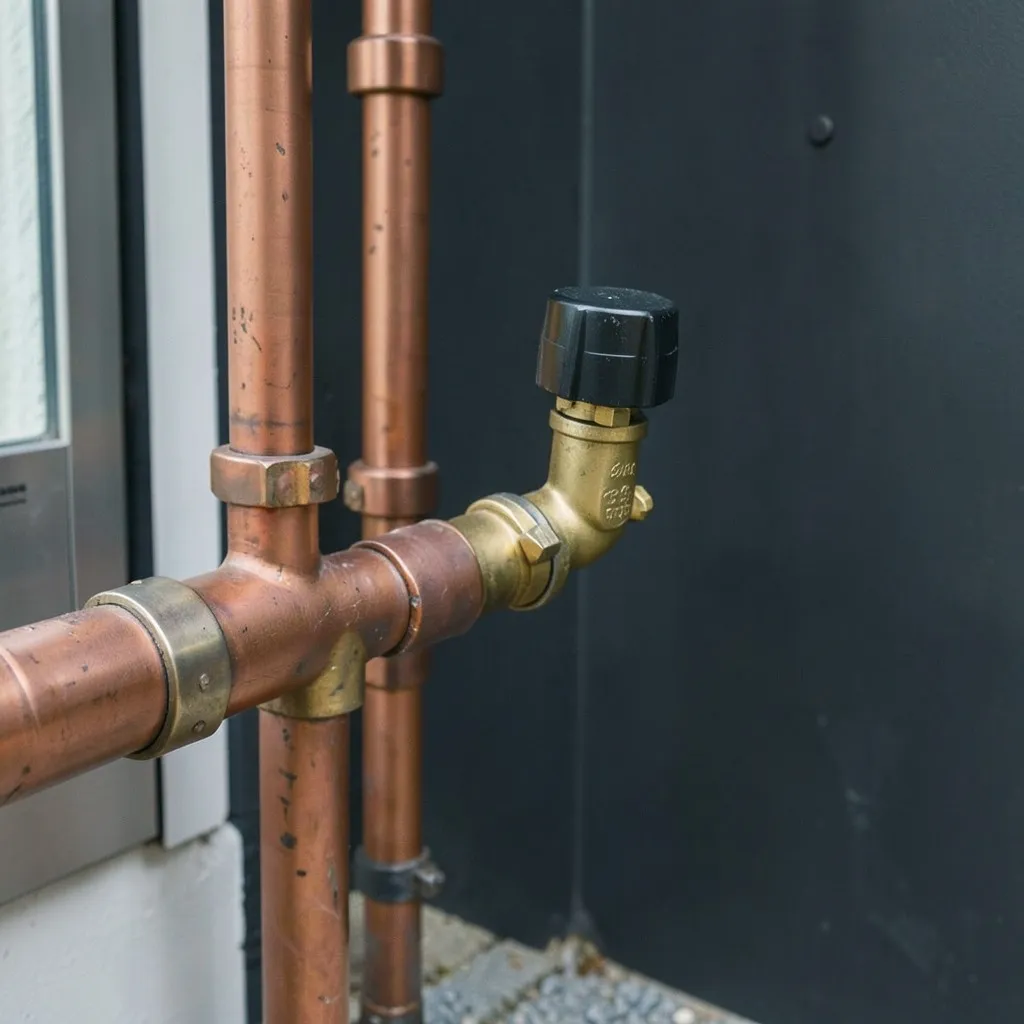
A pressure reducing valve, often abbreviated PRV, is a spring-and-diaphragm regulator installed on the main water service line, typically just downstream of the meter or main shutoff. Municipal supply pressure can range from 40 psi to over 150 psi depending on elevation and pumping schedule, but residential plumbing fixtures, supply hoses, and water heaters are designed for a working pressure of 50 to 60 psi. The PRV reduces incoming pressure to a fixed setpoint and holds it steady regardless of fluctuations on the supply side.
When is a pressure reducing valve required?
The IRC and IPC require a pressure reducing valve on any water service where static pressure at the building exceeds 80 psi. The reduced pressure setpoint must be 80 psi or less. Many jurisdictions also require a thermal expansion tank to be installed downstream of the PRV, because the PRV creates a closed system in which heated water cannot expand back into the main.
What are the signs of a failing pressure reducing valve?
- Banging or hammering pipes when valves close (water hammer)
- Sudden surges in pressure or fluctuating flow at fixtures
- Toilets that hiss or run for long fill cycles
- Premature leaks at supply hoses, washing-machine connections, or ice-maker lines
- Frequent dripping from the water-heater T&P relief valve
- Audible whistling or vibration from the valve body itself
- Static pressure reading above 80 psi on a hose-bib gauge
What does PRV installation cost in 2026?
A standard 3/4-inch or 1-inch residential PRV runs $250 to $500 installed, including the valve ($90 to $220), labor (1 to 2 hours), shutoff coordination with the utility if no main shutoff is present, and a pressure test. Adjustable lead-free brass valves with a built-in strainer or integrated gauge cost more. Service life is typically 10 to 15 years; rebuild kits run $40 to $90 in parts but most plumbers recommend full replacement once the diaphragm has failed. Adding a required expansion tank at the same time adds $150 to $350.
What code applies to pressure reducing valves?
Pressure reducing valves are governed by IRC Section P2903.3.1 and IPC Section 604.8. Valve performance must conform to ASSE 1003.
Researching the term is one thing — hiring for it is another. See whole-home repipe services for scope, timelines, and what drives the price, or call (888) 530-4445 for a no-cost estimate.
For the full picture — materials, process, timelines and what drives the cost — read Whole-Home Repipe: The Complete Guide.
What related terms should you know?
What sources back this up?
Need a verified plumber for whole-home repipe?
AlertPlumber matches you with a licensed plumber for whole-home repipe. Written estimate before any work begins.