
Riser
A vertical pipe in a plumbing system — either a supply riser carrying water upward to upper floors and fixtures, or a drain riser carrying waste downward within a stack.
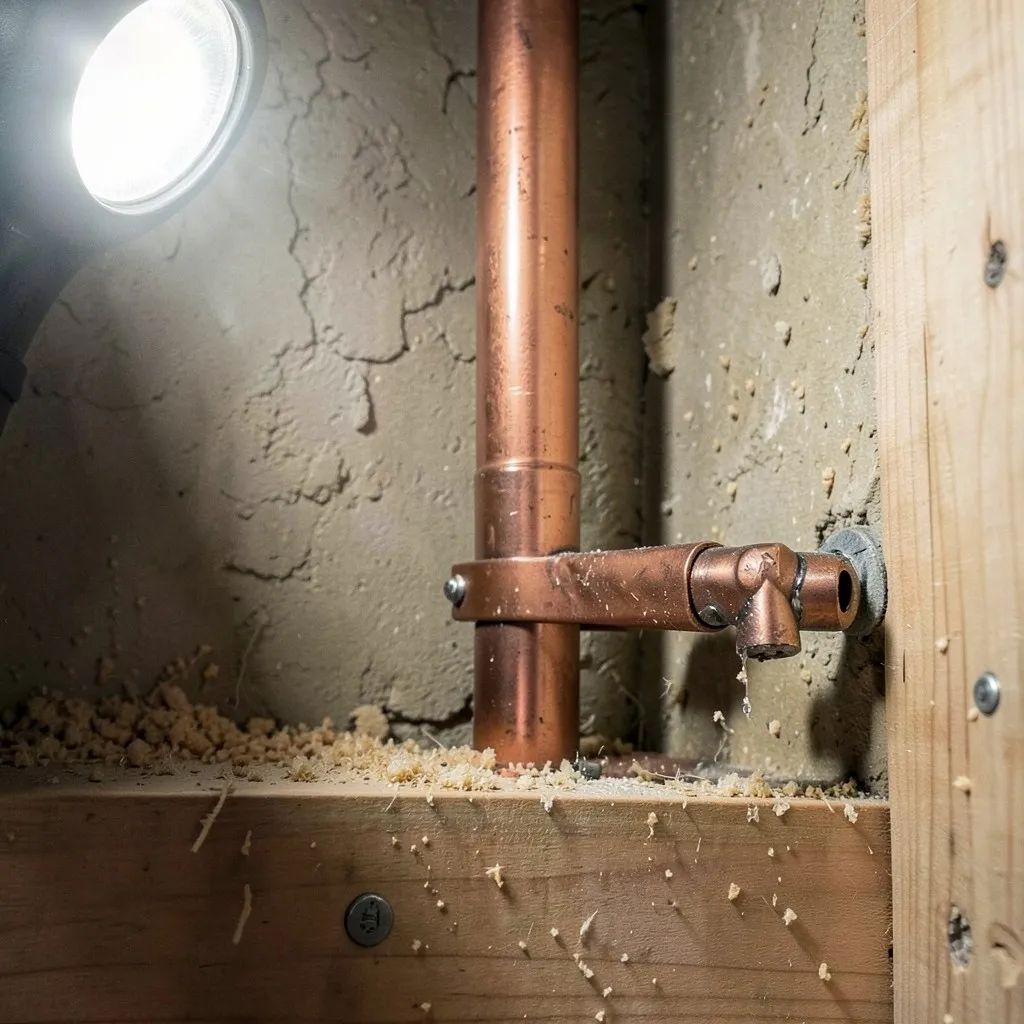
In plumbing, a riser is a vertical pipe that carries water (supply riser) or waste (drain riser/stack) vertically through a building. The term is commonly used in two contexts: supply risers that carry pressurized water upward to fixtures on upper floors, and drain-waste-vent stacks that carry sewage downward through a building structure.
What is a supply riser?
A supply riser is the vertical run of pipe from the main horizontal distribution line (usually in the basement or crawl space) up to individual floors and fixture groups. In a multi-story home, the water heater's output connects to a hot water riser and a cold water riser that branch off to each floor. Supply risers must be properly supported at every floor level (hangers or pipe straps at maximum 8–10 foot intervals for copper) and must be correctly sized for the number of fixtures served.
What are drain stacks (waste risers)?
Drain-waste-vent stacks run vertically through a building, collecting waste from individual floor drains and fixture branches. The main stack (soil stack) carries toilet waste; secondary stacks carry lavatory, tub, and sink waste. At the top, the stack terminates as a vent through the roof; at the bottom, it connects to the building drain that slopes to the sewer lateral.
What is a riser diagram?
In commercial and multi-family construction, plumbing engineers draw riser diagrams — simplified vertical cross-sections of the entire piping system showing each floor's connections to the main risers. These diagrams are required on permitted commercial projects and are invaluable for diagnosing problems in large buildings (finding which floor's branch connects to which riser).
What are common riser problems?
- Supply riser corrosion: galvanized steel risers in pre-1970s homes corrode from the inside, reducing flow — a common cause of progressive whole-house low pressure
- Stack clog: roots or debris in the main stack slow drainage on multiple floors simultaneously
- Riser freeze: supply risers in exterior walls lack adequate insulation for climate
Researching the term is one thing — hiring for it is another. See whole-home repipe services for scope, timelines, and what drives the price, or call (888) 530-4445 to talk to a local plumber about the job.
For the full picture — materials, process, timelines and what drives the cost — read Whole-Home Repipe: The Complete Guide.
What related terms should you know?
What sources back this up?
Need a plumber for whole-home repipe?
Calls are connected to independent licensed local plumbers in our partner's network for whole-home repipe. Ask for the license number and a written estimate before any work begins.