
Supply Line
The flexible hose that connects a shutoff valve (angle stop) to a faucet, toilet, or appliance. Supply lines are a common source of slow leaks and catastrophic floods.
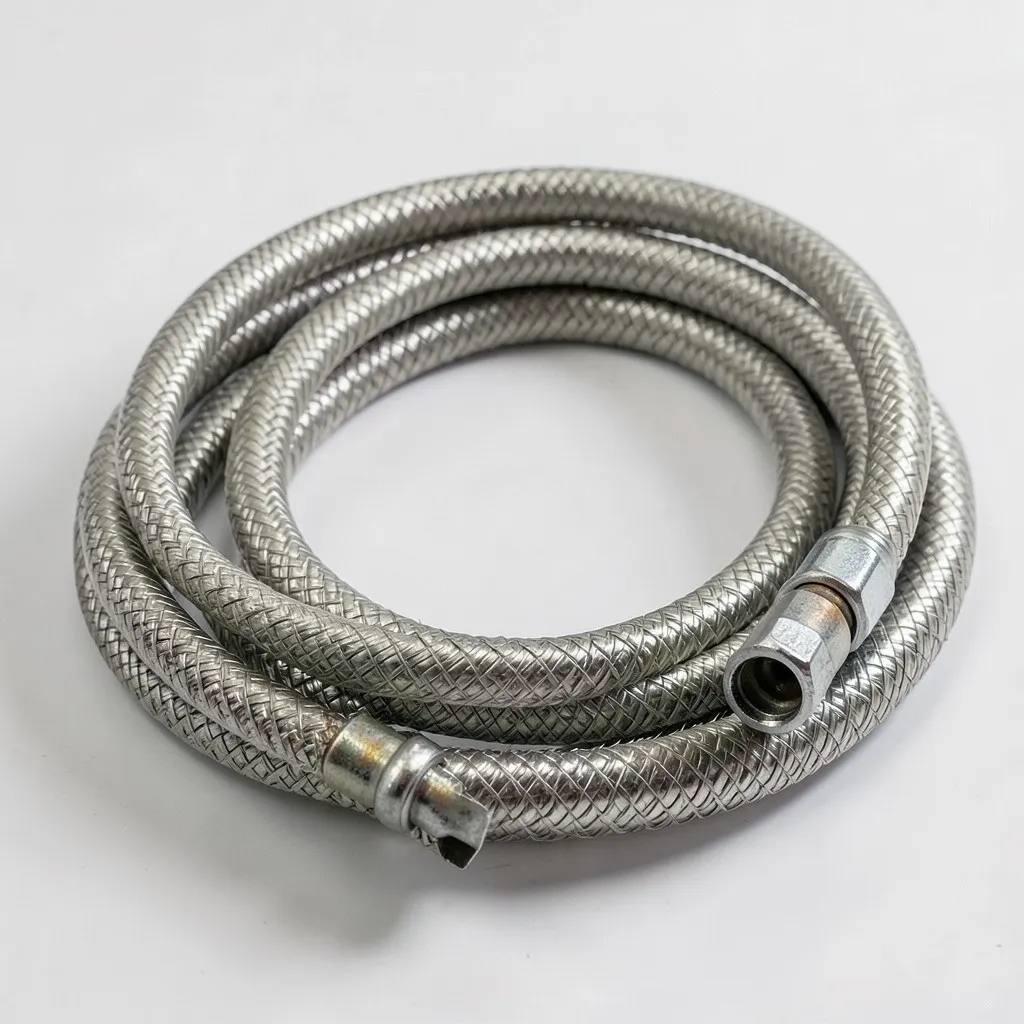
A supply line (also called a flex line or supply hose) is the short, flexible tube that connects the angle stop shutoff valve at the wall or floor to a faucet, toilet fill valve, dishwasher, or other fixture. Despite being inexpensive and overlooked, supply lines are one of the most common sources of significant water damage in homes.
What types of supply lines are there?
- Braided stainless steel: the modern standard — a flexible rubber core wrapped in woven stainless wire. Resistant to kinking, corrosion, and rodent damage. Lifespan: 8–10 years.
- Plastic (vinyl or nylon braid): cheaper than stainless, used for lower-pressure applications. More prone to cracking and UV degradation if exposed to light.
- Corrugated copper or chrome: common in commercial and high-end residential applications; rigid, durable, and less likely to fail catastrophically but must be sized precisely.
Why do supply lines fail?
The rubber inner core degrades over time even in braided stainless hoses. Chlorine in tap water, heat cycles, and water pressure gradually weaken the core. When it fails, it often fails suddenly — a pinhole becomes a split that can discharge hundreds of gallons per hour. The most catastrophic failures happen on the hot-water supply to washing machines, where a ¾-inch hose can flood a home in minutes.
How often should you replace a supply line?
Most manufacturers and insurance companies recommend replacing supply lines every 5–8 years regardless of visible condition. Replace any supply line that shows bulging, kinking, discoloration, corrosion at the fittings, or is more than 10 years old. The cost of proactive replacement ($10–$30 per line) is negligible compared to a water damage claim.
What are the installation tips for a supply line?
- Hand-tighten connections first, then snug with channel-locks — over-tightening cracks the coupling nuts
- Don't kink the line when routing it
- Leave slight slack so vibration doesn't stress the fittings
- Check connections for drips after turning the water on
Researching the term is one thing — hiring for it is another. See whole-home repipe services for scope, timelines, and what drives the price, or call (888) 530-4445 for a no-cost estimate.
For the full picture — materials, process, timelines and what drives the cost — read Whole-Home Repipe: The Complete Guide.
What related terms should you know?
What sources back this up?
Need a verified plumber for whole-home repipe?
AlertPlumber matches you with a licensed plumber for whole-home repipe. Written estimate before any work begins.