
Emergency Water Heater Repair in Reno, Nevada
Active water damage compounds by the hour — a licensed NV plumber is on call for Reno right now.
Local plumbing data for Reno, NV
Seeing these conditions at your place in Reno? A state-licensed plumber can confirm it over the phone — free, no obligation.
Pipe conditions in Reno, NV
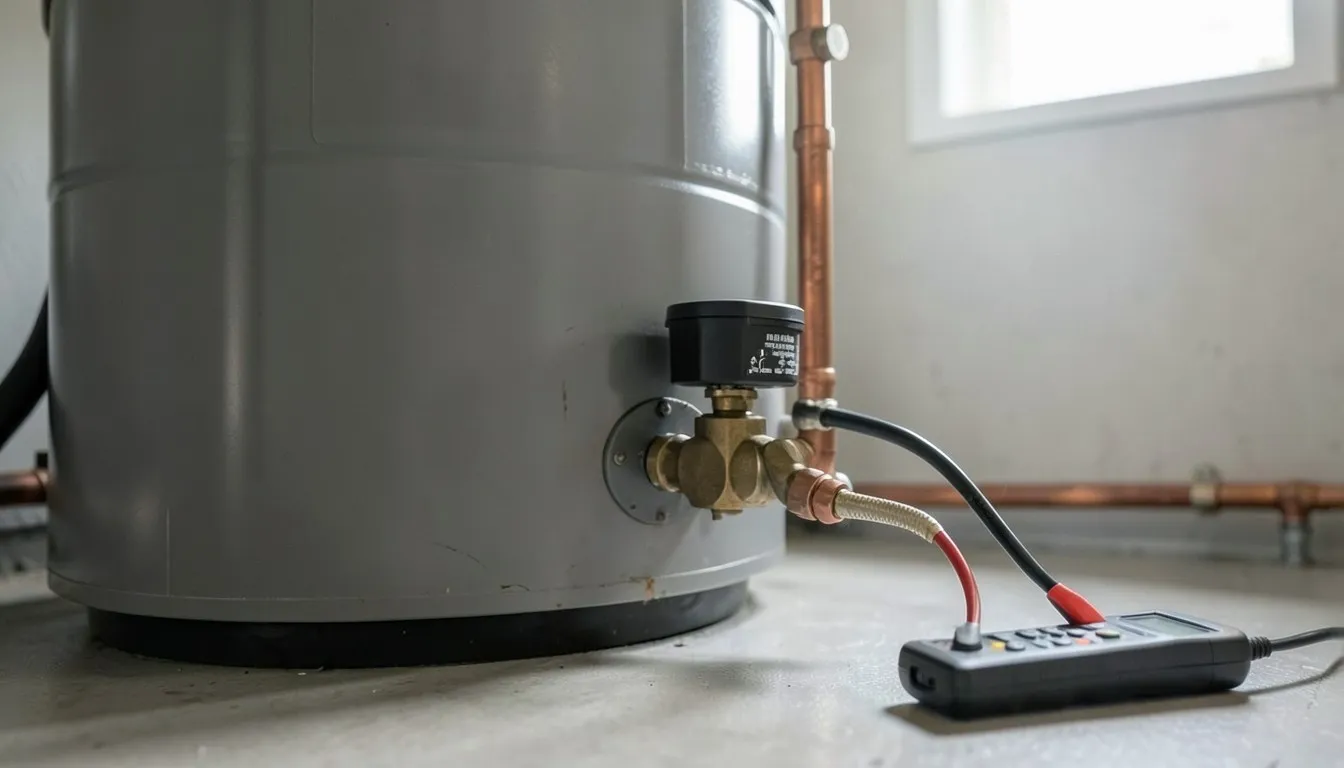
Water heater repair in Reno starts with isolating the failure mode: a unit producing no hot water usually has a failed heating element or thermostat (electric) or a pilot or gas valve issue (gas); a unit leaking at the base has a failed tank — a repair is not possible and replacement is immediate. Sediment flushing and anode rod replacement extend the life of units under 10 years significantly; units over 12 years are typically beyond economic repair. AlertPlumber routes your request to a Nevada-licensed plumber who diagnoses before recommending repair vs. replacement. Freeze events and frost-depth requirements add pipe insulation, exterior faucet winterization, and burst-risk assessment to service calls in this climate.
Reno's housing stock spans multiple construction eras — median home age 39 years — meaning pipe materials and failure modes vary significantly by neighborhood and building vintage. An inspection-led approach that confirms pipe material before recommending a service path is standard practice for mixed housing profiles.
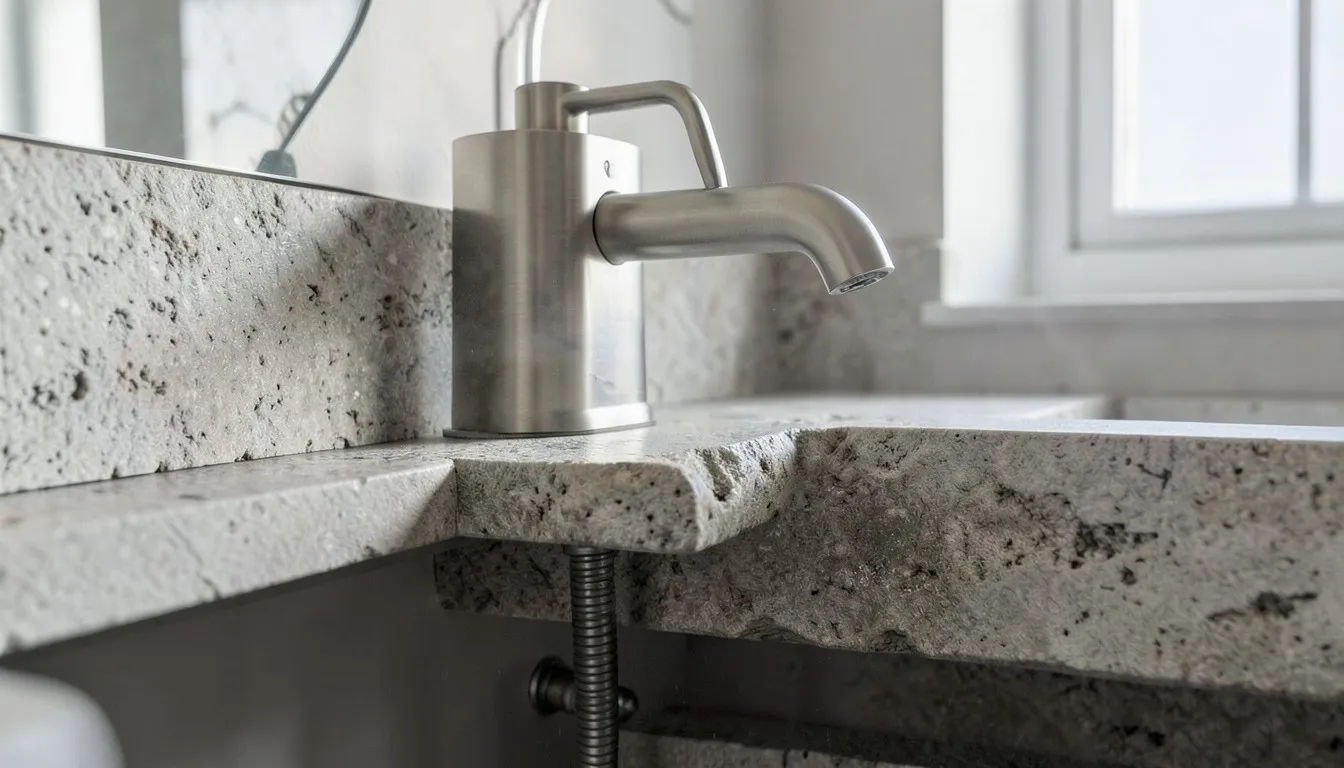
Very hard water in Reno is a primary driver of accelerated appliance failure: water heater anode rods exhaust in 2–3 years instead of 6–8, scale deposits at fixture connections form within months of installation, and tankless heat exchangers accumulate mineral buildup that can reduce lifespan by half without regular descaling. A softener or whole-house conditioner is strongly recommended alongside any appliance service call.
Frost line depth in Reno means supply lines and outdoor plumbing must be installed below the freeze threshold — typically 30 — to prevent pipe burst during cold events. Exterior hose bibs, irrigation shutoffs, and any exposed pipe runs are the most common winterization service points in freeze-risk markets.
- Median home age
- 39 yrs
- Water hardness
- 12 gpg
- Frost line
- 30 in.
- Permit
- $78
A licensed NV plumber reads these conditions the moment you describe the symptom.
What shapes plumbing demand in Reno, NV
CPVC becomes brittle in the 20–35-year range and snaps under thermal stress or incompatible pipe dopes. Early PEX fittings (pre-2010) may develop chloramine compatibility issues at 15–25 years. The 1980s–1990s housing stock in Reno is entering its first wave of material-driven service calls — not from neglect, but from normal service-life progression.
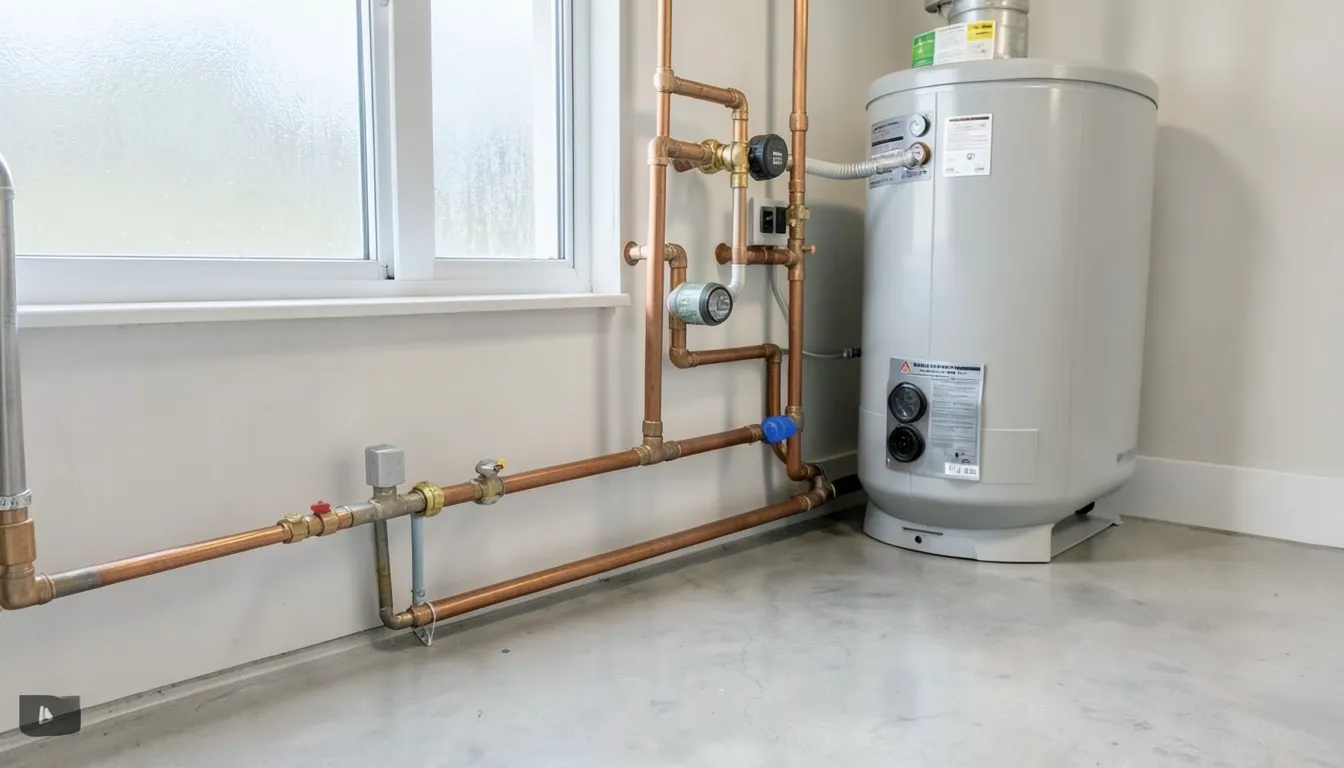
At 15–20+ GPG, calcium scale forces compressed equipment cycles in Reno: tank heaters average 6–9 years vs. the 10–12-year national benchmark, and tankless units require annual descaling. Anode rods calcify within 12–18 months. Most plumbers here assess heater age against the local scale timeline — not the manufacturer's service life.
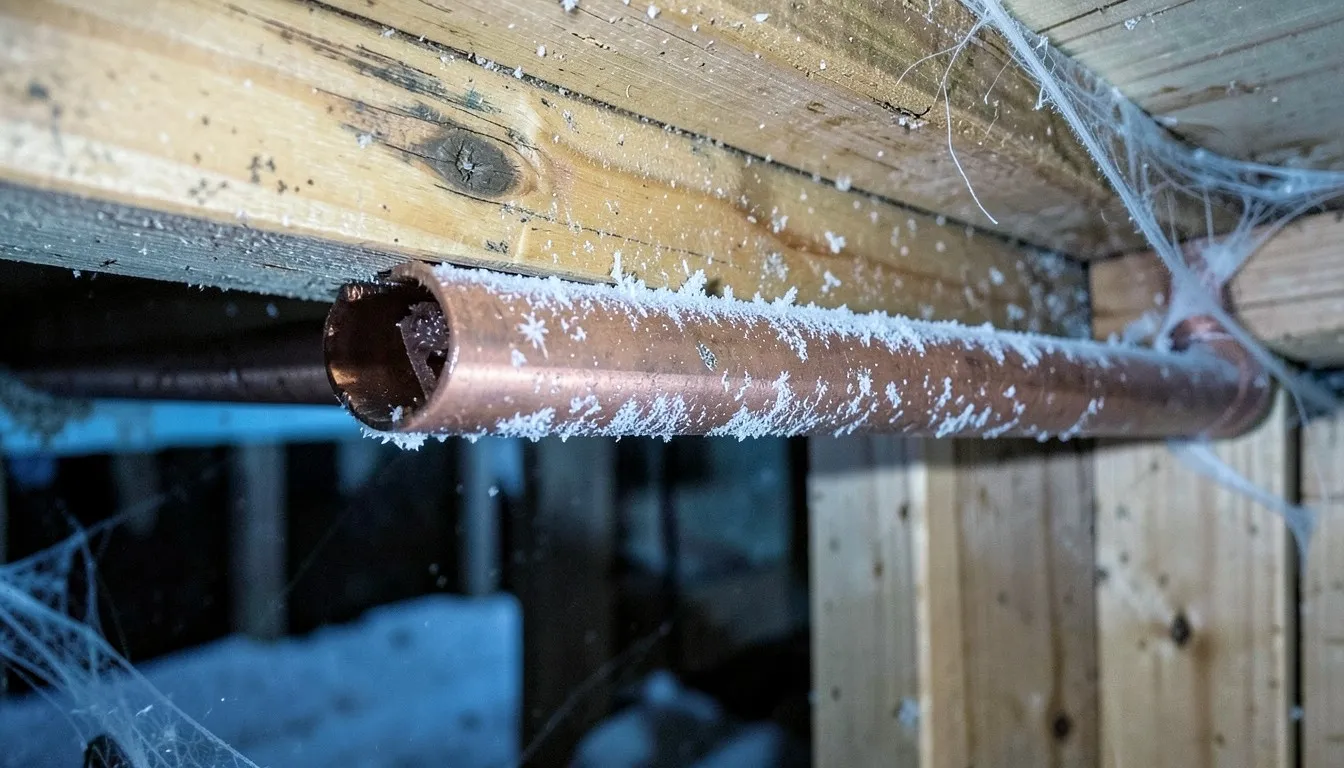
The primary surge in Reno runs January–March, with a secondary wave at the spring thaw — when pipes that held through the freeze rupture as pressure is restored above 32°F. Scheduling competition peaks exactly when emergency calls are highest. Homeowners who wait for visible damage compete for the same limited plumber slots at the worst possible time.
Active damage in Reno: contain, assess, restore
Submit your Reno address and describe the active damage — flooding, failed shutoff, burst or frozen line. AlertPlumber marks the request as priority and a NV-licensed plumber confirms receipt within 15 minutes, without routing through a national call center.
The plumber arrives with a confirmed ETA, locates the nearest shutoff, and maps the damage boundary — affected lines, access points, material condition. You receive a verbal assessment of what requires immediate containment and what can wait until the full repair scope is confirmed.
You approve a written containment and repair scope before any work begins. Temporary isolation is priced separately from full restoration. No phase proceeds without your explicit sign-off.
Water Heater Repair cost calculator — Reno
Pre-filled for water heater repair in Reno. Adjust the ZIP for a neighboring area, or change the service to compare. Calculator pulls from the city's scraped permit-fee + state plumber-density data.
Water Heater Repair emergency in Reno?
Every hour without a repair increases structural risk and remediation cost. A verified plumber calls back with an ETA and a written estimate before any work begins.
Water Heater Repair in Reno — frequently asked
How much does water heater repair cost in Reno, NV?
Reno water heater repair quotes through the AlertPlumber network typically run $195–$540 for a single-fault component repair — thermocouple, heating element, thermostat, T&P relief valve, or gas control valve — and $1,550–$2,950 for a full 40–50 gallon tank replacement installed in a Powning's Addition 1880s basement, an Old Southwest California Avenue craftsman utility room, or a Caughlin Ranch foothill garage. The $78 City of Reno Community Development plumbing permit bundles into any tank-replacement quote. Truckee Meadows Water Authority (TMWA) delivers 12 gpg blended Truckee River and Sierra east-slope wellfield supply — well into the hard range per USGS hardness data — so scale-driven failures cluster at year 5–7 and replacement quotes arrive sooner than in soft-water markets.
What symptoms mean my Reno water heater needs service now?
Five symptom clusters trigger same-day dispatch on the AlertPlumber Reno network: (1) no hot water at all — usually a tripped high-limit on electric units served by NV Energy, or a failed thermocouple on Southwest Gas tanks; (2) lukewarm water with visible scale flakes in faucet aerators — sediment fouling in the lower 1/3 of tank from 12 gpg TMWA carbonate buildup; (3) rumbling or kettle-boil noise during the heating cycle — calcium carbonate scale flashing water to steam under the burner; (4) rusty or metallic-smelling hot water — anode rod fully consumed and tank steel corroding; (5) water pooling under the unit. Bottom-of-tank pooling on Powning's Addition 1880s basement installs or Newlands Heights estate utility rooms almost always means perforation — replacement, not repair. The matched NSCB C-1 plumber confirms the failure mode with a $0–$95 diagnostic before quoting scope.
Why does 12 gpg TMWA water shorten Reno tank life?
TMWA delivers a blend of Truckee River surface intake and Sierra east-slope groundwater wells that tests at roughly 12 grains/gallon — squarely in the hard range per the USGS hardness scale. Calcium carbonate scale crystallizes on heating elements and bakes onto the tank bottom faster than soft-water markets like Boston or Seattle. The result: Reno gas tanks typically reach 5–7 years before sediment-driven failures versus the 12–15 year national median from DOE Energy Saver. The 146-freeze-day Truckee Meadows winter per NWS Reno adds a second wear pattern: thermal cycling between cold-inlet shock and heated tank steel stresses dip tubes and lower elements every December–March. Combined, these mean Reno's dominant repair calls are thermostats, thermocouples, and elements at year 4–6, with anode-rod replacement (every 2–4 years on 12 gpg) being the highest-leverage preventive spend.
Tank vs tankless vs heat-pump in Reno — what fits which home?
Three Reno fits on the AlertPlumber network. Gas tank ($1,550–$2,650 installed): the default for Powning's Addition 1880s basement utility rooms, Old Southwest California Avenue craftsman alcoves, and Midtown 1920s-40s bungalow basement installs on Southwest Gas service, where venting and gas line are already sized. Gas tankless ($3,400–$5,800): a strong fit for Caughlin Ranch and Somersett 1990s-2010s foothill garages with sized gas service — the wall-mount footprint frees floor space and the higher BTU service handles foothill multi-bath demand. Reno's Sierra rain shadow dry air affects exterior-mounted tankless installs because vent terminations need protection from blowing snow and Sierra east-slope storm-driven dust. Heat-pump electric ($2,850–$4,400 before rebates): strong fit for Newlands Heights estate basements with adequate conditioned volume where the unit's dehumidification side-effect is welcome. DOE Energy Saver heat-pump water heaters documents 2–3x efficiency over standard electric. NV Energy rebate programs offset heat-pump installs — verify current incentive amount at quote time.
Does Nevada HO-3 insurance cover Reno water heater damage?
Standard Nevada HO-3 policies cover sudden, accidental discharge water damage — a tank that ruptures and floods a Caughlin Ranch garage or a Powning's Addition basement — but NOT the cost of replacing the tank itself, and NOT damage from gradual seepage the homeowner should have noticed. Reno's 146-freeze-day winter creates a documented edge case: a tank that splits during a January or February cold snap may be covered if the home was occupied and heated, but denied if vacant or unheated. Newlands Heights estate basement installs and Old Southwest craftsman utility-closet units are flagged risk locations — insurers often request photos of the install before claim approval. Nevada has adopted current IRC editions requiring expansion tanks on closed-loop systems; the matched NSCB C-1 plumber confirms whether your home needs one during any tank-replacement quote, since a missing expansion tank can be cited as deferred maintenance on a denied claim.
How often should I replace the anode rod in Reno?
Anode rod cadence on Reno's 12 gpg TMWA water is every 2–4 years for the factory magnesium rod, and 3–5 years for an aluminum-zinc upgrade. That's faster than soft-water markets but typical for hard-water Western cities. The matched plumber pulls the rod through the top hex port, inspects for the steel core wire being exposed (the replacement trigger), and swaps in a $115–$185 rod. Anode rod replacement at year 3 typically extends total tank life from 6–8 years out to 10–12 years on Reno water — the highest-ROI single repair on this water profile. Caughlin Ranch and Somersett homes with whole-home softeners actually accelerate anode consumption (sodium ions strip the magnesium faster) and need rod inspection at year 2. Old Southwest homes without softeners on original 1955–1985 copper supply systems benefit from aluminum-zinc rods to reduce sulfur smell from anode-water reactions in the hot loop.
How fast can a Reno plumber repair my water heater?
Most Reno-area plumbers in the AlertPlumber network respond within 1–3 hours during business hours and 2–4 hours overnight for a no-hot-water dispatch. Diagnostic-to-repair turnaround depends on parts: thermocouples, elements, and thermostats are stocked on the truck and finish in a single 60–90 minute visit. Gas control valves on Southwest Gas units sometimes require a parts-house run and turn into a same-day-by-evening or next-morning return. Full tank replacements run 3–5 hours on-site once the truck arrives — longer for Powning's Addition 1880s basement installs that need code bring-up (drain pan, expansion tank, sediment trap, seismic strapping required in Washoe County) or Caughlin Ranch foothill tankless retrofits requiring new venting routed through finished walls. Sierra east-slope storm windows during the 146-freeze-day winter can briefly delay exterior tankless installs.
Does Caughlin Ranch foothill elevation affect water heater pressure?
Yes. Caughlin Ranch and the upper terraces of Somersett sit on the foothill rise at the western edge of the Truckee Meadows basin, putting these homes on the upper end of the TMWA distribution gradient. Static cleanout pressure runs higher than basin-floor Powning's Addition or Midtown properties — the pressure-reducing valve (PRV) at the meter is the relevant control, and the thermal expansion tank on the water heater compensates for the elevated supply pressure. On water heater replacement, foothill elevation matters in three ways: (1) a missing or undersized expansion tank can cause T&P relief valve drips when nighttime peak pressure compounds with thermal expansion; (2) the matched NSCB C-1 plumber verifies static pressure at install — a Caughlin Ranch home may show 75–85 PSI where a Midtown basement home shows 55–65; (3) any tankless conversion must include PRV verification because over-pressure shortens the heat exchanger warranty. The matched plumber checks PRV health as part of the install scope, not as an add-on.
Do Powning's Addition, Old Southwest, and Caughlin Ranch need different approaches?
Yes — Reno's housing-era spread drives different scope and pricing on the AlertPlumber network. Powning's Addition 1880s historic-plat basement: tight basement clearances, original cast-iron drain stacks, and code bring-up for combustion-air, drain pan, and sediment trap commonly add $250–$550 to a tank replacement. Old Southwest 1910s-30s California Avenue craftsman + Tudor: closet or basement installs with mid-century copper supply; the matched plumber inspects supply for pinhole risk before quoting because a failing copper run upstream of the tank can mask thermostat or element failures. Midtown 1920s-40s bungalow basement: standard installs with good access, lower end of quote range. Newlands Heights / Newlands Manor 1930s estate: generous basement footprint, accessible utilities, heat-pump conversions fit naturally. Caughlin Ranch / Somersett foothill garage: 1990s-2010s gas tank or tankless installs; expansion tank and PRV verification required given foothill pressure-zone position. The matched plumber identifies which pattern applies during the callback request.
What permits and credentials apply to Reno water heater work?
Component-level repair — element, thermostat, thermocouple, T&P valve, anode rod — does not require a permit in City of Reno. A full tank or tankless replacement DOES require a City of Reno Community Development plumbing/mechanical permit at $78 plus inspection. The matched NSCB C-1 plumber pulls the permit and bundles the fee into the written quote. Nevada credentials plumbing contractors through the Nevada State Contractors Board (NSCB), 2024 — roughly 1,150 active C-1 Plumbing & Heating contractors statewide with Northern Nevada concentration in the Truckee Meadows and Carson Valley corridor. Permit-required scope follows IPC Chapter 5 as adopted by Nevada. City of Reno issued 3,420 residential permits in 2024 across all trades — replacement-required water heater work accounts for a meaningful share.
Should I repair or replace a 5-year-old tank in Reno?
The Reno breakeven rule: if the repair quote exceeds 50% of replacement cost AND the tank is past 5 years on 12 gpg TMWA water, replacement makes more economic sense. A $420 gas-valve repair on a 6-year-old tank rarely pencils out — the next failure (element, anode, dip tube) usually arrives within 12–18 months given the Truckee carbonate load. Reno homes built before 2000 also predate current expansion tank and seismic strapping code; replacement brings the install up to current code, which inspectors increasingly enforce on resale across Caughlin Ranch and Somersett. Powning's Addition and Old Southwest basement installs with original 1980s-90s tanks should be priced for replacement at year 6, not patched for another year. The matched NSCB C-1 plumber prices both options on the written diagnostic.
What ZIP codes around Reno does AlertPlumber cover for water heaters?
AlertPlumber covers all City of Reno ZIP codes (895xx prefix covering downtown, Powning's Addition west of downtown, Old Southwest along the California Avenue corridor, Newlands Heights and Newlands Manor above the Truckee River bluffs, Midtown south of downtown, and Caughlin Ranch / Somersett foothill master-planned tracts) plus surrounding Washoe County communities — Sparks, Verdi, Sun Valley, and the Carson Range fringe. Local context. Reno's 274,915 residents per US Census Bureau, 39-year median home age, Truckee Meadows basin-floor position in the Sierra rain shadow at ~4,500ft elevation, 12 gpg TMWA blended Truckee River and Sierra east-slope wellfield supply at $3.42 per 1,000 gallons, 146 freeze days per NOAA NCEI, and a basement/crawlspace-dominant pre-1990 housing stock produce a Reno water-heater signature distinct from Las Vegas Mojave 17 gpg cities or Salt Lake Wasatch markets. Tank replacement at year 6–8 is routine; anode rod replacement at year 3 is the highest-ROI preventive spend.
Sixty seconds from now, a plumber can be working your problem.
Call and talk to dispatch, or put your number in the form below — a licensed Nevada plumber calls you back about the water heater repair and gives a written estimate by phone.
Request a water heater repair callback in Reno
In a meeting, with the kids, or just prefer not to hold? Drop your ZIP and number below. AlertPlumber routes your request to a verified plumber in your area — they’ll call you back directly.
- 1 Submit your info. ZIP, phone, and what kind of work you need.
- 2 AlertPlumber matches you with a verified plumber serving your area.
- 3 The plumber calls you back with a written estimate, no obligation.
Water Heater Repair in Reno — fast response
Acute plumbing failures cannot wait. AlertPlumber has verified Nevada plumbers available for water heater repair in Reno — call now or submit the form above for rapid callback.