
Dip Tube
Plastic tube inside a water heater that delivers incoming cold water to the bottom of the tank for heating.
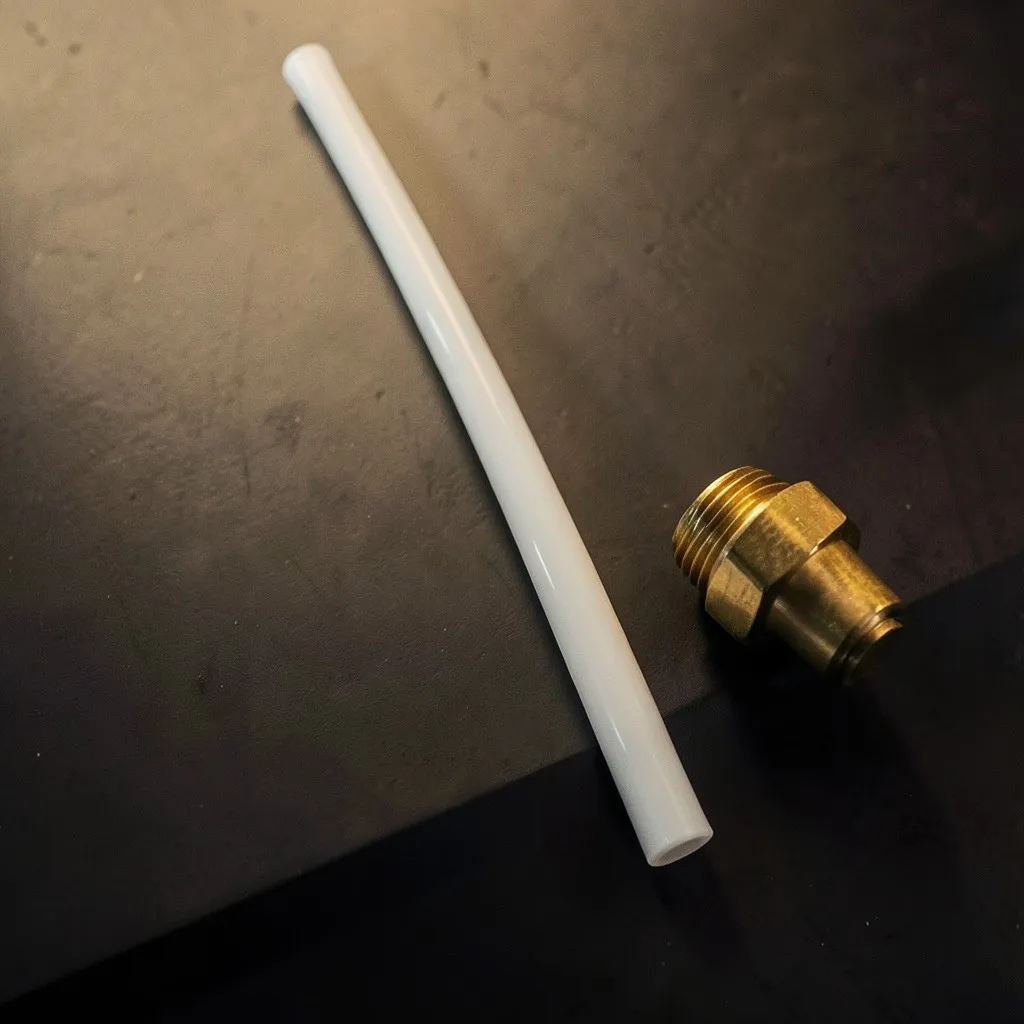
A dip tube is a long plastic tube that extends from the cold water inlet at the top of a tank-style water heater down to within 6 to 8 inches of the bottom. Its function is to route incoming cold supply water to the bottom of the tank, where the burner or lower heating element is located, so the cold water doesn't mix with the hot water at the top. Without a working dip tube, cold water entering the tank stratifies near the top and exits straight out the hot water outlet, producing lukewarm water at fixtures even when the heater is operating normally.
How do you identify a dip tube?
The dip tube is not visible from outside the tank. It connects to the cold water inlet nipple on top of the heater and is typically made of cross-linked polyethylene (PEX) or polypropylene. On gas heaters the cold inlet is marked with a blue ring or label; on electric heaters it is opposite the hot outlet on top. To inspect or replace, the cold inlet nipple must be unthreaded, which requires shutting off water and gas or power to the unit first.
How long does a dip tube last, and how does it fail?
Modern dip tubes typically last the life of the water heater, 8 to 12 years. However, water heaters manufactured between 1993 and 1997 used a defective polypropylene material that disintegrated prematurely, depositing white plastic flakes into the hot water lines and clogging aerators, washing machine inlet screens, and dishwasher solenoids. Outside that defect window, dip tubes most commonly fail by cracking near the top connection from thermal cycling, or by breaking off entirely and falling into the bottom of the tank. The classic symptom is a sudden drop in available hot water volume, sometimes paired with white plastic shards in faucet aerators.
When should a dip tube be replaced?
A replacement dip tube costs $10 to $30 as a part. Total professional replacement runs $80 to $200 depending on labor difficulty, since the cold inlet nipple is often corroded in place after years of service. The job requires shutting off the water heater, draining a few gallons to drop the level below the inlet, unscrewing the nipple, fishing out any broken fragments from the bottom of the tank, and installing a new tube cut to the correct length. On heaters older than 8 years, replacement of the dip tube alone is often not cost-effective compared to full water heater replacement.
What code applies to dip tubes?
Dip tubes are not separately addressed in the IPC, but water heater installation generally falls under IPC Section 501 and manufacturer installation instructions, which specify dip tube material standards. ANSI Z21.10.1 covers performance standards for the water heaters that contain them.
Researching the term is one thing — hiring for it is another. See water heater repair services for scope, timelines, and what drives the price, or call (888) 530-4445 for a no-cost estimate.
What related terms should you know?
What sources back this up?
Need a verified plumber for water heater repair?
AlertPlumber matches you with a licensed plumber for water heater repair. Written estimate before any work begins.