
Emergency Water Heater Repair in Jacksonville, Florida
Active water damage compounds by the hour — a licensed FL plumber is on call for Jacksonville right now.
Local plumbing data for Jacksonville, FL
Seeing these conditions at your place in Jacksonville? A state-licensed plumber can confirm it over the phone — free, no obligation.
Pipe conditions in Jacksonville, FL
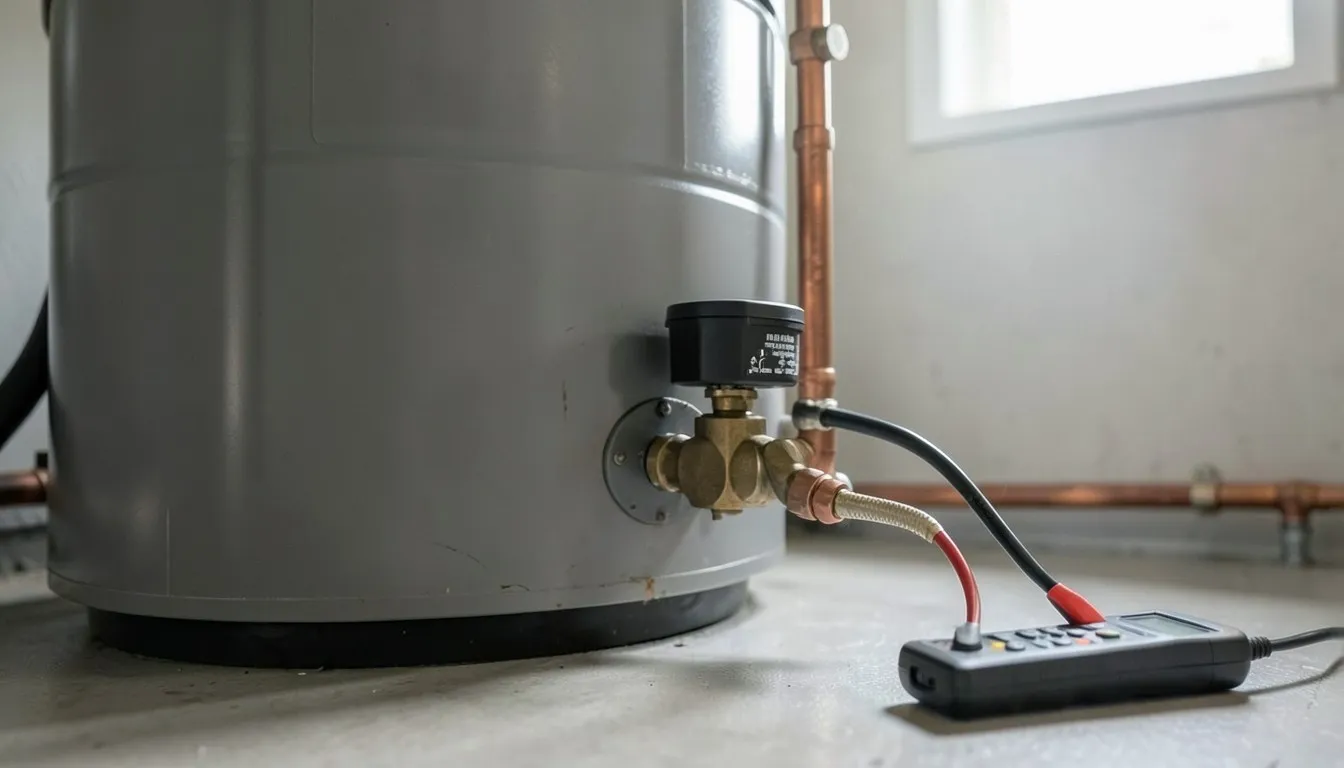
Water heater repair in Jacksonville starts with isolating the failure mode: a unit producing no hot water usually has a failed heating element or thermostat (electric) or a pilot or gas valve issue (gas); a unit leaking at the base has a failed tank — a repair is not possible and replacement is immediate. Sediment flushing and anode rod replacement extend the life of units under 10 years significantly; units over 12 years are typically beyond economic repair. AlertPlumber routes your request to a Florida-licensed plumber who diagnoses before recommending repair vs. replacement.
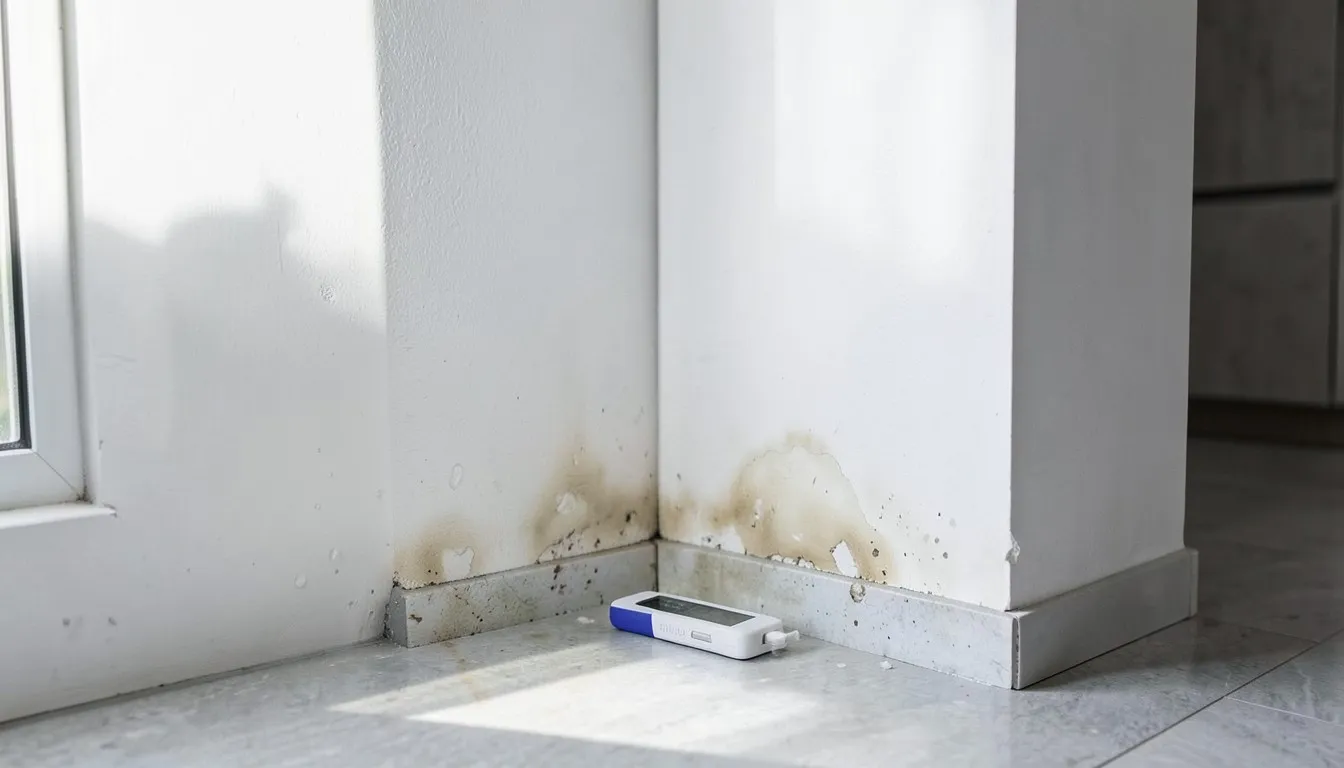
Jacksonville's housing stock spans multiple construction eras — median home age 41 years — meaning pipe materials and failure modes vary significantly by neighborhood and building vintage. An inspection-led approach that confirms pipe material before recommending a service path is standard practice for mixed housing profiles.
Very hard water in Jacksonville is a primary driver of accelerated appliance failure: water heater anode rods exhaust in 2–3 years instead of 6–8, scale deposits at fixture connections form within months of installation, and tankless heat exchangers accumulate mineral buildup that can reduce lifespan by half without regular descaling. A softener or whole-house conditioner is strongly recommended alongside any appliance service call.
- Median home age
- 41 yrs
- Water hardness
- 12 gpg
- Frost line
- 0 in.
- Permit
- $125
A licensed FL plumber reads these conditions the moment you describe the symptom.
Water Heater Repair in Jacksonville: Local Infrastructure Context
JEA draws from the Floridan Aquifer at 12 GPG — hard water with occasional sulfur notes from hydrogen sulfide in some service zones. At this hardness level, annual sediment flushing is a maintenance requirement rather than an option; elements in electric water heaters encrust within 3-5 years without treatment, and anode rod inspection intervals shorten to 2-3 years versus the 4-6 year standard in soft-water markets. The 41-year median housing age (1983 build) places first-generation unit replacements long behind; the current service population is second-generation units at 15-25 years.
Jacksonville's subtropical climate — 12 annual freeze days, no frost depth — means temperature-related water heater stress is minimal compared to northern markets. The failure pattern is chemistry-driven: scale reducing heat transfer efficiency, anode rod depletion accelerating tank corrosion, and sulfur content generating odor complaints that are sometimes misdiagnosed as unit failure. Hurricane season from June through November creates demand spikes from surge damage and power interruption cycles that accelerate component stress.
Florida DBPR licensing covers the 8,460 active plumbers in the Jacksonville market. City permit fees run $125 plus inspection through Duval County. JEA's tiered rate structure and 12 GPG hardness make heat-pump water heater upgrades financially compelling — particularly when a whole-house softener is incorporated, since the combined investment reduces both operating cost and maintenance frequency. Water softener pairing at this hardness range is cost-justified compared to lower-hardness Florida coastal markets.
What shapes plumbing demand in Jacksonville, FL
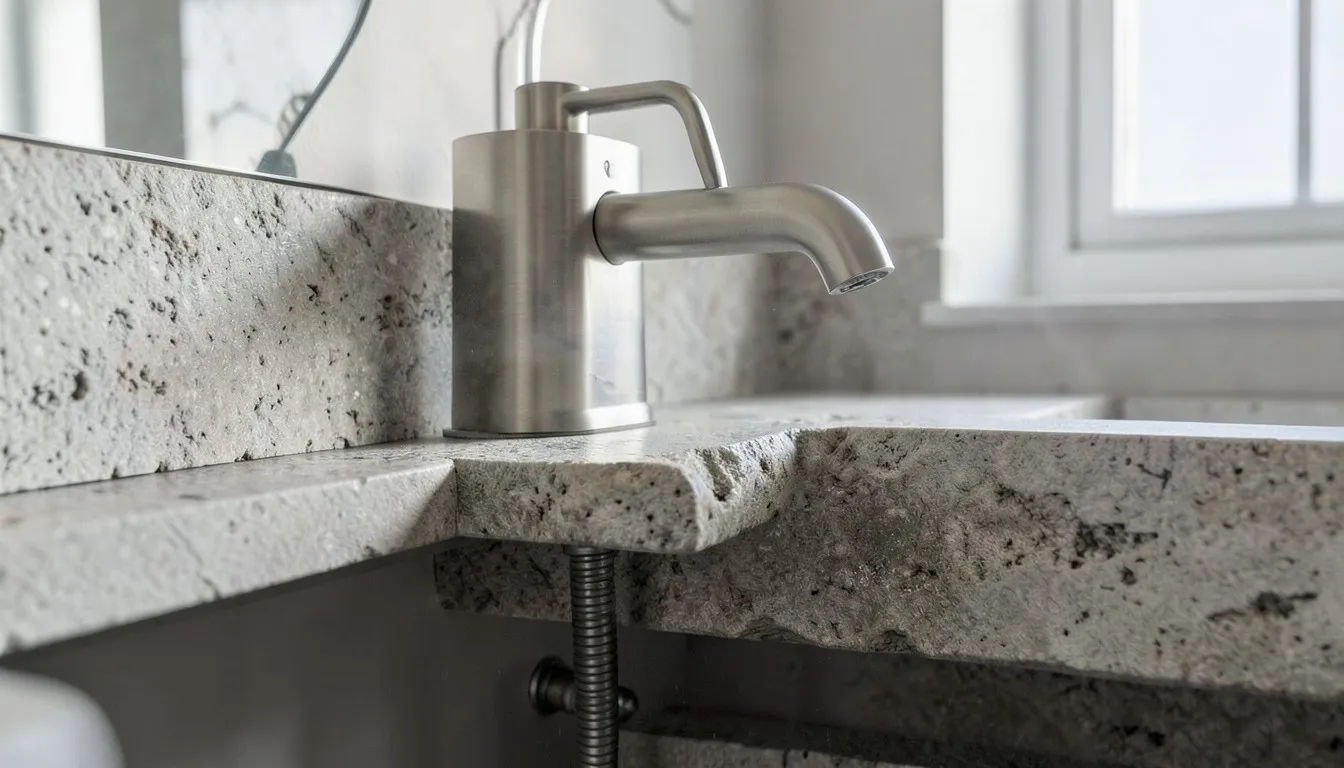
CPVC becomes brittle in the 20–35-year range and snaps under thermal stress or incompatible pipe dopes. Early PEX fittings (pre-2010) may develop chloramine compatibility issues at 15–25 years. The 1980s–1990s housing stock in Jacksonville is entering its first wave of material-driven service calls — not from neglect, but from normal service-life progression.
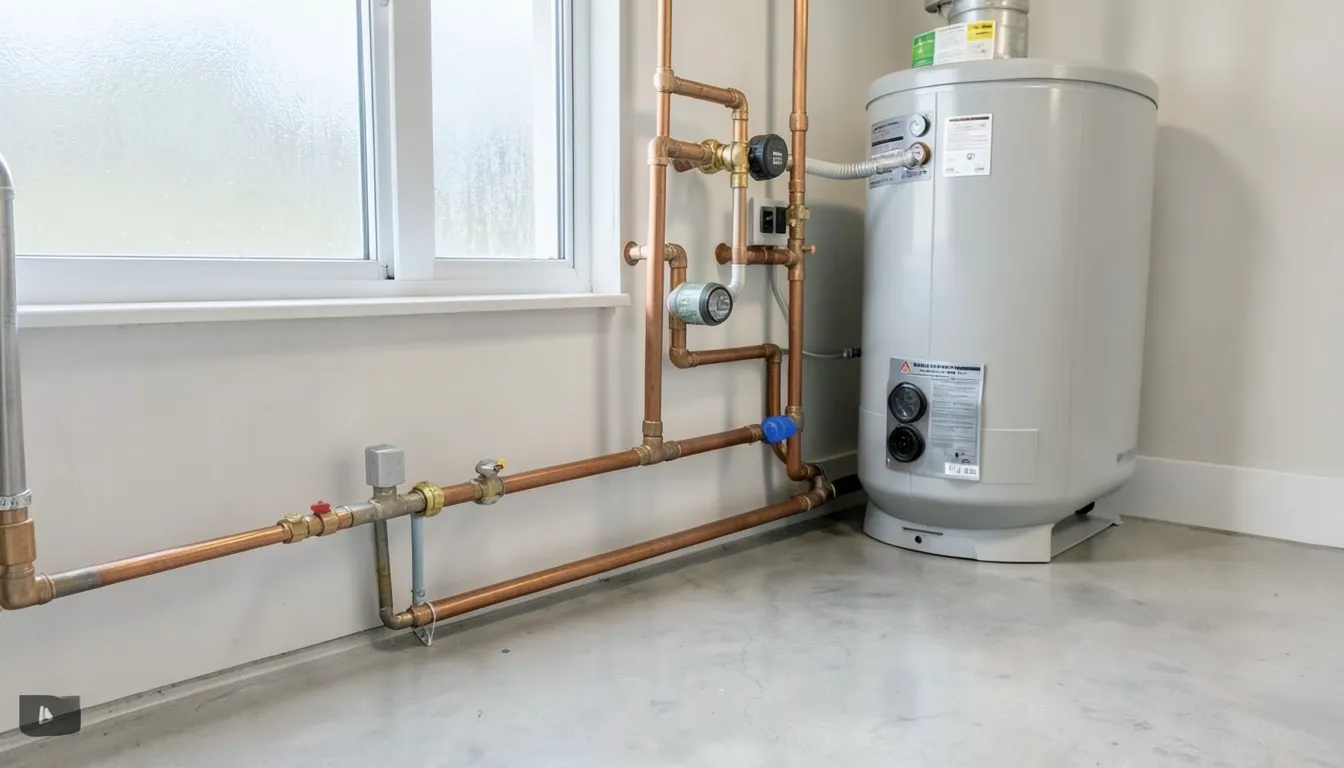
At 15–20+ GPG, calcium scale forces compressed equipment cycles in Jacksonville: tank heaters average 6–9 years vs. the 10–12-year national benchmark, and tankless units require annual descaling. Anode rods calcify within 12–18 months. Most plumbers here assess heater age against the local scale timeline — not the manufacturer's service life.
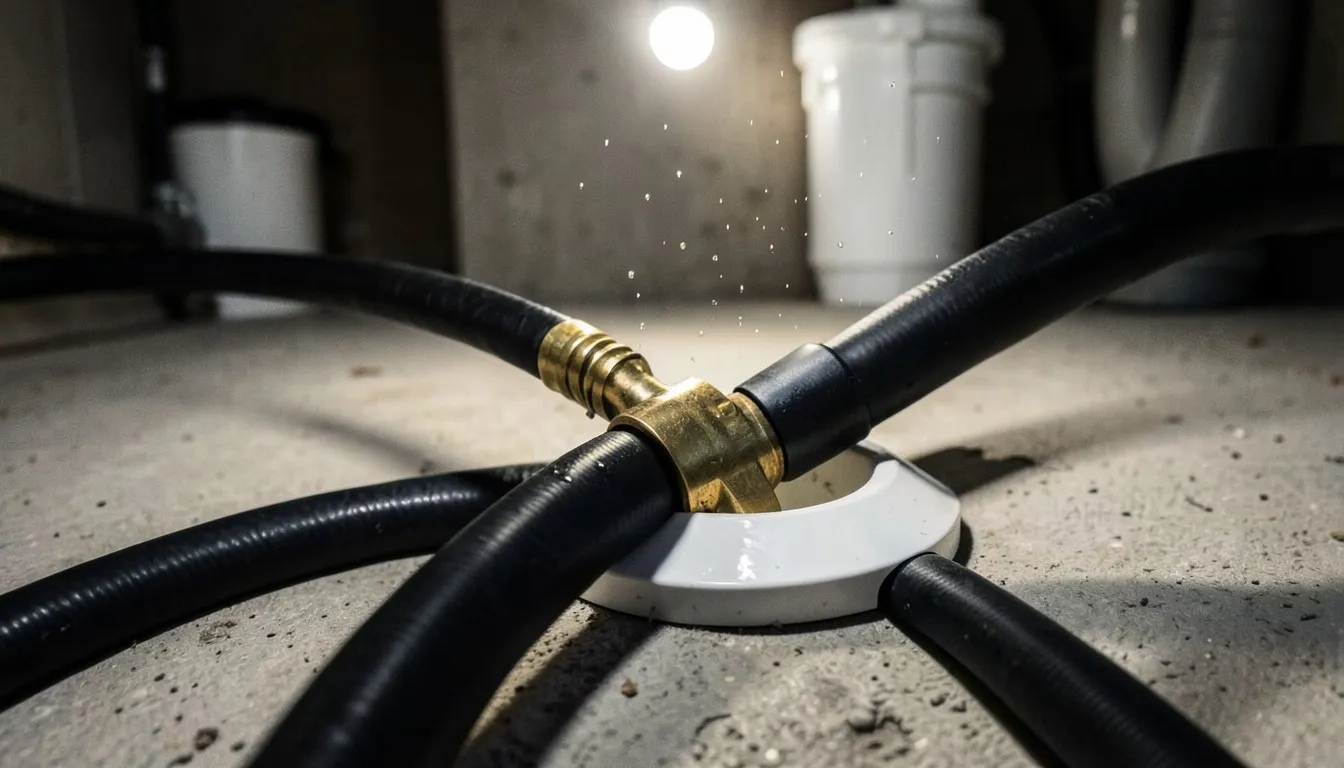
Without a hard freeze season, demand in Jacksonville distributes evenly through the year. Maintenance-driven categories dominate: end-of-life water heater replacement, root intrusion clearing, and fixture repair. Deferred maintenance surfaces gradually as partial failures rather than acute winter emergencies — which means issues compound silently until they become a larger job.
Active damage in Jacksonville: contain, assess, restore
Submit your Jacksonville address and describe the active damage — flooding, failed shutoff, burst or frozen line. AlertPlumber marks the request as priority and a FL-licensed plumber confirms receipt within 15 minutes, without routing through a national call center.
The plumber arrives with a confirmed ETA, locates the nearest shutoff, and maps the damage boundary — affected lines, access points, material condition. You receive a verbal assessment of what requires immediate containment and what can wait until the full repair scope is confirmed.
You approve a written containment and repair scope before any work begins. Temporary isolation is priced separately from full restoration. No phase proceeds without your explicit sign-off.
Water Heater Repair cost calculator — Jacksonville
Pre-filled for water heater repair in Jacksonville. Adjust the ZIP for a neighboring area, or change the service to compare. Calculator pulls from the city's scraped permit-fee + state plumber-density data.
Water Heater Repair emergency in Jacksonville?
Every hour without a repair increases structural risk and remediation cost. A verified plumber calls back with an ETA and a written estimate before any work begins.
Water Heater Repair in Jacksonville — frequently asked
How much does water heater repair cost in Jacksonville?
Jacksonville water heater repair quotes typically run $195–$540 for a single-fault repair (thermocouple, gas control valve, electric element/thermostat, T&P relief valve, anode rod replacement) and $1,520–$3,100 installed for a 40–50 gallon tank swap. The $125 Jacksonville Planning permit + Florida Building Code inspection bundle into any replacement quote. JEA-fed homes (Jacksonville Electric Authority is the combined municipal water + electric + sewer utility) sit on roughly 12 grains/gallon hardness per USGS hardness scale, which puts Jacksonville in the upper "hard" tier — meaning replacement quotes typically arrive at year 8–10 here rather than the 12-year national median. Mandarin and Arlington garage installs add minimal labor; San Marco / Riverside-Avondale closet installs and East Beaches elevated-pier installs both add $185–$340 in labor for tighter access. Hurricane wind-load strapping is mandatory under FBC and adds $65–$95 to any new install.
What symptoms mean my Jacksonville water heater needs service?
The five Jacksonville-specific failure signals: (1) lukewarm water on a gas tank older than 7 — likely a failing thermocouple or gas valve fouled by humidity-driven oxidation common in non-conditioned garage installs; (2) rumbling or kettle-boil noise — calcium scale baked onto the tank bottom from 12 gpg JEA water, accelerated 2–3x vs soft markets; (3) rusty hot water with cold running clear — anode rod fully consumed, common at year 4–5 on JEA water; (4) drip-pan moisture in a Mandarin garage install — could be the T&P discharge, the drain valve, or a perforated tank, only a plumber can confirm; (5) sudden no-hot-water after a tropical storm — storm-surge flooding has shorted electric elements or fouled the gas burner assembly. Don't confuse a JEA combined-bill spike with a tank leak — JEA bundles water, sewer, electric, and stormwater on one statement, so isolating the failing system requires reading the per-meter detail on the JEA portal.
Why do Jacksonville tanks fail faster than the national average?
Two compounding factors. First, JEA delivers roughly 12 grains/gallon hardness — the carbonate scale precipitates onto the tank bottom and burner-side wall, insulating the heat source and forcing the burner or element to run hotter and longer. The sacrificial anode rod (zinc-aluminum or magnesium) is consumed in 4–5 years on JEA water vs 7–9 on soft-water markets. Once the anode is gone, the steel tank itself becomes the sacrificial element. Second, Jacksonville's hurricane season (Jun–Nov per NOAA NWS Jacksonville) drives storm-surge flooding into ground-level garage installs in Mandarin, Arlington, Atlantic Beach, and Neptune Beach — submerged gas burner assemblies and electric elements often need full replacement after a named-storm event even if the tank itself survived. Combined, gas tanks in Jacksonville commonly hit replacement at 8–10 years, electric at 9–11, vs the 12-year national median per DOE Energy Saver.
Tank vs tankless vs heat-pump — what works in Jacksonville?
Three serviceable paths in the Jacksonville market. (1) Atmospheric gas tank fed by TECO Peoples Gas or Florida Public Utilities natural gas — lowest install cost ($1,520–$2,400), 8–10 year life on JEA water, requires FBC-compliant venting and combustion air in garage installs. (2) Tankless gas (Rinnai, Navien, Noritz) on TECO Peoples Gas — $3,400–$5,800 installed, requires annual descaling on 12 gpg water or the heat exchanger fouls and warranty voids; best fit for Mandarin / Arlington tract garages with adequate gas-line sizing (typically needs upsize from 1/2" to 3/4"). (3) Hybrid heat-pump electric (Rheem ProTerra, AO Smith Voltex) — $2,800–$4,200 installed and ideal for Jacksonville's mild ambient (rarely below 50F even in the 12 freeze days/year), plus the heat-pump dehumidifies the garage as a side effect, addressing the year-round Florida humidity problem. East Beaches elevated installs favor electric or heat-pump because gas-line runs to elevated structures add cost. Per DOE, heat-pump units cut electric water-heating cost 60–70% — meaningful on JEA's combined-utility bill.
Will my Florida HO-3 policy cover water heater damage in Jacksonville?
Standard Florida HO-3 policies cover sudden, accidental discharge water damage (a tank that ruptures and floods the slab) but NOT the cost of the failed tank itself, and NOT gradual leaks the homeowner should have noticed. Two Jacksonville-specific traps. First, the named-storm deductible: most Florida HO-3 policies carry a separate hurricane/named-storm deductible (typically 2–5% of the dwelling limit) that triggers when the National Hurricane Center names a storm — if your water heater fails during a named-storm window, the carrier may try to apply that higher deductible even for unrelated discharge damage. Second, drip-pan visibility: Jacksonville garage installs often have visible drip pans; carriers routinely deny claims when the leak was visible for weeks before the rupture. Document the maintenance history, keep the plumber's written report with photos, and pull the $125 Jacksonville Planning permit on every replacement — skipping the permit voids most discharge coverage. Florida statute does not require flood coverage on standard HO-3, so storm-surge damage to a garage tank typically falls under separate NFIP flood insurance, not HO-3.
What hurricane wind-load strapping does Jacksonville require?
The Florida Building Code (FBC) mandates that water heaters be secured against wind-load and storm-surge hydraulic forces — the Florida equivalent of California's seismic strap requirement, but engineered for hurricane uplift rather than earthquake lateral. Jacksonville installs typically use two heavy-gauge metal straps anchored into wall studs (not just drywall), one upper-third and one lower-third of the tank, plus a 3" minimum drip pan with a routed drain line discharging to an approved location (typically the garage exterior or a dedicated indirect waste). FBC also requires flexible braided gas connectors on TECO Peoples Gas or Florida Public Utilities-fed tanks (rigid black iron only is non-compliant in hurricane zones because it shears at the union under structural movement). Strap + pan + flex connector adds $85–$135 to a replacement quote. The Jacksonville Planning inspector signs off on the strapping at the same $125 permit inspection that closes out the replacement. Skipping FBC strapping voids HO-3 discharge coverage and creates a real-estate disclosure problem at resale.
How often should I replace the anode rod on Jacksonville water?
The sacrificial anode rod (zinc-aluminum or magnesium) is what keeps the steel tank from corroding — it's literally designed to be consumed instead of the tank wall. On 12 grains/gallon JEA water, the anode is typically 60–80% consumed by year 3 and fully spent by year 4–5, vs 7–9 years on soft markets. A $145–$240 anode-rod swap at year 4 — before the anode is fully consumed — is the single highest-leverage maintenance task on a Jacksonville tank. Pair it with an annual sediment flush ($165–$245) and you can push gas-tank life from 8–10 years to 11–13, recovering most of the lifespan gap vs the national median. Powered (impressed-current) anodes ($340–$480 installed) eliminate the consumption cycle entirely and pay back inside 6 years on JEA water. Confirm rod material — magnesium is standard but sulfate-rich water (some Jacksonville sub-aquifer pulls) can produce a rotten-egg odor, in which case aluminum-zinc is the correct swap.
Mandarin / Arlington vs East Beaches — does install location matter?
Yes — Jacksonville splits cleanly across four install patterns, each with its own labor profile. (1) Mandarin and Arlington 1980s+ tract: water heater in an attached garage on the slab, easy access, standard $1,520–$2,400 swap, but garage humidity accelerates external corrosion on the tank skin and gas-valve assembly. (2) San Marco / Riverside-Avondale historic (1920s–1940s): tank in an interior closet or under-stair niche, tighter access adds $185–$340 in labor; basements are essentially nonexistent in Florida due to the water table. (3) Atlantic Beach / Neptune Beach / Ponte Vedra elevated-pier construction: tank often on a raised platform or in a ground-floor utility room, the elevated structure is FBC flood-zone compliance — replacement requires confirming the new tank install meets the flood elevation requirement or risks FEMA flood-insurance issues. (4) Ortega / Avondale waterfront: salt-air-exposed tanks corrode externally faster, especially the burner assembly on gas units, often requiring replacement at 7–8 years rather than 9–10. The matched plumber confirms install pattern on the callback before quoting.
Do I need a Jacksonville permit and is the plumber FL DBPR-credentialed?
Component repairs (thermocouple, element, thermostat, T&P valve, anode swap) don't require a permit in Jacksonville. A full tank or tankless replacement DOES — Jacksonville Planning charges $125 for the plumbing/mechanical permit + FBC inspection covering combustion air, vent termination, gas-supply sizing, hurricane strapping, drip pan, and T&P discharge routing. The state-credentialed Florida plumber pulls the permit on your behalf and bundles the fee into the written quote. Florida licenses plumbers at the state level through the Department of Business and Professional Regulation — FL DBPR license lookup shows roughly 8,460 active state-credentialed plumbing contractors statewide. Every plumber routed through AlertPlumber in Jacksonville maintains active FL DBPR status; you can verify any specific plumber's credentials by name or license number on the DBPR portal before authorizing work. The DBPR record also surfaces any open complaints or disciplinary actions, which the carrier and the FBC inspector both check at permit close-out.
Does a heat-pump conversion pencil out in Jacksonville?
Often yes, more so than in cold-winter markets. Jacksonville averages roughly 12 freeze days per year (per NOAA NWS Jacksonville) and ambient garage temps stay in the heat-pump efficiency band (45F+) essentially year-round, so a hybrid heat-pump (Rheem ProTerra, AO Smith Voltex) operates in heat-pump-only mode for 95%+ of annual runtime rather than falling back to resistance. Per DOE, heat-pump water heaters use 60–70% less electricity than standard electric resistance — meaningful on a JEA combined-utility bill where water + sewer + electric all flow through one meter set. Install runs $2,800–$4,200 in Jacksonville, federal tax credit (Inflation Reduction Act 25C) covers 30% up to $2,000, and JEA periodically offers heat-pump rebates. Conversion from gas to heat-pump also eliminates the TECO Peoples Gas or Florida Public Utilities monthly meter charge ($18–$32) and the FBC combustion-air requirement. Best fit: Mandarin / Arlington garage installs where the heat-pump's dehumidification side effect is a bonus during 7-month humid season. Local context. 949,611 Jacksonville residents on JEA combined-utility service at 12 grains/gallon hardness, 1983 median build, 12 freeze days/year, hurricane season Jun–Nov, $125 Jacksonville Planning permit, 8,460 FL DBPR-credentialed plumbers statewide, FBC hurricane wind-load strapping mandatory.
Sixty seconds from now, a plumber can be working your problem.
Call and talk to dispatch, or put your number in the form below — a licensed Florida plumber calls you back about the water heater repair and gives a written estimate by phone.
Request a water heater repair callback in Jacksonville
In a meeting, with the kids, or just prefer not to hold? Drop your ZIP and number below. AlertPlumber routes your request to a verified plumber in your area — they’ll call you back directly.
- 1 Submit your info. ZIP, phone, and what kind of work you need.
- 2 AlertPlumber matches you with a verified plumber serving your area.
- 3 The plumber calls you back with a written estimate, no obligation.
Water Heater Repair in Jacksonville — fast response
Acute plumbing failures cannot wait. AlertPlumber has verified Florida plumbers available for water heater repair in Jacksonville — call now or submit the form above for rapid callback.