
Shutoff Valve
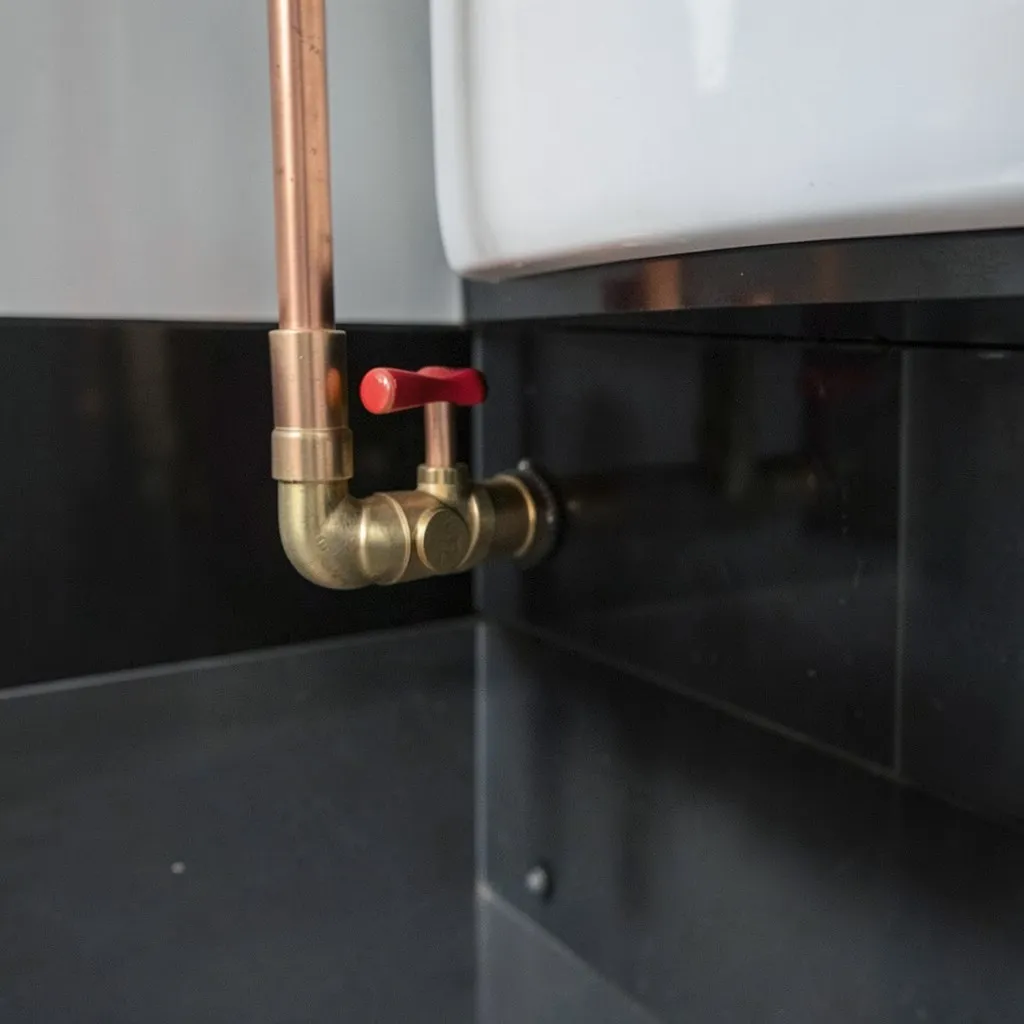
A shutoff valve, also called an isolation valve or stop valve, is a manually operated valve installed in a water supply line to allow flow to be stopped without affecting the rest of the system. Plumbing code requires shutoff valves at the building entry (the main shutoff), upstream of every water heater, and at every fixture supply (toilet, faucet, dishwasher, ice maker, washing machine). The point of code-required shutoffs is so any single fixture, appliance, or branch can be repaired or replaced without draining the entire house.
Three valve types dominate residential supply piping. Ball valves use a slotted spherical disc that rotates 90 degrees with a lever handle — the most reliable type, with full bore flow when open and decisive shutoff when closed. Gate valves use a wedge-shaped gate that drops between two seats; common in older installations but prone to seizing or partial-open failure after years sitting unused. Stop-and-waste valves are a special category used on outdoor irrigation and exterior hose lines, with a small drain port that bleeds residual water from the downstream side.
The International Plumbing Code § 606 sets the requirements. Every fixture supply must have an accessible individual shutoff. The main building shutoff must be located inside the building near the supply entry and operable without a tool. Multifamily buildings need a unit shutoff for each dwelling unit in addition to the building main. Water heaters require a cold-water shutoff within reach of the unit, and ideally a hot-water shutoff as well for service work.
Common failure modes include corroded gate valves that will not fully close (the standard fix is to replace with a quarter-turn ball valve), seized fixture stops below toilets and sinks that snap or strip when forced after years of disuse (turn each shutoff once a year as preventive maintenance), and frozen or cracked outdoor shutoffs after a hard winter without proper drainage. Most shutoff replacements at a fixture run $90 to $250 per valve depending on access and pipe material; a main building shutoff replacement runs $250 to $600 because the water service has to be killed at the meter for the work.
Knowing where the main shutoff is located, and verifying once a year that it actually closes, is the single most valuable plumbing skill any homeowner can have. In any sudden leak — burst pipe, water heater rupture, slab leak, supply-line burst — closing the main shutoff in under 60 seconds is the difference between a $300 repair and a $30,000 mold and flooring claim. The shutoff is typically inside the home where the water service enters: garage wall, basement near the front foundation, or in a utility closet.
Researching the term is one thing — hiring for it is another. See whole-home repipe services for scope, timelines, and what drives the price, or call (484) 603-3302 for a no-cost estimate.
Related terms
Sources
Whole-Home Repipe — verified plumbers available
AlertPlumber matches you with a licensed plumber for whole-home repipe. Written estimate before any work begins.