
Water Softener
A whole-house treatment system that removes calcium and magnesium ions (hardness minerals) from water through ion exchange, preventing scale buildup on pipes, fixtures, and appliances.
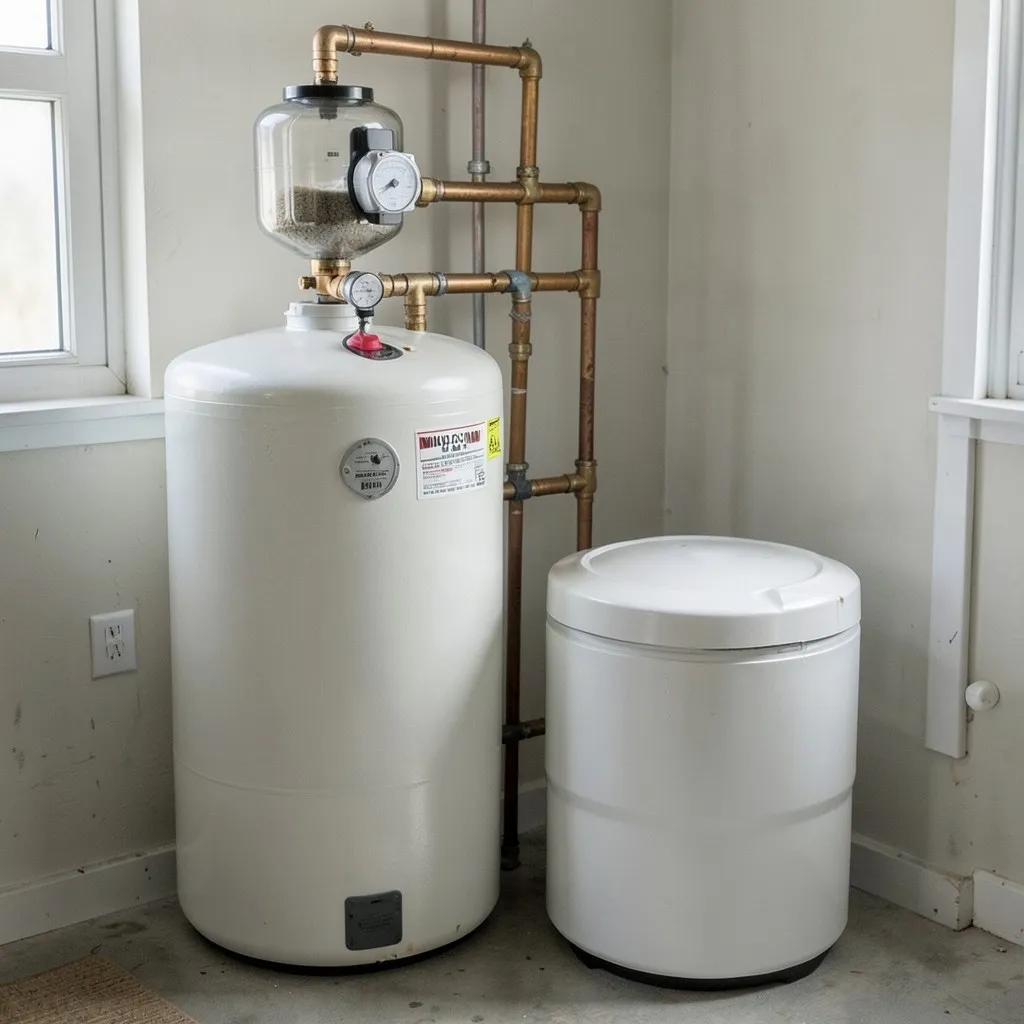
A water softener is a whole-house water treatment system that removes dissolved calcium (Ca²⁺) and magnesium (Mg²⁺) ions — the minerals responsible for water hardness — and replaces them with sodium or potassium ions through a process called ion exchange. Soft water prevents scale buildup inside pipes, water heaters, and appliances; extends the life of fixtures and clothing; and dramatically improves the performance of soaps and detergents.
How does ion exchange work?
Hard water passes through a tank filled with thousands of tiny resin beads coated in sodium ions. Calcium and magnesium ions have a stronger positive charge and displace the sodium ions, bonding to the resin. Soft, sodium-carrying water exits the tank. Over time, the resin becomes saturated with hardness minerals — so periodically the system runs a regeneration cycle, flooding the resin with a brine solution (salt dissolved in water) that flushes the calcium and magnesium off the resin and down the drain, recharging the beads with sodium.
Is soft water safe to drink?
Softened water adds a small amount of sodium — roughly 20–40 mg per 8 oz glass depending on incoming hardness. For most people this is negligible, but those on sodium-restricted diets may prefer a separate hard-water tap for drinking, or use a potassium chloride softener instead of sodium chloride.
What are the benefits of a water softener?
- Extends water heater lifespan by preventing scale on heating elements
- Reduces soap and detergent usage by 50–75%
- Eliminates spotty dishes and cloudy glassware
- Prevents white calcium deposits on faucets, showerheads, and tile
- Softer skin and hair; less soap film on bath surfaces
What does a water softener cost to install?
A whole-house water softener is priced as the unit plus professional installation; current ranges are in the water softener install cost guide. Salt replenishment is a small monthly cost. Most units last 15–20 years. The payback from reduced appliance maintenance and extended pipe life is typically 5–8 years in hard-water areas (above 7 GPG / 120 mg/L hardness).
Researching the term is one thing — hiring for it is another. See water softener installation services for scope, timelines, and what drives the price, or call (888) 530-4445 to talk to a local plumber about the job.
For the full picture — materials, process, timelines and what drives the cost — read Water Softener Installation Guide.
What related terms should you know?
What sources back this up?
Need a plumber for water softener installation?
Calls are connected to independent licensed local plumbers in our partner's network for water softener installation. Ask for the license number and a written estimate before any work begins.