
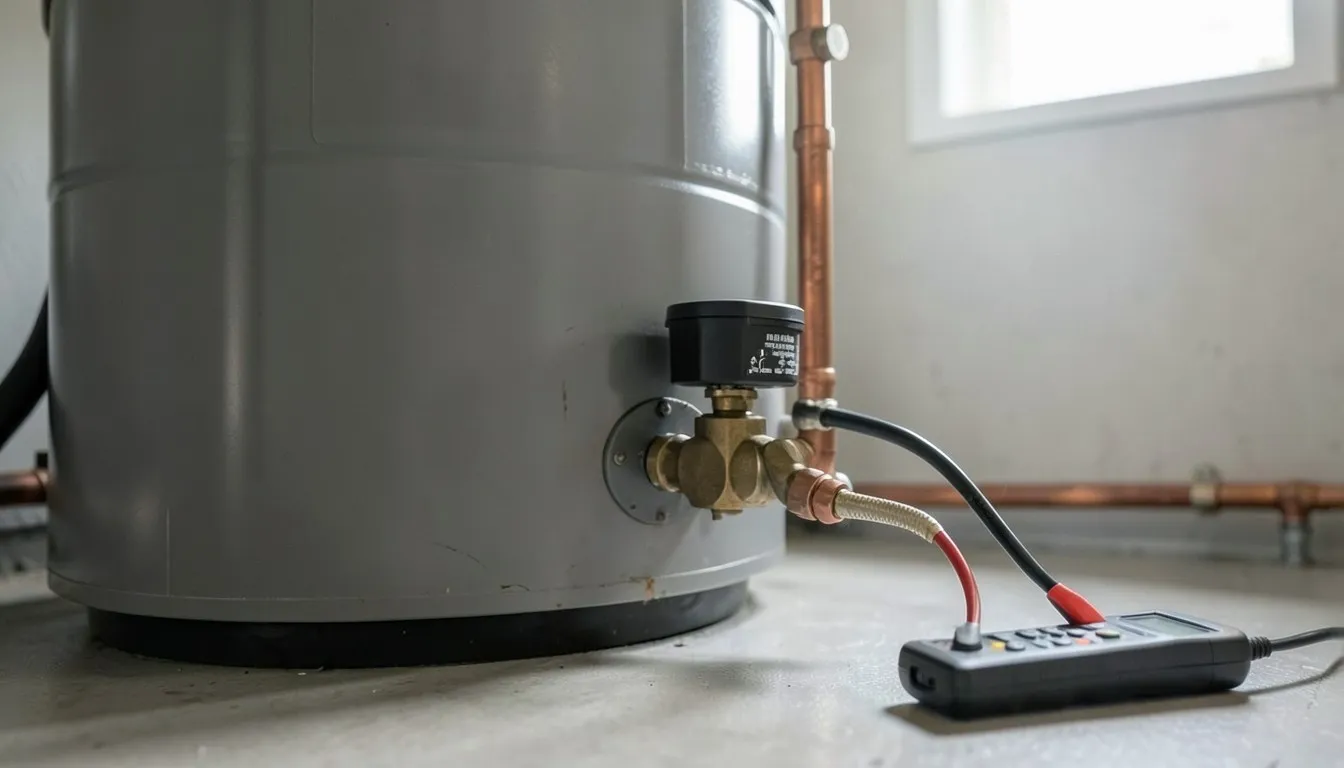
Emergency Water Heater Repair in Fort Wayne, Indiana
Active water damage compounds by the hour — a licensed IN plumber is on call for Fort Wayne right now.
Local plumbing data for Fort Wayne, IN
Seeing these conditions at your place in Fort Wayne? A state-licensed plumber can confirm it over the phone — free, no obligation.
Pipe conditions in Fort Wayne, IN
Water heater repair in Fort Wayne starts with isolating the failure mode: a unit producing no hot water usually has a failed heating element or thermostat (electric) or a pilot or gas valve issue (gas); a unit leaking at the base has a failed tank — a repair is not possible and replacement is immediate. Sediment flushing and anode rod replacement extend the life of units under 10 years significantly; units over 12 years are typically beyond economic repair. AlertPlumber routes your request to an Indiana-licensed plumber who diagnoses before recommending repair vs. replacement. Freeze events and frost-depth requirements add pipe insulation, exterior faucet winterization, and burst-risk assessment to service calls in this climate.
Fort Wayne's housing stock spans multiple construction eras — median home age 56 years — meaning pipe materials and failure modes vary significantly by neighborhood and building vintage. An inspection-led approach that confirms pipe material before recommending a service path is standard practice for mixed housing profiles.
Very hard water in Fort Wayne is a primary driver of accelerated appliance failure: water heater anode rods exhaust in 2–3 years instead of 6–8, scale deposits at fixture connections form within months of installation, and tankless heat exchangers accumulate mineral buildup that can reduce lifespan by half without regular descaling. A softener or whole-house conditioner is strongly recommended alongside any appliance service call.
Frost line depth in Fort Wayne means supply lines and outdoor plumbing must be installed below the freeze threshold — typically 42 — to prevent pipe burst during cold events. Exterior hose bibs, irrigation shutoffs, and any exposed pipe runs are the most common winterization service points in freeze-risk markets.
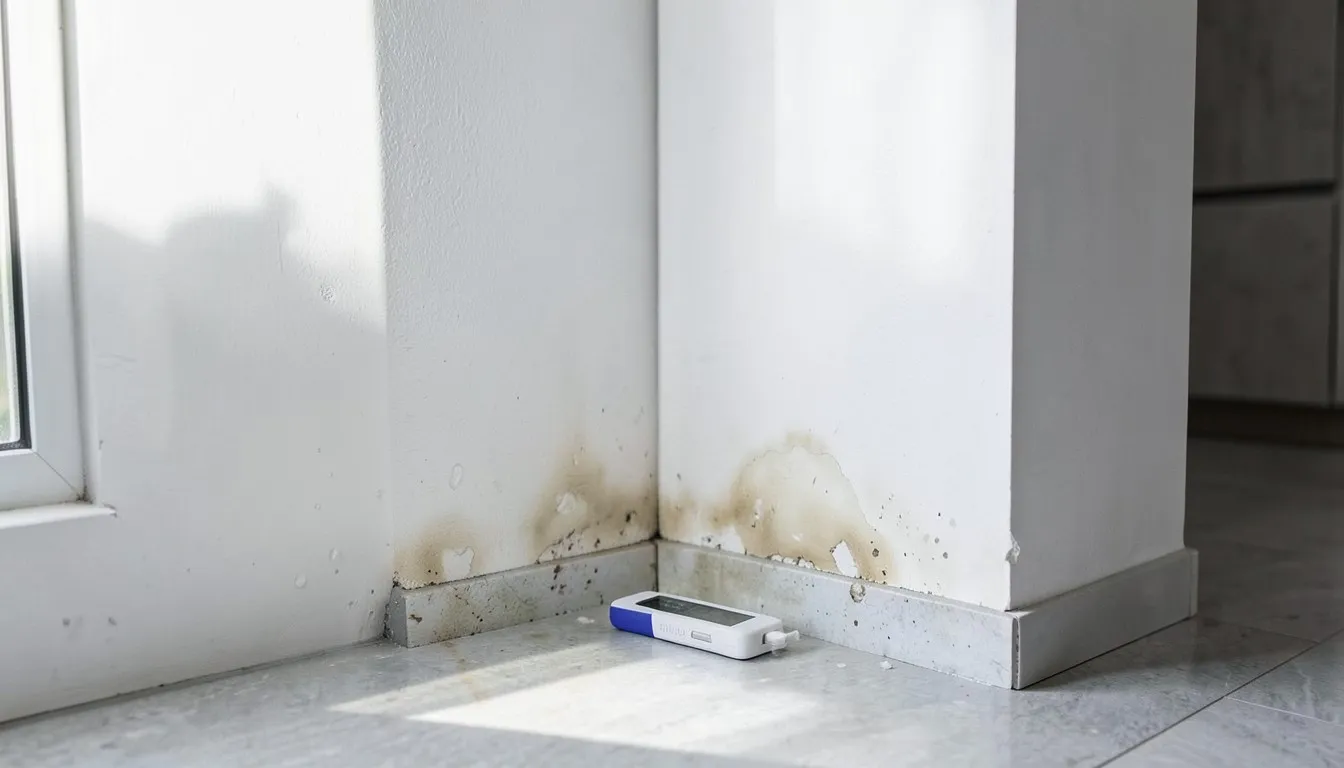
- Median home age
- 56 yrs
- Water hardness
- 13 gpg
- Frost line
- 42 in.
- Permit
- $55
A licensed IN plumber reads these conditions the moment you describe the symptom.
What shapes plumbing demand in Fort Wayne, IN
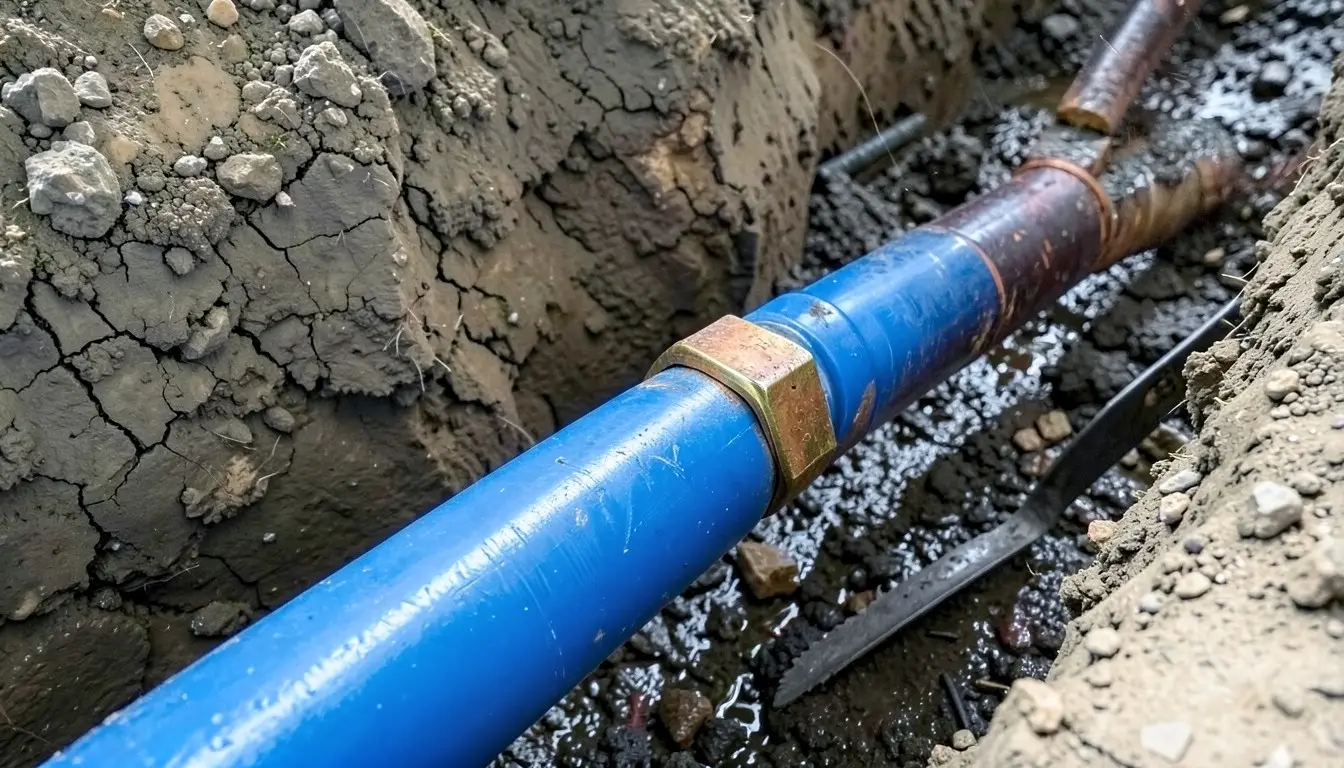
1950s–70s copper supply is now 50–70 years into its service cycle in Fort Wayne. Thermal fatigue at fittings and slab-on-grade access complexity — common in Sun Belt construction — make repair vs. replacement a live decision on most jobs. This housing cohort is the active primary replacement wave in this market.
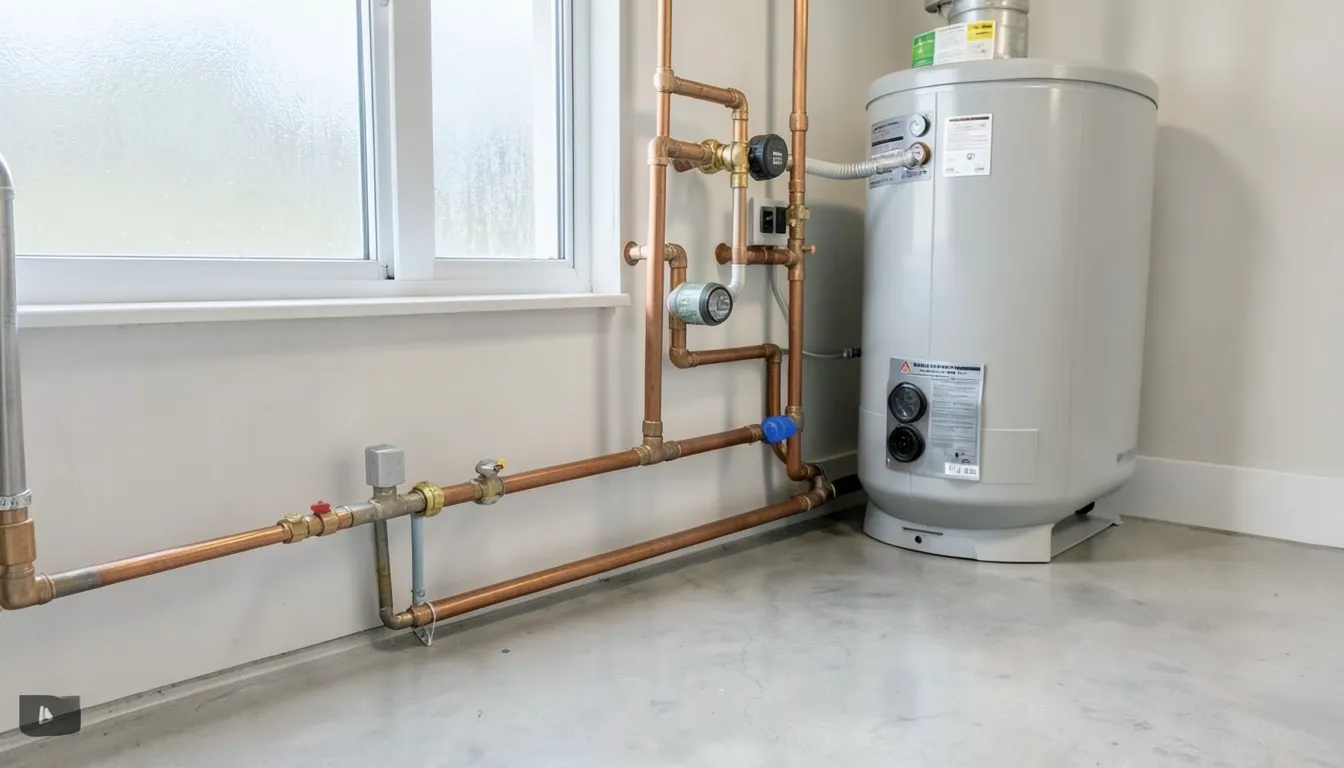
At 15–20+ GPG, calcium scale forces compressed equipment cycles in Fort Wayne: tank heaters average 6–9 years vs. the 10–12-year national benchmark, and tankless units require annual descaling. Anode rods calcify within 12–18 months. Most plumbers here assess heater age against the local scale timeline — not the manufacturer's service life.
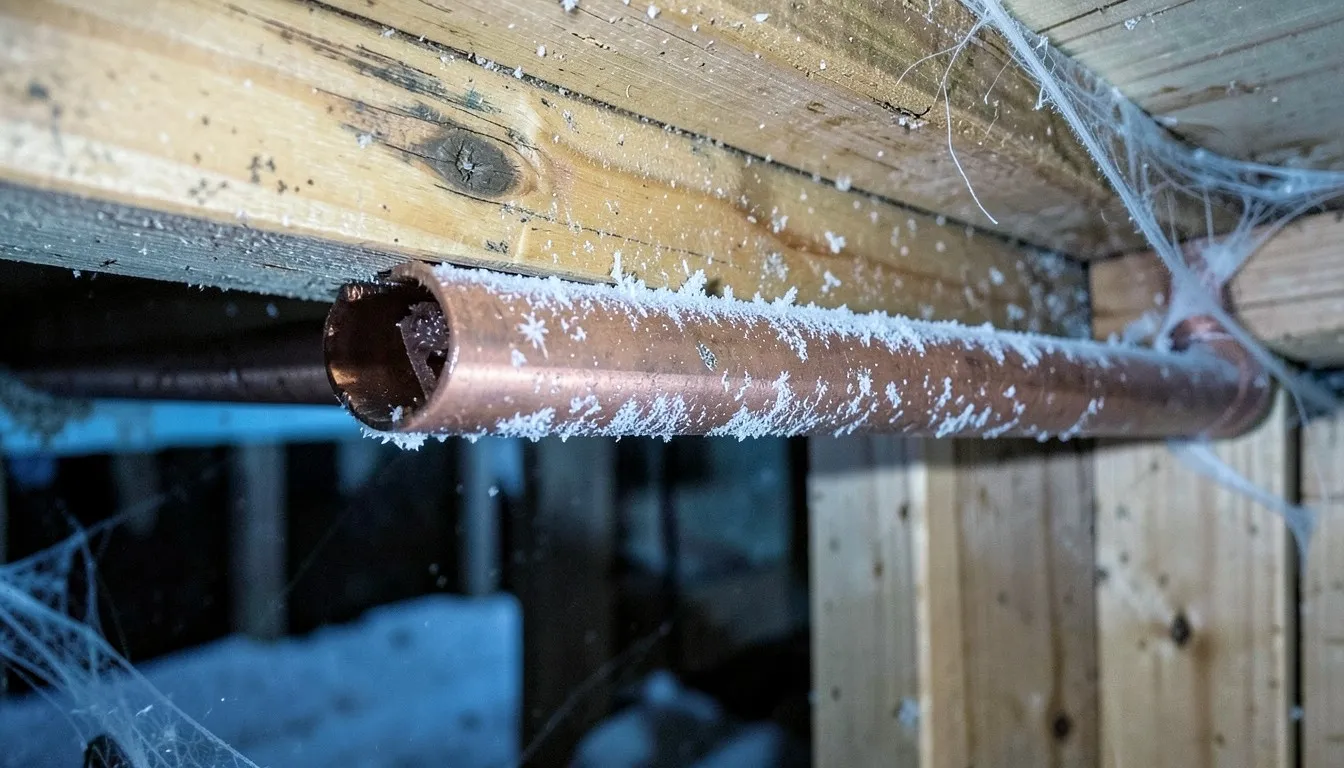
The primary surge in Fort Wayne runs January–March, with a secondary wave at the spring thaw — when pipes that held through the freeze rupture as pressure is restored above 32°F. Scheduling competition peaks exactly when emergency calls are highest. Homeowners who wait for visible damage compete for the same limited plumber slots at the worst possible time.
Active damage in Fort Wayne: contain, assess, restore
Submit your Fort Wayne address and describe the active damage — flooding, failed shutoff, burst or frozen line. AlertPlumber marks the request as priority and an IN-licensed plumber confirms receipt within 15 minutes, without routing through a national call center.
The plumber arrives with a confirmed ETA, locates the nearest shutoff, and maps the damage boundary — affected lines, access points, material condition. You receive a verbal assessment of what requires immediate containment and what can wait until the full repair scope is confirmed.
You approve a written containment and repair scope before any work begins. Temporary isolation is priced separately from full restoration. No phase proceeds without your explicit sign-off.
Water Heater Repair cost calculator — Fort Wayne
Pre-filled for water heater repair in Fort Wayne. Adjust the ZIP for a neighboring area, or change the service to compare. Calculator pulls from the city's scraped permit-fee + state plumber-density data.
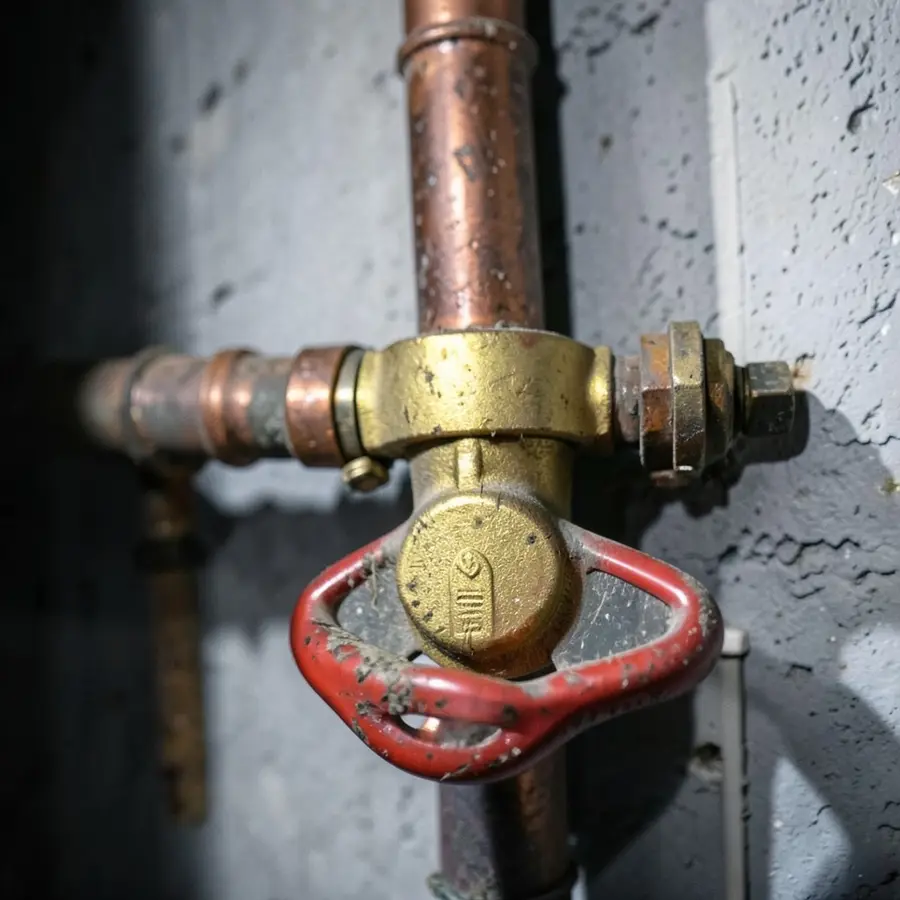
Water Heater Repair emergency in Fort Wayne?
Every hour without a repair increases structural risk and remediation cost. A verified plumber calls back with an ETA and a written estimate before any work begins.
Water Heater Repair in Fort Wayne — frequently asked
How much does water heater repair on Fort Wayne's 13 gpg glacial limestone aquifer supply cost?
Fort Wayne water heater repair quotes drawn off the City Utilities of Fort Wayne St. Joseph River reservoir and glacial limestone aquifer source typically run $185–$525 for a single-fault repair — replacement lower element, upper thermostat, T&P relief valve, sacrificial anode swap, or gas control valve on a NIPSCO gas tank. A full 40–50 gallon tank swap installed runs $1,425–$2,850 for an atmospheric-vent gas unit and $1,575–$3,050 for a 50-gallon electric in a West Central Historic District 1910s basement where extra venting carpentry is needed. The $55 City of Fort Wayne Building Department plumbing permit bundles into any tank-replacement quote. The 13 gpg glacial limestone aquifer hardness per USGS Water Hardness is moderately hard — harder than Lake Michigan markets but milder than Sun Belt 17–25 gpg, so Fort Wayne tanks routinely push 9–11 years before replacement.
What symptoms tell a Fort Wayne homeowner the water heater is failing?
Six symptoms drive most Fort Wayne water heater repair calls. (1) No hot water at any fixture — gas pilot dropout on NIPSCO supply, or a tripped electric upper thermostat on an AEP/Indiana Michigan Power-served home. (2) Lukewarm-only water — failed lower element on electric or partial gas-valve modulation failure. (3) Rumbling/popping at the tank bottom — significant 13 gpg limestone scale baked onto the burner footprint, classic on Fort Wayne tanks past 5 years. (4) Rusty hot water at the tap only — anode rod fully consumed by 13 gpg water, tank steel now corroding. (5) Bottom-pan water or basement-floor seepage — perforation in a Lakeside 1925 basement or Wildwood Park utility-room install. (6) T&P relief valve weeping during winter heating-load cycling across Fort Wayne's 129 freeze days. Any of these warrant a same-day diagnostic from a state-credentialed Indiana plumber routed through AlertPlumber.
Why are Fort Wayne water heater repairs different from other Indiana markets?
Three Fort Wayne-specific factors shape water heater repair scope. First, the City Utilities of Fort Wayne St. Joseph River reservoir blended with glacial limestone aquifer source delivers 13 gpg moderately hard water — meaningfully harder than Indianapolis's 12 gpg White River supply and far harder than soft-water Great Lakes markets, so anode rods and dip tubes degrade on an accelerated cadence. Second, NOAA NWS Northern Indiana (weather.gov/iwx) records 129 days/year at or below freezing, driving maximum winter heating-load duty cycles on Fort Wayne tanks — burner ignitions run 2–3x summer rates from December through March. Third, Fort Wayne's housing stock is bimodal: West Central Historic District 1900s-1920s craftsman have very-old basement installs with undersized 3/4" gas piping and no expansion tanks; Wildwood Park, Southwood Park, and Aboite Township carry basement and garage installs with freeze-zone exterior shielding requirements.
Tank vs tankless vs heat-pump for a Fort Wayne replacement on NIPSCO gas?
Three Fort Wayne-relevant paths. (1) Atmospheric-vent gas tank on NIPSCO service — $1,425–$2,400 installed, simplest swap in a West Central Historic District 1910s basement with existing B-vent and 3/4" gas line, 9–11 year service life on 13 gpg glacial limestone water with annual flushing. (2) Tankless gas (condensing) — $3,600–$5,400 installed, demands a Category IV PVC vent run and often a gas-line upsize from 3/4" to 1" in older Lakeside basements; DOE Energy Saver reports 24–34% energy savings, requires annual descaling at 13 gpg. (3) Heat-pump (hybrid electric) — $2,400–$3,950 installed plus possible AEP/Indiana Michigan Power EE-program rebate; per DOE heat-pump WH cuts water-heating energy 60–70% and is well-suited to a Wildwood Park basement holding 50–70F year-round. The matched plumber sizes against Fort Wayne's 129 freeze days.
Does Indiana HO-3 cover a Fort Wayne tank that ruptures during a freeze-burst event?
Standard Indiana HO-3 homeowners policies cover sudden, accidental discharge — a tank that splits and floods a Forest Park basement during a January Three Rivers cold snap is a textbook covered loss for water-damage cleanup, drywall replacement, and contents. What HO-3 generally does NOT cover: the cost of the failed tank itself (that's wear-and-tear), gradual seepage the homeowner should have noticed (an inspector finding a 6-month-old drip pan stain in a Wildwood Park utility room can trigger denial), or freeze-related damage if the carrier determines the home was unoccupied without heat maintained. Across Fort Wayne's 129 freeze days, Indiana carriers (Erie, Indiana Farm Bureau, State Farm) expect insureds to keep thermostats at 55F minimum on vacant West Central rentals. Document every prior repair, photograph the install before any cleanup, and submit the Indiana-credentialed plumber's written failure report.
How often should a Fort Wayne anode rod be inspected at 13 gpg?
The sacrificial magnesium or aluminum anode rod is the part that sacrifices itself to corrosion so the steel tank does not. Manufacturer guidance (Rheem, A.O. Smith, Bradford White) calls for inspection every 2–3 years on City Utilities of Fort Wayne supply at 13 gpg glacial limestone aquifer hardness — replacement when the rod's steel core is exposed across more than 6" or the rod has thinned below half-diameter. Fort Wayne's 13 gpg is meaningfully harder than soft-water Great Lakes markets, and the 129-day freeze season drives more burner ignitions and element on-cycles per year, which agitates the tank water and accelerates anode consumption beyond the hardness number alone. A $135–$235 anode swap at year 3 in a Wildwood Park 1965 ranch routinely buys 3–4 extra years of tank life — durable insurance against a $1,425+ replacement quote.
How long does a Fort Wayne water heater repair take on dispatch?
Most Fort Wayne water heater repairs complete in a single truck roll. Thermocouple replacement on a West Central Historic District 1915 gas tank: 35–55 minutes. Element + thermostat replacement on a Wildwood Park 1965 electric: 60–90 minutes including drain time. T&P relief valve replacement: 30–50 minutes. Anode rod swap on a tank tucked under low Lakeside basement joists: 60–110 minutes (often the rod has to be cut and replaced with a flexible segmented rod given 13 gpg scale buildup). Gas control valve replacement on a NIPSCO supply: 75–120 minutes plus leak-test. Full 40–50 gallon tank-out, tank-in replacement: 2.5–4 hours including the $55 City of Fort Wayne Building Department permit pull, expansion-tank install where required by the post-2020 IRC adoption Indiana runs, and pressure/leak verification.
West Central 1910s basement vs Wildwood Park ranch vs Aboite Township new — what changes?
Fort Wayne's housing stock drives three distinct repair-scope buckets. West Central Historic District 1900s-1920s craftsman: water heaters live in unfinished stone or block basements with 6'4" headroom, often on packed-dirt or thin-slab floors with no drip pan and no floor drain — the matched plumber routinely adds a pan, drain line, and proper strapping during a tank swap, and very-old homes may need 3/4" gas-line upsizing from undersized iron runs. Wildwood Park, Southwood Park, Forest Park 1950s–70s ranch utility-room installs: standard-height basements with proper drains, cleaner swaps, but many are still on original galvanized cold-water inlets that should be replaced with copper or PEX during the tank-out. Aboite Township 1990s+ tract garage and exterior-closet installs: code-compliant pans and drains exist, but exterior units require freeze-zone shielding against the 42-inch frost line and 129 freeze days — recovery times suffer and exterior insulation jackets are standard.
What's the Fort Wayne permit and IN PLA framework for a tank replacement?
City of Fort Wayne Building Department requires a $55 plumbing/mechanical permit for any full water-heater replacement (tank, tankless, or heat-pump). Component-level repairs — thermocouple, element, thermostat, T&P valve, anode rod — do NOT require a permit. The state-credentialed plumber pulls the permit on the homeowner's behalf and includes the $55 fee in the written quote. Indiana PLA Plumbing Commission lists approximately 3,400 active credentialed plumbers statewide; AlertPlumber routes only to plumbers in good standing. After install, the Building Department inspects for proper T&P discharge, expansion tank where required by the post-2020 IRC adoption Indiana runs, gas-line sizing on NIPSCO supply, vent termination clearances, and 13 gpg-supply-side dielectric union. Homeowners can independently verify any matched plumber's IN PLA status before authorizing work.
Heat-pump conversion economics with AEP/I&M and NIPSCO rebates?
Heat-pump water heater conversions in Fort Wayne sit at the intersection of two utility EE-program tracks. AEP/Indiana Michigan Power (Fort Wayne's electric distribution utility) offers efficiency rebates on qualifying ENERGY STAR heat-pump WH models per ENERGY STAR HPWH, and NIPSCO (the gas utility) offers parallel rebates that incentivize moving load OFF gas in some program years — homeowners verify current-year amounts directly with each utility. Federal IRA 25C tax credits and HEEHRA point-of-sale rebates can stack on income-qualified Allen County households. Net installed cost on a 50-gallon HPWH in a Wildwood Park basement frequently lands $2,400–$3,950 before rebates, $1,400–$2,800 net post-rebate. Operating cost runs ~$110–$165/year vs ~$320–$435/year for an atmospheric-vent gas tank on NIPSCO rates — payback in 5–8 years on a basement install. Per AHRI Directory, model-specific UEF ratings drive the rebate-eligibility cutoff.
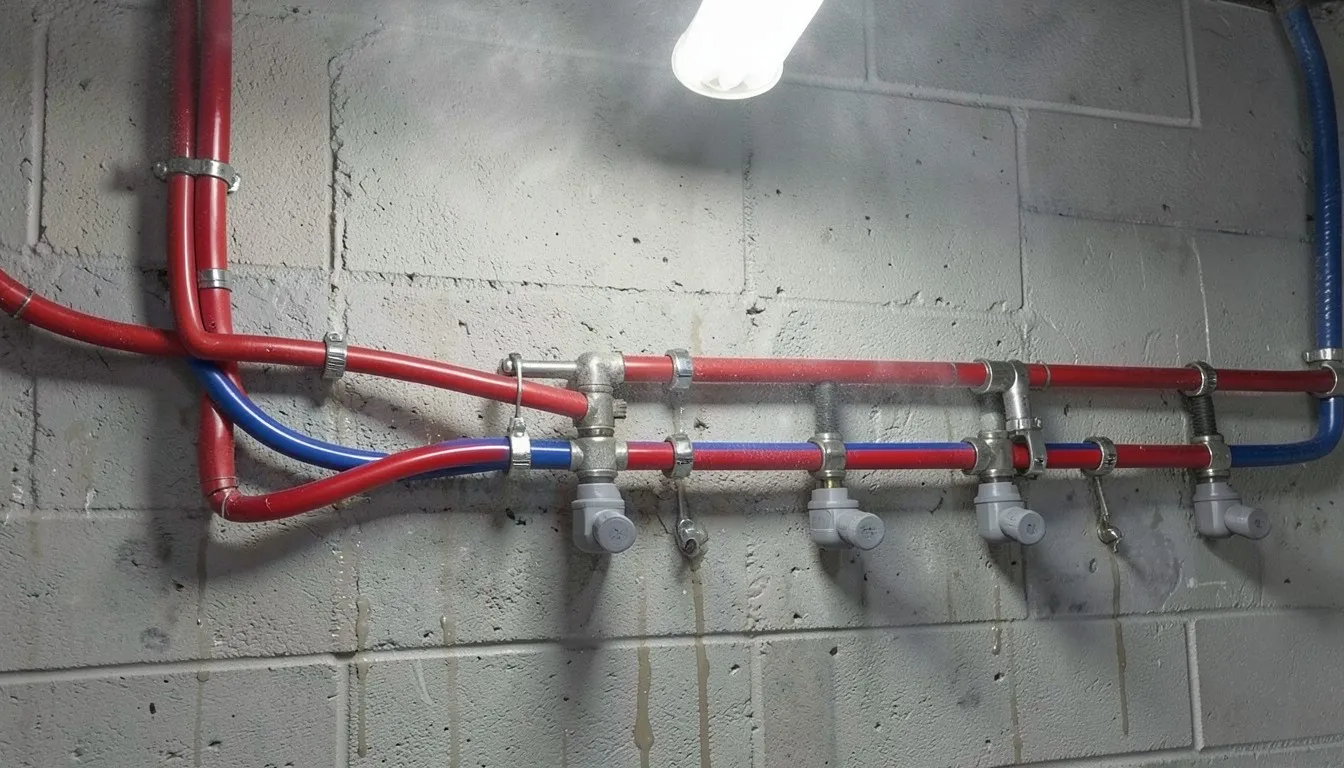
Sixty seconds from now, a plumber can be working your problem.
Call and talk to dispatch, or put your number in the form below — a licensed Indiana plumber calls you back about the water heater repair and gives a written estimate by phone.
Request a water heater repair callback in Fort Wayne
In a meeting, with the kids, or just prefer not to hold? Drop your ZIP and number below. AlertPlumber routes your request to a verified plumber in your area — they’ll call you back directly.
- 1 Submit your info. ZIP, phone, and what kind of work you need.
- 2 AlertPlumber matches you with a verified plumber serving your area.
- 3 The plumber calls you back with a written estimate, no obligation.
Water Heater Repair in Fort Wayne — fast response
Acute plumbing failures cannot wait. AlertPlumber has verified Indiana plumbers available for water heater repair in Fort Wayne — call now or submit the form above for rapid callback.