
Dielectric Union
Fitting that joins dissimilar metals like copper to galvanized steel, with insulating gasket to prevent galvanic corrosion.
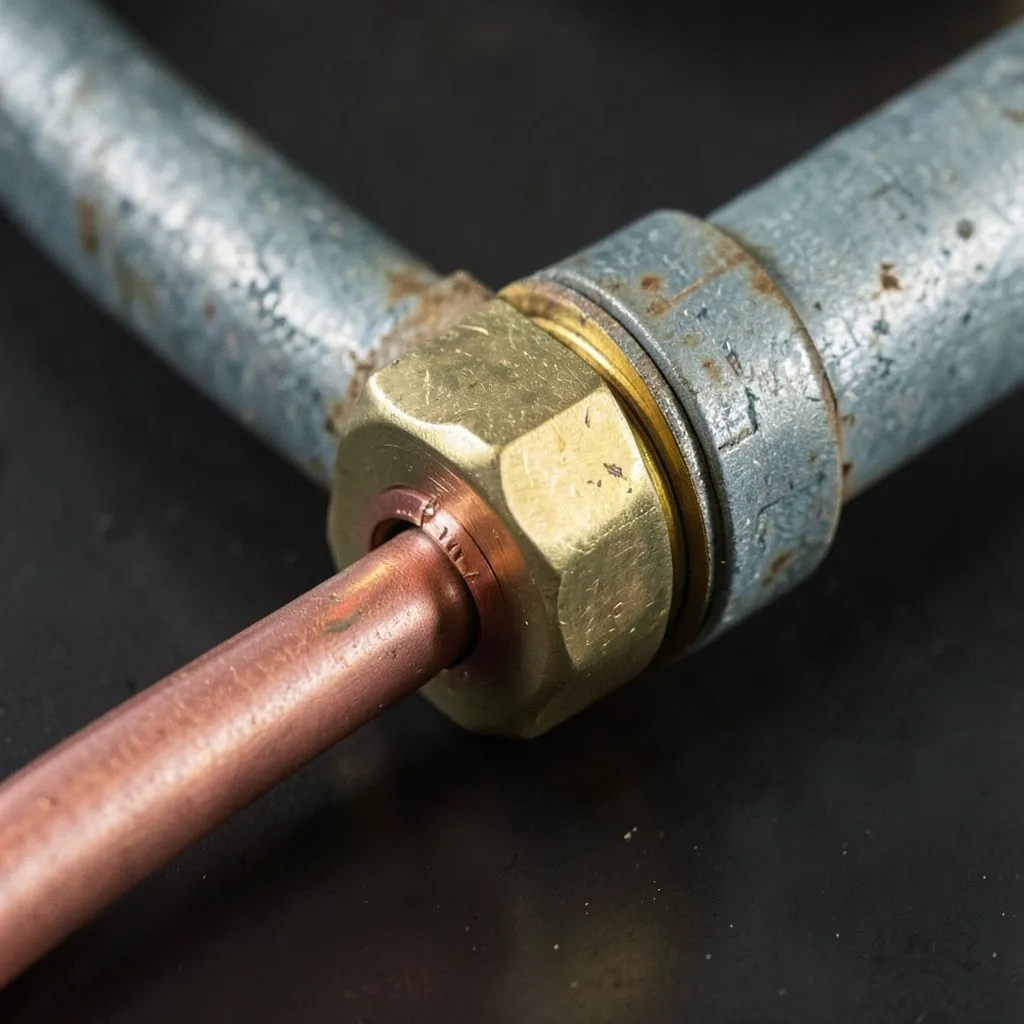
A dielectric union is a specialized plumbing fitting designed to connect two pipes made of dissimilar metals while electrically insulating them from each other. It is most commonly used at the transition between copper and galvanized steel pipe, and at the cold and hot water connections on top of a water heater where copper supply lines meet the steel tank nipples. The fitting contains a non-conductive plastic or rubber gasket and a dielectric sleeve that physically prevents the two metals from touching, breaking the electrical circuit that would otherwise drive galvanic corrosion.
How do you identify a dielectric union?
A dielectric union has a distinctive three-part body: a brass or copper threaded half on one side, a galvanized or steel threaded half on the other, and a center union nut that draws the two halves together against a colored insulating gasket (often red, black, or white). The insulating sleeve is visible inside the union when disassembled. Dielectric unions are typically 3/4 inch on water heater installations and 1/2 inch to 1 inch elsewhere in the supply system.
How long does a dielectric union last, and how does it fail?
When properly installed and not over-tightened, a dielectric union should last 15 to 25 years. The most common failure mode is internal corrosion at the steel side of the union, where dissolved minerals and oxygen attack the threads despite the dielectric break. The plastic insulating washer can also degrade from prolonged exposure to hot water, eventually allowing direct metal-to-metal contact and restoring the galvanic cell. Symptoms of failure include rust-colored water at the nearest fixture, reduced flow from internal scale buildup inside the union, and visible corrosion or leaks around the union nut. Some plumbers prefer to replace dielectric unions with brass nipples or flexible braided connectors at water heater connections, since the brass body of those alternatives provides natural galvanic isolation without the failure-prone gasket.
When should a dielectric union be replaced?
Dielectric unions cost $15 to $45 each at supply houses. Professional replacement labor typically runs $125 to $225 per fitting depending on access and whether adjacent piping must be cut and reworked. Replacement is warranted when the union is visibly leaking, when supply water at nearby fixtures shows persistent rust discoloration, or proactively during water heater replacement.
What code governs dielectric union installation?
The International Plumbing Code Section 605.14 (Joints between different piping materials) requires that connections between piping of dissimilar metals be made with approved transition fittings designed to prevent galvanic action. ASTM F492 covers performance specifications for dielectric pipe unions, and ASSE Standard 1079 covers performance requirements for dielectric pipe fittings.
Researching the term is one thing — hiring for it is another. See water heater repair services for scope, timelines, and what drives the price, or call (888) 530-4445 for a no-cost estimate.
What related terms should you know?
What sources back this up?
Need a verified plumber for water heater repair?
AlertPlumber matches you with a licensed plumber for water heater repair. Written estimate before any work begins.