
Emergency Drain Cleaning in Fort Wayne, Indiana
Active water damage compounds by the hour — a licensed IN plumber is on call for Fort Wayne right now.
Local plumbing data for Fort Wayne, IN
Seeing these conditions at your place in Fort Wayne? A state-licensed plumber can confirm it over the phone — free, no obligation.
Pipe conditions in Fort Wayne, IN
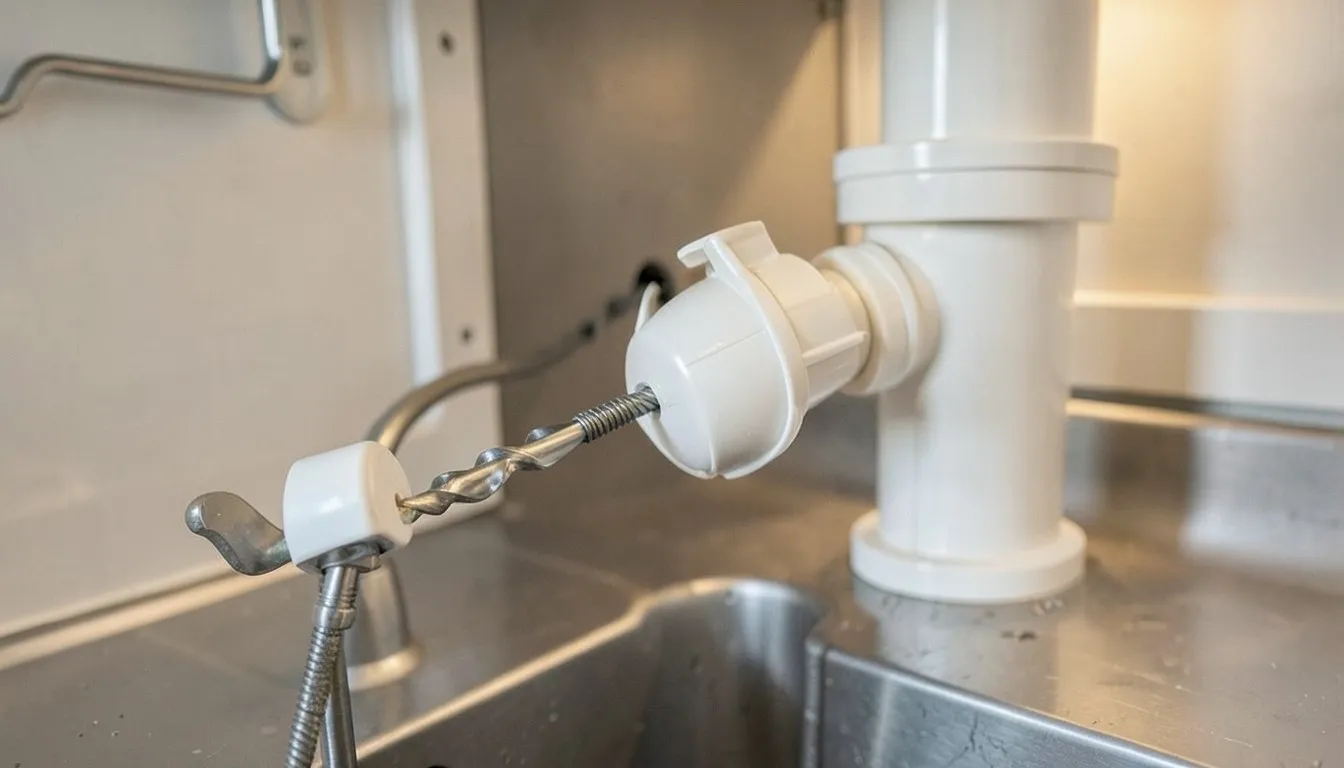
Drain cleaning in Fort Wayne addresses two distinct problems: immediate blockage clearance (snake or jet, same day) and the underlying condition causing recurring clogs (root intrusion, scale buildup, pipe belly, or grease accumulation requiring treatment beyond a single service call). The right approach depends on the root cause — a cable machine clears the blockage without revealing what caused it; a camera scope adds $100–$200 but determines whether the drain will re-block in weeks or hold for years. AlertPlumber routes your request to an Indiana-licensed plumber who provides both options upfront. Freeze events and frost-depth requirements add pipe insulation, exterior faucet winterization, and burst-risk assessment to service calls in this climate.
Fort Wayne's housing stock spans multiple construction eras — median home age 56 years — meaning pipe materials and failure modes vary significantly by neighborhood and building vintage. An inspection-led approach that confirms pipe material before recommending a service path is standard practice for mixed housing profiles.
Very hard water in Fort Wayne is a primary driver of accelerated appliance failure: water heater anode rods exhaust in 2–3 years instead of 6–8, scale deposits at fixture connections form within months of installation, and tankless heat exchangers accumulate mineral buildup that can reduce lifespan by half without regular descaling. A softener or whole-house conditioner is strongly recommended alongside any appliance service call.
Frost line depth in Fort Wayne means supply lines and outdoor plumbing must be installed below the freeze threshold — typically 42 — to prevent pipe burst during cold events. Exterior hose bibs, irrigation shutoffs, and any exposed pipe runs are the most common winterization service points in freeze-risk markets.
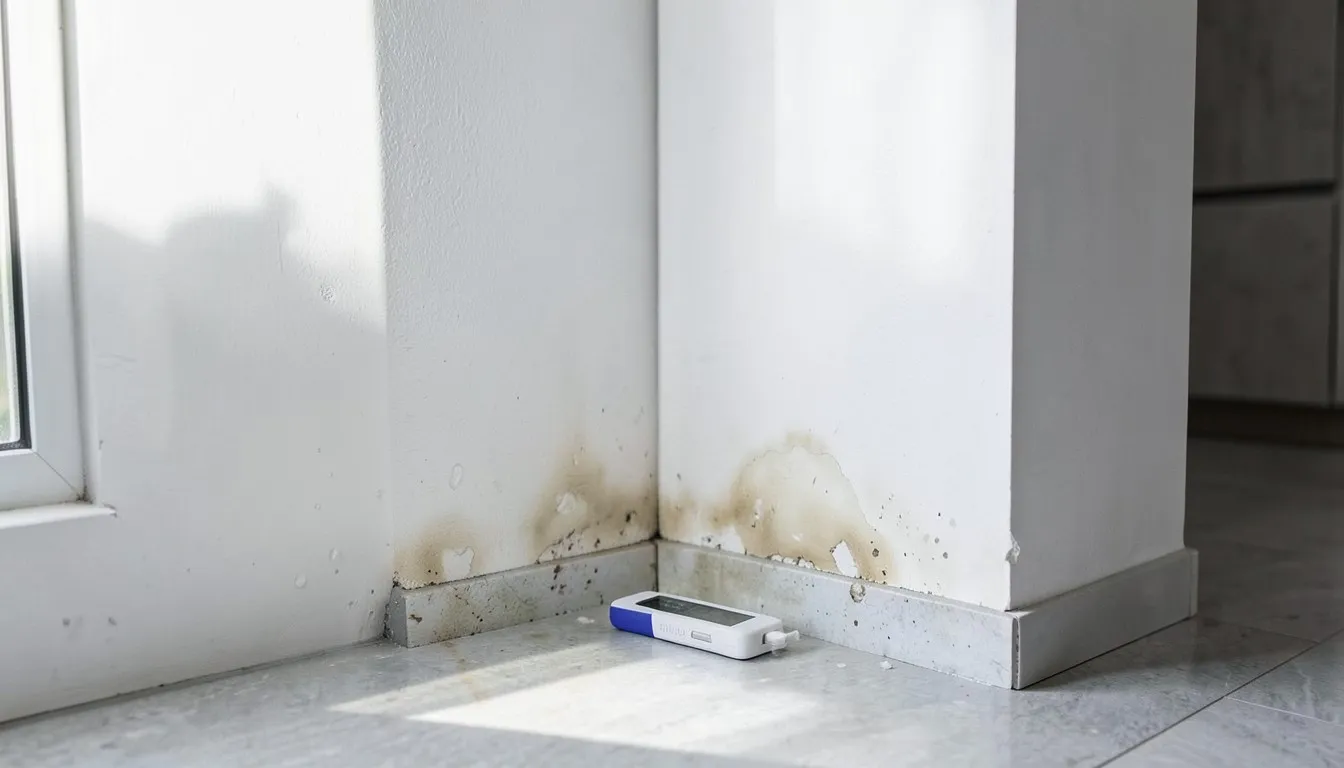
- Median home age
- 56 yrs
- Water hardness
- 13 gpg
- Frost line
- 42 in.
- Permit
- $55
A licensed IN plumber reads these conditions the moment you describe the symptom.
What shapes plumbing demand in Fort Wayne, IN
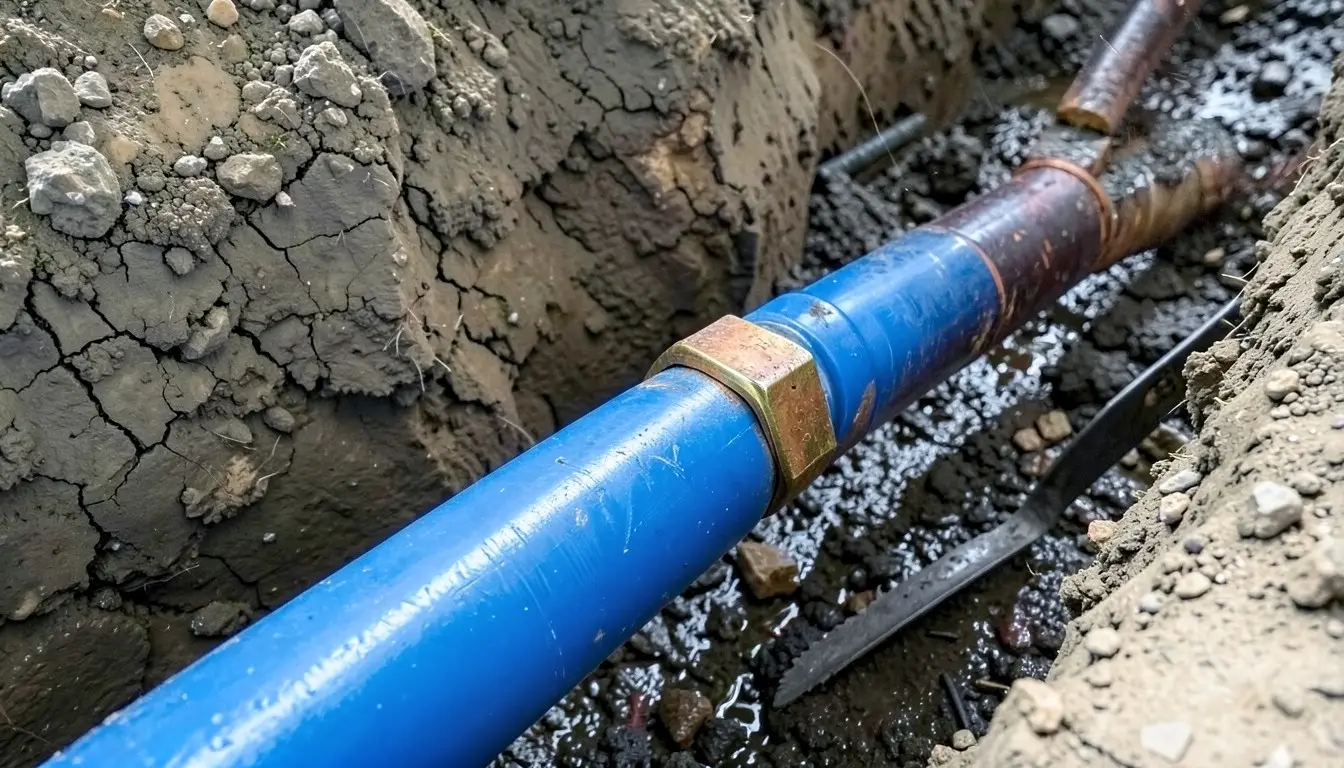
1950s–70s copper supply is now 50–70 years into its service cycle in Fort Wayne. Thermal fatigue at fittings and slab-on-grade access complexity — common in Sun Belt construction — make repair vs. replacement a live decision on most jobs. This housing cohort is the active primary replacement wave in this market.
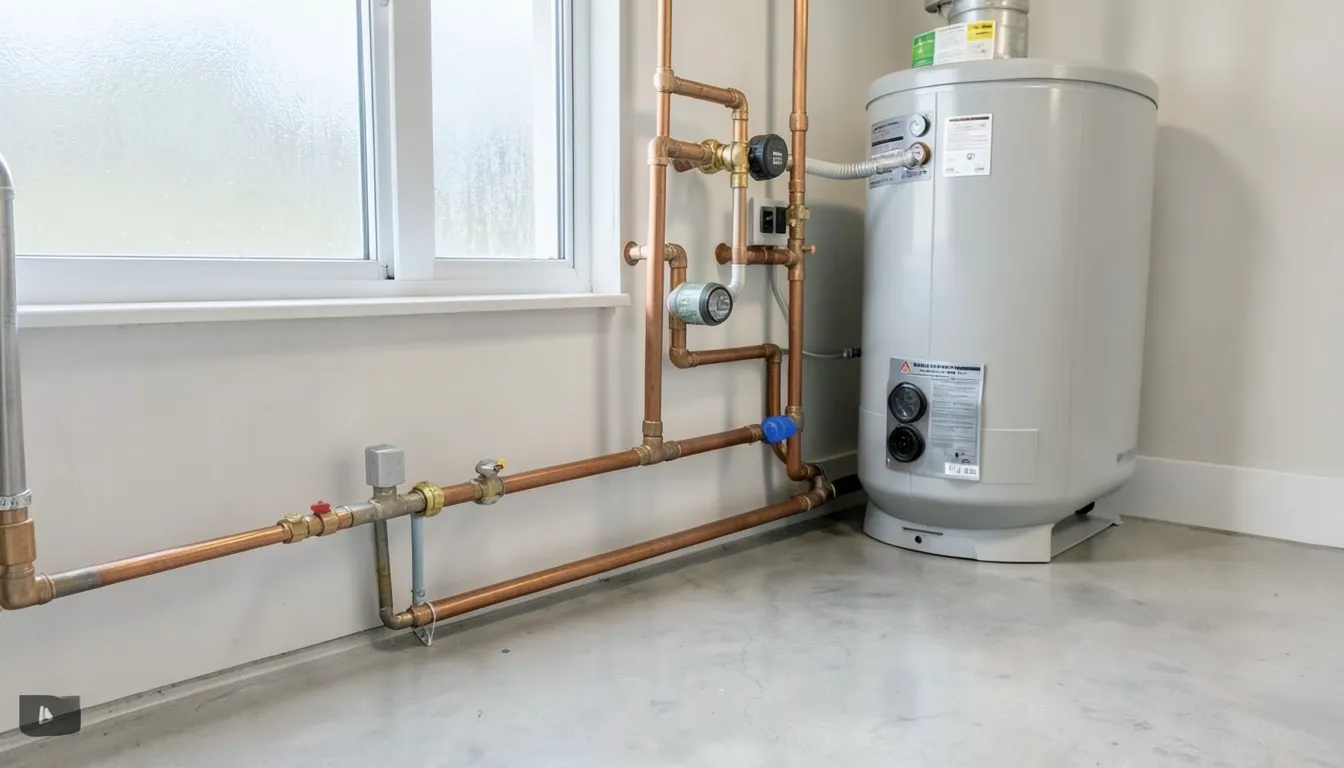
At 15–20+ GPG, calcium scale forces compressed equipment cycles in Fort Wayne: tank heaters average 6–9 years vs. the 10–12-year national benchmark, and tankless units require annual descaling. Anode rods calcify within 12–18 months. Most plumbers here assess heater age against the local scale timeline — not the manufacturer's service life.
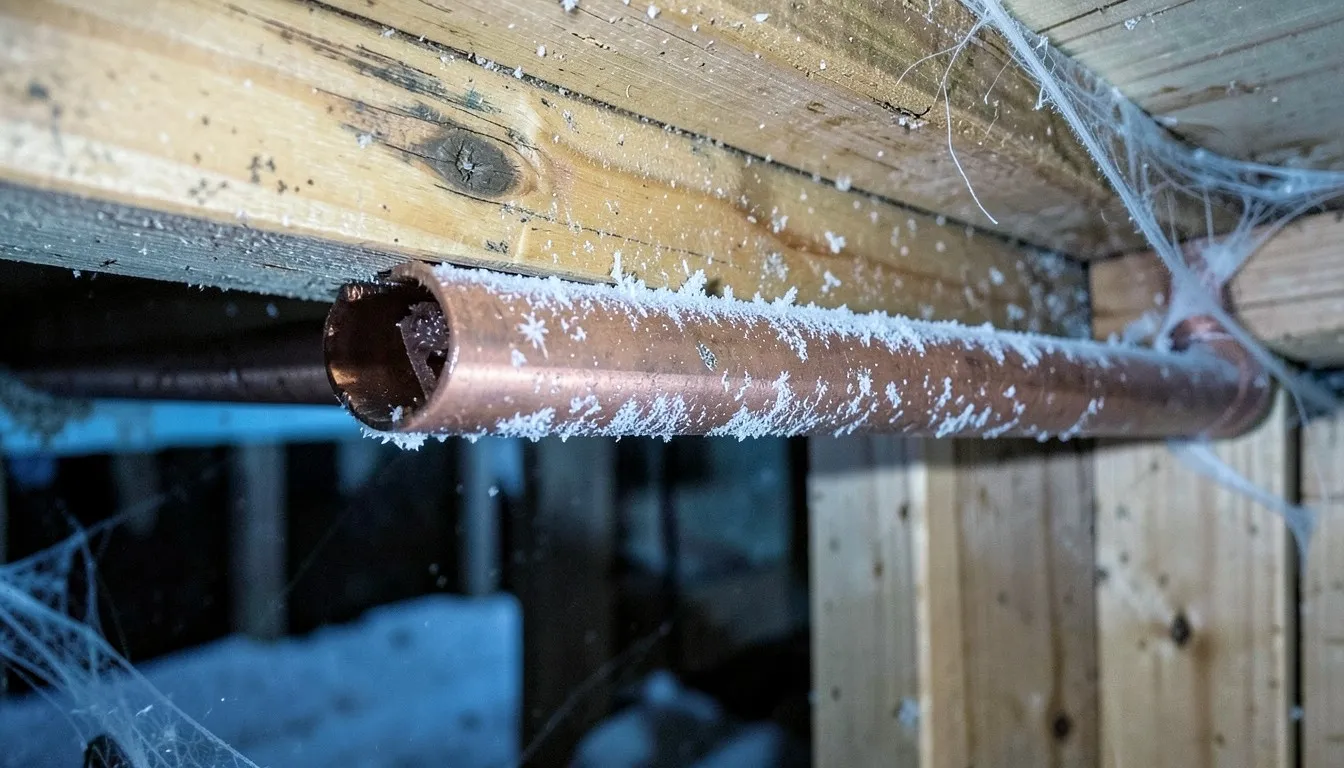
The primary surge in Fort Wayne runs January–March, with a secondary wave at the spring thaw — when pipes that held through the freeze rupture as pressure is restored above 32°F. Scheduling competition peaks exactly when emergency calls are highest. Homeowners who wait for visible damage compete for the same limited plumber slots at the worst possible time.
Active damage in Fort Wayne: contain, assess, restore
Submit your Fort Wayne address and describe the active damage — flooding, failed shutoff, burst or frozen line. AlertPlumber marks the request as priority and an IN-licensed plumber confirms receipt within 15 minutes, without routing through a national call center.
The plumber arrives with a confirmed ETA, locates the nearest shutoff, and maps the damage boundary — affected lines, access points, material condition. You receive a verbal assessment of what requires immediate containment and what can wait until the full repair scope is confirmed.
You approve a written containment and repair scope before any work begins. Temporary isolation is priced separately from full restoration. No phase proceeds without your explicit sign-off.
Drain Cleaning cost calculator — Fort Wayne
Pre-filled for drain cleaning in Fort Wayne. Adjust the ZIP for a neighboring area, or change the service to compare. Calculator pulls from the city's scraped permit-fee + state plumber-density data.
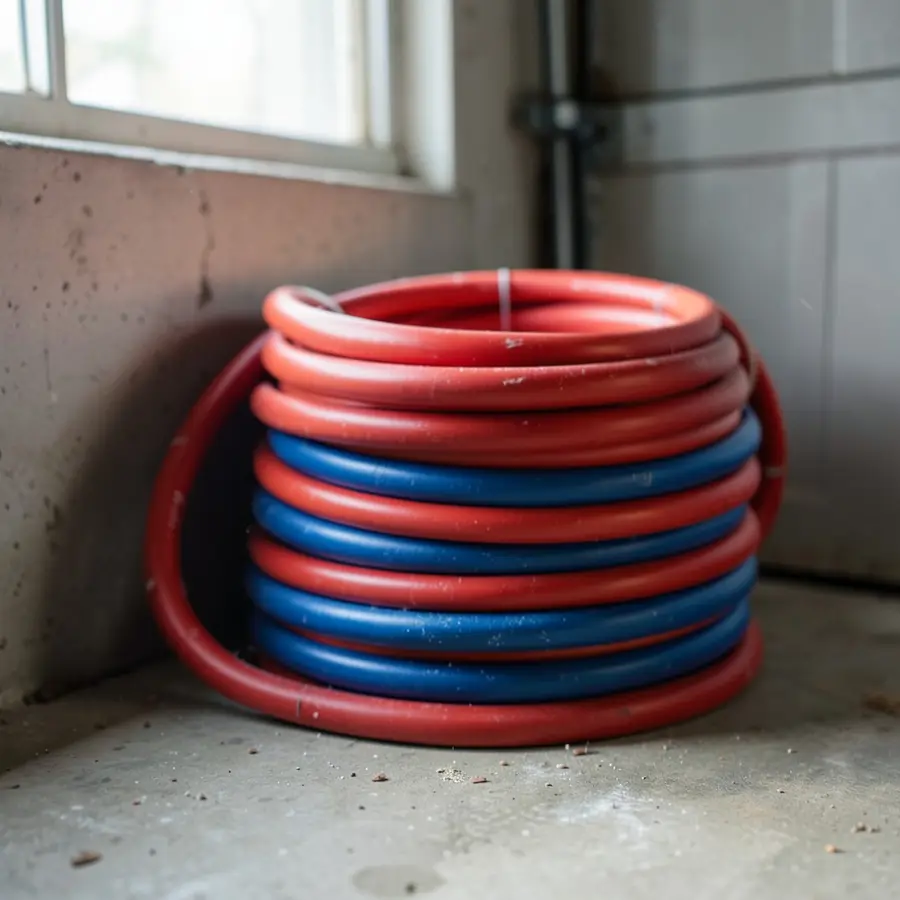
Drain Cleaning in Fort Wayne — the longer it runs, the more it costs.
Slow failures compound: soft pipe walls, root penetration, mineral buildup. A verified plumber calls back with a scope-first estimate before anything is dug up.
Drain Cleaning in Fort Wayne — frequently asked
How much does drain cleaning cost in Fort Wayne, IN?
Fort Wayne drain cleaning typically prices per fixture and access point. A West Central Historic District bath sink or tub branch cabled through an existing P-trap runs $155–$235, with a $40–$80 surcharge on pre-1940 craftsman bungalows where the original cleanout cap is buried behind plaster wainscot. Kitchen branch with FOG buildup runs $185–$295. A Lakeside or Forest Park mainline drum-cabling from a basement cleanout runs $345–$555 because the run to the Maumee watershed lateral often spans 90–115 feet of 4-inch tile. Camera scope adds $165–$265. The $55 City of Fort Wayne Building Department permit only triggers on replacement scope, not routine cabling. AlertPlumber routes the call to a verified Indiana Plumbing Commission credentialed plumber for a written estimate keyed to your Allen County ZIP.
What symptoms tell me my Fort Wayne drain needs professional cabling?
A single slow fixture in a Wildwood Park ranch — bath sink draining past 60 seconds, kitchen sink gurgling when the dishwasher discharges — points to a branch buildup that a 25-50 foot sectional cable clears in under an hour. Multi-fixture symptoms (toilet bubbles when the shower runs, basement floor drain weeping during the washer cycle) signal a mainline restriction needing a 3/4-inch drum cable through the basement cleanout to the Maumee watershed lateral. Sewer odor in a West Central Historic District 1910s home after a Three Rivers confluence storm event often means the trap dried out or the Maumee watershed combined sewer is surcharging. Recurring 4–8 week clogs on a Lakeside bungalow 2-inch galvanized branch indicate interior scale that cabling alone won't durably clear.
Why do Fort Wayne drains clog more than newer Sun Belt cities?
Four Fort Wayne-specific pressures stack up. First, West Central Historic District pre-1940 craftsman bungalows run cast-iron stacks with interior tuberculation that narrows the effective diameter by 30–45% over a century. Second, City Utilities of Fort Wayne source water at 13 grains-per-gallon (per USGS hardness classification) deposits significant glacial limestone aquifer carbonate scale on horizontal cast-iron runs. Third, mature oak and maple in West Central and Forest Park push root intrusion into clay-tile laterals at the tree-lawn transition. Fourth, 129 freeze days drive basement rim-joist freeze events that backflow debris into floor drains. Combined, residential mainline call volume runs higher per capita than newer-stock Indianapolis suburbs or Sun Belt PVC tracts.
Cabling vs auger vs jetting vs scope — what does my Fort Wayne line need?
Hand-auger handles toilet and lavatory branch clogs in any Fort Wayne housing era — first-call tool for single-fixture symptoms. A 3/8 to 5/8-inch sectional cable is the workhorse for 2-inch and 3-inch branch lines in West Central Historic District craftsman and Lakeside bungalow stock — clears soft blockages and root intrusion at clay-tile joints without stressing 110-year-old lead-and-oakum fittings. A 3/4-inch drum cable is mandatory for 4-inch mainlines where the run from basement cleanout to the Maumee watershed tap hits 90–115 feet. Hydro-jetting at 3,000–4,000 PSI handles 13 gpg limestone scale and recurring kitchen FOG but only after a camera scope confirms the cast-iron can take the pressure. The $165–$265 scope is the decision point on any pre-1940 property.
Will Indiana HO-3 homeowners insurance cover a Fort Wayne drain backup?
Standard Indiana HO-3 policies do NOT cover the cabling labor itself — that's classified as routine maintenance. They DO typically cover the downstream water-damage cleanup (drywall, hardwood, basement carpet, mold remediation) subject to deductible, AND only when a sewer-and-drain backup endorsement is added. Forest Park 1950s ranch tract and West Central Historic District finished-basement craftsman stock face the highest backup-damage exposure during Three Rivers confluence flood events. Most Indiana carriers (State Farm, Erie, Indiana Farm Bureau, Allstate) cap unscheduled sewer-backup riders at $5,000–$25,000. Document with the matched plumber's invoice plus camera footage — Indiana carriers increasingly deny verbal-diagnosis claims. Submit within 30 days of loss for cleanest claim approval.
How long will a Fort Wayne drain cleaning visit take?
Single branch cabling on a Wildwood Park ranch or Aboite Township slab home runs 35–65 minutes including setup, P-trap R&R, and post-clear flush testing. Toilet pull-and-auger on a Lakeside 1925 bungalow flange runs 50–90 minutes — the wax ring reseat alone takes 15 minutes. Mainline drum cabling from a West Central Historic District basement cleanout runs 80–140 minutes because the cable threads 90–115 feet through tuberculated cast-iron fittings without snagging. Camera scope adds 30–50 minutes. Winter call-surge season (mid-November through early March, 129 freeze days) stretches same-day response from 90 minutes to 4–6 hours as Allen County dispatch absorbs freeze-burst calls — schedule maintenance cabling for October or April to skip the queue.
West Central craftsman vs Aboite Township slab — different clog patterns?
Sharply different. West Central Historic District and Lakeside pre-1940 craftsman and bungalow stock show cast-iron stack tuberculation, lead-and-oakum joint failure, lath-and-plaster wall degradation dropping debris into the branch, basement floor drain backflow during Three Rivers storm events, and clay-tile lateral root intrusion at the tree-lawn transition. Smaller-diameter cable (3/8 to 5/8 inch) is the right call and high-PSI jetting needs a pre-scope. Wildwood Park / Southwood Park 1960s frame mid-century and Aboite Township 1990s+ slab-on-grade stock show ABS or PVC mainlines in better condition, FOG-driven kitchen clogs, and sump-pit-to-drain crossover surcharging during spring thaw. Larger cable (5/8 to 3/4 inch) works there, and jetting is tolerated more readily.
Does Fort Wayne require a permit for drain cleaning, and who verifies the plumber?
Drain cleaning is permit-exempt in Fort Wayne — straight cabling, hand-augering, and routine jetting are classified as maintenance under the Indiana adoption of the IPC. The $55 City of Fort Wayne Building Department permit triggers only when scope crosses into replacement (re-piping a branch, replacing a failed mainline section, installing a new cleanout, or any code-altering install). On credentialing, every plumber routed through AlertPlumber in Allen County must hold an active Indiana Plumbing Commission specialty plumbing credential — Indiana PLA Plumbing Commission, 2024 lists roughly 3,400 active credentialed plumbing contractors statewide. Homeowners can verify the matched plumber's credential by name through the PLA lookup before authorizing any work.
When does a Fort Wayne drain clog escalate from branch-line to mainline?
The diagnostic line is whether multiple fixtures back up simultaneously. A single slow lavatory in a Southwood Park ranch is a 1.25-inch P-trap or 1.5-inch branch issue — closet auger or sectional cable at the wall stub clears it. The moment the toilet bubbles when the shower runs, the basement floor drain weeps when the kitchen sink empties, or the laundry standpipe surcharges during a wash cycle, the restriction has moved downstream of the branch-fitting tee into the 3-inch or 4-inch mainline. NASSCO inspection guidance (per NASSCO Pipeline Assessment) treats simultaneous multi-fixture backflow as the escalation marker. Mainline work needs a drum machine and access through a basement cleanout — branch cabling at $155–$295 vs mainline at $345–$555 is the largest single price-tier jump.
When do I call a Fort Wayne plumber instead of trying it myself?
DIY-reasonable: a single slow lavatory or kitchen sink with a P-trap you can disassemble by hand, a toilet you can clear with a closet auger from the bowl, a tub stopper with visible hair. Stop and call when: any West Central Historic District or Lakeside pre-1940 craftsman where DIY snaking risks damaging fragile cast-iron or lead-and-oakum joints; multiple fixtures backing up (mainline, not branch); sewer odor from a basement floor drain after a Three Rivers storm event (trap dry-out or Maumee watershed CSO surcharge); recurring 4–8 week clogs at the same fixture (interior scale or root intrusion needing a scope); any clog discovered during the 129-day freeze season where rim-joist damage may be involved. EPA guidance (EPA Safer Choice) discourages caustic chemical cleaners — they accelerate cast-iron corrosion and rarely reach a true mainline restriction.
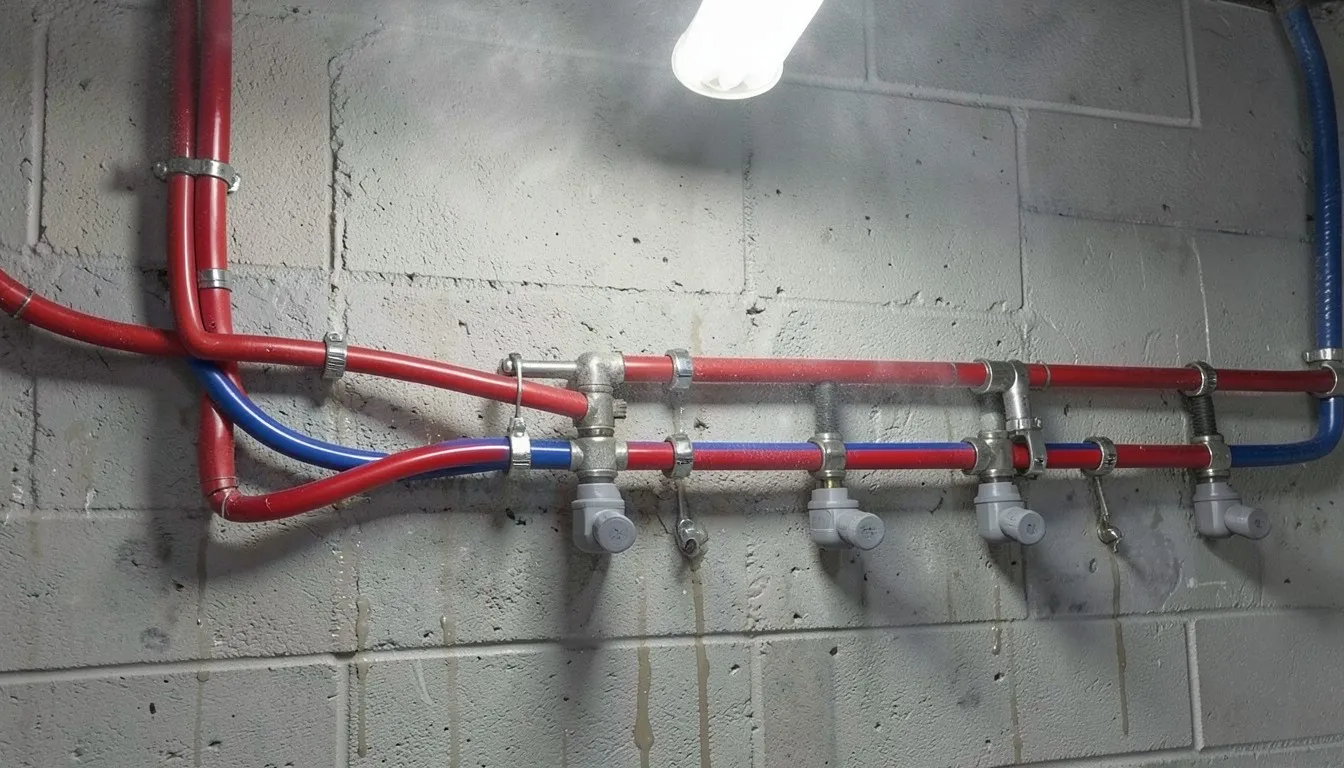
The fix gets cheaper the sooner a plumber sees it.
Degradation problems compound quietly. Call now, or use the form below and a licensed Indiana plumber calls you back with a no-obligation estimate for the drain cleaning.
Request a drain cleaning callback in Fort Wayne
In a meeting, with the kids, or just prefer not to hold? Drop your ZIP and number below. AlertPlumber routes your request to a verified plumber in your area — they’ll call you back directly.
- 1 Submit your info. ZIP, phone, and what kind of work you need.
- 2 AlertPlumber matches you with a verified plumber serving your area.
- 3 The plumber calls you back with a written estimate, no obligation.
Drain Cleaning in Fort Wayne — catch it early
Degradation-driven failures worsen over time and cost more to fix the longer they run. A verified IN plumber in Fort Wayne diagnoses your specific condition and provides a written scope before any work begins.