
24/7 Emergency Β· Freeze zone Β· Des Moines

Emergency Slab Leak Repair in Des Moines, Iowa

Camera first, quote second β€” know exactly what's wrong in your Des Moines home before you approve a dollar.

24/7 dispatch Β· Licensed IA plumbers (888) 530-4445 Talk to a licensed local plumber β€” answers in under 60 seconds
214,133 Des Moines residents
42 in Frost line
64 yrs Median home age
Written estimate before work starts No obligation until you approve
Des Moines, IA β€” what affects cost Cost depends on leak location under the slab, pipe material, access method (tunneling vs. saw-cut), and whether rerouting is required. 214,133 residents Β· median home age 64 years (98%).
Local data

Local plumbing data for Des Moines, IA

License board Iowa Plumbing & Mechanical Systems Board / Master Plumber License board
Active plumbers (state) Iowa DIAL public license search Active plumbers (state)
City permit fee $77.25 (residential alteration); $206 (new dwelling) City permit fee
Residential permits 2024 Des Moines–West Des Moines MSA BPS via FRED Residential permits 2024
Water hardness (gpg) ~16 gpg (270+ ppm; very hard) Water hardness (gpg)
Lead service line inventory ~8,117 confirmed lead + ~47,285 unknown of ~100,000 services Lead service line inventory
Annual freeze days ~128 days/yr ≀ 32Β°F Annual freeze days
Frost depth 42 in Frost depth
Sewer coverage ~98% (WRA serves DSM + 17 metro members) Sewer coverage
Water rate $5.35/1k gal (Tier 1, eff 1/1/2026) Water rate

Seeing these conditions at your place in Des Moines? A state-licensed plumber can confirm it over the phone β€” free, no obligation.

Local infrastructure

What are the pipe conditions in Des Moines, IA?

50YRS
// Service profile Β· Des Moines

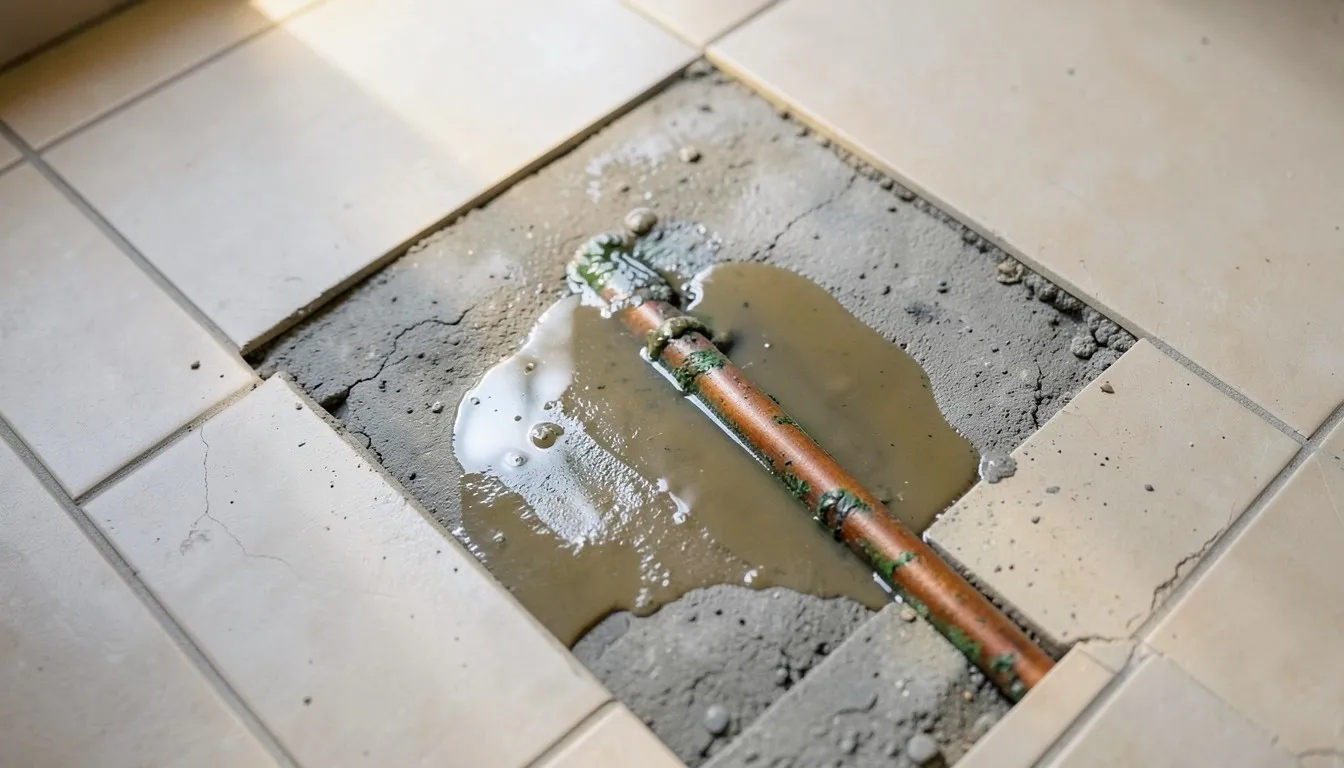
Slab leaks form when copper supply lines embedded in the concrete foundation develop pinholes from electrochemical corrosion, high-velocity water erosion, or slab movement. Des Moines homes built during the 1960s–1980s on post-tensioned slabs face the highest slab-leak risk β€” copper installed at original construction is approaching or past the 50-year corrosion window. Early signs include warm or wet spots on the floor, unexplained water bill spikes, and the sound of running water when all fixtures are closed. AlertPlumber routes your request to an Iowa-licensed plumber for acoustic leak location before any slab cutting begins.

64YRS
// Pipe stock

Des Moines's housing stock spans multiple construction eras β€” median home age 64 years β€” meaning pipe materials and failure modes vary significantly by neighborhood and building vintage. An inspection-led approach that confirms pipe material before recommending a service path is standard practice for mixed housing profiles.

2–3YRS
// Water quality

Very hard water in Des Moines is a primary driver of accelerated appliance failure: water heater anode rods exhaust in 2–3 years instead of 6–8, scale deposits at fixture connections form within months of installation, and tankless heat exchangers accumulate mineral buildup that can reduce lifespan by half without regular descaling. A softener or whole-house conditioner is strongly recommended alongside any appliance service call.

04
// Freeze risk

Frost line depth in Des Moines means supply lines and outdoor plumbing must be installed below the freeze threshold β€” typically 42 in β€” to prevent pipe burst during cold events. Exterior hose bibs, irrigation shutoffs, and any exposed pipe runs are the most common winterization service points in freeze-risk markets.
Slab Leak Repair β€” representative field conditions
Median home age
64 yrs
Frost line
42 in
● Field-verified · Des Moines (888) 530-4445

A licensed IA plumber reads these conditions the moment you describe the symptom.

Local conditions

What shapes plumbing demand in Des Moines, IA?
45–70 yr copper service cycle
Postwar-era housing

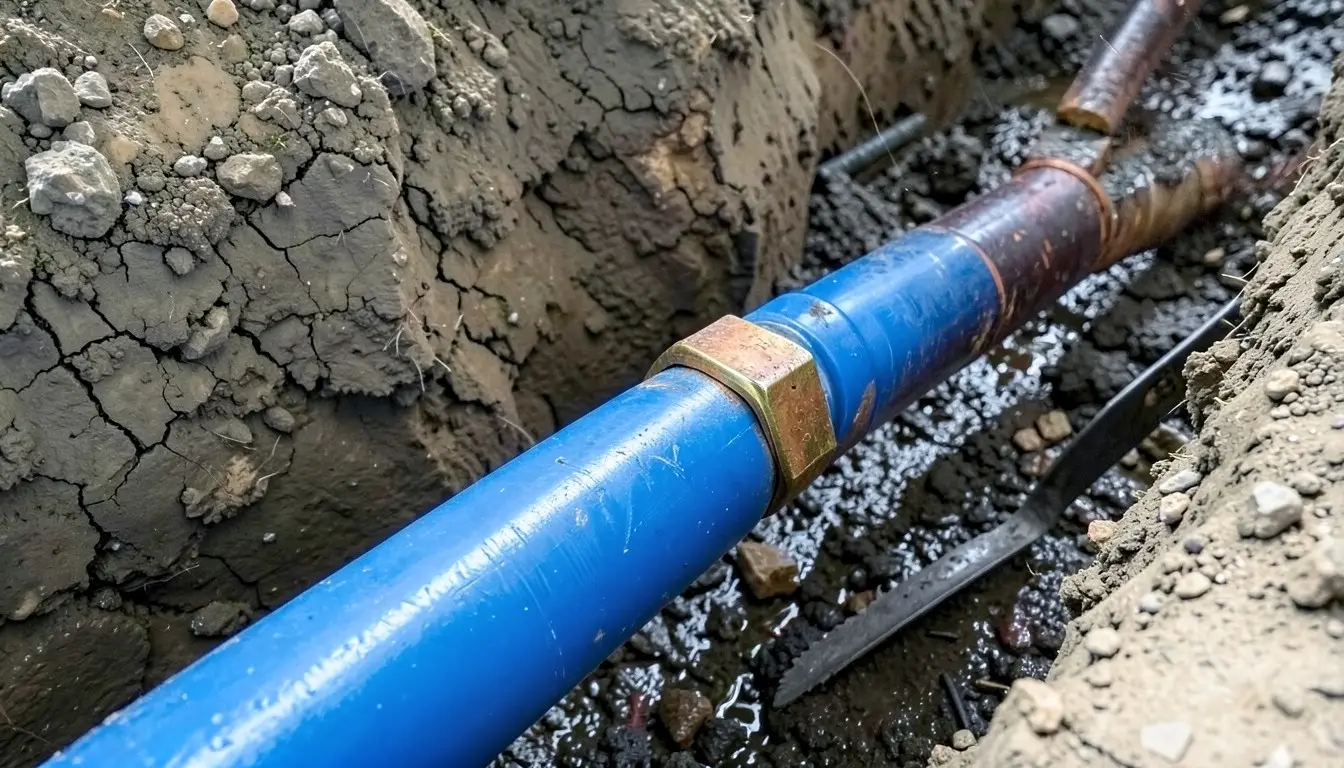
1950s–70s copper supply is now 50–70 years into its service cycle in Des Moines. Thermal fatigue at fittings and slab-on-grade access complexity β€” common in Sun Belt construction β€” make repair vs. replacement a live decision on most jobs. This housing cohort is the active primary replacement wave in this market.
15–20+ grains/gallon
Very hard water

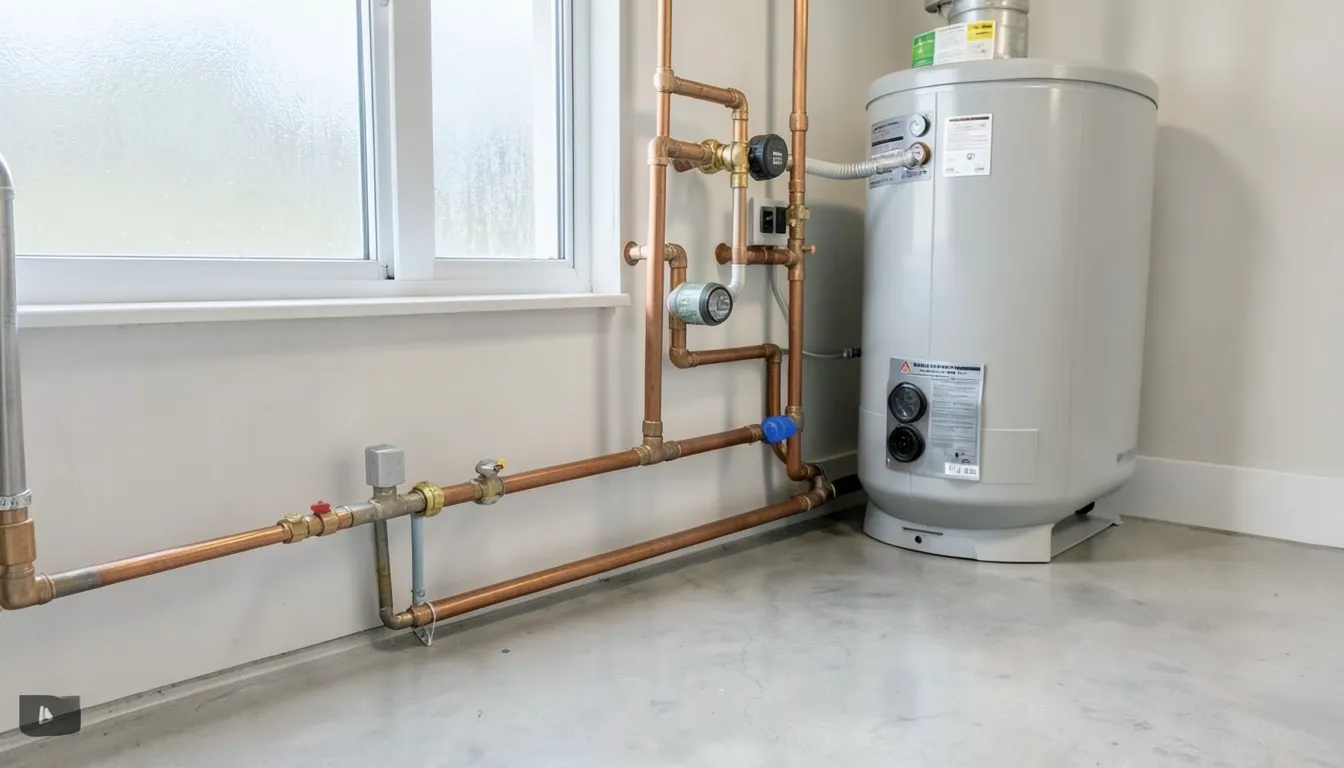
At 15–20+ GPG, calcium scale forces compressed equipment cycles in Des Moines: tank heaters average 6–9 years vs. the 10–12-year national benchmark, and tankless units require annual descaling. Anode rods calcify within 12–18 months. Most plumbers here assess heater age against the local scale timeline β€” not the manufacturer's service life.

60+ days below freezing/yr
High freeze-risk season

The primary surge in Des Moines runs January–March, with a secondary wave at the spring thaw β€” when pipes that held through the freeze rupture as pressure is restored above 32Β°F. Scheduling competition peaks exactly when emergency calls are highest. Homeowners who wait for visible damage compete for the same limited plumber slots at the worst possible time.

Diagnostic process

Why diagnose before repairing in Des Moines?

01 Submit a diagnostic request

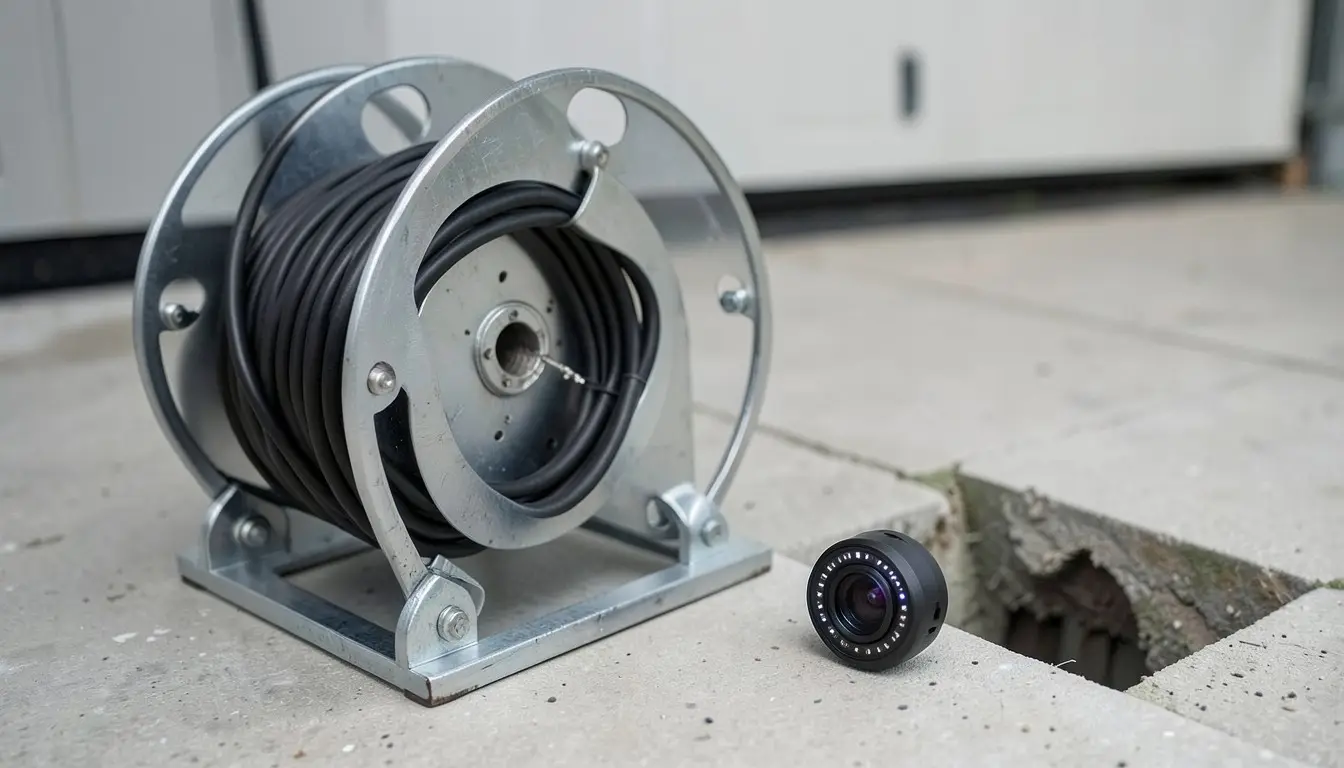
Describe the symptom β€” not the repair. AlertPlumber routes to an IA-licensed plumber trained in diagnostics. The site visit uses camera tracing, acoustic detection, or hydrostatic pressure testing β€” matched to the reported failure type.

02 Findings delivered in writing

The plumber delivers a written diagnostic report: confirmed failure location, available repair methods, and tradeoffs β€” disruption level, material durability, long-term cost, and whether a Des Moines building permit applies to the selected method.

03 Repair method authorized

You select the repair path. The Iowa-licensed plumber proceeds on the authorized method with a fixed scope and price. Where required, the permit application to Des Moines is handled by the contractor.

Estimate

Slab Leak Repair cost calculator — Des Moines

Pre-filled for slab leak repair in Des Moines. Adjust the ZIP for a neighboring area, or change the service to compare. Calculator pulls from the city's scraped permit-fee + state plumber-density data.

Click Estimate to calculate cost for your ZIP.
Emergency line Β· Des Moines

Slab Leak Repair emergency in Des Moines?

Every hour without a repair increases structural risk and remediation cost. A verified plumber calls back with an ETA and a written estimate before any work begins.

FAQs Β· Slab Leak Repair in Des Moines

Slab Leak Repair in Des Moines β€” frequently asked

Are slab leaks common in Des Moines?
Less common than in slab-dominant Sun Belt markets because Des Moines housing is predominantly basement-over-foundation. Most pre-1970 stock in Beaverdale, Sherman Hill, South of Grand, Drake, and Highland Park sits over a full or partial basement rather than a slab. Slab plumbing in Des Moines shows up in three places: postwar ranches in West Des Moines and outer Polk County suburbs from the 1950s through 1970s, Waveland Park and similar craftsman neighborhoods where a 1950s or 1960s addition was poured on a slab, and East Village downtown loft conversions. undefined treats slab leak diagnostics seriously in those properties because DMWW's 16 grains per gallon very hard water accelerates pitting corrosion on Type M copper buried in concrete.
Why does DMWW 16 gpg water attack slab copper so aggressively?
DMWW's 16 grain-per-gallon very hard water from the Raccoon River and Des Moines River sources carries a heavy mineral load that interacts with the chloride and dissolved oxygen profile to produce slow pitting corrosion from the inside of copper supply lines. In a slab installation, where the copper is encased in concrete and cannot be inspected, that pitting goes undetected for years until a pinhole develops. Iowa Statehouse limestone-distilled hardness profiles in the regional groundwater are part of why Type M copper under slab in Des Moines tends to fail in 25 to 40 years rather than the 50 year design life. undefined recommends re-routing rather than slab cutting on any home where one pinhole has already developed, because the next one is usually within a few years.
How do you find a slab leak in a postwar Polk County ranch?
Postwar 1950s and 1960s ranches in West Des Moines and outer Polk County suburbs typically have a single-pour slab with original Type M copper supply lines running to a centrally located kitchen and bath. undefined starts with a meter-isolation test, then runs a controlled hot-water draw at each fixture while a thermal imaging camera scans the slab for differential warming. Once thermal narrows the leak to a 6-foot circle, we use an acoustic ground microphone to pinpoint within a 12-inch area. Only at that point do we discuss whether to cut concrete or to re-route the line through accessible attic or wall cavity above the slab.
Should I cut the slab or re-route the line in a 1960s Des Moines slab home?
For most Des Moines slab leaks, re-routing is the better answer. The 16 gpg DMWW hardness has been attacking the entire slab-encased copper line for the full service age, and the existence of one pinhole means the rest of the line is statistically close to failing. undefined quotes both options in writing: a slab cut and repair at the single failure point, versus a re-route through the attic or interior wall using PEX-A with home-run manifold construction. The re-route is usually within 20 to 40 percent of the slab-cut price and eliminates future slab leaks on that branch entirely. Iowa Plumbing & Mechanical Systems Board Master Plumber rules require the homeowner to be informed of both options.
What does a Waveland Park kitchen-addition slab leak look like?
Many Waveland Park 1910s through 1930s craftsman bungalows had a 1950s or 1960s kitchen or family room addition poured on a slab next to the original basement. Those slab additions typically have a single supply line running from the basement up through the slab edge and across to the kitchen sink and dishwasher locations. The most common failure point is at the slab transition where the copper bends 90 degrees and enters the concrete. undefined sees this failure repeatedly, the bend stresses the pipe and the slab-edge moisture barrier degrades over decades. The fix is usually a re-route from the basement up through an interior wall rather than cutting the kitchen tile or hardwood.
How does the 128-day freeze season affect slab leak detection?
Des Moines averages roughly 128 freeze days per year, and slab leaks in heated interior space stay liquid year-round, the heated slab keeps the supply line above freezing. The diagnostic implication is that thermal imaging for slab leak detection works well in winter because the differential between heated floor and cold leak water is larger, which makes the leak signature easier to read. undefined schedules slab leak diagnostics in winter when possible for this reason, the thermal contrast cuts diagnostic time roughly in half compared to summer when the slab is warmer overall and the leak signature is more subtle.
Will my Iowa homeowners policy cover a slab leak in Des Moines?
Most standard Iowa homeowners policies cover the resulting water damage to flooring, drywall, and personal property from a sudden and accidental slab leak, but do not cover the leak detection or the slab repair itself. Coverage usually excludes long-term seepage that the homeowner should have noticed. undefined documents every slab leak diagnostic with thermal imaging photographs, acoustic readings, and a written report so the homeowner can submit a strong claim. Carriers in Iowa increasingly require this documentation before approving water-damage claims. The diagnostic report is part of our standard closeout package on slab leak detection visits.
What does slab leak repair cost in Des Moines?
undefined quotes slab leak repair as either a slab-cut repair at the single failure point or a re-route around the slab. A slab-cut on a postwar Polk County ranch involves locating, cutting concrete, repairing the copper, pressure testing, and restoring the concrete and floor covering. A re-route involves running PEX-A from the basement or attic through accessible wall cavity to the fixture and capping the old slab line. Each method has a defined price bracket we quote on the phone after diagnostic. Permit-pulled scope falls under the City of Des Moines schedule of $77.25 for a residential alteration permit.
Can I use PEX for a slab leak re-route in Des Moines?
Yes. Iowa adopted the Uniform Plumbing Code with state amendments, and PEX-A is approved for residential potable water supply throughout Polk County. undefined uses PEX-A (cross-linked polyethylene Type A) for slab leak re-routes because it tolerates the DMWW 16 gpg hardness without the pitting corrosion that attacks copper, it has a longer service life in heated interior installations, and it can be run through wall cavity in continuous lengths with home-run manifold construction so there are no buried fittings under the slab. Iowa Plumbing & Mechanical Systems Board licensing rules permit PEX in residential applications under standard installation methods.
How long does a slab leak repair take in a Des Moines home?
A standard slab-cut repair in a postwar ranch, locating, cutting a 2 by 2 foot section of concrete, repairing the copper, pressure testing, and pouring the patch, takes one full day on site plus 24 hours for the concrete to cure before flooring is restored. Floor covering restoration (tile, vinyl, or hardwood) adds 1 to 3 days depending on material. A slab leak re-route through accessible wall cavity is usually 4 to 6 hours on site for the plumbing work itself, plus minor drywall repair. undefined confirms the timeline in writing and works around the homeowner's hot-water needs, the affected branch is isolated and capped so the rest of the house keeps running during the repair.
What happens to the abandoned slab line after a re-route?
When undefined re-routes around a slab leak, the abandoned copper line in the slab is cut at the basement entry and at the fixture stub, both ends are sealed with copper caps and pressure-tested at zero psi to confirm isolation, and the abandoned line is documented on a record drawing for the homeowner. The slab itself is not disturbed because the line is no longer carrying pressurized water. This is the standard approach because the alternative, demolishing the slab to physically remove the line, costs significantly more and adds no functional benefit. Iowa code permits abandoned-in-place supply lines provided they are properly capped and documented.
How do I prevent the next slab leak after one occurs?
One slab leak in a Des Moines home almost always predicts more on the same supply line within a few years, because the DMWW 16 gpg water has been pitting the entire run, not just the failure point. undefined recommends three preventive moves after the first slab leak: re-route the affected branch in PEX-A rather than spot-repairing the copper, install a whole-home water softener to reduce hardness reaching the remaining copper, and run a baseline thermal imaging survey of the remaining slab plumbing as a reference for future diagnostics. The combined cost is usually less than the second slab leak repair would be, and the softener pays for itself in water-heater service life and reduced scale across the rest of the house.
Are East Village loft slabs different from postwar suburban slabs?
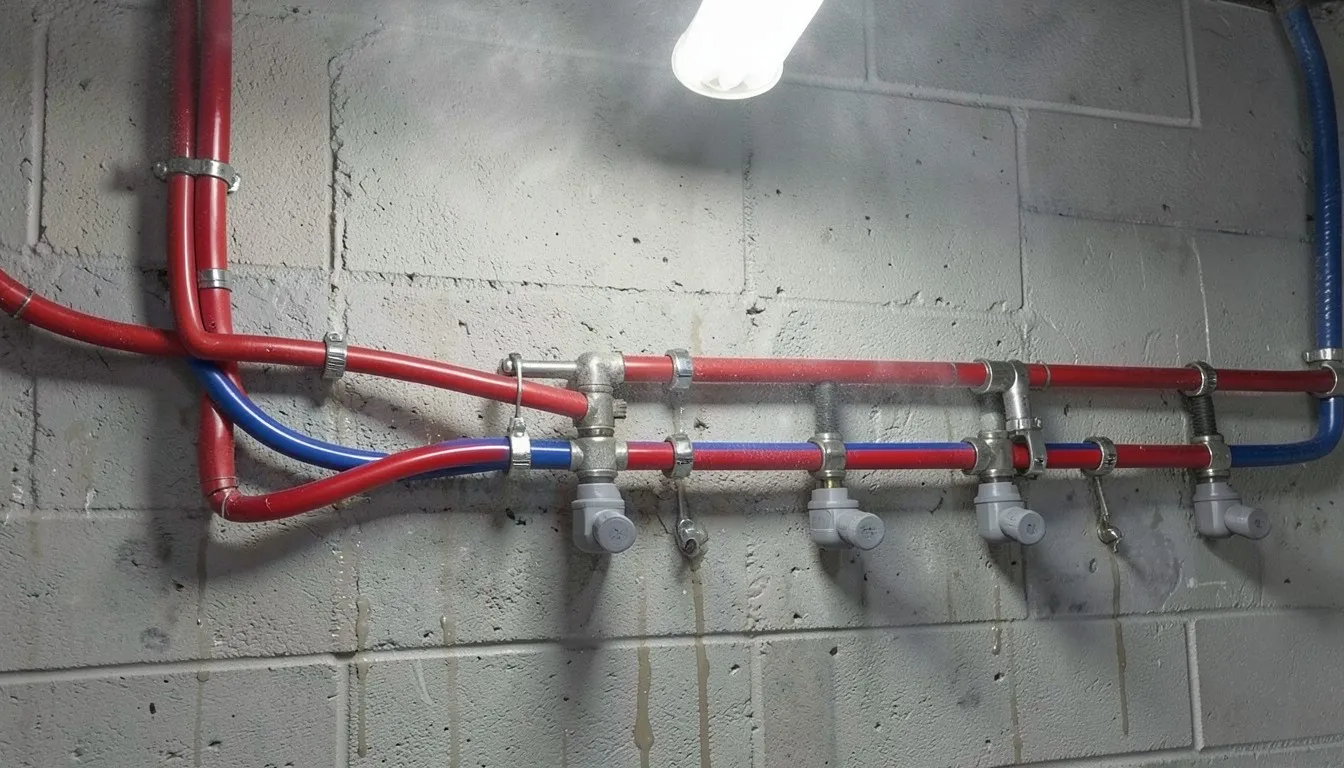
Yes. East Village downtown lofts in converted warehouses and mill-era buildings sit on heavy commercial slabs poured between roughly 1880 and 1920, and the residential plumbing was retrofit in the 2000s and 2010s rather than original to the slab. The retrofit work usually runs PEX or copper through new chases above the slab or through fire-rated wall cavity, with minimal pipe actually buried in the original concrete. Slab leaks in East Village are therefore rare, when they do occur, it is typically at a new penetration through the original slab where waterproofing has failed. undefined approaches East Village slab work with the building manager involved because the building common areas and fire-rated assemblies are shared infrastructure.
Dispatch Β· Des Moines, IA

Sixty seconds from now, a plumber can be working your problem.

Call and talk to dispatch, or put your number in the form below β€” a licensed Iowa plumber calls you back about the slab leak repair and gives a written estimate by phone.
Des Moines callback

Request a slab leak repair callback in Des Moines

In a meeting, with the kids, or just prefer not to hold? Drop your ZIP and number below. AlertPlumber routes your request to a verified plumber in your area — they’ll call you back directly.

  1. 1 Submit your info. ZIP, phone, and what kind of work you need.
  2. 2 AlertPlumber matches you with a verified plumber serving your area.
  3. 3 The plumber calls you back with a written estimate, no obligation.
Your info isn’t sold to third parties TCPA-compliant consent · opt-out anytime
Dispatch request · 30 seconds Verified plumbers on call
How urgent?

Disclaimer: AlertPlumber is a referral service and is not a licensed contractor. All work is performed by independently-vetted contractors routed through the partner network. AlertPlumber does not perform, supervise, or guarantee any work.

or skip the form
Call (888) 530-4445 24/7 line · talk to a plumber sooner
When you need it most

Slab Leak Repair in Des Moines β€” fast response

Acute plumbing failures cannot wait. AlertPlumber has verified Iowa plumbers available for slab leak repair in Des Moines β€” call now or submit the form above for rapid callback.

Call (888) 530-4445 Request Callback
