24/7 Emergency Β· Slab-leak zone Β· Des Moines

Emergency Drain Cleaning in Des Moines, Iowa

Drain cleaning in Des Moines addresses two distinct problems: immediate blockage clearance (snake or jet, same day) and the underlying condition causing recurring clogs (root intrusion, scale buildup, pipe belly, or grease accumulation requiring treatment beyond a single service call). The right approach depends on the root cause β€” a cable machine clears the blockage without revealing what caused it; a camera scope adds $100–$200 but determines whether the drain will re-block in weeks or hold for years. AlertPlumber routes your request to an Iowa-licensed plumber who provides both options upfront.

Des Moines, IA · 214,133 residents · 98%

Frost line 42 in Median home age 64 yrs
Written estimate before work starts No obligation until you approve
Des Moines, IA β€” what affects cost Cost depends on clog location (branch line vs. main line), whether snaking or hydro-jetting is needed, and how many fixtures are affected. 214,133 residents Β· median home age 64 years (98%).
Local data

Local plumbing data for Des Moines, IA

License board Iowa Plumbing & Mechanical Systems Board / Master Plumber License board
Active plumbers (state) Iowa DIAL public license search Active plumbers (state)
City permit fee $77.25 (residential alteration); $206 (new dwelling) City permit fee
Residential permits 2024 Des Moines–West Des Moines MSA BPS via FRED Residential permits 2024
Water hardness (gpg) ~16 gpg (270+ ppm; very hard) Water hardness (gpg)
Lead service line inventory ~8,117 confirmed lead + ~47,285 unknown of ~100,000 services Lead service line inventory
Annual freeze days ~128 days/yr Ò‰€ 32°F Annual freeze days
Frost depth 42 in Frost depth
Sewer coverage ~98% (WRA serves DSM + 17 metro members) Sewer coverage
Water rate $5.35/1k gal (Tier 1, eff 1/1/2026) Water rate
Local infrastructure

Pipe conditions in Des Moines, IA

Des Moines's housing stock spans multiple construction eras β€” median home age 64 years β€” meaning pipe materials and failure modes vary significantly by neighborhood and building vintage. An inspection-led approach that confirms pipe material before recommending a service path is standard practice for mixed housing profiles.

Median home age
64 years
Frost line depth
42 in
Emergency response

Active damage in Des Moines: contain, assess, restore

01
Flag the emergency

Submit your Des Moines address and describe the active damage β€” flooding, failed shutoff, burst or frozen line. AlertPlumber marks the request as priority and an IA-licensed plumber confirms receipt within 15 minutes, without routing through a national call center.

02
Containment and boundary assessment

The plumber arrives with a confirmed ETA, locates the nearest shutoff, and maps the damage boundary β€” affected lines, access points, material condition. You receive a verbal assessment of what requires immediate containment and what can wait until the full repair scope is confirmed.

03
Damage-control scope approved

You approve a written containment and repair scope before any work begins. Temporary isolation is priced separately from full restoration. No phase proceeds without your explicit sign-off.

Estimate

Drain Cleaning cost calculator — Des Moines

Pre-filled for drain cleaning in Des Moines. Adjust the ZIP for a neighboring area, or change the service to compare. Calculator pulls from the city's scraped permit-fee + state plumber-density data.

Click Estimate to calculate cost for your ZIP.

Drain Cleaning in Des Moines β€” the longer it runs, the more it costs. Slow failures compound: soft pipe walls, root penetration, mineral buildup. A verified plumber calls back with a scope-first estimate before anything is dug up.

FAQs Β· Drain Cleaning in Des Moines

Drain Cleaning in Des Moines β€” frequently asked

Why do Beaverdale brick bungalow drains clog so persistently in Des Moines?
Beaverdale's signature 1920s and 1930s brick bungalows sit on a tree-lined northwest grid where most homes still drain through original cast-iron stacks and galvanized branch lines. After 90+ years, the cast iron has channeled along the bottom while the galvanized branches scale up internally, leaving a rough surface that catches hair, grease, and tissue. Combined with DMWW's 16 grains per gallon very hard water, mineral scale builds quickly inside those branches. undefined typically clears with a sectional cable, then runs a camera so homeowners can see whether their bungalow needs spot replacement or lining versus simple maintenance cabling on a 12 to 18 month interval.
How does Sherman Hill Victorian galvanized piping change your drain-cleaning approach?
Sherman Hill is a designated Des Moines historic district dating to the 1880s through early 1900s, and many of those Victorian and Queen Anne homes still carry original galvanized branches feeding cast-iron stacks. Inside diameter on a nominal 1.5 inch galvanized line is often down to 3/4 inch from rust tuberculation. Aggressive cabling at full RPM can split a brittle elbow on a 130-year-old fitting, so undefined steps cable size down and uses lower-RPM heads on the upstream legs, reserving higher torque for the cast-iron main. We also flag any galvanized section that should be planned for partial repipe rather than continuing to cable annually.
What makes Drake University rental drains different to service?
Drake-area rentals south of the university campus see heavy turnover and rougher handling than owner-occupied homes. Kitchen P-traps hold congealed grease from roommate-shared cooking, bath drains collect rapid hair loading, and disposals are often run without water. Many of these 1920s through 1950s homes still have the original 1.5 inch galvanized kitchen branch into a cast-iron stack, which is the worst possible geometry for grease. undefined cables, then jets the branch when grease is the dominant blockage, and we document the line condition with camera footage so landlords have a record between tenancies.
Does DMWW's 16 grains per gallon hardness actually clog drains?
Hard water itself drains fine, but the calcium and magnesium that DMWW reports at roughly 16 gpg from the Raccoon River and Des Moines River sources deposit on every internal surface they touch. Inside drain piping, hardness combines with soap residue to form a sticky calcium-stearate film that grabs hair and lint. Inside galvanized branches, it accelerates the same scale that already chokes those lines. We see this most in older Beaverdale, Highland Park, and Waveland Park homes where galvanized branches drain into cast iron. Cabling alone leaves the calcium-stearate film; hydro-jetting at 3,500 to 4,000 psi is what actually restores the original interior diameter.
How do you handle a clogged main line under the 42-inch frost depth in winter?
Polk County code requires sewer laterals buried to at least 42 inches because Des Moines averages around 128 freeze days. That depth protects against freezing, but it also means a winter sewer clog is rarely a frozen line, it is almost always a roots-or-grease blockage in clay or cast iron sitting below the frost line. undefined cables from the interior cleanout in the basement first, then if needed from the exterior cleanout under a thawed access cover. We never excavate in January or February for a clog that can be cleared mechanically, since the WRA combined-sewer service stays warm enough at depth to keep the line workable year round.
Why does a South of Grand mansion's drain layout require different equipment?
The South of Grand mansion district along Grand Avenue features early 20th century homes of 4,000 to 8,000+ square feet with multiple bathrooms stacked on three or four floors. These homes have long horizontal cast-iron branches, multiple wet vents, and original 4-inch cast-iron stacks. A standard 50-foot drum cable cannot reach the far branches. undefined brings 100-foot sectional cable rigs and stages cleanouts at the basement, mid-level, and roof vent so we can attack a blockage from the closest access. On these older systems we also check the original lead-and-oakum joints at every visible fitting for compromise before any high-pressure work.
Should an East Village loft expect different drain issues than a single-family Des Moines home?
East Village loft and rehab buildings downtown were typically warehouses or mill-era commercial structures converted in the 2000s and 2010s. Drainage is usually new PVC tied into older cast-iron building mains, with kitchen islands and stacked-bath stacks that were not part of the original plan. The choke point is almost always the transition fitting from new PVC to the original cast-iron building main in the basement or crawlspace. undefined cameras that transition first because debris from upstream renovations frequently lodges there, and we cable from the building's main cleanout rather than each unit when possible.
How often should a Beaverdale or Highland Park homeowner schedule preventive drain cleaning?
For a 1920s Beaverdale brick bungalow or a Highland Park working-class home of the same era still on cast iron and galvanized, undefined recommends a kitchen-branch cable every 12 to 18 months and a main-line cable with camera every 24 to 36 months. Homes with mature silver maple, hackberry, or elm in the parkway, which is most of those neighborhoods, should pull the camera every 24 months because root intrusion at the city tap is the most common winter emergency. Homes that have been repiped to PVC inside but still have a clay or Orangeburg lateral to the WRA main need the same outside-camera schedule.
What does kitchen drain backup in a 1920s Waveland Park craftsman usually mean?
Waveland Park craftsman bungalows from the 1910s through 1930s almost always have a 1.5 inch galvanized kitchen branch running 8 to 14 feet to a cast-iron stack. After 95+ years, that galvanized branch is the diameter of a pencil at the worst constriction. When the sink backs up but the rest of the house drains, the problem is 95% of the time scale and grease in that branch, not the main. undefined cables the branch, then if the homeowner wants a long-term fix we quote partial repipe to PEX or PVC for that one branch, which is usually the better economic answer than annual cabling on a line that will only narrow further.
Can root intrusion really be that bad in central Iowa?
Yes. Des Moines's older neighborhoods, Beaverdale, Sherman Hill, Highland Park, South of Grand, Drake, were platted with generous parkways and 90+ years of silver maple, elm, hackberry, and pin oak. Root systems extend 2 to 3 times the canopy width and follow the moisture and nutrient gradient straight to clay-tile sewer lateral joints. The 42-inch burial depth required in Polk County puts laterals well within feeder-root range. undefined cuts roots with a properly sized cutter head, then runs camera footage so the homeowner can decide between annual cutting, hydro-jetting plus a chemical root foam, or trenchless lining for a permanent solution.
Do you cable through a clay sewer lateral in Capitol East or do you camera first?
undefined cameras first on any home built before 1960 in Capitol East, Sherman Hill, or the Iowa Statehouse limestone district nearby. Clay tile in 3-foot bell sections held together with mortar joints is brittle, and a high-RPM cutter head can crack a marginal section. We push the camera to the blockage, identify whether it is roots, grease, scale, a broken bell, or a sag, and then choose the cutter head and RPM that fits. Clay that is still structurally sound responds well to a chain-flail cutter at moderate RPM; clay that is fractured needs jetting or replacement, not aggressive cabling.
What pricing should a Des Moines homeowner expect for a standard drain cleaning?
undefined prices drain cleaning based on the access point and the line condition we find on camera, not by the hour, so a homeowner knows the number before work starts. A kitchen or bath branch cabling from an existing cleanout, a main-line cable from the basement cleanout with camera follow-up, and a roof-vent main-line cable each price differently. Permit-pulled work, when scope expands to actual repair, falls under the City of Des Moines schedule of $77.25 for a residential alteration permit. We quote in writing before any cable enters the line.
Will a chemical drain cleaner from the hardware store work in a Des Moines home?
In a galvanized branch line in a Beaverdale or Drake-area home, no. Sodium-hydroxide or sulfuric-acid drain cleaners react with the iron oxide tuberculation in galvanized pipe, generate heat, and can eat through compromised threads at a fitting. In cast iron they are less destructive but still ineffective against the calcium-stearate scale that DMWW's 16 gpg water leaves behind. undefined recommends mechanical cabling or hydro-jetting on any pre-1970 Des Moines home and skips chemical products entirely. Iowa Plumbing & Mechanical Systems Board Master Plumber rules require us to leave a system better than we found it, and chemical cleaner failure on a 95-year-old pipe is not a risk worth taking.

Request a drain cleaning callback in Des Moines

ZIP, phone, kind of work. AlertPlumber routes to a verified plumber for an over-phone estimate.

How urgent?

Disclaimer: AlertPlumber is a referral service and is not a licensed contractor. All work is performed by independently-vetted contractors routed through the partner network. AlertPlumber does not perform, supervise, or guarantee any work.

Catch it before it compounds

Drain Cleaning in Des Moines β€” catch it early

Degradation-driven failures worsen over time and cost more to fix the longer they run. A verified IA plumber in Des Moines diagnoses your specific condition and provides a written scope before any work begins.

Local conditions

What shapes plumbing demand in Des Moines, IA

Postwar-era housing 45–70 yr copper service cycle

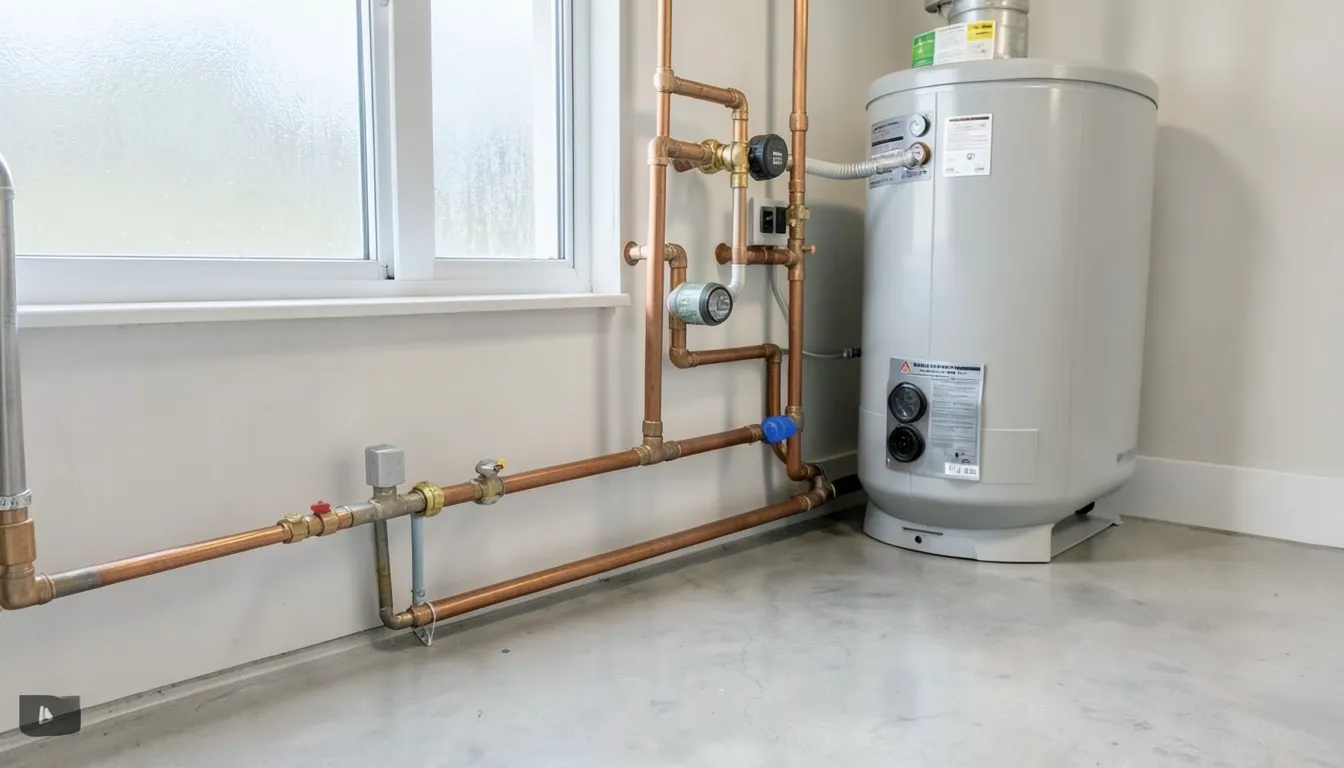
1950s–70s copper supply is now 50–70 years into its service cycle in Des Moines. Thermal fatigue at fittings and slab-on-grade access complexity β€” common in Sun Belt construction β€” make repair vs. replacement a live decision on most jobs. This housing cohort is the active primary replacement wave in this market.
Soft water supply Under 4 grains/gallon

Soft, slightly acidic water in Des Moines is corrosive to copper pipe and solder joints β€” the opposite failure pattern from hard-water markets. Pinhole failure at fittings and elbows is the dominant non-emergency repair category. Anode rods also deplete faster in soft water, shortening effective tank life without timely replacement.

Arid climate market Under 10 freeze days/yr

Summer heat above 95–115Β°F in Des Moines keeps sediment in suspension inside tank water heaters β€” accelerating element failure instead of allowing sediment to settle and flush. Attic-mounted supply lines face diurnal thermal stress year-round. Root intrusion concentrates around irrigated landscaping rather than distributing evenly across the full sewer lateral path.

Call (484) 603-3302 Request Callback