
Emergency Sewer Line Repair in Detroit, Michigan
Sewer Line Repair in Detroit, Michigan repairs broken or root-invaded sewer lines via spot repair, lining, or trenchless methods. Local conditions in Detroit: a 42 in frost line and a median home age of 77 years.
Camera first, quote second — know exactly what's wrong in your Detroit home before you approve a dollar.
What does the local plumbing data show for Detroit, MI?
Seeing these conditions at your place in Detroit? A state-licensed plumber can confirm it over the phone — free, no obligation.
What are the pipe conditions in Detroit, MI?
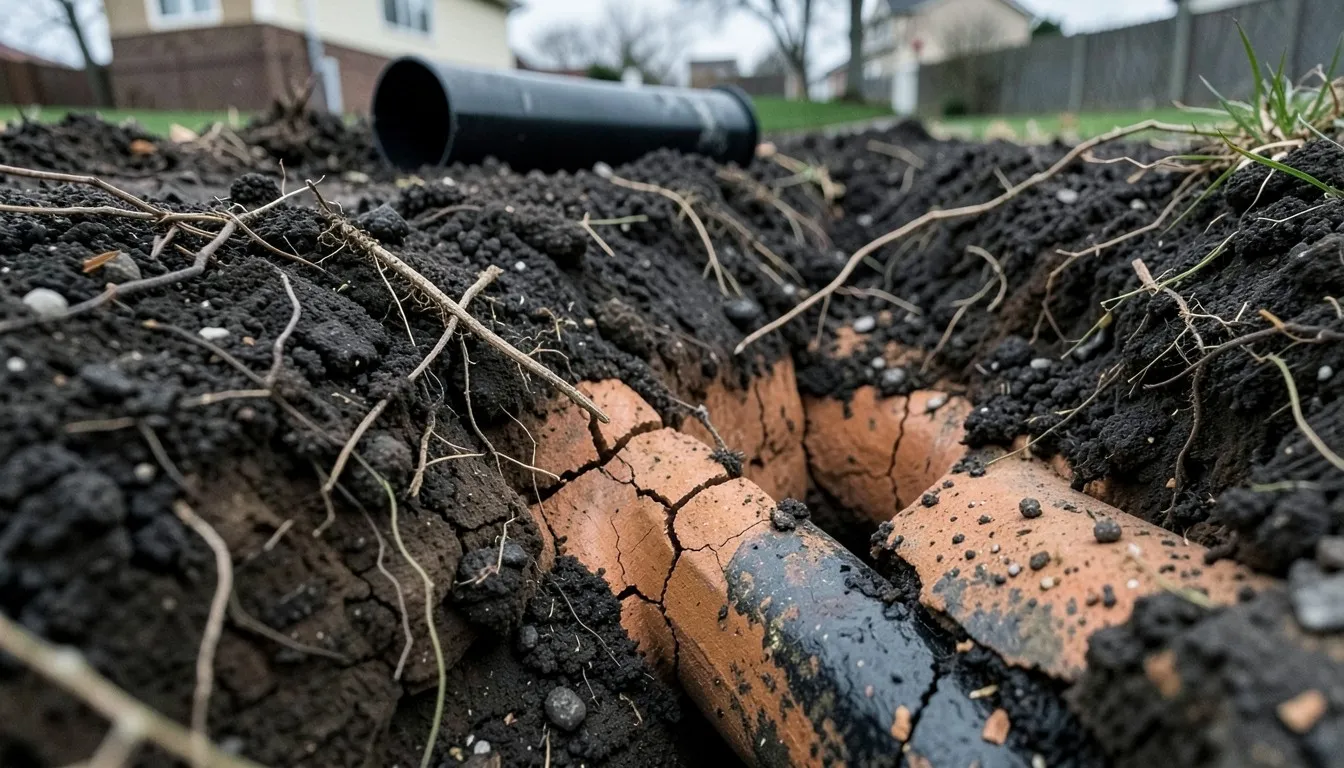
Sewer line failures in Detroit follow predictable patterns by pipe material and installation era: clay tile joints separate and admit root intrusion; Orangeburg pipe (1940s–1960s) compresses under soil load; cast iron corrodes at horizontal runs where standing water accelerates deterioration. A camera scope before excavation is critical — it confirms whether a spot repair is viable or whether replacement of the full lateral is the smarter investment. AlertPlumber routes your request to a Michigan-licensed plumber who completes the scope before quoting the repair. Freeze events and frost-depth requirements add pipe insulation, exterior faucet winterization, and burst-risk assessment to service calls in this climate.
Pre-war housing in Detroit — median home age 77 years — commonly carries galvanized steel supply lines installed before the copper era. Galvanized pipe corrodes from the inside out: internal oxidation gradually narrows bore diameter, reduces water pressure, and eventually results in pinhole failure at corroded sections. Inspection confirms whether scale and corrosion warrant section replacement or full repipe.
Frost line depth in Detroit means supply lines and outdoor plumbing must be installed below the freeze threshold — typically 42 in — to prevent pipe burst during cold events. Exterior hose bibs, irrigation shutoffs, and any exposed pipe runs are the most common winterization service points in freeze-risk markets.
- Median home age
- 77 yrs
- Frost line
- 42 in
A licensed MI plumber reads these conditions the moment you describe the symptom.
What local infrastructure shapes Sewer Line Repair in Detroit?
At 77 years median housing age, Detroit's residential laterals are predominantly clay tile from the 1920s through 1940s build-out of streetcar neighborhoods — Boston-Edison, Indian Village, and Bagley among them. Orangeburg pipe was installed during the early postwar period in northeast and northwest neighborhoods and has delaminated universally under the 140-freeze-day climate stress. Cast iron is present in greystone two-flats on the near east and west sides, where decades of corrosion from the moderate-hardness Great Lakes supply has reduced bore diameter significantly.
Detroit's saturated lake-bottom clay subsoil shifts with 140 freeze days per year at a 42-inch frost line — one of the most active heave environments in the Midwest. Annual frost cycling displaces clay tile bell-and-spigot joints incrementally, and 77 years of cumulative movement has created grade reversal sections throughout original-era laterals. Silver maple and elm roots throughout the residential canopy exploit displaced joints and can fill a 6-inch lateral bore within a single growing season.
Detroit Water and Sewerage Department requires permits for lateral excavation, with fees at $80. The combined sewer overflow infrastructure serving the entire city means hydraulic surcharging during heavy rain can backpressure compromised laterals into active backup. CIPP lining is viable for clay tile runs retaining bore geometry; Orangeburg and collapsed cast iron require open-cut replacement to the 42-inch frost minimum. DWSD coordination is required for work within 10 feet of the public main.
What shapes plumbing demand in Detroit, MI?
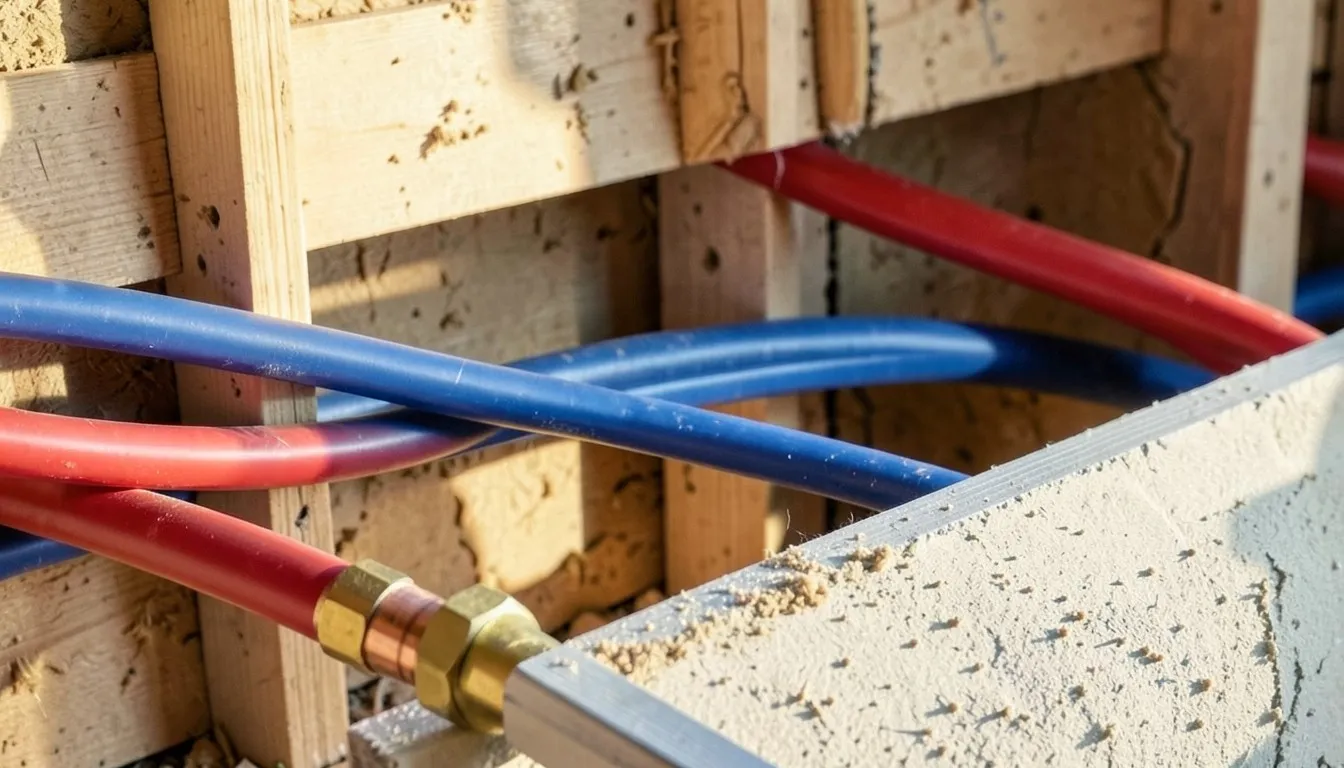
Galvanized supply lines and cast iron drain systems from the 1880s–1940s are past their 40–70-year design life across much of Detroit. Interior rust scale progressively narrows pipe bore. Plumbers here routinely scope supply lines before quoting any repair — the underlying pipe condition often makes full replacement more cost-effective than patching.
4–7 GPG produces gradual scale that stays manageable with standard maintenance intervals in Detroit — annual flushing, cartridge cleaning every 1–2 years. Equipment runs near design lifespan. The primary water quality driver here is preventive maintenance rather than emergency replacement, which distributes service demand more evenly across the calendar.
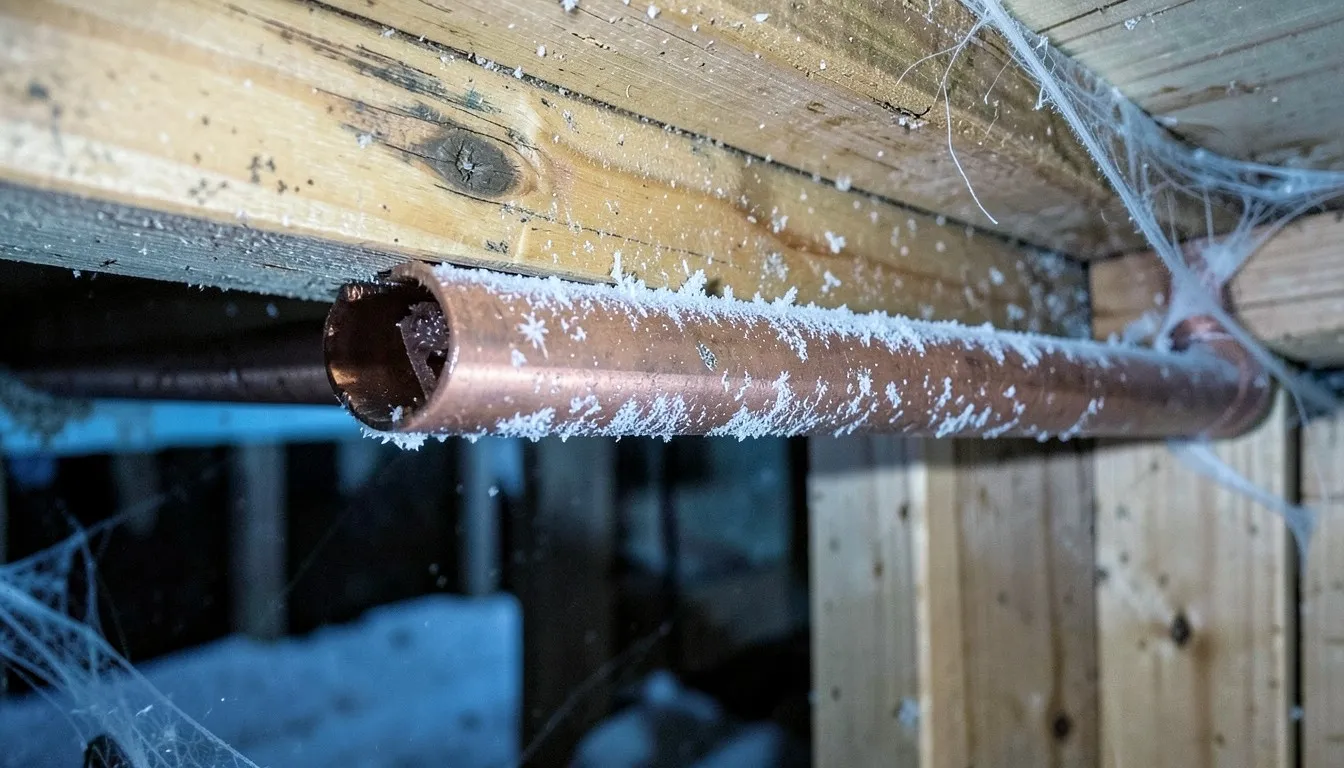
The primary surge in Detroit runs January–March, with a secondary wave at the spring thaw — when pipes that held through the freeze rupture as pressure is restored above 32°F. Scheduling competition peaks exactly when emergency calls are highest. Homeowners who wait for visible damage compete for the same limited plumber slots at the worst possible time.
Why diagnose before repairing in Detroit?
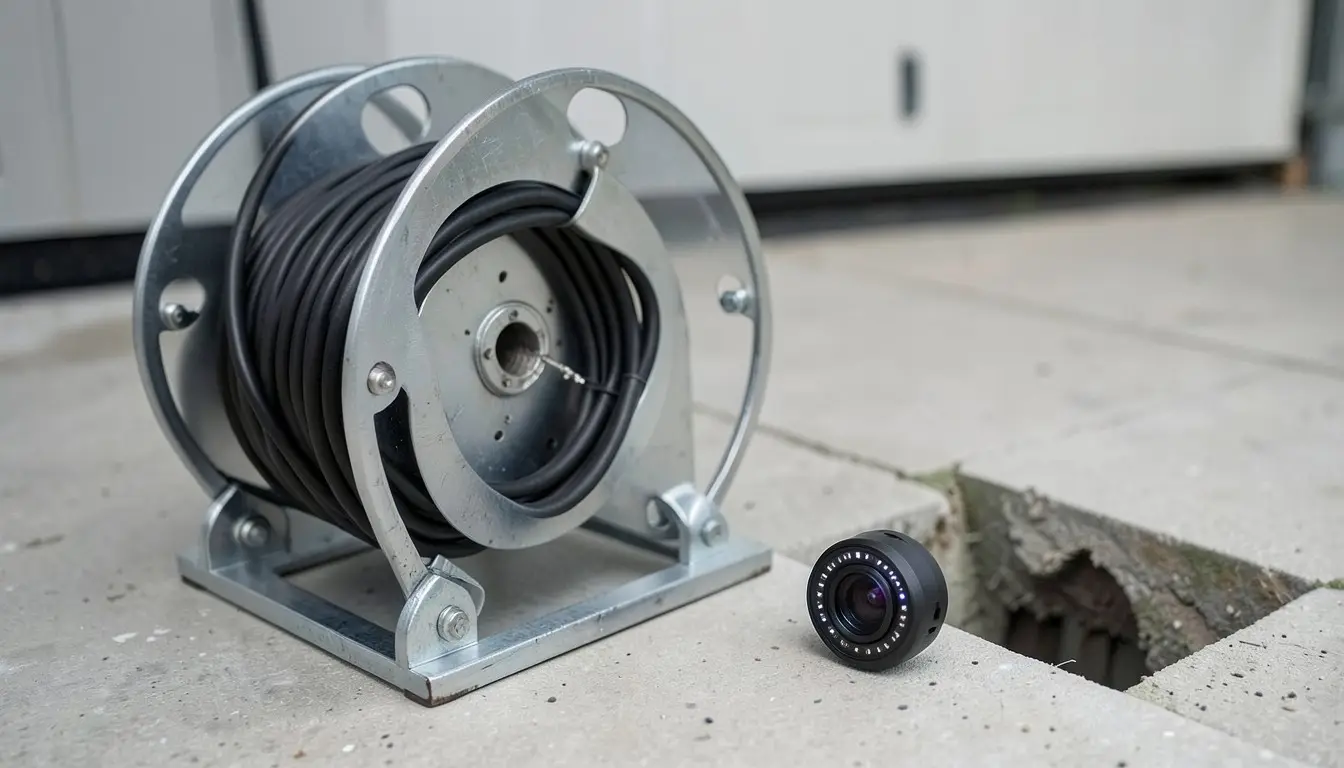
Describe the symptom — not the repair. AlertPlumber routes to an MI-licensed plumber trained in diagnostics. The site visit uses camera tracing, acoustic detection, or hydrostatic pressure testing — matched to the reported failure type.
The plumber delivers a written diagnostic report: confirmed failure location, available repair methods, and tradeoffs — disruption level, material durability, long-term cost, and whether a Detroit building permit applies to the selected method.
You select the repair path. The Michigan-licensed plumber proceeds on the authorized method with a fixed scope and price. Where required, the permit application to Detroit is handled by the contractor.
Sewer Line Repair cost calculator — Detroit
Pre-filled for sewer line repair in Detroit. Adjust the ZIP for a neighboring area, or change the service to compare. Calculator pulls from the city's scraped permit-fee + state plumber-density data.
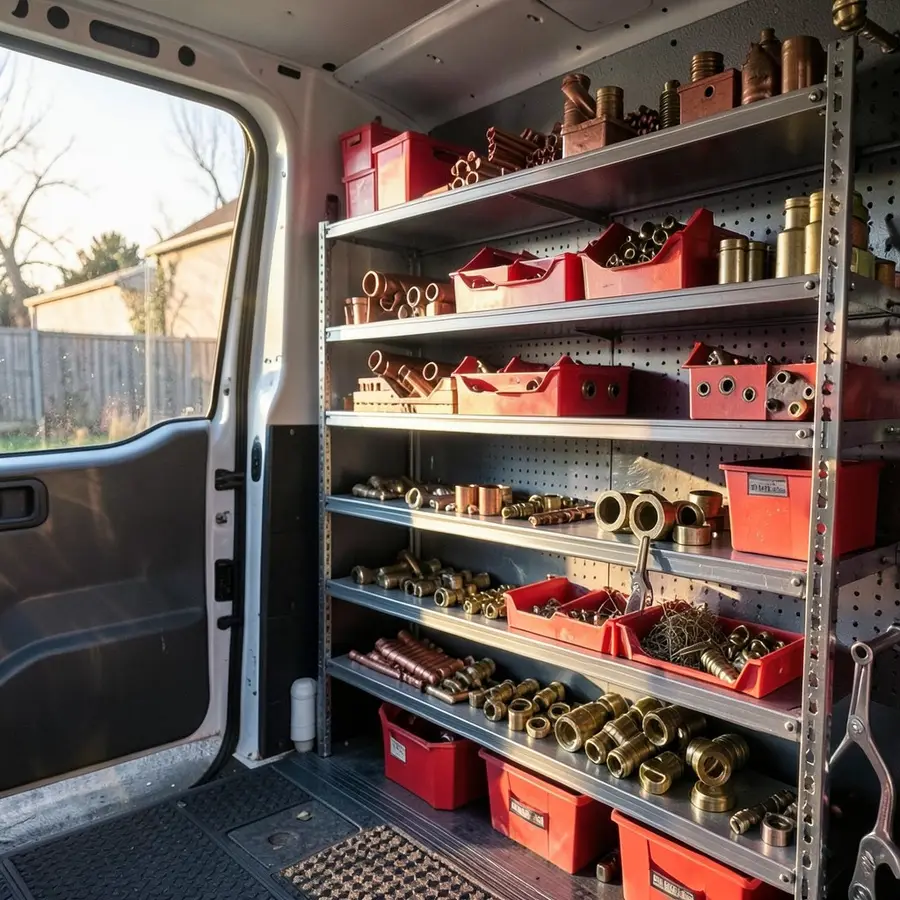
Sewer Line Repair in Detroit — the longer it runs, the more it costs.
Slow failures compound: soft pipe walls, root penetration, mineral buildup. A verified plumber calls back with a scope-first estimate before anything is dug up.
What else do people ask about sewer line repair in Detroit?
How much does sewer line repair cost in Detroit, MI?
Sewer lateral repair in Detroit typically runs $2,950-$7,850 for spot repair via excavation and $7,250-$18,500 for trenchless cured-in-place lining or pipe bursting of a full Indian Village or Rosedale Park clay run. Pricing reflects the City of Detroit BSEED $80 residential plumbing permit minimum plus separate excavation and right-of-way permits for work in the DWSD service area.
Why is Corktown sewer repair particularly complex?
Corktown is Detroit's oldest neighborhood (1834 Irish settlement) and sits on some of the oldest sewer infrastructure in the city. Original brick sewer mains and vitrified clay laterals from the 1880s-1900s are still in service in places. Repair work involves coordinating with DWSD's combined sewer system (sanitary and storm in the same pipe), confirming connection elevation to the brick main, and using fittings sized for non-standard 19th-century pipe diameters. Excavation often reveals additional unrelated infrastructure (steam lines, abandoned coal chutes) requiring careful trenching.
Does Detroit have combined or separated sewers?
DWSD operates roughly 35% combined sewer (sanitary plus stormwater in one pipe) and 65% separated. Most pre-1960 Detroit neighborhoods — Corktown, Boston-Edison, Indian Village, Eastern Market, Midtown — sit on combined sewers with active combined sewer overflow (CSO) discharge during heavy rain events. Lateral repair in combined-sewer areas means coordinating with DWSD on backflow valve installation requirements per current city ordinance.
Why do Indian Village clay laterals collapse?
Indian Village mansions built 1890-1920 on the east side run vitrified clay sewer laterals at 42-inch burial depth below Detroit's frost line. After a century in Saginaw clay glacial-till soil, three failure modes dominate: bell-and-spigot joint offset from soil settlement, longitudinal cracking from frost heave above the line, and full belly collapse where mature oak roots have pried apart adjacent sections. Camera inspection distinguishes which mode is present and whether trenchless lining can save the run.
Will trenchless work on a Boston-Edison sewer line?
Often yes. Boston-Edison's 1905-1925 Henry Ford-era mansions typically have clay laterals 60-100 feet long from foundation to DWSD main. If the camera shows continuous pipe path with no full collapse, cured-in-place pipe (CIPP) lining inserts a resin-saturated liner that hardens into a smooth new pipe-within-a-pipe. That avoids trenching through mature landscaping and the historic-district sidewalk panels common in Boston-Edison.
How deep are Detroit sewer laterals buried?
Detroit sewer laterals are typically buried at 42 inches or deeper to clear the city's 42-inch frost penetration (NOAA Detroit/Pontiac office) and reach the DWSD main, which runs deeper. Burial depth at the foundation cleanout is often 4-5 feet; at the main connection in the street it can reach 8-12 feet. Excavation crews use trench-box shoring for any dig over 5 feet for OSHA compliance.
Do I need a backwater valve under the new Detroit ordinance?
For combined-sewer-area properties (most pre-1960 Detroit neighborhoods), DWSD strongly recommends backwater valve installation during any sewer lateral repair, and current city plumbing code requires backflow prevention on new connections. The valve sits between the foundation cleanout and the DWSD main and closes automatically when the main surcharges during a CSO event. Cost typically adds $850-$1,650 to a lateral repair.
What permits do I need for Detroit sewer line repair?
The City of Detroit BSEED construction fee schedule sets a $80 residential plumbing permit minimum, plus excavation permit (separate fee scaled to trench size) and DWSD right-of-way permit for any work touching the city tap. The verified plumber pulls all permits, coordinates DWSD locate, and arranges the post-work inspection.
Will my homeowners insurance cover Detroit sewer line repair?
Standard Michigan homeowners policies generally do NOT cover sewer lateral repair itself (excluded as wear and tear), but may cover water damage from a backup with a sewer-backup endorsement. Service-line endorsements covering the lateral from foundation to street tap are sold separately and are well-suited for Detroit's older clay-lateral neighborhoods. Confirm coverage before assuming.
Can pipe bursting work in Rosedale Park's mature tree-lined streets?
Often yes. Rosedale Park's 1916+ Tudor and Colonial blocks on the NW side have substantial oak and maple canopy. Pipe bursting pulls a bursting head through the existing clay lateral, fragmenting it outward while pulling new HDPE pipe behind. Only entry and exit pits are excavated, sparing the mature root systems and front-lawn landscaping. Total disruption is typically a single day vs. 3-5 days for open-trench replacement.
How long does a Detroit sewer line repair take?
Open-trench spot repair of a single collapsed section: 1-2 days. Full lateral replacement by open trench: 3-5 days. Trenchless CIPP lining: 1 day cure plus prep. Pipe bursting: 1-2 days. DWSD coordination for right-of-way work and inspection can add 1-2 days at the front and back ends. Winter excavation in frozen ground extends timelines for any work scheduled December through March.
Are AlertPlumber-matched Detroit sewer crews Michigan-licensed?
Yes. Every plumber matched through AlertPlumber in Detroit holds an active Michigan plumbing license issued by the LARA State Plumbing Board (~12,830 statewide). License verification happens against the state database. Sewer-specific work additionally requires DWSD contractor registration for any tap-side work.
What if my Detroit lateral connects to a brick combined sewer?
Pre-1900 Corktown and parts of Eastern Market still have brick combined sewer mains under the street. Connecting a new lateral or replacing a tap to a brick sewer requires a saddle-tap or core-drill connection with a flexible coupling, not a standard PVC wye. DWSD inspects all such connections. Cost runs higher than standard PVC main connection because of the specialized fittings and slower coring work.
Will Detroit's CSO ordinance affect my repair scheduling?
Indirectly, yes. DWSD prioritizes inspection slots around CSO-event response, and during sustained wet-weather periods (typically spring snowmelt and summer thunderstorm season) inspection lead times extend. The Michigan-verified plumber sequences excavation to align with DWSD availability so the lateral doesn't sit open longer than necessary. Combined-sewer-area work also triggers the backwater-valve requirement noted above.
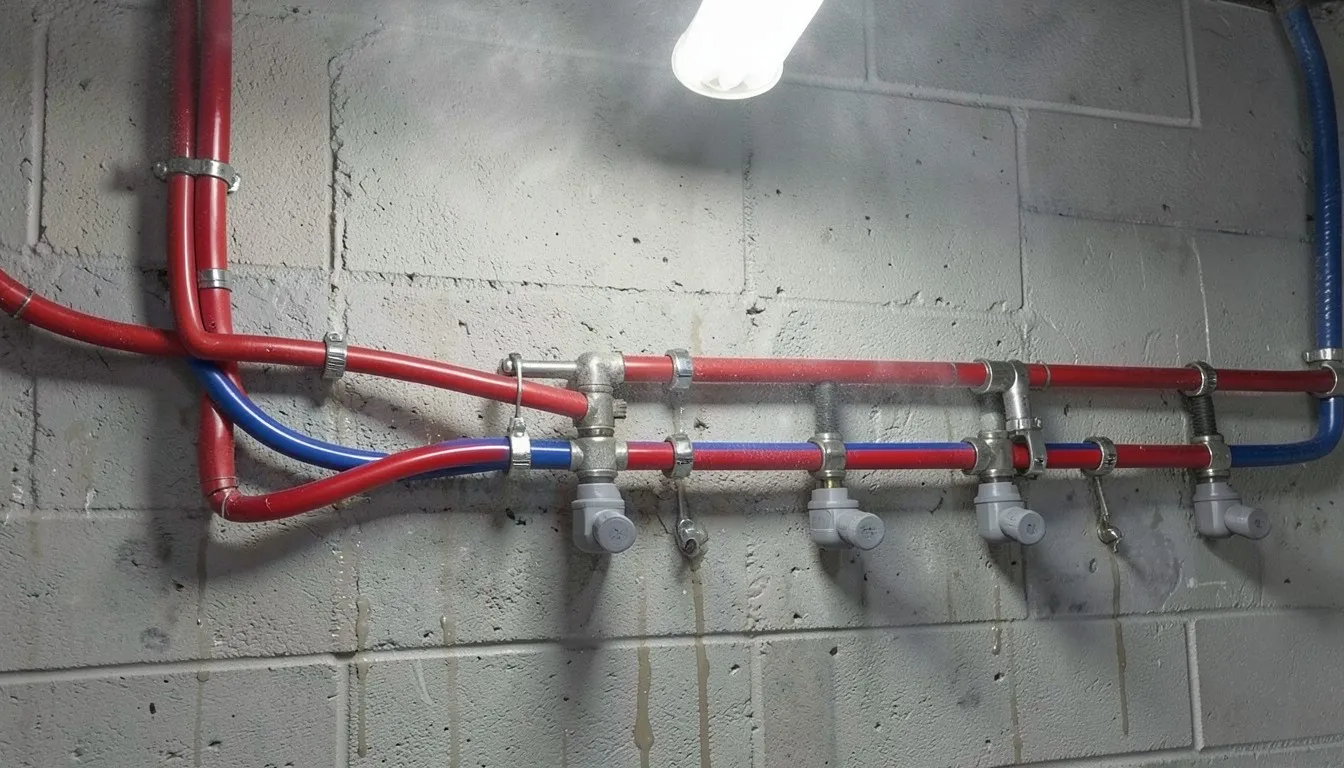
The fix gets cheaper the sooner a plumber sees it.
Degradation problems compound quietly. Call now, or use the form below and a licensed Michigan plumber calls you back with a no-obligation estimate for the sewer line repair.
Need a sewer line repair callback in Detroit?
In a meeting, with the kids, or just prefer not to hold? Drop your ZIP and number below. AlertPlumber routes your request to a verified plumber in your area — they’ll call you back directly.
- 1 Submit your info. ZIP, phone, and what kind of work you need.
- 2 AlertPlumber matches you with a verified plumber serving your area.
- 3 The plumber calls you back with a written estimate, no obligation.
Sewer Line Repair in Detroit — catch it early
Degradation-driven failures worsen over time and cost more to fix the longer they run. A verified MI plumber in Detroit diagnoses your specific condition and provides a written scope before any work begins.