
Emergency Water Heater Repair in San Francisco, California
Water Heater Repair in San Francisco, California fixes no-hot-water, leaking tank, pilot light, and thermostat issues. Local conditions in San Francisco: water measured at 1.0, a 0 frost line and a median home age of 86 years.
Active water damage compounds by the hour — a licensed CA plumber is on call for San Francisco right now.
What does the local plumbing data show for San Francisco, CA?
Seeing these conditions at your place in San Francisco? A state-licensed plumber can confirm it over the phone — free, no obligation.
What are the pipe conditions in San Francisco, CA?
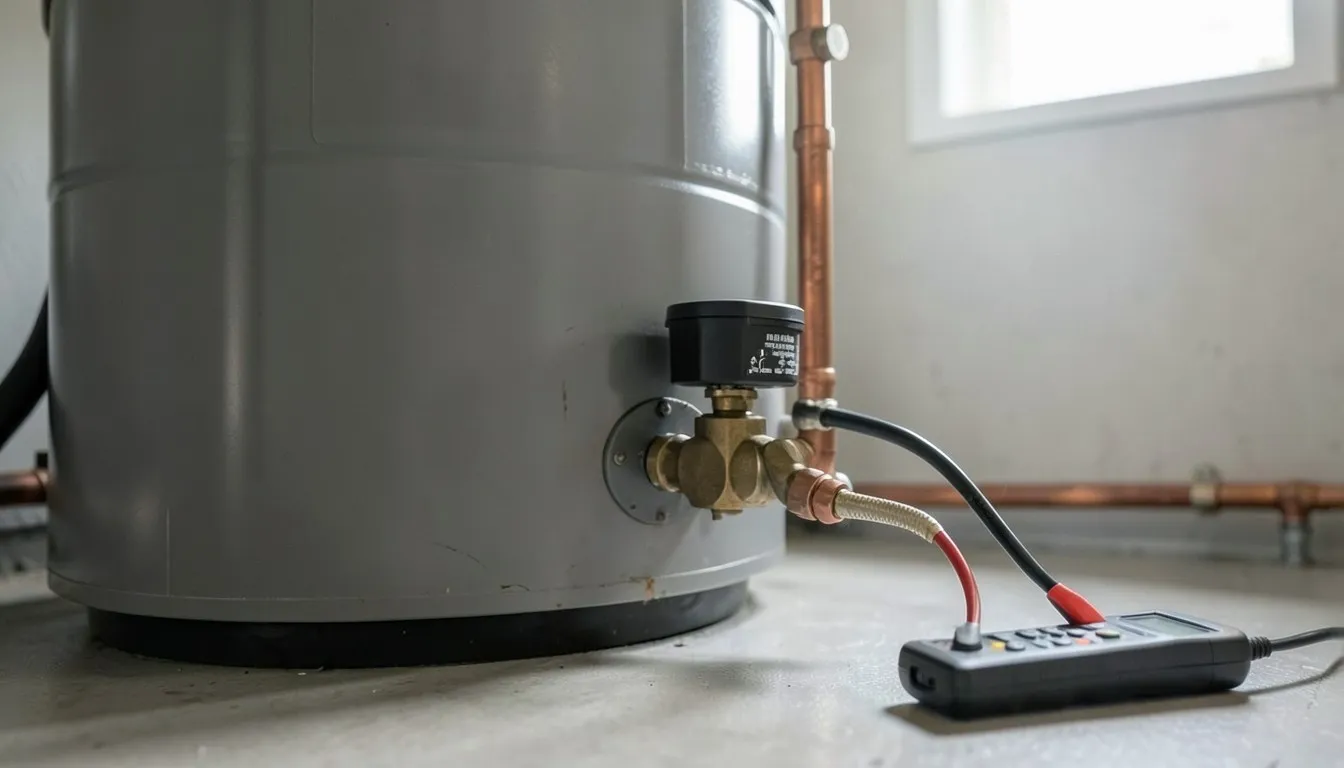
Water heater repair in San Francisco starts with isolating the failure mode: a unit producing no hot water usually has a failed heating element or thermostat (electric) or a pilot or gas valve issue (gas); a unit leaking at the base has a failed tank — a repair is not possible and replacement is immediate. Sediment flushing and anode rod replacement extend the life of units under 10 years significantly; units over 12 years are typically beyond economic repair. AlertPlumber routes your request to a California-licensed plumber who diagnoses before recommending repair vs. replacement.
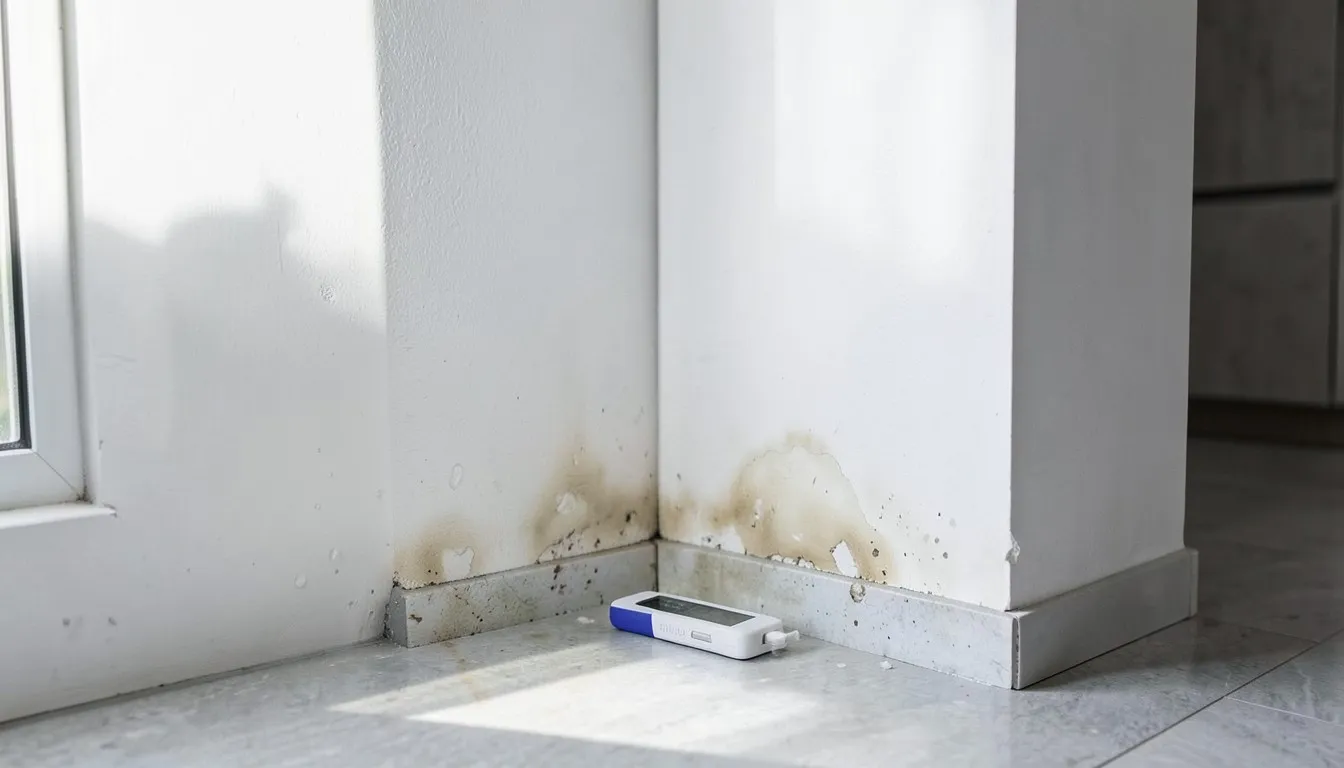
Pre-war housing in San Francisco — median home age 86 years — commonly carries galvanized steel supply lines installed before the copper era. Galvanized pipe corrodes from the inside out: internal oxidation gradually narrows bore diameter, reduces water pressure, and eventually results in pinhole failure at corroded sections. Inspection confirms whether scale and corrosion warrant section replacement or full repipe.
- Median home age
- 86 yrs
- Water hardness
- 1.0 gpg
- Frost line
- 0 in.
- Permit
- $285
A licensed CA plumber reads these conditions the moment you describe the symptom.
What local infrastructure shapes Water Heater Repair in San Francisco?
San Francisco Public Utilities Commission (SFPUC) delivers Hetch Hetchy system water at 1.0 GPG — essentially distilled, with virtually no scale-forming minerals. At this hardness, sediment accumulation is absent as a water heater failure driver. The 86-year median housing age (1938 build) makes housing age the dominant failure context: Victorian and Edwardian flats in the Sunset, Richmond, Excelsior, and Mission districts have original gas supply infrastructure requiring combustion air and flue compliance evaluation during any water heater replacement.
San Francisco sits in Bay Area Seismic Zone 4 — flexible gas line connections (corrugated stainless steel, CSST) and seismic automatic gas shutoff valves are required on water heater installations. Thermal expansion tank sizing is critical given SFPUC's operating pressures across the city's varied topography. The permit fee at $285 plus $190 plan check is among the highest in California, and SF DBI (Department of Building Inspection) review adds lead time to the permitting cycle.
California CSLB C-36 licensing covers the 19,840 active plumbers in the greater Bay Area. SFPUC water at $11.85 per 1,000 gallons is the highest residential water rate among major California cities — a factor that makes heat-pump water heaters and recirculation pump efficiency upgrades financially compelling despite the high permit cost. With no frost depth and fewer than one annual freeze day, temperature-related failure modes are absent from the San Francisco market.
What shapes plumbing demand in San Francisco, CA?
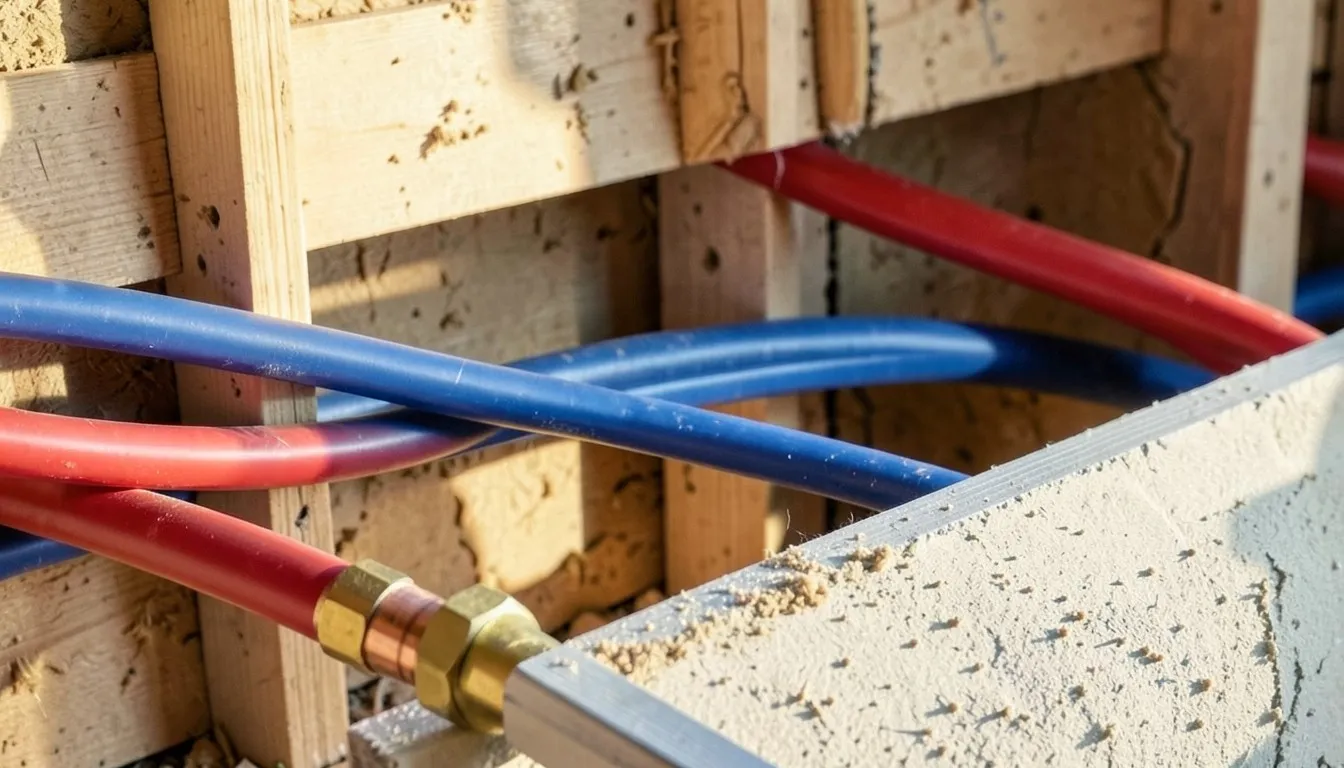
Galvanized supply lines and cast iron drain systems from the 1880s–1940s are past their 40–70-year design life across much of San Francisco. Interior rust scale progressively narrows pipe bore. Plumbers here routinely scope supply lines before quoting any repair — the underlying pipe condition often makes full replacement more cost-effective than patching.
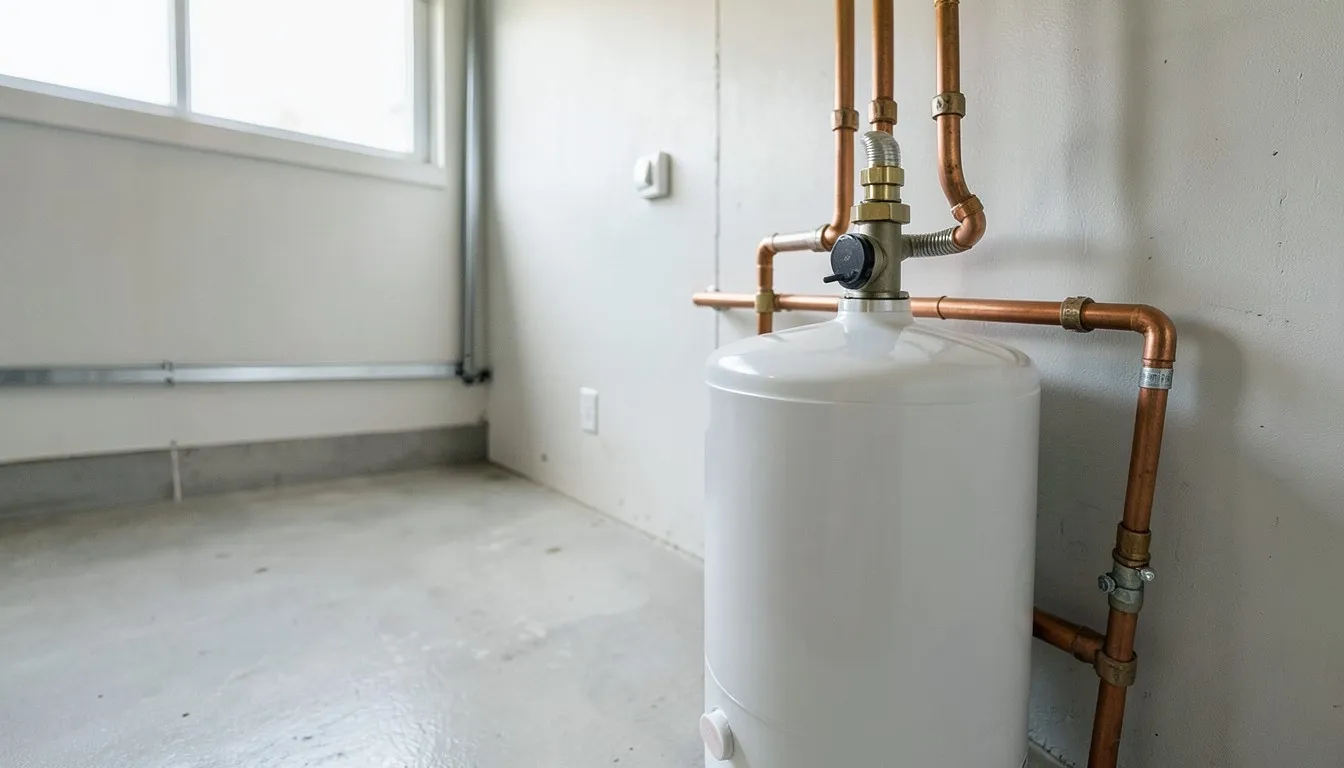
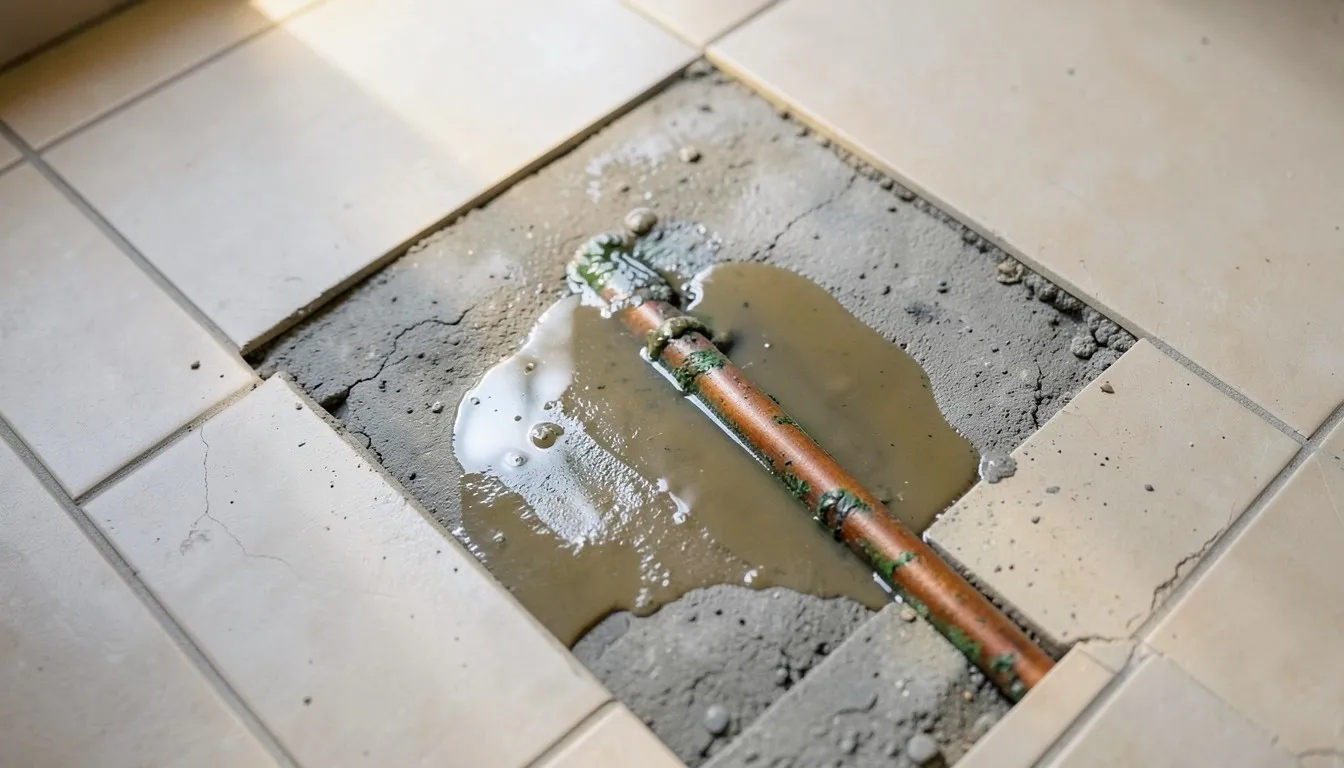
Soft, slightly acidic water in San Francisco is corrosive to copper pipe and solder joints — the opposite failure pattern from hard-water markets. Pinhole failure at fittings and elbows is the dominant non-emergency repair category. Anode rods also deplete faster in soft water, shortening effective tank life without timely replacement.
Summer heat above 95–115°F in San Francisco keeps sediment in suspension inside tank water heaters — accelerating element failure instead of allowing sediment to settle and flush. Attic-mounted supply lines face diurnal thermal stress year-round. Root intrusion concentrates around irrigated landscaping rather than distributing evenly across the full sewer lateral path.
Active damage in San Francisco — how is it contained, assessed and restored?
Submit your San Francisco address and describe the active damage — flooding, failed shutoff, burst or frozen line. AlertPlumber marks the request as priority and a CA-licensed plumber confirms receipt within 15 minutes, without routing through a national call center.
The plumber arrives with a confirmed ETA, locates the nearest shutoff, and maps the damage boundary — affected lines, access points, material condition. You receive a verbal assessment of what requires immediate containment and what can wait until the full repair scope is confirmed.
You approve a written containment and repair scope before any work begins. Temporary isolation is priced separately from full restoration. No phase proceeds without your explicit sign-off.
Water Heater Repair cost calculator — San Francisco
Pre-filled for water heater repair in San Francisco. Adjust the ZIP for a neighboring area, or change the service to compare. Calculator pulls from the city's scraped permit-fee + state plumber-density data.
Water Heater Repair emergency in San Francisco?
Every hour without a repair increases structural risk and remediation cost. A verified plumber calls back with an ETA and a written estimate before any work begins.
What else do people ask about water heater repair in San Francisco?
How much does water heater repair cost in San Francisco?
San Francisco water heater repair quotes typically run $185–$520 for a single-fault repair (replacement element, thermostat, T&P relief valve, gas control valve) and $1,450–$2,800 for a full 40–50 gallon tank replacement installed. The $285 San Francisco plumbing permit fee bundles into any tank-replacement quote. Hard water at 1.0 grains/gallon drives faster sediment buildup than national average, so a replacement quote at age 7–8 is more common in San Francisco than in soft-water markets.
How fast can a San Francisco plumber arrive for a no-hot-water emergency?
Most San Francisco-area plumbers in the AlertPlumber network respond within 1–3 hours during business hours and 2–4 hours overnight for a no-hot-water dispatch. Response time depends on ZIP, dispatch load, and whether the unit is gas or electric (parts inventory differs). The matched plumber confirms an exact ETA on the callback before rolling a truck. Older San Francisco homes with water heaters in attached garages or exterior closets often need extra time for code-bringup if a full replacement is needed.
Do I need a permit to repair my water heater in San Francisco?
Component-level repair (element, thermostat, T&P valve, anode rod) does not require a permit in San Francisco. A full tank or tankless replacement DOES require a permit: the San Francisco building department charges $285 for the plumbing/mechanical permit plus inspection. The state-credentialed California plumber pulls the permit on your behalf and includes the fee in the written quote. Permit-required scope is documented in IPC Chapter 5. 1.0-gpg hardness on the San Francisco Public Utilities Commission system in San Francisco accelerates anode-rod consumption and tank-bottom sediment baking — annual flushing extends tank life 2–3 years on average for 808,437-resident properties.
My San Francisco water heater is leaking from the bottom — what does that mean?
Bottom-of-tank leaking on a San Francisco water heater almost always means the inner steel tank has perforated from sediment corrosion (accelerated at 1.0 gpg hardness). The tank cannot be repaired once perforated — replacement is the only fix. If the leak is from the drain valve or T&P discharge tube on the side, that's a $185–$340 component repair instead. Have a plumber confirm the source with a 5-minute visual before approving a full replacement.
How long should a water heater last on San Francisco water?
National average tank life is 12–15 years per DOE Energy Saver. San Francisco tanks at 1.0 gpg hardness average 8–11 years for gas units and 9–12 years for electric. Annual flushing extends San Francisco tank life by 2–3 years; pairing the tank with a whole-home softener can push it past the national average. Tankless units in San Francisco should get manufacturer-recommended descaling annually to maintain warranty.
Should I repair or replace a 7-year-old tank in San Francisco?
The San Francisco breakeven rule: if the repair quote exceeds 50% of replacement cost AND the tank is past 6 years on hard water, replace it. A $420 gas-valve repair on an 8-year-old tank rarely makes sense — the next failure (element, anode, dip tube) usually arrives within 12–18 months. San Francisco homes built before 1990 also predate current seismic strapping and earthquake-shutoff valve code; replacement brings the install up to current code, which inspectors increasingly enforce on resale.
Will my California homeowners insurance cover water heater damage?
For San Francisco households, Standard California HO-3 policies cover sudden, accidental discharge water damage (a tank that ruptures and floods a room) but NOT the cost of replacing the tank itself, and NOT damage from gradual leaking the homeowner should have noticed. San Francisco homes with water heaters in attached garages often have visible drip pans — insurers may deny claims if the leak was visible for weeks. Document repair history; submit the plumber's written report with photos for fastest claim resolution. California insurance carriers cover sudden discharge water damage but not gradual leakage. Document the failure mode — California-credentialed plumber's written report supports claim approval for San Francisco properties.
What's the rumbling noise from my San Francisco tank?
Rumbling, popping, or kettle-boiling sounds from a San Francisco water heater come from sediment (calcium carbonate scale) baked onto the tank bottom, trapping water that flashes to steam under the burner or element. At 1.0 grains/gallon hardness, San Francisco tanks accumulate visible sediment in 3–5 years. A flush ($145–$220) may quiet it temporarily; if rumbling has been ongoing for over a year, the tank is near end of life and a replacement quote saves money over chasing component repairs.
My gas water heater pilot keeps going out in San Francisco — what is wrong?
Pilot-light failures on San Francisco gas tanks are usually one of three issues: (1) failed thermocouple — $185–$285 repair, the most common cause; (2) clogged pilot orifice from spider webs or dust (common in garage and exterior-closet installs); or (3) failing gas control valve — $320–$520. The state-credentialed plumber tests thermocouple millivolt output before quoting a more expensive valve replacement. If the unit is past 8 years on 1.0-gpg water, ask for a repair-vs-replace comparison before approving the fix.
Are AlertPlumber-matched plumbers verified for water-heater work in CA?
The partner network requires every plumber routed through AlertPlumber in San Francisco to maintain active California state-credentialed status. CA CSLB, 2024 Q4 lists 19,840 active CSLB C-36 statewide. The state board verifies licensure on a continuous basis and AlertPlumber routes only to plumbers in good standing. Homeowners can independently confirm any specific plumber's credentials via the state board lookup before authorizing work. Local context. Pre-1906-earthquake + post-fire reconstruction housing stock with 100-year-old galvanized + cast-iron systems drives constant repipe demand. Coastal salt-air corrosion, soft Hetch Hetchy water (1 gpg), seismic-strap requirements. No freeze risk. 808,437 San Francisco residents on the San Francisco Public Utilities Commission system at 1.0 grains/gallon hardness drive faster sediment buildup and shorter tank life than national averages — replacement quotes start arriving sooner here. Median home age 86 years.
Sixty seconds from now, a plumber can be working your problem.
Call and talk to dispatch, or put your number in the form below — a licensed California plumber calls you back about the water heater repair and gives a written estimate by phone.
Need a water heater repair callback in San Francisco?
In a meeting, with the kids, or just prefer not to hold? Drop your ZIP and number below. AlertPlumber routes your request to a verified plumber in your area — they’ll call you back directly.
- 1 Submit your info. ZIP, phone, and what kind of work you need.
- 2 AlertPlumber matches you with a verified plumber serving your area.
- 3 The plumber calls you back with a written estimate, no obligation.
Water Heater Repair in San Francisco — fast response
Acute plumbing failures cannot wait. AlertPlumber has verified California plumbers available for water heater repair in San Francisco — call now or submit the form above for rapid callback.