
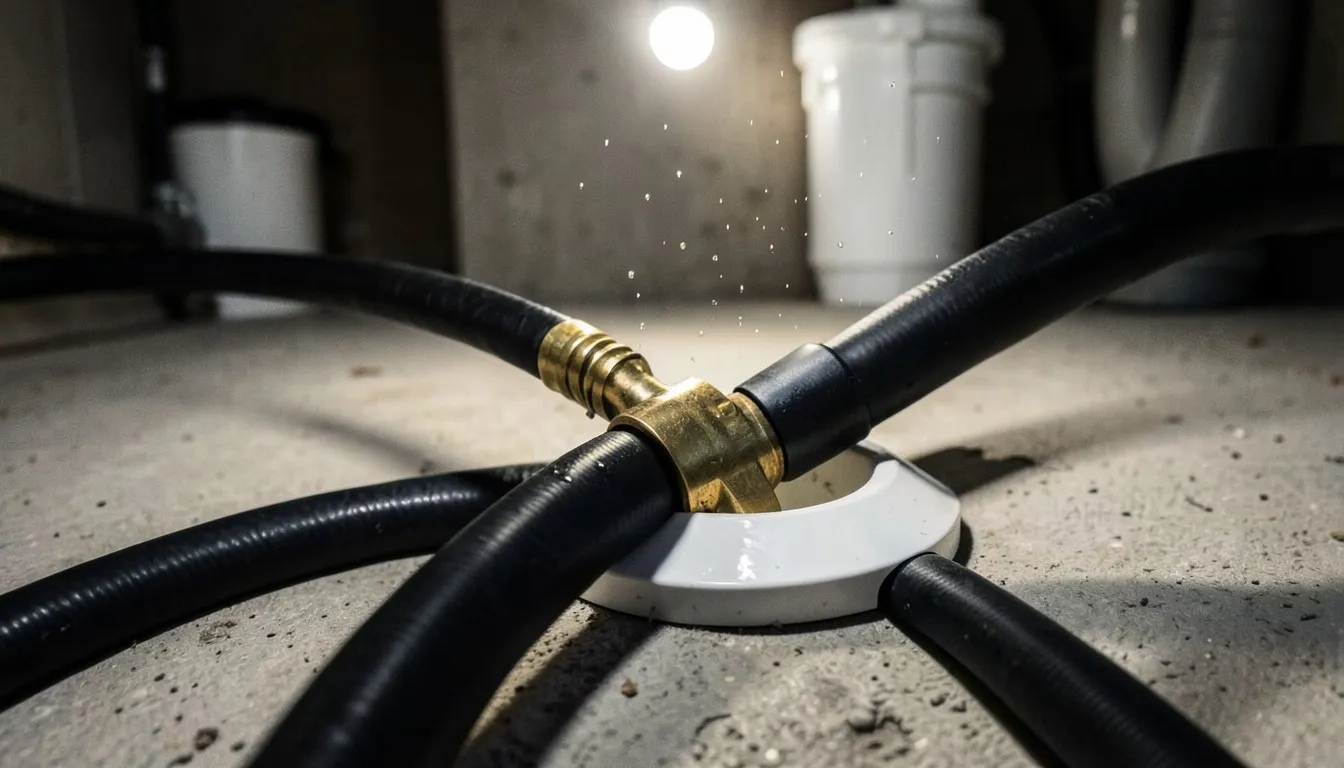
Emergency Hydro Jetting in Pueblo, Colorado
Hydro Jetting in Pueblo, Colorado is high-pressure water jetting to clear severe clogs and grease in main lines. Local conditions in Pueblo: water measured at 12, a 36 frost line and a median home age of 62 years.
Camera first, quote second — know exactly what's wrong in your Pueblo home before you approve a dollar.
What does the local plumbing data show for Pueblo, CO?
Seeing these conditions at your place in Pueblo? A state-licensed plumber can confirm it over the phone — free, no obligation.
What are the pipe conditions in Pueblo, CO?
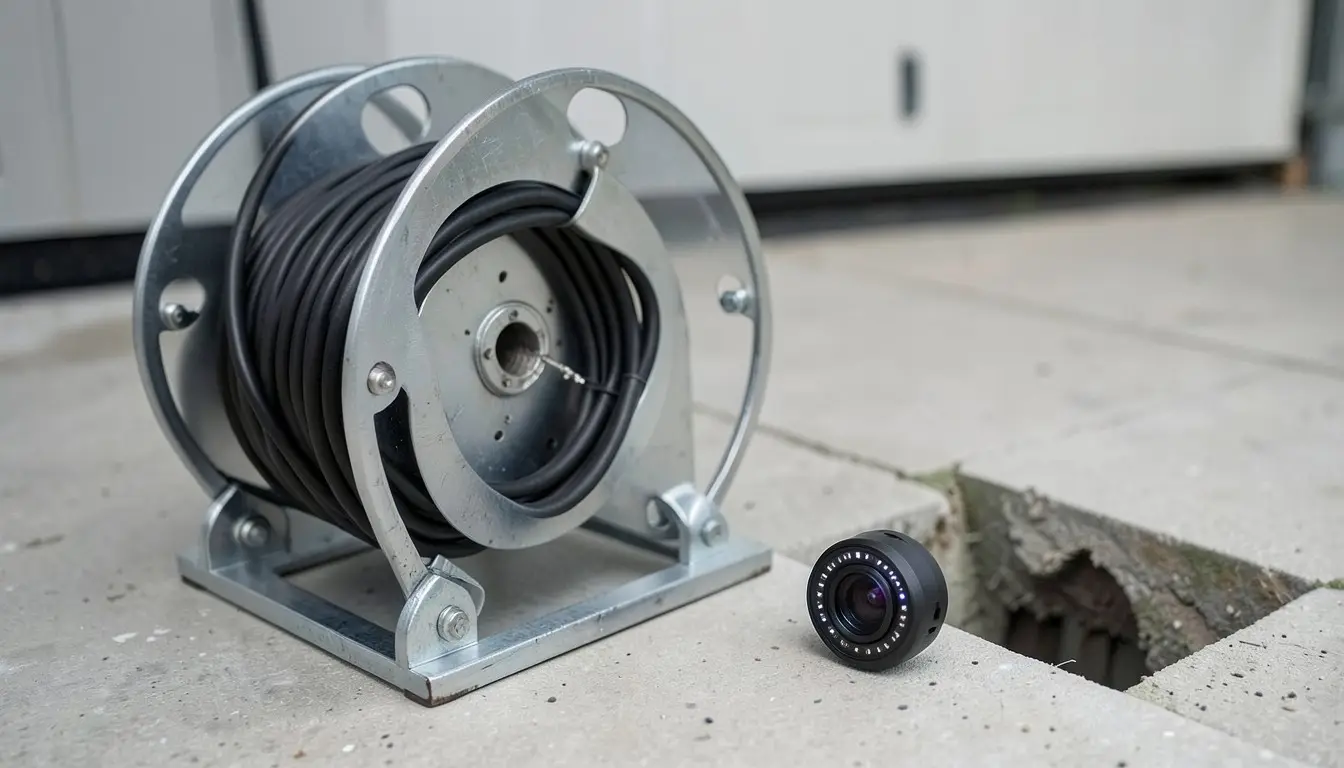
Hydro-jetting in Pueblo clears what drain snaking leaves behind: scale buildup from hard water, grease layers coating pipe walls, and root tendrils that regrow from fragments left by a cable machine. The process uses 3,000–4,000 PSI water pressure through a rotating nozzle that scrubs the pipe wall — not just punches through the blockage. A camera scope before jetting confirms the pipe can withstand high pressure and identifies any structural defects that jetting would worsen. AlertPlumber connects you with a Colorado-licensed plumber who scopes before jetting as a standard practice.
Pueblo's housing stock spans multiple construction eras — median home age 62 years — meaning pipe materials and failure modes vary significantly by neighborhood and building vintage. An inspection-led approach that confirms pipe material before recommending a service path is standard practice for mixed housing profiles.
Very hard water in Pueblo is a primary driver of accelerated appliance failure: water heater anode rods exhaust in 2–3 years instead of 6–8, scale deposits at fixture connections form within months of installation, and tankless heat exchangers accumulate mineral buildup that can reduce lifespan by half without regular descaling. A softener or whole-house conditioner is strongly recommended alongside any appliance service call.
Frost line depth in Pueblo means supply lines and outdoor plumbing must be installed below the freeze threshold — typically 36 — to prevent pipe burst during cold events. Exterior hose bibs, irrigation shutoffs, and any exposed pipe runs are the most common winterization service points in freeze-risk markets.
- Median home age
- 62 yrs
- Water hardness
- 12 gpg
- Frost line
- 36 in.
- Permit
- $48
A licensed CO plumber reads these conditions the moment you describe the symptom.
What shapes plumbing demand in Pueblo, CO?
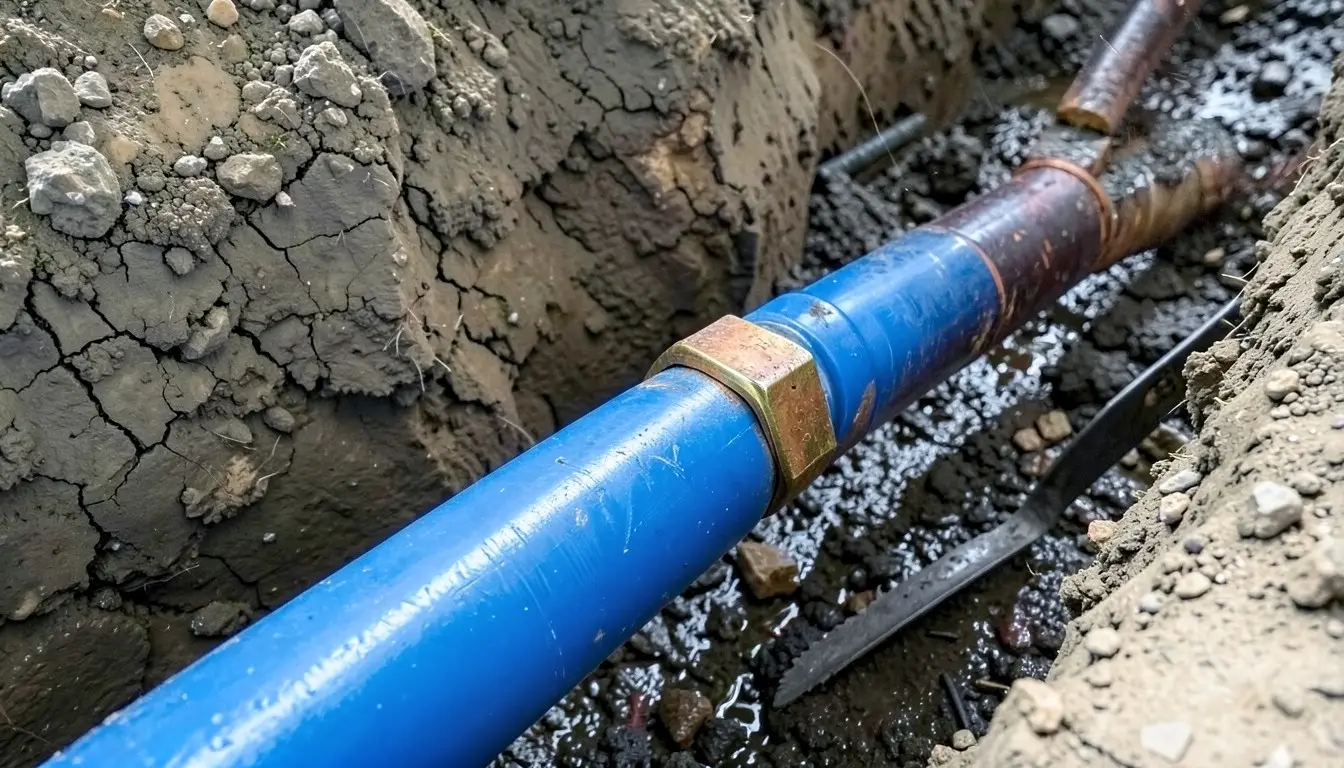
1950s–70s copper supply is now 50–70 years into its service cycle in Pueblo. Thermal fatigue at fittings and slab-on-grade access complexity — common in Sun Belt construction — make repair vs. replacement a live decision on most jobs. This housing cohort is the active primary replacement wave in this market.
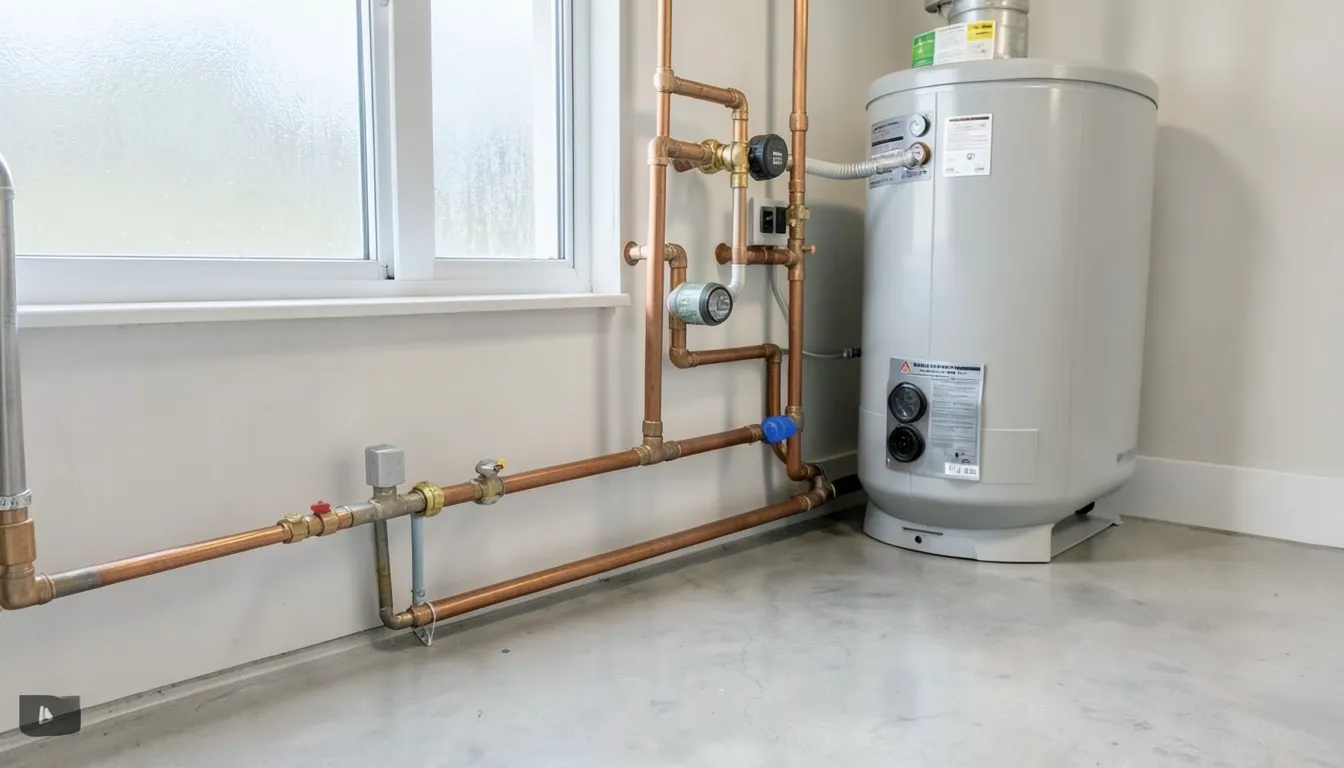
At 15–20+ GPG, calcium scale forces compressed equipment cycles in Pueblo: tank heaters average 6–9 years vs. the 10–12-year national benchmark, and tankless units require annual descaling. Anode rods calcify within 12–18 months. Most plumbers here assess heater age against the local scale timeline — not the manufacturer's service life.
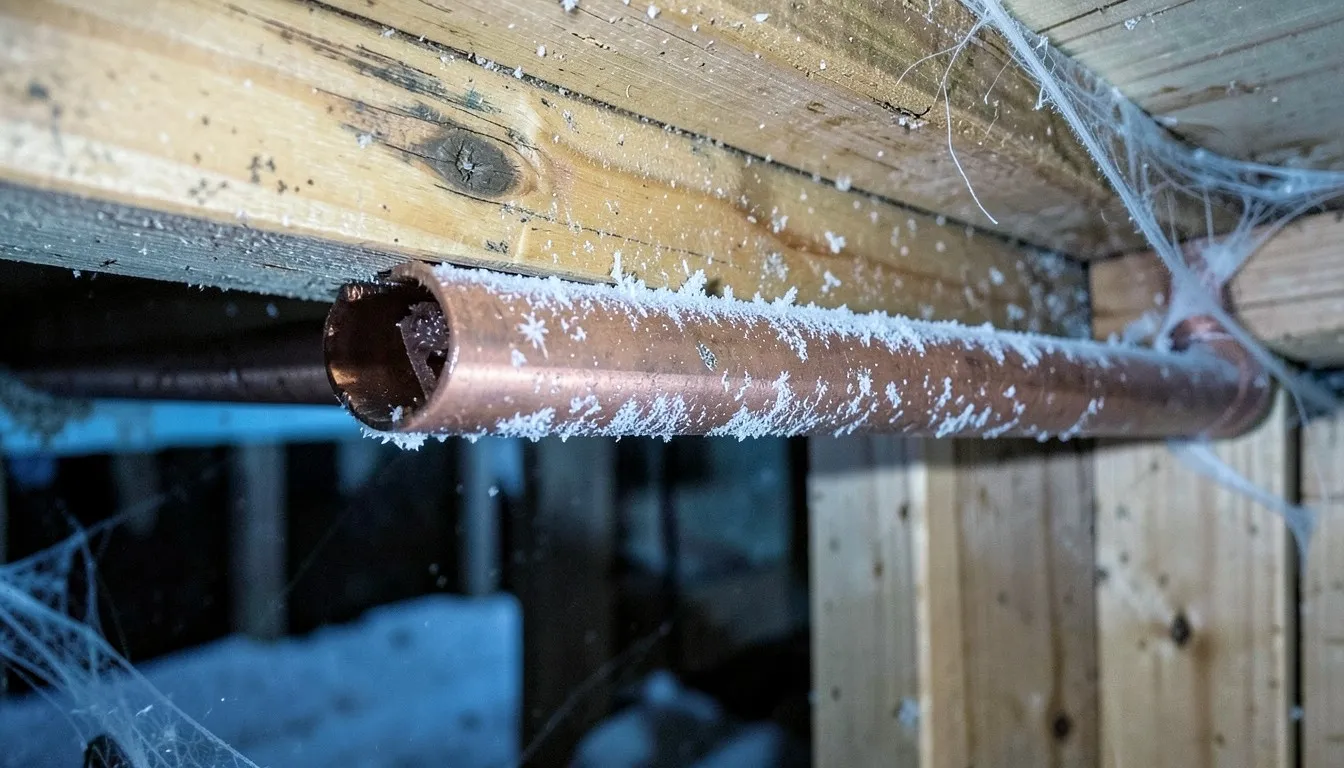
The primary surge in Pueblo runs January–March, with a secondary wave at the spring thaw — when pipes that held through the freeze rupture as pressure is restored above 32°F. Scheduling competition peaks exactly when emergency calls are highest. Homeowners who wait for visible damage compete for the same limited plumber slots at the worst possible time.
Why diagnose before repairing in Pueblo?
Describe the symptom — not the repair. AlertPlumber routes to a CO-licensed plumber trained in diagnostics. The site visit uses camera tracing, acoustic detection, or hydrostatic pressure testing — matched to the reported failure type.
The plumber delivers a written diagnostic report: confirmed failure location, available repair methods, and tradeoffs — disruption level, material durability, long-term cost, and whether a Pueblo building permit applies to the selected method.
You select the repair path. The Colorado-licensed plumber proceeds on the authorized method with a fixed scope and price. Where required, the permit application to Pueblo is handled by the contractor.
Hydro Jetting cost calculator — Pueblo
Pre-filled for hydro jetting in Pueblo. Adjust the ZIP for a neighboring area, or change the service to compare. Calculator pulls from the city's scraped permit-fee + state plumber-density data.
Hydro Jetting in Pueblo — the longer it runs, the more it costs.
Slow failures compound: soft pipe walls, root penetration, mineral buildup. A verified plumber calls back with a scope-first estimate before anything is dug up.
What else do people ask about hydro jetting in Pueblo?
What PSI does a Pueblo hydro-jet job actually run, and why does it depend on the neighborhood?
PSI selection in Pueblo is a function of pipe age, material, and condition — not a single setpoint. Operating envelopes the CO DORA Plumbing Board–credentialed jet operator uses on the Southern Colorado high-plains: 1,500–2,500 PSI / 4–7 GPM on 1880s–1920s Bessemer steel-mill cottage cast-iron — old joints, heavy 12 gpg Arkansas River carbonate scale, but enough wall remaining to take a moderate pass; the goal is to flush carbonate and FOG without exfoliating fragile pipe wall. 2,500–3,500 PSI / 6–10 GPM on Mesa Junction streetcar-era galvanized waste branches and Country Club / Aberdeen pre-1940 north-side cast-iron with documented camera-scope wall integrity. 3,500–4,000 PSI / 8–14 GPM on Lake Minnequa mid-century vitrified clay sewer with root intrusion at joints — a chain-cutter nozzle paired with the higher PSI is the durable answer to recurring root masses under mature cottonwood. 1,800–2,200 PSI on Belmont 1950s–60s postwar cast-iron DWV where the original wall has thinned. Pre-job camera scope is non-negotiable on anything pre-1960 — running 4,000 PSI blind through a Bessemer mill-cottage stack with 100-year tuberculation is how plumbers crack pipe.
Why is hydro-jetting the durable fix for Pueblo Arkansas River carbonate scale?
The Pueblo Board of Water Works (BWW) draws from Pueblo Reservoir on the Arkansas River — a 12 gpg calcium-and-magnesium snowmelt profile per USGS hardness water-science. Hot kitchen and laundry waste precipitates calcium carbonate on cast-iron drain stack walls in a chalky concentric layer; a 100-year Bessemer steel-mill cottage stack can lose 40–60% of bore to layered scale plus tuberculation. A mechanical cable punches a 3/4-inch path through the scale and restores temporary flow — the line is still 60% blocked, the next FOG pulse re-clogs in weeks. A hydro-jet at 2,000–2,500 PSI with a rotating chisel-tip nozzle strips the carbonate layer back to bare pipe wall, restoring full bore. Camera scope before and after documents the change. The maintenance interval after a proper jet on a Bessemer cast-iron stack is 3–5 years before scale re-accumulates to symptomatic levels; cable-only repeats every 4–10 months on the same pathology.
How does Pueblo's 127-day freeze season affect hydro-jet scheduling and winterization?
The NWS Pueblo forecast office climate file shows 127 days at or below freezing per year per NCEI climate normals, with 36-inch frost depth on the high-plains. Three jet-season operational rules. (1) Cold-weather jetting (Nov–Mar): the operator runs warm-water supply when possible to prevent supply-hose freeze-up between flush cycles, and parks the rig out of the wind. (2) Outdoor cleanout work: if the yard cleanout is frozen plug, the plumber thaws with controlled steam or low-PSI hot-water jetting at 800–1,200 PSI — not torches, which can crack 1880s Bessemer clay laterals. (3) Rig winterization between jobs: the jetter pump, hose reel, and water-tank lines get drained or pressurized with antifreeze between calls Nov–Mar to prevent cracked manifolds — that's a non-trivial $4,000–$8,000 jetter-pump rebuild cost if skipped. The schedule pushes maintenance jets onto the warmer end of shoulder season (Mar–May, Sep–Oct) when the river is high-water and FOG-loaded restaurant lines are most likely to back up anyway.
How much does hydro-jetting cost in Pueblo?
Pueblo hydro-jetting price bands by scope. Single residential mainline jet through an existing two-way cleanout: $585–$985 on a typical Belmont 1950s ranch or Eastwood Heights tract property — 2.5–3.5 hours including pre-job camera scope and post-jet flow verification. Bessemer pre-1920 steel-mill cottage jet with reduced PSI (1,500–2,500) and chain-cutter nozzle for cast-iron scale: $785–$1,285 — longer setup, slower pass, mandatory before-and-after camera footage. Mesa Junction commercial / mixed-use grease-trap line on a 4th Street or Union Avenue restaurant line: $1,285–$2,485 scheduled off-peak — multiple-pass jetting at 3,500 PSI plus FOG-removal documentation for health-department records. Add-ons: camera scope $145–$245 (included on most main-line packages); cleanout install where missing $785–$1,485; root-cutter nozzle upgrade $145–$285. The PRBD $48 plumbing permit attaches only when scope crosses into pipe replacement or cleanout installation. AlertPlumber routes to a CO DORA Plumbing Board–credentialed jet operator who quotes the full scope by phone before any technician rolls.
Why do hydro-jet operators in Pueblo always scope before jetting?
Three reasons specific to Pueblo housing stock. (1) PSI selection depends on wall condition. A 1880s Bessemer cast-iron stack with documented camera-scope tuberculation takes 1,500–2,000 PSI maximum; the same nozzle and PSI run blind on a galvanized Mesa Junction branch with rust-through can blow a pinhole into the wall. (2) Cause identification. "The line is blocked" is not a scope. Camera scope under NASSCO grading tells the operator whether the cause is 12 gpg Arkansas carbonate scale (chisel nozzle), FOG (penetrator nozzle), root intrusion at clay-lateral joints (chain-cutter nozzle), or a structural defect (no jet — repair scope). (3) Insurance documentation. Colorado HO-3 backup endorsements require written cause-of-loss; the camera footage plus invoice naming the failure mode (carbonate scale, galvanized tuberculation, root intrusion, Arkansas River backwater event) is the difference between a paid and denied claim. Skipping the scope is the single biggest reason a $785 jet job becomes a $4,500 stack-replacement bill within months.
Is hydro-jetting safe for 1880s Bessemer cast-iron stacks?
Yes — at the right PSI, with the right nozzle, after a camera scope confirms wall integrity. Bessemer worker-cottage stacks built 1880–1920 by Colorado Fuel & Iron to house steel-mill labor are pushing 100–145 years of service. Cumulative interior pitting from 12 gpg Arkansas River carbonate exposure plus occasional lead-and-oakum joints means the operator runs reduced PSI (1,500–2,500), a flush-only or chisel nozzle (no chain-cutter on unsupported wall), and a slower advance rate. The pre-job camera scope under NASSCO grading determines whether the stack rates as Grade 1–2 (safe to jet at moderate PSI), Grade 3 (low-PSI flush only, plan for replacement on a 5–10 year horizon), or Grade 4–5 (do not jet — replace the affected section first). Where the camera shows pinholes or active tuberculation through the wall, the jet job converts to a stack-replacement bid. The CO DORA Plumbing Board–credentialed operator names the rating on the invoice so the homeowner has documentation for both insurance and future scope.
How long does hydro-jetting take in Pueblo, and what does the appointment look like?
Time-on-site by job type. Residential single-mainline jet through an existing two-way cleanout in a Belmont ranch or Eastwood Heights tract property: 2.5–3.5 hours including 30 minutes pre-job camera scope, 60–90 minutes active jetting, 30 minutes post-jet flow verification and camera-scope re-walk, plus cleanup. Bessemer pre-1920 cast-iron stack jet: 3.5–5 hours — slower advance, more pauses for camera-scope checkpoints, cleanout location/installation often required because the original 1890s home pre-dates two-way cleanout code. Mesa Junction restaurant grease-trap line: 4–6 hours commercial scheduled off-peak — multiple-pass jetting at 3,500 PSI with FOG-removal certification for health-department records. The appointment runs: arrival window confirmed on callback; technician walks the property and locates cleanouts; pre-job camera scope and PSI selection conversation; jetter rig setup and water-tank fill from BWW supply; jetting pass; post-jet camera-scope walk; written invoice naming failure mode and NASSCO grade; payment.
Does a Pueblo restaurant or commercial property need hydro-jetting on a maintenance schedule?
Yes — and the schedule pays back materially over a no-maintenance plan. FOG-loaded commercial lines on 4th Street, Union Avenue, and the Mesa Junction restaurant corridor accumulate kitchen grease faster than residential, and the 12 gpg Arkansas River carbonate water chemistry layers calcium carbonate scale on top of the FOG to form a hybrid plug that mechanical snaking cannot strip. Maintenance jet intervals: quarterly on high-volume kitchens (full-service restaurant, commercial bakery), semi-annually on moderate-volume kitchens (cafe, deli, bar with food service), annually on light-FOG commercial (office break room with dishwasher, mixed-use storefront with single-fixture kitchenette). Per-visit pricing $785–$2,485 depending on line length and number of grease traps in series. Pueblo Public Health environmental-health inspectors check FOG-removal logs during routine restaurant inspections; the CO DORA Plumbing Board–credentialed jet operator's written invoice plus pre/post camera footage is the documentation that satisfies the requirement.
Will my Colorado HO-3 cover a hydro-jet job in Pueblo?
Generally no for the jet itself — that's classified as maintenance under standard NAIC HO-3 peril definitions. But when a sewer backup from documented carbonate scale or root intrusion causes covered water damage (drywall, flooring, mold remediation), the backup-endorsement policy commonly pays for the damage repair and frequently pays the jet bill as part of mitigation. Three documentation requirements specific to Pueblo claims: (1) camera footage showing the cause — carbonate scale, galvanized tuberculation, root intrusion, or Arkansas River high-water backwater event; (2) CO DORA Plumbing Board–credentialed invoice naming the NASSCO grade and the failure mode; (3) filing within 30 days of the loss event with the carrier. Carriers in Colorado deny verbal-diagnosis claims at high rates; CO DORA-credentialed paperwork plus video gets paid. Backup-endorsement rider on a Bessemer mill cottage or Mesa Junction pre-1940 home is $55–$135/year for $5,000–$15,000 of coverage and is strongly worth carrying.
How does Pueblo hydro-jetting differ from Denver or Colorado Springs jet work?
Three real differences worth understanding before you book. (1) Water chemistry. Pueblo BWW draws from Pueblo Reservoir on the Arkansas River at 12 gpg — heavier than 5.5 gpg Front Range supply in Denver or 5 gpg in Colorado Springs. The carbonate-scale pathology is materially more aggressive on cast-iron stacks, which is why Pueblo Bessemer maintenance jets carry shorter re-scale intervals than equivalent-age stacks farther north. (2) Housing stock vintage. Pueblo Bessemer steel-mill cottage row (1880s–1920s CF&I worker housing) is older than the bulk of Denver Capitol Hill or Colorado Springs Old North End — more lead-and-oakum joints, more original cast-iron at end-of-service-life, more pre-jet condition assessment required. (3) Seasonal patterns. The Arkansas River snowmelt high-water stage (March–May) backwaters low-bank Bessemer and south-Pueblo building sewers in a way that Denver South Platte and Colorado Springs Fountain Creek properties do not see. Maintenance jet timing shifts to favor the spring high-water shoulder rather than late summer.
What nozzle types does the Pueblo jet operator pick from, and why does it matter?
Nozzle selection is half the job. Penetrator nozzle (forward jets concentrated) — opens an initial path through a hard plug, used on FOG-loaded Mesa Junction restaurant lines. Flush / cleaning nozzle (rear-angled jets) — propels the head forward and strips wall buildup as it travels back, used on routine residential mainline jets. Chisel / scaling nozzle (high-impact rear jets) — strips heavy 12 gpg Arkansas carbonate scale off cast-iron stack walls, the standard for Bessemer and Country Club pre-1940 maintenance work. Chain-cutter nozzle (rotating chain flails) — cuts root masses at clay-lateral joints, used on Lake Minnequa mid-century clay sewer with documented cottonwood / elm root intrusion. Warthog / rotating multi-jet — heavy-duty descaling on commercial lines with thick scale plus FOG. The choice depends on what the pre-job camera scope shows under NASSCO grading — wrong nozzle on a Grade 3 cast-iron stack can crack the pipe; right nozzle on the right PSI buys 3–5 years of clean flow.
When should I call a Pueblo hydro-jet operator instead of running a cable myself?
Call for a jet when any of these apply. (1) Recurring clog at the same fixture or mainline inside 90 days — the cable is buying weeks on a scale or root problem that wants a jet plus camera scope. (2) Pre-1960 home in Bessemer, Mesa Junction, Country Club, Aberdeen, or Lake Minnequa — cast-iron with 12 gpg Arkansas carbonate scale and galvanized branches with rust-narrowing both respond materially better to jetting than to cabling. (3) FOG-loaded kitchen branch on any vintage where the homeowner has been pouring oil down the sink — cabling punches a hole, jetting strips the wall. (4) Documented root intrusion at clay-lateral joints on a previous camera scope — chain-cutter jet is the durable fix. (5) Restaurant or commercial property with health-department FOG-log requirements — jet plus documented invoice is the compliance path. AlertPlumber routes to a CO DORA Plumbing Board–credentialed jet operator on any of the above — phone quote first, pre-job camera scope mandatory, no truck-roll until you approve.
The fix gets cheaper the sooner a plumber sees it.
Degradation problems compound quietly. Call now, or use the form below and a licensed Colorado plumber calls you back with a no-obligation estimate for the hydro jetting.
Need a hydro jetting callback in Pueblo?
In a meeting, with the kids, or just prefer not to hold? Drop your ZIP and number below. AlertPlumber routes your request to a verified plumber in your area — they’ll call you back directly.
- 1 Submit your info. ZIP, phone, and what kind of work you need.
- 2 AlertPlumber matches you with a verified plumber serving your area.
- 3 The plumber calls you back with a written estimate, no obligation.
Hydro Jetting in Pueblo — catch it early
Degradation-driven failures worsen over time and cost more to fix the longer they run. A verified CO plumber in Pueblo diagnoses your specific condition and provides a written scope before any work begins.