
Water Pressure
The force at which water moves through your home's supply pipes, measured in PSI. Ideal residential pressure is 40–80 PSI — too low means weak flow; too high causes pipe damage and leaks.
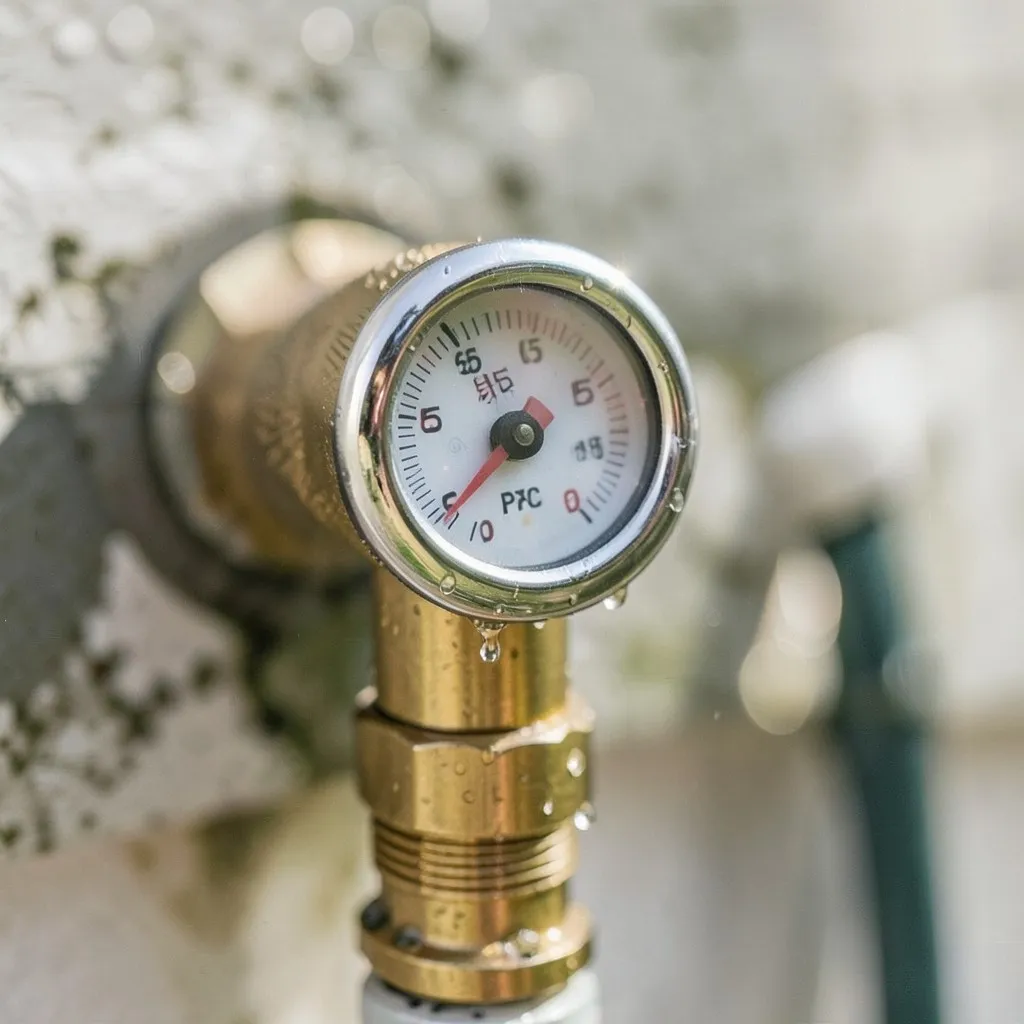
Water pressure is the force exerted by water in the supply pipes, measured in pounds per square inch (PSI). It's what drives water from the municipal main through your pipes and out of your fixtures. Residential water pressure ideally falls between 40 and 80 PSI — the "Goldilocks zone" where fixtures perform well and pipes aren't over-stressed.
What is the ideal water pressure range?
- 40–80 PSI: the accepted residential range per the International Plumbing Code
- Below 40 PSI: showers feel weak, toilets fill slowly, dishwashers and washing machines may not perform correctly
- Above 80 PSI: accelerates wear on faucet washers, cartridges, and supply line fittings; causes water hammer; increases risk of supply line failure; can damage appliances
How do you test water pressure?
A pressure gauge with a hose thread connection is inexpensive at hardware stores. Thread it onto a hose bib (outdoor spigot) and open the valve fully. Static pressure (no other water running) represents your incoming line pressure. If it reads above 80 PSI, you need a pressure reducing valve (PRV). If it reads below 40 PSI with no fixtures running, call the water utility — low supply pressure may be a street main issue.
What does a pressure reducing valve do?
Homes on high-pressure municipal mains are required by code to have a PRV — a valve installed on the main line after the meter that reduces and regulates pressure. A failing PRV is the most common cause of household pressure creeping above 80 PSI in older homes. PRV replacement is a single plumber job, priced installed.
What causes dynamic pressure drop?
The pressure at a fixture when multiple fixtures run simultaneously is called dynamic pressure. If pressure drops severely when the shower and a sink run at the same time, the cause is usually undersized supply piping (¾" main where 1" is needed), a failing PRV, or corroded galvanized pipe reducing interior diameter.
Researching the term is one thing — hiring for it is another. See leak detection services for scope, timelines, and what drives the price, or call (888) 530-4445 to talk to a local plumber about the job.
What related terms should you know?
What sources back this up?
Need a plumber for leak detection?
Calls are connected to independent licensed local plumbers in our partner's network for leak detection. Ask for the license number and a written estimate before any work begins.