
Hydro Jetting: The Complete Guide
How hydro jetting works, when it solves what snaking can't, 2026 cost, and when high-pressure water is the wrong answer. Per-city pricing + sources.
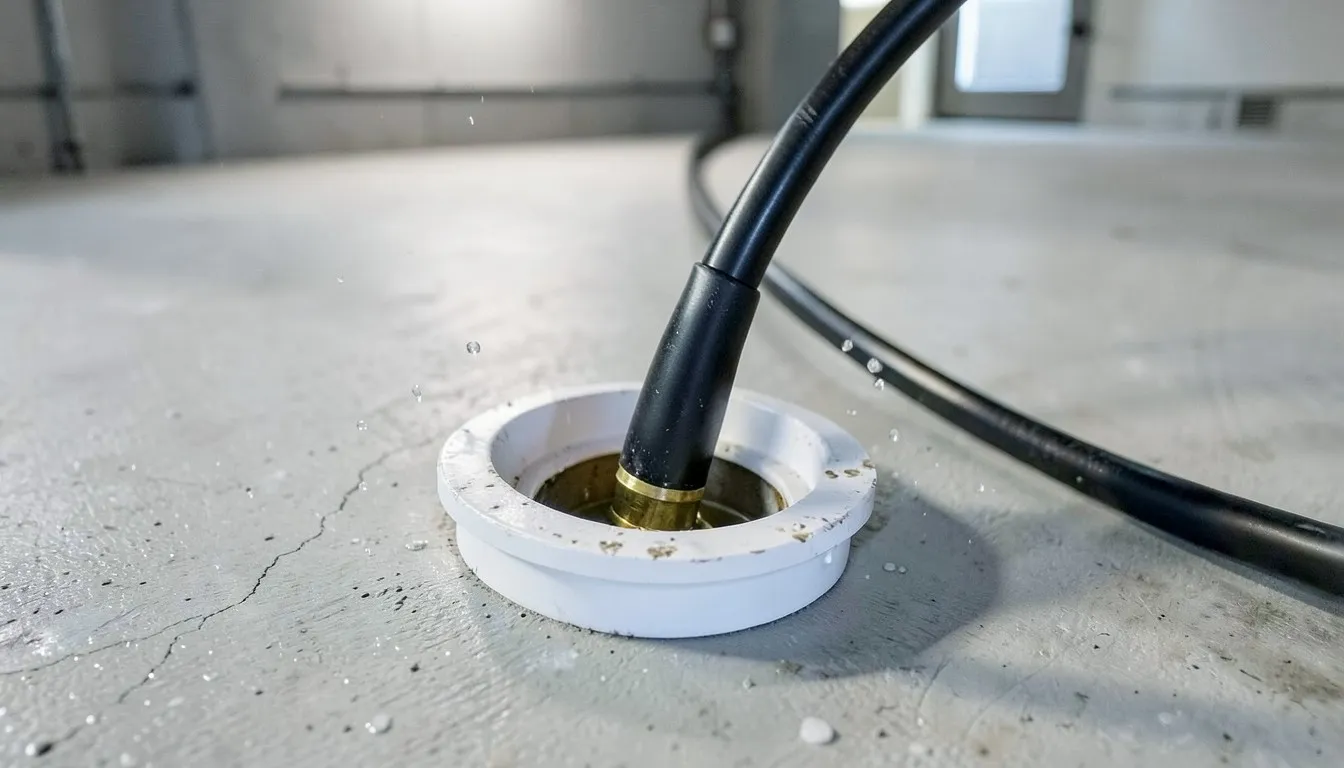
Hydro jetting uses 1,500–4,000 PSI of pressurized water (up to 10,000+ PSI on commercial rigs) propelled through a specialized nozzle to scour the inside of a sewer or drain line NASSCO maintenance standards. Residential service runs $350–$900 typical; add $150–$350 for the mandatory pre-jet camera scope (BuildZoom 2024 cost data). It is the right tool for severe grease, compacted scale, sand, and root mats — and the wrong tool for cracked, collapsed, or Orangeburg pipe, where the pressure can perforate or wash out bedding (EPA infrastructure aging data).
What is hydro jetting?
Hydro jetting (sometimes called "water jetting" or "hydro-scrubbing") is a drain-cleaning method that uses a high-pressure stream of water — typically 1,500 to 4,000 PSI on residential equipment, climbing to 10,000+ PSI on commercial and municipal rigs — propelled through a specialized rotating or fixed nozzle on the end of a flexible hose. Unlike a cable auger (a "snake"), which punches a hole through a blockage, the jet stream scours the entire 360° pipe wall, removing grease films, root mats, mineral scale, sand, gravel, and accumulated solids per NASSCO drain-cleaning standard practice. The result is a pipe restored to roughly its original internal diameter rather than a pipe with a passage carved through whatever was clogging it.
The method developed in the 1950s as municipalities sought a faster way to clean combined sewer mains per EPA combined-sewer-system history; portable trailer-mount units became common in the residential trade by the late 1980s. Today hydro jetting is the recognized standard for any drain-line cleaning where the cause is something other than a single hard object — and it is the only method that fully addresses chronic grease lines, scale-laden cast iron, and root infiltration that a snake will only temporarily clear. NASSCO publishes the trade standard for both jetting equipment and pre/post inspection workflow.
A typical residential hydro-jetting setup includes:
- Trailer- or cart-mount jetter — a self-contained unit with engine, pump, water reservoir (or municipal hookup), pressure regulator, and hose reel. Common engine: Honda GX390 (13 hp gasoline) or larger diesel for commercial work per NASSCO equipment-class spec.
- Plunger pump or piston pump — converts engine horsepower into hydraulic pressure. Residential jetters typically generate 4–8 GPM at 2,500–4,000 PSI; commercial rigs hit 18–25 GPM at 4,000–10,000+ PSI.
- Pressure-rated hose — typically 1/4" to 1/2" inside diameter, rated 4,000+ PSI working pressure with a 4:1 burst safety factor per OSHA equipment standards.
- Nozzle — the business end. Different jobs use different nozzles (covered below).
- Water source — either a 100–300 gallon onboard tank or a hose connection to a building hose bib protected by a backflow preventer per EPA Safe Drinking Water Act backflow rules. A typical residential job uses 50–150 gallons of water.
Nozzle types — the actual cleaning happens here
The nozzle determines what the jet does inside the pipe. Five common designs:
- Penetrating nozzle — most jet thrust pointed forward, used to break through a hard blockage. The plumber's "first contact" with a fully-stopped line per NASSCO sequence of operations.
- Flushing nozzle — most jet thrust pointed rearward, propelling the nozzle UP the pipe and flushing debris back DOWN to the cleanout. The standard cleaning nozzle for grease and soft buildup.
- Rotating nozzle — the nozzle head spins as the jets fire, producing a 360° scour pattern. Used for scale, mineral buildup, and uniform pipe-wall cleaning. Per NASSCO best practice, the rotating nozzle is the workhorse for cast-iron line restoration.
- Root-cutter nozzle — incorporates retractable steel blades or carbide chains powered by the water flow. Cuts root mass at joints flagged by EPA infrastructure aging data as a top failure mode. Always followed by a flushing pass to clear the cut material.
- Chain nozzle (chain knocker) — flailing carbide-tipped chains for descaling heavily-corroded cast iron. The most aggressive nozzle; used only on pipe that camera inspection has confirmed can take it.
The plumber selects the nozzle from the camera footage — and rotates through nozzles during a single job as conditions change. A line with grease + light root intrusion might start with a penetrating nozzle to open a path, switch to a root-cutter at the intrusion zone, then finish with a flushing nozzle for the full-length scour. Per IPC § 707, the workflow is a maintenance procedure (not a construction one), so jetting itself is not permit-triggering — but the plumber's license still applies, and any pipe damage caused by improper jetting is on the contractor.
Worth understanding: hydro jetting is a CLEANING tool, not a REPAIR tool. It restores flow capacity by removing what's narrowing the pipe; it does not fix structural damage. If the pipe is cracked, the jet does not help — and it may make things worse. The diagnostic camera scope BEFORE jetting is what separates competent jetting work from amateur work that destroys marginal pipe. Cross-reference the sewer line repair guide for what to do when the camera shows the pipe needs more than cleaning.
When is hydro jetting the right answer?
Hydro jetting is a high-leverage tool — but only on the right kind of clog. The rule is simple: jetting handles diffuse buildup and biological intrusion that a snake can't fully clear; it doesn't fix pipe damage. Here are the situations where the camera scope plus jetting is the recommended workflow, in approximate frequency-of-use order:
Severe grease accumulation in kitchen lines
Kitchen waste lines accumulate fats, oils, and grease (FOG) that solidify on contact with cool pipe walls. Over years, the FOG layer narrows a 2-inch line to half an inch of usable diameter — the line still drains but very slowly, and any added load (dishwasher cycle, garbage disposal) backs it up. A snake punches a hole through the FOG; jetting strips the entire interior wall back to bare pipe. EPA notes that FOG is the #1 cause of sanitary-sewer overflows in dense urban systems, which is why most cities now require commercial kitchens to maintain grease traps and run preventative jetting on a defined schedule.
Residential symptoms: kitchen sink and dishwasher both drain slowly; cleaning the trap doesn't help; the basement floor drain occasionally gurgles when the dishwasher runs. Camera footage shows a tan-to-brown waxy buildup on the pipe wall, more pronounced at horizontal runs and after fittings per IPC § 706 fitting layout.
Root intrusion through joints in mature laterals
Tree roots seek moisture and nutrients. Sewer joints — especially the bell-and-spigot joints in clay or cast iron — are perfect entry points: warmth, water, organic content. Once roots establish a foothold inside the pipe, they grow into a fibrous mass that catches wipes, paper, and grease, then forms a clog. A snake cuts a passage through the root mass but leaves the root entry point intact; the mass regrows in 6–18 months. A root-cutter nozzle on a hydro-jet pulverizes the root mass against the pipe wall and flushes the debris downstream — buying 2–5 years before regrowth depending on tree species. EPA infrastructure aging data flags root intrusion as one of the top-five causes of residential lateral failure.
Residential symptoms: recurring slow drains in the lowest fixtures (basement floor drain, ground-floor toilet); intermittent gurgling; backups that recover spontaneously after a few hours then return weeks later. Camera footage shows whitish root mats at joint locations, sometimes filling the entire pipe diameter.
Mineral scale and tubercle buildup in cast-iron drains
Cast-iron drain pipe (1920s–1980s construction) corrodes from the inside out. The corrosion product is a hard, crusty mineral scale called "tuberculation" that can occupy 30–60% of the pipe diameter on 50+ year-old lines. A snake bounces off it. A standard flushing nozzle scrubs the surface but doesn't remove much. A rotating descaling nozzle or chain knocker grinds the scale off and restores most of the original diameter — typically extending cast-iron pipe service life 10–20 more years before full replacement is unavoidable. Pipe corrosion mechanisms documented by industry standards (the same internal-corrosion process applies to ferrous as well as copper, though the products differ).
Sand, gravel, and grit in older drains
Pre-1960 homes per US Census housing-vintage data sometimes have storm-drain or floor-drain runs that accumulate fine sand and grit over decades. The deposits sit in low spots ("bellies") and reduce drainage capacity. A snake disturbs the surface; a hydro-jet flushes the entire deposit downstream. This is one of the few situations where jetting fully restores capacity in a single visit.
Recurring clogs that snaking can't fix
A drain that backs up twice in 18 months, gets snaked twice, and backs up a third time has a CAUSE that snaking can't address. The cause is almost always one of the four above: grease, roots, scale, or grit. The matched plumber's recommendation in this scenario should be: camera scope to confirm the cause, then hydro-jet to remove it. Per BLS plumber wage data 2024, the median plumber labor rate is $89/hr — a third snake call costs roughly the same as the camera + jet workflow that would actually fix the problem.
Commercial and restaurant lines — preventative cleaning
Commercial kitchens generate FOG continuously. Most municipalities now require restaurants to maintain grease traps AND to schedule preventative jetting on a defined interval — typically every 18–24 months — to keep the line downstream of the trap clear, with city pre-treatment requirements documented through agencies like Boston Inspectional Services and Chicago Buildings Department. For property managers and restaurant operators, this is recurring scheduled work, not emergency response. The matched plumber sets up the schedule and tracks it.
Pre-treatment before pipe lining (CIPP)
If the next step is CIPP lining (cured-in-place pipe), the host pipe must first be cleaned to bare wall — otherwise the resin doesn't bond. Hydro-jetting (typically with a chain knocker or rotating descaling nozzle) is the standard prep step before any CIPP installation. A line that's about to be lined often gets the most aggressive jet pass it will ever receive — because once the liner is in, the host pipe condition no longer matters.
When is hydro jetting the wrong answer?
High-pressure water is a powerful tool. It can also destroy marginal pipe in seconds. The plumber's judgment between "this pipe can handle 4,000 PSI" and "this pipe will fragment at 4,000 PSI" is what separates a productive jetting job from a disaster that turns a $700 cleaning into a $12,000 replacement. The camera scope BEFORE jetting is non-negotiable; per NASSCO best practice the pre-jet inspection is a documented requirement, not an upsell.
Pipe conditions that make jetting the wrong answer:
Cracked, fractured, or collapsed pipe
If the pipe wall is breached, the high-pressure water finds the exit. Outside the pipe, the jet stream erodes the surrounding bedding sand and native soil — sometimes washing out a void large enough to cause a sinkhole over the lateral path within days. EPA documents this as a known failure mode in aging gravity-sewer systems. Camera footage that shows ANY visible crack, fracture, or open joint disqualifies jetting until the structural defect is repaired.
The exception: if the plan is to follow jetting immediately with CIPP lining per NASSCO CIPP installation standards (and the lining is contracted, equipment is on-site, and the lining will go in before the day ends), the controlled cleaning pass is acceptable because the liner restores structural integrity within hours. If lining is NOT planned — get the structural repair first, then clean.
Orangeburg pipe (1948–1972 vintage)
Orangeburg was a tar-impregnated wood-fiber sewer pipe manufactured during the post-WWII steel and clay shortage. It absorbs moisture over decades and softens; many original installations are now well past structural failure. Hydro-jetting Orangeburg pipe is the textbook example of "do not". The water pressure dissolves the substrate, gouges the inside wall, and accelerates collapse — sometimes within the same visit. EPA aging-infrastructure studies note Orangeburg as one of the highest-failure-rate legacy materials still in service.
How to identify Orangeburg without camera: house was built between 1948 and 1972 per US Census housing-vintage data, original lateral has not been replaced, lateral material has not been previously documented. The camera tells you in 30 seconds — Orangeburg has a distinctive matte, slightly fibrous interior texture and tends to have visible ovalization (the round cross-section becomes egg-shaped under soil load). If the camera sees Orangeburg, the recommendation is full replacement — not jetting.
Heavily corroded galvanized steel drain lines
Galvanized steel was used for drain runs in some pre-1960 construction per US Census housing-vintage records. After 50+ years of corrosion, the pipe wall is often paper-thin in spots — perforation under high-pressure water is a real risk. The camera shows orange-brown rust nodules and visible wall thinning. Jetting can be done at LOW pressure (under 1,500 PSI) for very gentle cleaning, but full-pressure jetting risks blowing through the wall. The matched plumber's judgment call.
Polybutylene supply lines (NEVER jet supply side)
Polybutylene was used for residential water supply 1978–1995 and is known to fail at fittings per Plastic Pipe Institute material history; the plastic itself becomes brittle with age. Hydro-jetting is for DRAIN/WASTE/VENT lines, not pressurized supply lines — but the warning bears repeating because confused homeowners occasionally ask. Never apply external pressure to a pressurized line. If the issue is supply-side scale or buildup, the answer is replacement (typically with PEX per NSF/ANSI 61 standards), not jetting.
Recently-completed CIPP liner that hasn't fully cured
A CIPP epoxy liner reaches full cure typically 2–24 hours after installation depending on resin chemistry and curing method per NASSCO CIPP cure-time guidelines. Jetting an uncured or partially-cured liner can blow it out of the host pipe. Wait for the manufacturer's specified cure time, verified by post-cure camera scope, before any subsequent jetting.
Pipe joints that are barely holding
If the camera shows joint separations of more than 1/4 inch, the joint is structurally compromised; jetting can complete the separation. Camera-grade the joint condition before deciding. A few light separations: jet at reduced pressure with the operator watching the camera in real-time. Multiple severe separations: skip jetting, go to repair planning.
The "do not jet" decision tree
If the camera shows ANY of: visible crack, visible fracture, open joint over 1/4", Orangeburg material, severely corroded galvanized, or a partially-cured liner — the right answer is NOT to jet. The right answer is to plan structural repair first, then clean afterward (or clean as part of a coordinated lining workflow). A plumber who recommends jetting these pipes without flagging the risk is operating outside accepted practice — get a second opinion.
Hydro jetting vs cable snake vs chemical drain cleaner
Three common drain-cleaning methods exist; they solve different problems and have very different costs and risks. Choosing the wrong one wastes money at best and damages pipe at worst. Side-by-side:
Cable snake (drum auger / sectional auger)
How it works: A flexible steel cable with a cutting head is fed through the drain on a powered drum or hand-crank reel. The head spins, breaking through the blockage by mechanical force, and either pulls back the obstruction or pushes it downstream.
When it's right: Localized hard blockages — a wad of paper towel, a child's toy, a hairball. Single-fixture clogs. Initial diagnostic ("is the line stopped, or just slow?"). Emergency clearing when you don't yet have time for a camera + jet workflow.
What it doesn't solve: Grease accumulation (snake punches a hole through, FOG closes it again within weeks per EPA FOG-management guidance). Root mats (snake cuts a passage; roots regrow rapidly through the cleared path). Scale on cast iron (snake bounces off). Sand/grit in bellies (snake displaces a small amount, leaves the bulk).
Cost: $200–$450 typical residential service call per BuildZoom 2024 cost data. Often the lowest-cost first response.
Risk: Cable abrasion can damage marginal pipe joints per IPC § 705 joint integrity standards. Aggressive cable use on cast iron can chip scale loose in chunks that re-clog downstream. Generally safer than jetting on questionable pipe but not risk-free.
Hydro jetting (pressurized water)
How it works: Covered above — high-pressure water through a directional nozzle scours the entire pipe interior 360°.
When it's right: Diffuse buildup (grease, soft scale, soap films). Root infiltration (with the right nozzle). Mineral tuberculation in cast iron. Sand/grit in bellies. Recurring clogs that snaking only temporarily fixes. Pre-CIPP cleaning. Scheduled commercial preventative maintenance.
What it doesn't solve: Structural defects (cracks, collapses, severe joint separations) — and may make these worse. Hard foreign objects (a snake retrieves them faster). Issues upstream of the cleanout the jetter can't access.
Cost: $350–$900 typical residential service per BuildZoom 2024; $400–$1,200 with the mandatory pre-jet camera scope.
Risk: On marginal pipe, jetting can perforate, fragment, or wash out bedding per EPA aging-pipe failure modes. Camera scope is the risk control.
Chemical drain cleaner
How it works: Caustic chemicals (sodium hydroxide / lye) or oxidizing chemicals (sulfuric acid, sodium hypochlorite) are poured into the drain. They generate exothermic reactions that dissolve organic clogs. Enzymatic and bacterial cleaners (Bio-Clean, Roebic) use microbes that consume organic matter over hours/days — gentler but slower.
When chemical is acceptable: Light hair clog in a single sink/shower drain that you want to address before calling a plumber. Periodic enzymatic maintenance for kitchen lines (monthly preventive use). Dissolving an obvious organic clog in a minor fixture.
When chemical is wrong: Main lateral clogs (chemical never reaches the obstruction in workable concentration). Cast-iron drains (caustic chemistry accelerates internal corrosion per corrosion-mechanism guidance from industry). Older galvanized supply (some chemicals attack the zinc coating). Any clog that is mechanical (object) rather than organic.
Cost: $8–$30 retail. Looks low-cost; very rarely actually solves the problem you're trying to solve.
Risk: Caustic chemicals damage skin, eyes, lungs (per CPSC consumer safety guidance). They damage older pipes — especially at joint sealants per IPC § 705 joint material standards. They sit in a clogged line and wait to splash back at the next person who tries to plunge it. They are the most over-recommended and worst-actually-performing of the three methods.
Side-by-side comparison
| Method | Cost | Best for | Worst for | Fixes root cause? |
|---|---|---|---|---|
| Cable snake | $200–$450 | Hard objects, single-fixture clogs | Grease, roots, scale | No (clears blockage only) |
| Hydro jet | $350–$900 | Grease, roots, scale, recurring clogs | Cracked or collapsed pipe | Yes (restores diameter) |
| Chemical cleaner | $8–$30 | Light hair in a single drain | Main lines, older pipe | No (rarely reaches main clog) |
Why "snake first, jet if it comes back" is the wrong economy
Many homeowners try snaking twice before authorizing jetting. The math doesn't work: $300 snake + $300 second snake + $700 jet = $1,300 to learn what a $200 camera scope and $700 first-time jet would have shown ($900 total). Per BLS plumber wage statistics, the median labor rate of $89/hr means each call is ~3 hours of paid labor; you save real money by camera-scoping first and selecting the right tool, instead of trying the lowest-cost tool first and escalating.
The matched plumber on the AlertPlumber call back will frame the question on the phone — based on your symptoms, age of plumbing, and history of service — and recommend snake or jet (or camera-first then decide) before scheduling. Estimate cost in your ZIP through the cost calculator before the call.
What PSI and GPM do you need for your pipe diameter?
Hydro-jetting equipment isn't one-size-fits-all. The pressure (PSI) and flow (gallons per minute, GPM) need to match the pipe diameter and material. Too little and you don't move the debris; too much and you damage the pipe. NASSCO publishes equipment-selection guidelines for both municipal and contractor work; the table below summarizes the contractor-side norms.
Equipment specs by pipe diameter
| Pipe diameter | Typical PSI | Typical GPM | Application | Equipment class |
|---|---|---|---|---|
| 1.5"–2" (kitchen, lavatory branches) | 1,500–2,500 | 2–4 | Grease, soap, hair | Cart-mount mini-jetter |
| 3" (laundry, branch waste) | 2,000–3,500 | 4–6 | Lint, soap, light grease | Cart-mount jetter |
| 4" (residential lateral, main stack) | 2,500–4,000 | 4–8 | Grease, roots, light scale | Trailer-mount residential |
| 6" (large lateral, light commercial) | 3,000–4,000 | 8–18 | Roots, scale, sand, grit | Trailer-mount commercial |
| 8"–12" (commercial, multifamily) | 3,500–5,000 | 18–25 | Heavy commercial buildup | Truck-mount commercial |
| 15"–48"+ (municipal sewer mains) | 4,000–10,000+ | 40–80+ | Municipal sewer cleaning | Vacuum/jet combination truck |
Why both PSI and GPM matter
PSI (pressure) drives the cutting/scouring action — it's what makes the jet stream impact the pipe wall. GPM (flow) carries debris back down the pipe to the cleanout. A high-PSI low-GPM system can cut through buildup but doesn't flush it; the operator clears debris but creates a new clog downstream. A low-PSI high-GPM system flushes well but doesn't cut. Both spec numbers need to match the application — and the equipment label is meaningless without both.
A common contractor selling point is high PSI ("4,000 PSI residential jetter!"). Worth understanding: 4,000 PSI at 4 GPM is a different machine from 4,000 PSI at 8 GPM, and the second one cleans a 4-inch lateral roughly twice as fast. The matched plumber's equipment should match the job; ask the operator for both numbers if you want to verify.
Engine and pump combinations
Most residential cart and trailer jetters use a Honda GX390 (13 hp gasoline) or comparable Briggs & Stratton, mated to a triplex plunger pump. The combination delivers roughly 4 GPM at 4,000 PSI — sufficient for the 4-inch residential laterals (per IPC § 710 lateral sizing) that make up the bulk of the work. Larger commercial trailer rigs use a Honda GX690, Kohler, or small diesel coupled to a higher-displacement pump — generating 8–18 GPM at similar pressures.
Truck-mount municipal combination units (the trucks you see cleaning city storm drains) carry 1,500–2,000 gallons of water plus a vacuum tank, deliver 60–80 GPM at 2,500 PSI through 1-inch hose, and are operated by trained municipal crews — these are not contractor-grade equipment and are generally not used for private property work outside HOA common areas and large commercial sites per EPA municipal sewer-maintenance practice.
Water source: tank vs. hose hookup
Most residential jobs use a hose connection to the customer's outdoor hose bib (typical residential supply pressure 40–80 PSI delivers 6–10 GPM, comfortably enough to feed a 4–8 GPM jetter). A backflow preventer is required at the hose-bib connection per EPA Safe Drinking Water Act cross-connection rules. Onboard tanks (100–300 gallons) are used when no hose is available, when water service is shut off, or for jobs in remote/unbuilt sites. A typical residential service uses 50–150 gallons of water; a commercial scheduled service can use 300–500 gallons. The water bill impact for the homeowner is generally under $5 — the volume sounds large but is small relative to lawn irrigation.
Why DIY rental jetters are a bad bet for laterals
Home-improvement chains rent small "drain jetters" rated 1,200–1,800 PSI at 2 GPM. These are reasonable for clearing a single fixture branch (kitchen sink, shower drain) — but they are well below the spec needed to clean a 4-inch lateral per NASSCO equipment-class minimums. Renting a residential rig and trying to clean the main yourself most often results in: water damage to the cleanout area (operator can't control the hose under load), a job that didn't actually clean anything (insufficient PSI/GPM for the diameter), and zero diagnostic data (no camera, no idea what was actually wrong). Cost is $80–$150/day plus deposit; for $200 more you get a professional with proper equipment, a camera scope per BLS labor-rate baseline, and warranty on the work.
What happens during a hydro-jetting service?
A standard residential hydro-jetting service follows roughly this sequence. Total on-site time: 1.5 to 4 hours typical; complex commercial jobs can extend to a full day.
1. Arrival and walkthrough (10–15 min)
The plumber confirms the symptoms with you, identifies the cleanout(s) on your property per IPC § 708 cleanout requirements, and assesses access for the jetter. If the jetter is trailer-mount and your property has gate or driveway access constraints, this is when those get worked out. The truck typically parks on the driveway or street; the hose reaches the cleanout from there.
2. Camera scope BEFORE jetting (20–40 min)
This step is non-negotiable per NASSCO standards. The plumber feeds a waterproof push-camera through the cleanout and traverses the line, recording footage that documents:
- Pipe material (clay, cast iron, Orangeburg, PVC, HDPE)
- Pipe diameter
- Joint condition (intact vs separated vs offset)
- Visible defects (cracks, fractures, ovalization)
- Cause of the symptom (grease, roots, scale, sand, foreign object)
- Bellies (low spots holding water)
- Locator probe data (depth and lateral position above-ground if intervention is planned)
The plumber walks you through what they see. If the camera reveals a structural defect that contraindicates jetting (per Section 3 above), the plan changes here — to repair planning instead of jetting. Insist on getting a copy of the camera footage; reputable plumbers provide it on request.
3. Jetter setup (15–20 min)
The plumber positions the jetter, connects to a water source (your hose bib or onboard tank), starts the engine, and lets the system warm to operating pressure. The hose is fed off the reel, the appropriate nozzle (selected from the camera footage) is threaded on, and the operator confirms the trigger and pressure-relief mechanisms function per OSHA equipment-safety check standards. Tarps and floor protection go down where the hose enters the building.
4. The jetting pass — work upstream first (30–90 min)
The standard workflow: insert the hose into the cleanout, push it UPSTREAM (toward the house, away from the city main) while the jets fire. The reverse-pointing jets (flushing nozzle) propel the hose forward AND propel the loosened debris back DOWN to the cleanout, where it can be vacuumed or flushed out. Once the upstream end is reached, the operator slowly pulls the hose back, with the jet still running, performing a final scour pass on the way out per NASSCO upstream-first procedure.
For root-cutter or descaling work, the same pattern applies but with the appropriate aggressive nozzle. The operator can feel the load on the hose; significant resistance means the nozzle has hit a major obstruction (large root mass, scale plug). The operator works it through with patience — high-pressure water finds its way around dense matter slowly. Brute-forcing the nozzle through hard obstruction risks both equipment and pipe damage.
5. Downstream pass (15–30 min)
After the upstream pass is complete, the operator typically does a downstream pass — pushing the hose toward the city main connection and pulling back, ensuring the entire lateral is clean to the property line per IPC § 708 lateral termination. Some jobs end at the upstream pass if the camera confirms the downstream segment was already clean.
6. Post-jet camera verification (15–30 min)
The plumber re-runs the camera to confirm the cleaning was effective per NASSCO post-clean verification standard. The post-jet footage documents the restored pipe diameter and confirms no new damage was introduced. This is the "after" half of the before/after camera record — and the foundation of any warranty claim if you have issues within the warranty window.
7. Equipment breakdown and walkthrough (15–20 min)
The hose is reeled, the jetter shut down, tarps removed, debris cleaned up, equipment loaded. The plumber walks you through the before/after camera footage, hands over the digital file (USB drive or video file), explains what was done, and recommends any follow-up — typically either "you're good for 18–24 months until next service" or "the camera also showed [structural defect X]; here's the recommended next step." A written invoice with scope, materials used, and warranty terms gets signed.
What you should expect from a competent operator
- Camera scope BEFORE jetting, every time, no exceptions
- Walk-through of the footage with you, before any jet starts
- Nozzle selection that matches what the camera shows
- Post-jet camera verification
- Copies of both camera files on request
- Honest recommendation on whether jetting will solve your problem long-term, vs whether structural repair is needed
- Written warranty (typically 30–90 days on the cleaning itself; longer warranties indicate the plumber stands by recurring-cleaning service)
What you should NOT see: a plumber who shows up with a jetter and starts jetting without running a camera. A plumber who refuses to share camera footage. A plumber who recommends jetting on visibly cracked or collapsed pipe. Per BLS plumber wage statistics 2024 the trade has high standards; operators who skip these steps are the exception, not the norm — but they exist.
What does hydro jetting cost in 2026?
National cost ranges (per BuildZoom 2024 cost data + BLS plumber wages OES 47-2152 + NASSCO method standards):
- Camera scope (mandatory pre-jet): $150–$350
- Locator probe (add-on if intervention planned): $75–$150
- Hydro-jetting — single fixture branch (kitchen, bath): $250–$450
- Hydro-jetting — main residential lateral: $350–$900
- Hydro-jetting — main lateral with root-cutter pass: $500–$1,100
- Hydro-jetting — main lateral with descaling/chain knocker pass: $700–$1,400
- Bundled camera + jet + post-camera: $400–$1,200
- Commercial scheduled maintenance (per visit): $400–$1,500 depending on diameter and length
- Pre-CIPP cleaning prep: $500–$1,200 (typically billed within the lining quote)
- After-hours / weekend service: +20–35% premium on labor
What drives the variance
Two homes the same age in the same city can get quotes that differ by 2-3x. The factors:
- Pipe diameter and length. A 25-ft kitchen branch costs less than a 60-ft main lateral. Most cost-calculator estimates assume 30-50 ft of 4-inch pipe.
- Type of buildup. Soft grease cleans quickly with a flushing nozzle (closer to the low end of the range). Heavy scale or root mass requires multiple passes with aggressive nozzles (toward the high end).
- Cleanout access. Exterior ground-level cleanout: easy, low cost. Cleanout in a finished basement crawlspace: more setup time, more cost. No accessible cleanout (some pre-1970 homes per US Census housing-vintage data): plumber may need to install one first ($300–$700 add).
- Camera scope inclusion. A bundled camera + jet + post-camera package typically saves $100–$200 over buying the camera and jet as separate calls.
- Labor market. Per BLS regional wage data, plumber median wage varies from ~$70/hr in some Southern metros to ~$110/hr in Boston and Seattle.
- Permit fees (rare for jetting). Hydro-jetting alone usually doesn't require a permit (it's maintenance, not construction per IPC § 707). Only jetting that involves any pipe modification triggers permitting.
- After-hours surcharge. 8 PM Friday is not the same price as 10 AM Tuesday — emergency call rates run 20–35% higher.
Budget realistically: for a typical 40-ft residential lateral with grease + light root issues, in a major US metro, expect $500–$900 for the bundled camera + jet workflow per BuildZoom 2024 metro pricing. Anything materially below $400 likely skips the camera scope (and is risky); anything materially above $1,200 deserves a second-opinion quote unless the work involves a chain-knocker descaling pass or significant access challenges.
How much does hydro jetting cost by city in 2026?
Labor rates and prevailing service-call pricing vary materially across US metros. Here is the picture in 8 major markets where AlertPlumber has scraped per-city data; each row reflects a typical bundled camera + jet of a residential 4-inch main lateral 30–50 ft long.
| City | Typical bundled cost | Notes | Source |
|---|---|---|---|
| Phoenix, AZ | $425–$850 | Mesquite + palm root intrusion common; 12-month maintenance cycle in mature neighborhoods | Phoenix Development Services |
| Boston, MA | $550–$1,150 | Pre-WWII apartment grease lines a frequent driver; cast-iron descaling adds cost | Boston ISD |
| Atlanta, GA | $400–$850 | Live oak + Bermuda grass root systems aggressive; root-cutter passes common | Atlanta City Planning |
| Seattle, WA | $525–$1,100 | Combined sewer system in older neighborhoods; preventative jetting recommended pre-rainy season | Seattle SDCI |
| Dallas, TX | $425–$900 | Expansive clay soil shifts pipe joints; roots exploit; jetting + lining bundled often | Dallas SDC |
| Chicago, IL | $525–$1,100 | Pre-WWII building grease + cast-iron scale frequent combination; CSO-area pre-treatment per EPA CSO program | Chicago Buildings Dept |
| Houston, TX | $400–$900 | Heavy-clay soil + seasonal root growth; storm-sewer pre-rain-season jetting common | Houston Public Works |
| Minneapolis, MN | $500–$1,050 | Pre-WWII apartment grease; deeper laterals don't affect jet cost (no excavation), but winter access can | Minneapolis Regulatory Services |
Why old-housing metros cost more
Boston, Chicago, and Minneapolis all carry significant inventory of pre-WWII multi-family housing — buildings whose kitchen and main waste lines have accumulated 80+ years of grease and scale. Jetting these lines often requires multiple passes with aggressive nozzles (chain knocker for cast-iron descaling; root-cutter for joint intrusions), pushing the bundled cost toward the high end of the range. Per US Census ACS housing-vintage data, these three metros all show 20%+ of housing built before 1940 — versus under 5% in Phoenix or Houston.
Why Sun Belt metros run lower (mostly)
Phoenix, Atlanta, Dallas, and Houston have newer housing stock on average and typically don't need cast-iron descaling work. The trade-off: aggressive root systems (mesquite + palm in Phoenix; live oak + Bermuda grass in Atlanta; oak + magnolia in Dallas/Houston) push more jobs into the root-cutter range, and tropical/subtropical climates mean jetting work happens year-round with no seasonal pricing premium.
Where to get a city-specific quote
The matched plumber on the AlertPlumber call back has access to per-city labor rates and gives you a written estimate before any work. You can also use the cost calculator for a ZIP-localized estimate before the call. AlertPlumber's network is screened on state-license verification (CSLB CA, TSBPE TX, AZ ROC AZ, DBPR FL, MA Board, MN DLI) and contractor liability insurance — both verifiable on the call.
Should you DIY hydro jetting or hire a pro?
Residential-grade hydro jetters do exist for retail purchase ($1,500–$5,000 for a cart-mount unit; $5,000–$15,000 for a trailer-mount). Rental rigs are also available through some equipment-rental chains. The question worth asking: is DIY the right call for your situation?
The case against DIY for laterals
Three issues make DIY hydro jetting a bad bet for most homeowners:
- No camera scope. Without a $4,000+ camera setup of your own, you don't know what's in the pipe. You don't know if it's grease (jet-friendly), scale (jet-friendly with right nozzle), roots (jet-friendly with root-cutter), Orangeburg (do not jet), cracked clay (do not jet), or galvanized perforation (do not jet). Jetting blind into a marginal pipe can turn a $700 cleaning bill into a $12,000 replacement.
- No nozzle library. Pros carry 5–8 nozzle types and select based on the camera footage. A DIY setup typically ships with one or two nozzles — usually a basic flushing and a basic root cutter — neither of which is right for scale, grit, or descaling work.
- Real safety risk. Per OSHA classifies high-pressure water cutting as a "fluid injection" hazard, with documented injury cases including muscle and tendon damage from accidental skin contact at pressures above 1,000 PSI. Eye injury risk from spray-back is significant. Pros wear face shields, kevlar-lined gloves, and steel-toed boots — and have training in safe equipment handling. The injury rate among amateur operators is materially higher than for trained pros.
The case where DIY can make sense
Hydro jetting a SINGLE fixture branch (kitchen sink drain, shower drain) with a small electric jetter (1,200–1,500 PSI, 1.5–2.5 GPM) on PVC pipe (per PPI material standards) in known-good condition is a reasonable DIY project. You can rent a unit for ~$80–$150/day; the work takes 30–60 minutes; the risk is bounded because you're jetting a short run of modern PVC that you can see/access and there's no large-volume waste flow downstream of you.
DIY hydro jetting of the MAIN LATERAL is almost never the right call. The equipment cost approaches the cost of a single professional service, the risk is much higher (you're working with 60+ feet of underground pipe of unknown material and condition), and the diagnostic gap (no camera) means you're operating blind. Excavation rules per OSHA trench-safety guidance and utility-locate requirements per 811 USA Dig Safety also apply if any pipe access is needed.
If you're going to DIY anyway: the checklist
For homeowners who want to attempt DIY on a single fixture branch (and only a single fixture branch):
- Confirm the pipe is modern PVC, ABS, or copper (visible at the fixture trap; not corroded galvanized)
- Confirm the pipe length is under 25 feet and contains no major bends
- Use a jetter rated for the pipe diameter (typically 1.5"–2" for fixture branches; never use a 4-inch-rated nozzle in 2-inch pipe)
- Wear face shield and gloves; do not handle the nozzle while pressurized
- Engage the trigger gradually; never start the jet before the nozzle is fully inserted into the cleanout
- Stop immediately if you encounter unusual resistance or hear unusual sounds — this can indicate the pipe is damaged or the nozzle is stuck
- Have a wet-vac on hand for cleanup; jetting always leaves some volume of water + debris back-flow at the cleanout (treat the back-flow as contaminated per CDC sewage-handling guidance)
The clear case for a pro
Any of the following push the right answer firmly toward "hire a pro":
- The clog is in the main lateral (not a single fixture branch)
- You've had recurring clogs and don't know the pipe material
- Home is older than 1980 and original lateral is in service
- You don't have a known-accessible cleanout
- Multiple fixtures back up at once (means problem is downstream of all of them — main lateral)
- You see sewage backup, sewer odor in the yard, or any wet spots over the lateral path
The matched plumber's value isn't just the jet equipment — it's the camera scope, the nozzle judgment, the pipe-condition assessment, the OSHA-compliant safety practice, and the warranty if something goes wrong. None of those are available in a rental. Per BLS, the median plumber labor rate of $89/hr makes the camera + jet workflow ~$700 — typically less than the cost of buying a residential jetter you'll use once.
What are the safety, OSHA, and code requirements?
Hydro jetting equipment is industrial-grade tooling regulated under federal occupational-safety standards. Understanding the safety framework matters both for hiring decisions (verifying the plumber's practice) and for any DIY consideration.
OSHA "fluid injection" hazard classification
OSHA classifies high-pressure water as a fluid-injection hazard at pressures above approximately 1,000 PSI. Documented injuries include:
- Skin penetration — water (and any contaminants in the water) injected through skin at high pressure can cause infection, tissue death, and require surgical debridement
- Eye injuries from spray-back — high-pressure spray can rupture the eye even at distances of several feet
- Hearing damage from extended exposure to engine + pump noise (pumps generate 85–95 dB)
- Burn injuries from hot water if the system has a heater (some commercial rigs)
Required PPE for professional operators: safety glasses or face shield, hearing protection, kevlar-lined gloves, steel-toed boots, and (in some commercial settings) chemical-resistant outerwear if the wastewater being jetted contains industrial process material.
Standards adoption — IPC and UPC don't cover jetting directly
Hydro jetting is a maintenance procedure, not a construction one — so neither the International Plumbing Code (IPC) nor the Uniform Plumbing Code (UPC) contains a dedicated chapter on jetting equipment. The relevant code touchpoint is the requirement that any work performed on the sanitary drainage system be performed by a verified plumber — a requirement adopted in essentially every US jurisdiction. NASSCO publishes the trade-standard guidelines for both equipment selection and pre/post-inspection workflow that effectively serve as the "code" for jetting practice.
Local AHJ (Authority Having Jurisdiction)
Each city or county has an Authority Having Jurisdiction over plumbing work. The AHJ enforces code adoption, licenses contractors, and inspects work. For hydro jetting specifically:
- Most AHJs do NOT require a permit for jetting alone (it's maintenance)
- ALL AHJs require the operator to hold a current state plumbing license
- Most AHJs require the operator's contracting business to carry liability insurance ($500K minimum typical; $1M+ standard)
- Some AHJs require backflow-preventer protection on the water supply during jetting (to prevent sewage from being drawn back into the potable system if the jetter loses pressure)
Verifying your plumber
Before any jetting work, verify the plumber's license through your state board:
- California — CSLB Contractors State License Board
- Texas — TSBPE Plumbing Examiners
- Arizona — ROC Registrar of Contractors
- Florida — DBPR Department of Business and Professional Regulation
- Massachusetts — Board of State Examiners of Plumbers
- Minnesota — Department of Labor and Industry
The verification takes 30 seconds. AlertPlumber's matched plumbers are pre-screened on license + insurance — but verifying yourself is always worth doing.
Sewage exposure health considerations
Hydro jetting can splash wastewater. Per CDC sewage exposure guidance, raw sewage carries pathogens including E. coli, hepatitis A, giardia, and assorted viruses. Operators are at occupational risk and use PPE accordingly. Homeowners on-site during jetting should:
- Stay clear of the cleanout area during active jetting
- Keep children and pets away from any backflow puddles at the cleanout
- Allow the operator to clean up backflow with appropriate disinfectant before walking through the area
- Wash hands thoroughly after any contact with cleanup buckets, tools, or hose surfaces
Backflow protection
If the jetter is supplied from your hose bib, the operator should install a backflow preventer (typically a hose-bib vacuum breaker, or a more rigorous reduced-pressure-zone assembly for commercial work) to prevent sewage from being siphoned back into the potable water supply if pressure is lost. The EPA Safe Drinking Water Act backflow-prevention requirements apply to any temporary connection between potable water and a non-potable system. Reputable operators bring their own backflow protection; ask if it's installed before the jetter starts.
How often should you schedule hydro-jetting maintenance?
The right hydro-jetting frequency depends on your home's plumbing condition, age, and what feeds the lateral (kitchen-heavy use, restaurant grease, mature trees nearby). Here is a frequency framework that accommodates most residential and commercial scenarios.
Residential — frequency by category
- Modern home (post-2000) with PVC lateral, no nearby trees: Reactive only — jet when symptoms emerge. Likely a 7–15 year interval between needs per PPI PVC service-life data.
- Mid-age home (1980–2000) with PVC, mature trees within 30 ft of lateral: Camera scope every 3–5 years; jet only if camera shows root intrusion or buildup. Annual root-inhibitor treatment ($30–$50/year) reduces need.
- Older home (1950–1980) with cast-iron or clay lateral: Camera scope every 2–3 years; jet every 5–10 years preventatively (or sooner if symptomatic). Build a maintenance budget assuming preventative jet every 7 years.
- Pre-1950 home with cast-iron and accumulated scale: Camera + jet every 3–5 years preventatively per US Census housing-vintage. Consider scheduled maintenance contract.
- Any home with frequent kitchen + dishwasher use, garbage disposal: Add 1–2 years to whatever the above suggests, OR switch to a 3-year cycle if symptoms recur.
Commercial — frequency by category
Per EPA combined-sewer-overflow (CSO) program data, FOG (fats, oils, grease) is the dominant cause of urban sanitary-sewer blockages. Most municipalities now mandate restaurant grease-trap maintenance and many require scheduled lateral jetting downstream of the trap. Typical commercial frequencies:
- Restaurant kitchen lateral: Jetting every 12–24 months. Some municipalities require quarterly cleanings on high-volume kitchens.
- Multi-family residential (8+ units sharing a lateral): Jetting every 18–36 months.
- Office building, light commercial: Jetting every 24–60 months.
- Hotel, hospital, food service in CSO-area cities (Boston, Chicago, Minneapolis, Pittsburgh, Philadelphia, etc. per EPA CSO list): Often quarterly or semi-annually as required by local pre-treatment ordinance.
Maintenance contracts
Reputable plumbers offer scheduled maintenance contracts that bundle: annual or semi-annual camera scope, hydro-jetting (or "jet as needed" based on the camera findings), root-inhibitor treatment for properties with mature trees, and priority emergency response. Typical pricing $200–$600/year for residential (depending on what's included), $1,500–$5,000/year for commercial per BuildZoom maintenance-contract pricing. The math usually works in the homeowner's favor by catching one or two issues early per cycle.
What you can do in between jet cycles
- Don't pour grease down the kitchen drain. Hot grease is liquid going down; solid by the time it reaches the cool lateral. Wipe pans with paper towel BEFORE washing; throw the towel in the trash.
- Don't flush "flushable" wipes. They are not flushable. They snag on every joint and form the nucleus of the next clog. Per EPA wastewater infrastructure data, wipes are a major contributor to sanitary sewer overflows.
- Run hot water after dishwashing. Helps push fats through the lateral while still liquid; per EPA FOG-management practice, this is a low-cost mitigation.
- Use enzymatic monthly maintenance. Bacterial drain treatments (Bio-Clean, Roebic) eat organic buildup over time per CDC organic-load guidance. They DON'T fix structural issues, but they slow grease accumulation. Monthly use is reasonable; don't expect them to clear an established clog.
- Flush root-inhibitor twice a year if trees are nearby. Copper sulfate (RootX, K-77) kills root tips that have entered the lateral without harming the tree above ground. Apply down the lowest drain in the house; let sit overnight; flush in the morning.
- Watch for early-warning signs. Slow drains in multiple fixtures, gurgling toilets, sewer smell — covered in the sewer line repair guide. Catch issues early; the camera + jet workflow is much lower-cost than a 2 AM emergency callout.
The economics of preventative jetting vs reactive emergency jetting
A scheduled maintenance camera + jet visit costs $400–$900. An emergency reactive jet at 9 PM Friday with sewage backed up into the basement runs $700–$1,500 — plus the cost of cleanup and any restoration of damaged finishes (drywall, flooring, baseboards). Per Insurance Information Institute, sewage backup damage averages $4,000–$12,000 in cleanup and replacement when basement finishes are involved. The math on preventive maintenance is straightforward: a $500 scheduled jet every 5–7 years is materially lower-cost than one emergency event.
Get a callback to discuss a maintenance schedule appropriate for your property. The matched plumber on the call will frame it based on your home's age, lateral material (if known), and tree proximity — typically 5 minutes on the phone to lay out a plan. Request a callback or use the cost calculator to estimate the upfront service cost.
Need a hydro jetting callback?
ZIP, phone, kind of work. AlertPlumber routes to a verified plumber for an over-phone estimate.
Hydro Jetting by city
City-specific pricing, code references, climate-driven pathology, and frequently-asked questions for the 12 cities where AlertPlumber ships hydro jetting pages today.
- Hydro Jetting in Houston, TX →
- Hydro Jetting in Phoenix, AZ →
- Hydro Jetting in Boston, MA →
- Hydro Jetting in Minneapolis, MN →
- Hydro Jetting in Atlanta, GA →
- Hydro Jetting in Seattle, WA →
- Hydro Jetting in New York, NY →
- Hydro Jetting in Los Angeles, CA →
- Hydro Jetting in Chicago, IL →
- Hydro Jetting in Dallas, TX →
- Hydro Jetting in Philadelphia, PA →
- Hydro Jetting in San Jose, CA →
What else do people ask about hydro jetting?
How long does a hydro-jetting service take?
A typical residential service runs 1.5–4 hours total: 20–40 minutes for the pre-jet camera scope per NASSCO inspection sequence, 15–20 minutes for setup, 30–90 minutes for the jetting passes themselves, 15–30 minutes for the post-jet camera verification, and 15–20 minutes for breakdown and walkthrough. Complex commercial jobs with multiple cleanout points can run a full day.
Will hydro jetting damage my pipes?
On structurally sound pipe, no — jetting cleans without damaging. On marginal pipe (cracked, fractured, severely corroded, Orangeburg), yes, the high pressure can perforate, fragment, or wash out bedding sand. This is why NASSCO best practice mandates a camera scope BEFORE jetting — to confirm the pipe can take the pressure. A plumber who skips the pre-jet camera is operating outside accepted standards. Get a different plumber.
How much water does hydro jetting use?
A typical residential service uses 50–150 gallons; commercial scheduled service can use 300–500 gallons. Most jobs supply from your outdoor hose bib with a backflow preventer per EPA SDWA cross-connection rules (typical residential supply at 40–80 PSI delivers enough flow to feed a 4–8 GPM jetter). Cost impact on your water bill is generally under $5 — large-sounding volume but small relative to lawn irrigation.
Do I need a permit for hydro jetting?
Generally no. Hydro jetting is a maintenance procedure, not construction, so it falls outside the IPC § 707 permit triggers in most US jurisdictions. The plumber still needs a current state plumbing license and the contracting business needs liability insurance — both verifiable through your state board (CSLB CA, TSBPE TX, AZ ROC AZ, DBPR FL, MA Board, MN DLI). Permitting is required only if the jetting is bundled with structural pipe modification.
Can I rent a hydro jetter and do it myself?
For a single short fixture branch (kitchen sink, shower drain) on known-good modern PVC pipe, yes — rental units rated 1,200–1,800 PSI/2 GPM are reasonable for $80–$150/day. For the main lateral, no — rental units underspec for 4-inch lateral cleaning, you have no camera to assess pipe condition, and per OSHA fluid-injection hazard classification the safety risk is real. The math doesn't favor DIY for laterals: a professional bundled camera + jet is typically $500–$900, comparable to renting and operating yourself blind.
How is hydro jetting different from snaking?
A snake (cable auger) punches a hole through a blockage with mechanical force; the rest of the pipe wall is unaffected. Hydro jetting uses high-pressure water through a 360° nozzle to scour the entire pipe interior — restoring something close to original diameter rather than just clearing a passage. Snaking is right for hard objects and single-fixture clogs ($200–$450 typical). Jetting is right for grease, roots, scale, and recurring clogs ($350–$900 typical for the bundled camera + jet). Per BLS plumber wage data, the higher cost of jetting reflects more equipment + more time, but it actually solves causes that snaking only temporarily clears.
Will hydro jetting kill tree roots that come back later?
Jetting with a root-cutter nozzle pulverizes the root mass currently inside the pipe and flushes the debris. It does not kill the tree, and it does not seal the entry point at the joint where the root entered. Roots regrow through that same entry over 2–5 years depending on tree species per EPA root-intrusion data. To slow regrowth: annual or semi-annual root-inhibitor treatment (copper sulfate products like RootX or K-77, ~$30–$50/year). For a permanent fix: pipe lining or replacement that creates a continuous joint-free run that roots can't re-enter — see the sewer line repair guide.
How often should I have my main line hydro-jetted?
Depends on home age, pipe material, and tree proximity. Modern home (post-2000) with PVC and no nearby trees: reactive only, likely 7–15 years between needs per PPI service-life data. Mid-age home with cast-iron or clay lateral: every 5–10 years preventively. Pre-1950 home with accumulated scale: every 3–5 years per US Census housing-vintage data. Restaurant kitchen lateral: every 12–24 months. Most municipalities now require commercial kitchens to schedule preventative jetting on a defined interval.
What is a "chain knocker" nozzle and when is it used?
A chain knocker (or chain nozzle) incorporates flailing carbide-tipped chains powered by the water flow. As the nozzle rotates and the chains spin, they grind hard mineral scale off the inside of cast-iron pipe — restoring most of the original diameter on heavily-tubercled lines. It's the most aggressive nozzle in the kit. Used only on cast iron that the camera scope confirms can take it; risks perforation on thin-walled or severely-corroded pipe. Per NASSCO descaling guidelines, it's the standard prep tool before CIPP lining of cast-iron sewer.
Will jetting work on a galvanized waste line that is rusted through?
No. Jetting at 3,000+ PSI on perforated galvanized accelerates wall failure — water finds the existing pinholes and washes them open. The pre-jet camera scope identifies any galvanized section that should be replaced before jetting per IPC § 802 distress-condition guidance. Standard recommendation: replace the failed section first (PEX or copper), then jet the remaining length. Cost ranges for galvanized replacement are covered in the repipe guide.
What does "PSI" mean for a hydro jetter and why does it matter?
PSI (pounds per square inch) is the water pressure delivered by the jetter pump. Combined with GPM (gallons per minute, the flow rate), it determines what the jet stream can do inside the pipe. Residential rigs typically run 2,500–4,000 PSI at 4–8 GPM — sufficient for 4-inch laterals. Commercial rigs hit 4,000–10,000+ PSI at 18–25 GPM. Higher PSI cuts more aggressively; higher GPM flushes more debris. Per NASSCO equipment standards, both numbers need to match the pipe diameter — ask the operator for both, not just one.
My home has Orangeburg pipe — can it be hydro-jetted?
No. Orangeburg (manufactured 1948–1972 from tar-impregnated wood fiber) absorbs moisture and softens over decades; many original installations are now well past structural failure. Hydro-jetting Orangeburg dissolves the substrate, gouges the inside wall, and accelerates collapse. EPA aging-infrastructure studies note Orangeburg as one of the highest-failure-rate legacy materials. If the camera shows Orangeburg, the recommendation is full replacement (covered in the sewer line repair guide) — not jetting.
Will hydro jetting unclog a basement floor drain?
If the drain backed up because of a clog in the lateral downstream of the floor drain (most common case), then jetting the lateral clears the backup. If the drain backed up because the drain trap itself is dry and sewer gas is venting upward (a different problem), jetting won't help — refilling the trap with water solves it. The pre-jet camera scope distinguishes the two scenarios in 5 minutes.
Do I need to be home during the hydro-jetting service?
Yes, ideally. The plumber needs access to the cleanout (often interior basement or garage), needs to confirm the work order with you on arrival, walks you through the camera footage before and after, and gets your signature on completion. If you can't be home, you'll need to arrange access (lockbox, neighbor) and the camera walkthrough happens by phone or video — workable but less ideal than being on-site.
My quote includes "preventative jetting" but I'm not having any problems — should I do it?
Depends on your home's age, pipe material, and the camera findings. Preventative jetting on a structurally sound modern PVC lateral with no symptoms is generally not necessary. Preventative jetting on a 70-year-old cast-iron lateral that the camera shows is heavily tuberculated is a good idea — restoring diameter now is lower-cost than waiting for a backup. Ask the plumber to walk you through the camera footage; the recommendation should fall out of what the camera shows. If the plumber recommends preventative jetting WITHOUT showing you a camera scope, get a second opinion. Per BLS, the trade has high standards; recommendations should be evidence-based.
Can hydro jetting cause sewage to back up into my house?
Properly performed, no. The jetter's flushing nozzle propels debris back DOWN to the cleanout (where the operator can vacuum or flush it out), not back up into the house. Improperly performed (e.g., upstream pass with a forward-pointing penetrating nozzle, on a heavily-clogged line that's already backing up), debris and water can be pushed up through the lowest fixtures. Reputable operators stage tarps and absorbent cloths around lower-floor drains before starting; ask about this if you have a finished basement.
What's the warranty on a hydro-jetting service?
Industry standard is 30–90 days on the cleaning itself — meaning if the line backs up again in that window, the plumber returns to re-jet at no charge. Longer warranties (6 months to 1 year) are sometimes offered as part of scheduled maintenance contracts. Note: the warranty covers re-clogging from causes the original jet should have addressed; it doesn't cover new issues (e.g., a new root intrusion that grew after the work) or homeowner-introduced issues (e.g., flushing wipes after the work). Per Insurance Information Institute coverage guidance, water-damage claims related to jetting work typically require documented professional service and warranty terms.
Should I get a sewer-backup endorsement on my homeowners insurance if I'm doing scheduled jetting?
Yes. Even with preventive maintenance, sewer backups can happen — from city-main issues upstream of you, from sudden severe weather, or from age-related lateral failure between scheduled jet cycles. Per Insurance Information Institute, sewer-backup endorsements run $40–$120/year and cover $5,000–$50,000 in cleanup + property damage. Standard policies typically exclude sewer backup. For any home with finished basement space, the endorsement is among the most cost-effective coverage add-ons.
How do I find a plumber I can trust for hydro jetting?
Three filters: (1) state-license verified — look up the plumber on your state contractor board (CSLB CA, TSBPE TX, AZ ROC AZ, DBPR FL, MA Board, MN DLI); (2) carries $1M+ contractor liability insurance with proof on request; (3) provides camera footage with their quote and walks you through what they're seeing. AlertPlumber matches you with plumbers who pass all three filters — the matched plumber will give you a no-cost over-phone diagnostic and arrange a camera + jet visit. Request a callback or estimate cost in your ZIP.
Is hydro jetting environmentally safe?
Generally yes. The method uses only water — no chemicals, no caustic agents — so there's no toxic waste. The flushed debris is conventional sewage which goes through normal municipal treatment per EPA wastewater infrastructure standards. In CSO (combined-sewer-overflow) cities like Boston, Chicago, and Minneapolis, scheduled preventative jetting actually REDUCES environmental impact by preventing the grease + debris buildup that causes overflow events during heavy rain. The only environmental cost is the engine emissions from the gasoline or diesel jetter, which are negligible at single-job scale.
Sources
- NASSCO trenchless / jetting / inspection standards
- EPA Sewer System Infrastructure Report
- EPA Combined Sewer Overflows (CSOs)
- EPA Safe Drinking Water Act (backflow prevention)
- BuildZoom 2024 hydro-jetting cost data
- BLS Plumbing/Pipefitting wage statistics 2024 (OES 47-2152)
- BLS CPI for housing/utilities
- International Plumbing Code (IPC) 2024
- Uniform Plumbing Code (UPC) 2024
- Plastic Pipe Institute (PPI) — pipe standards
- Copper Development Association — plumbing applications
- NSF/ANSI 61 — water distribution system components
- Insurance Information Institute — sewer backup coverage
- Insurance Information Institute — water damage
- CDC sewage exposure health guidance
- OSHA confined-space + fluid-injection hazard guidance
- OSHA trenching + excavation safety
- CPSC consumer product safety guidance
- 811 USA Dig Safety
- US Census ACS housing-vintage data
- Boston Inspectional Services Division
- Phoenix Development Services
- Minneapolis Regulatory Services
- Atlanta City Planning
- Seattle SDCI
- Dallas Sustainable Development
- Chicago Buildings Department
- Houston Public Works and Engineering
- Arizona Registrar of Contractors (AZ ROC)
- California Contractors State License Board (CSLB)
- Texas State Board of Plumbing Examiners (TSBPE)
- Massachusetts Board of Examiners of Plumbers + Gas Fitters
- Minnesota DLI plumbing license database
- Florida DBPR plumbing license search