
Emergency Drain Cleaning in Mesa, Arizona
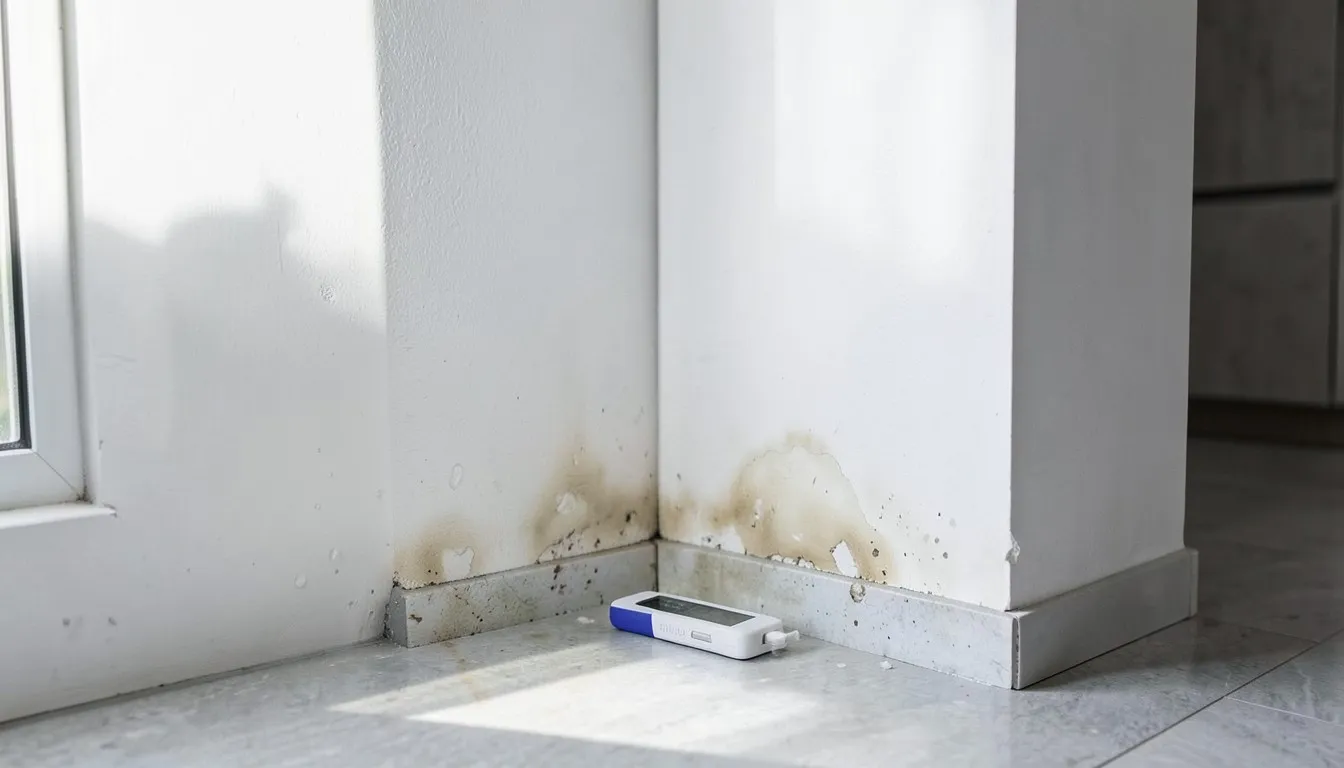
Active water damage compounds by the hour — a licensed AZ plumber is on call for Mesa right now.
Local plumbing data for Mesa, AZ
Seeing these conditions at your place in Mesa? A state-licensed plumber can confirm it over the phone — free, no obligation.
Pipe conditions in Mesa, AZ
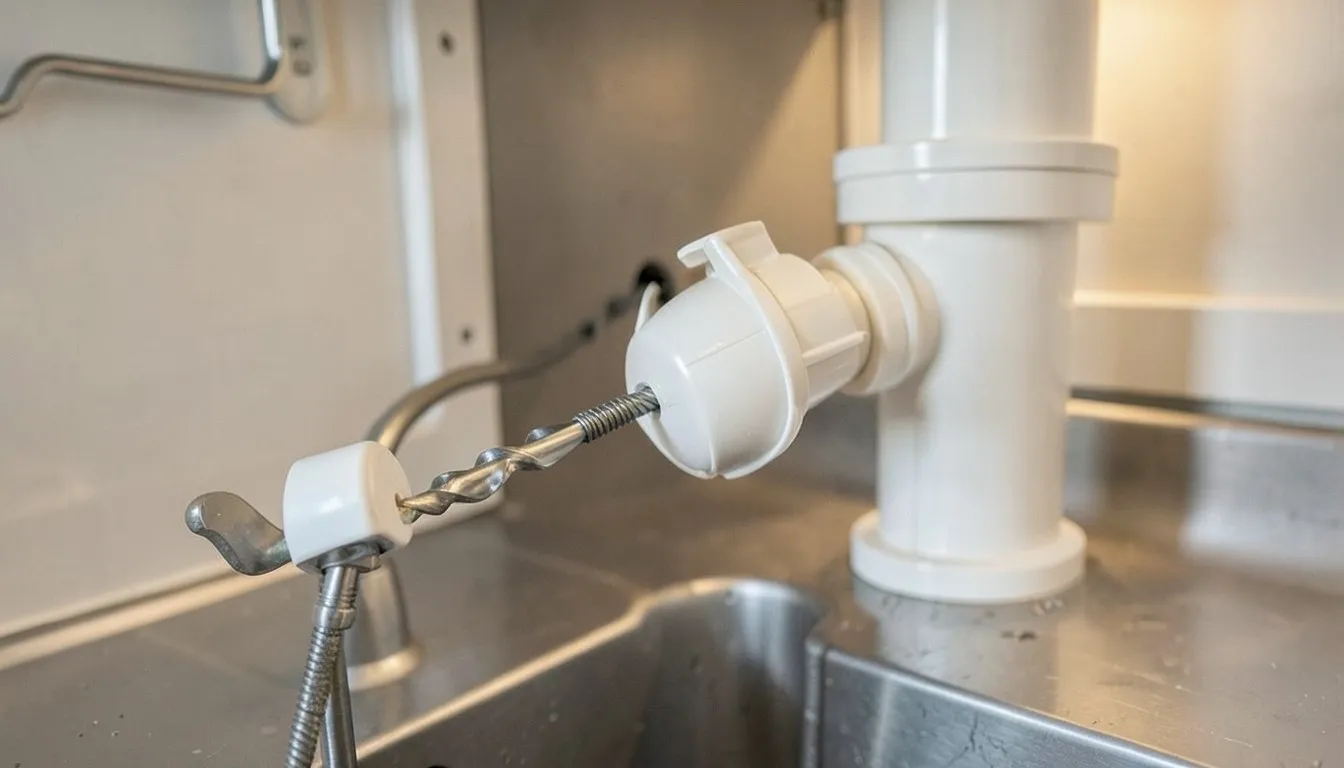
Drain cleaning in Mesa addresses two distinct problems: immediate blockage clearance (snake or jet, same day) and the underlying condition causing recurring clogs (root intrusion, scale buildup, pipe belly, or grease accumulation requiring treatment beyond a single service call). The right approach depends on the root cause — a cable machine clears the blockage without revealing what caused it; a camera scope adds $100–$200 but determines whether the drain will re-block in weeks or hold for years. AlertPlumber routes your request to an Arizona-licensed plumber who provides both options upfront.
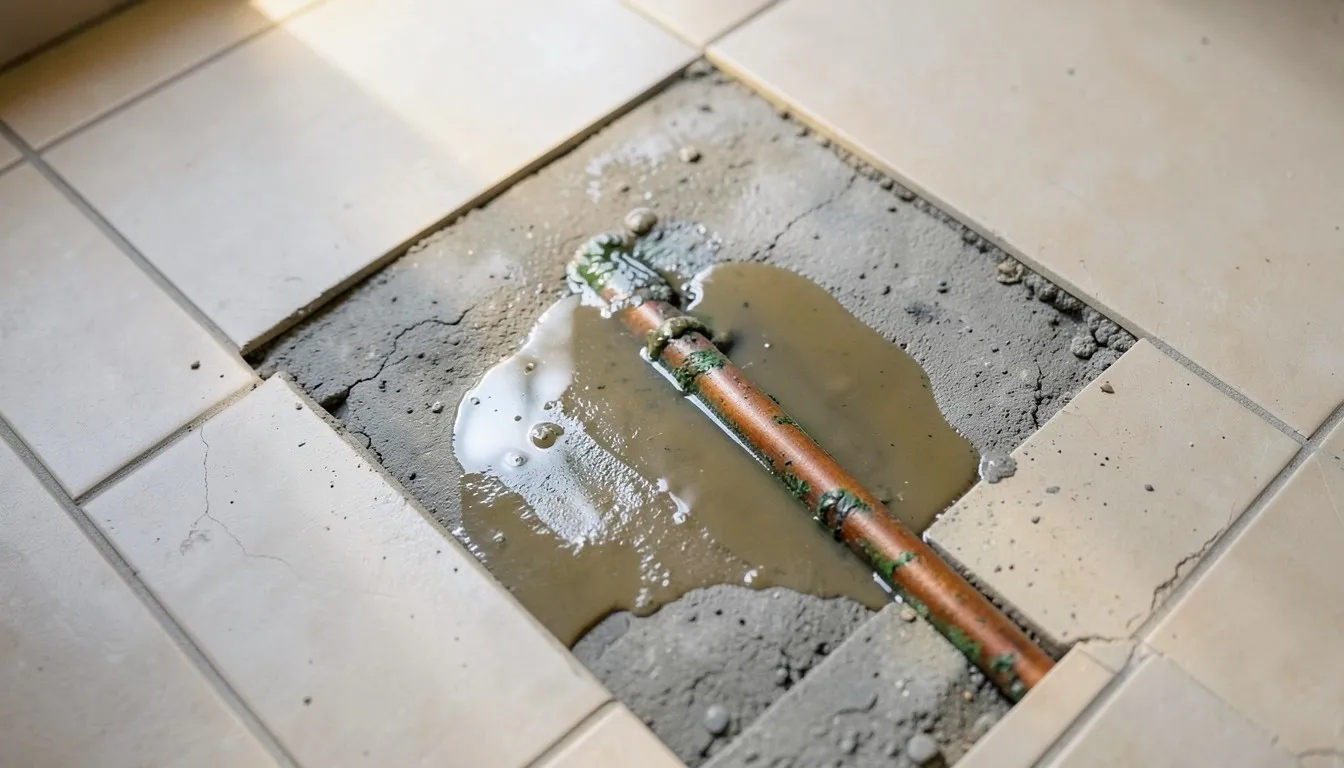
Post-war and modern-era construction in Mesa — median home age 38 years — frequently includes copper supply lines embedded in slab foundations, common in tract construction from the 1960s through the 1980s. Hard water accelerates pinhole corrosion from the exterior of slab-embedded copper; when a leak develops, access requires either epoxy lining through existing penetrations or controlled slab opening for section replacement.
Very hard water in Mesa is a primary driver of accelerated appliance failure: water heater anode rods exhaust in 2–3 years instead of 6–8, scale deposits at fixture connections form within months of installation, and tankless heat exchangers accumulate mineral buildup that can reduce lifespan by half without regular descaling. A softener or whole-house conditioner is strongly recommended alongside any appliance service call.
- Median home age
- 38 yrs
- Water hardness
- 17 gpg
- Frost line
- 0 in.
- Permit
- $155
A licensed AZ plumber reads these conditions the moment you describe the symptom.
What shapes plumbing demand in Mesa, AZ
CPVC becomes brittle in the 20–35-year range and snaps under thermal stress or incompatible pipe dopes. Early PEX fittings (pre-2010) may develop chloramine compatibility issues at 15–25 years. The 1980s–1990s housing stock in Mesa is entering its first wave of material-driven service calls — not from neglect, but from normal service-life progression.
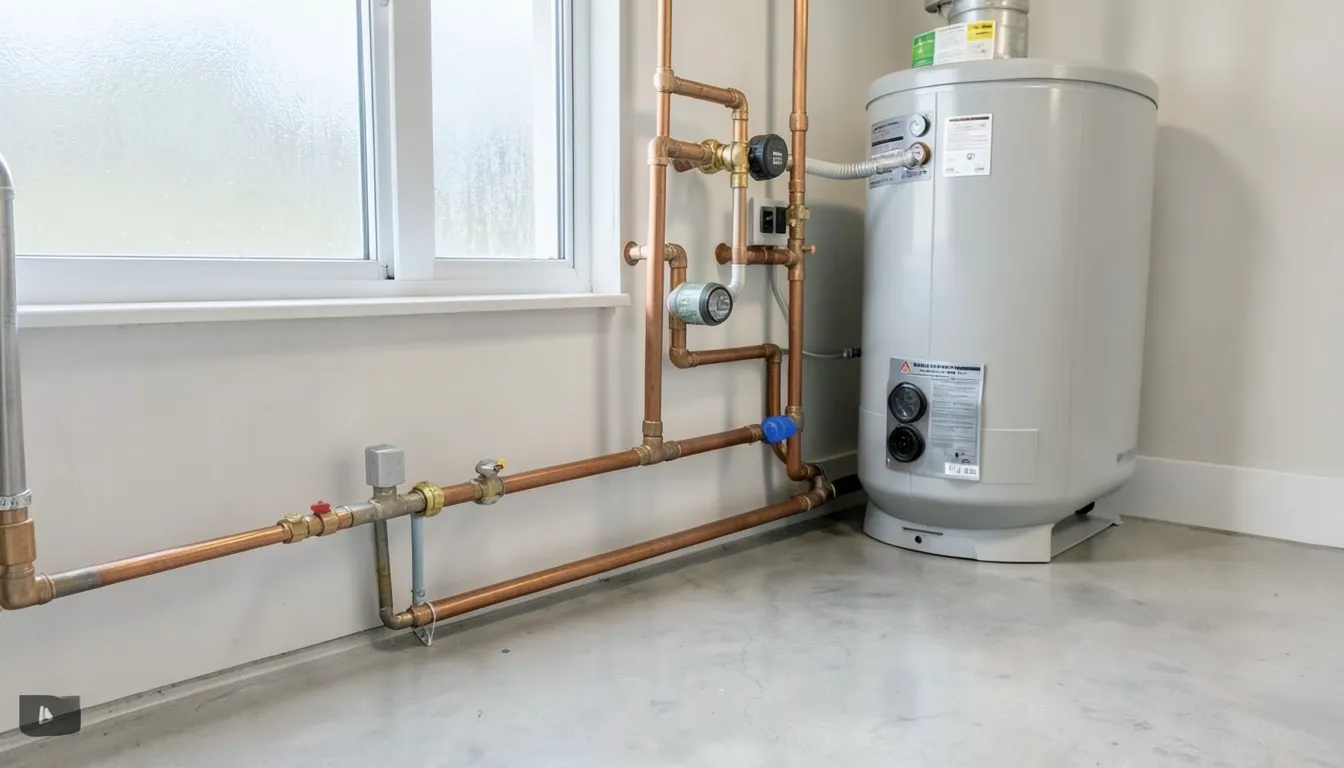
At 15–20+ GPG, calcium scale forces compressed equipment cycles in Mesa: tank heaters average 6–9 years vs. the 10–12-year national benchmark, and tankless units require annual descaling. Anode rods calcify within 12–18 months. Most plumbers here assess heater age against the local scale timeline — not the manufacturer's service life.
Summer heat above 95–115°F in Mesa keeps sediment in suspension inside tank water heaters — accelerating element failure instead of allowing sediment to settle and flush. Attic-mounted supply lines face diurnal thermal stress year-round. Root intrusion concentrates around irrigated landscaping rather than distributing evenly across the full sewer lateral path.
Active damage in Mesa: contain, assess, restore
Submit your Mesa address and describe the active damage — flooding, failed shutoff, burst or frozen line. AlertPlumber marks the request as priority and an AZ-licensed plumber confirms receipt within 15 minutes, without routing through a national call center.
The plumber arrives with a confirmed ETA, locates the nearest shutoff, and maps the damage boundary — affected lines, access points, material condition. You receive a verbal assessment of what requires immediate containment and what can wait until the full repair scope is confirmed.
You approve a written containment and repair scope before any work begins. Temporary isolation is priced separately from full restoration. No phase proceeds without your explicit sign-off.
Drain Cleaning cost calculator — Mesa
Pre-filled for drain cleaning in Mesa. Adjust the ZIP for a neighboring area, or change the service to compare. Calculator pulls from the city's scraped permit-fee + state plumber-density data.
Drain Cleaning in Mesa — the longer it runs, the more it costs.
Slow failures compound: soft pipe walls, root penetration, mineral buildup. A verified plumber calls back with a scope-first estimate before anything is dug up.
Drain Cleaning in Mesa — frequently asked
What does a Mesa drain cleaning call actually cost per fixture?
Mesa drain cleaning is priced per fixture, not per hour. A kitchen sink drain auger or bathroom lavatory clear typically runs $145–$285 — that's a hand-cabled job through the trap arm or branch line, 25–50 feet of 1/4" or 5/16" cable. A toilet auger (closet auger through the bowl, no pull-and-reset) is in the same $145–$285 band. Tub or shower drain access — pop the overflow plate, run a 5/16" cable through the P-trap and waste-and-overflow assembly — runs $185–$340 because of the extra disassembly time. Mainline cabling from a yard or stack cleanout, 75–100 feet of 3/4" sectional cable to clear a backed-up branch or short lateral, is $285–$485. A camera scope ($150–$280) is added when a clog recurs or the cable hits something it can't push through. Hydro-jetting is a separate, higher-tier service for grease-rings and scale that cabling can't restore — different scope, different pricing. AlertPlumber routes the call to a verified Mesa plumber who quotes by fixture type before dispatch.
Why do older Dobson Ranch and Mesa-core homes get recurring kitchen drain clogs while Eastmark stays clear?
It comes down to drain stack material and water hardness. Mesa's tap water — a Salt River Project and Central Arizona Project blend — runs roughly 17 grains per gallon, well into hard-water territory. In 1970s and early-1980s Dobson Ranch tracts, kitchen and bathroom waste stacks are cast iron. The interior wall of cast iron is rough cast and porous, and over four decades of 17 gpg water flowing through it, calcium carbonate scale builds up in concentric rings — narrowing a 2" kitchen waste branch down to 1" or less of effective flow. Add restaurant-style cooking grease and that ring catches every food particle that goes down. Eastmark, Las Sendas, and post-2000 Augusta Ranch homes use PVC drain stacks — slick interior wall, scale doesn't bond — so those drains clog mostly from hair and soap scum at the trap, which is a 30-minute hand-cable job. The cast-iron tracts often need cabling plus a camera scope to confirm the cabling restored the bore. AlertPlumber gets you a plumber who recognizes which pattern the address falls into.
What slow-drain symptoms in a Mesa home actually warrant a plumber call vs. a plunger?
Single-fixture slow drain — bathroom sink emptying in 30+ seconds, tub holding an inch after a shower — is usually hair and soap scum at the P-trap or just past it, and a plunger or a $20 hand auger from a hardware store handles it. Call a verified plumber when (1) two or more fixtures back up at the same time — sink gurgles when the toilet flushes, shower fills when the washer drains — that signals a branch or mainline clog past the individual trap; (2) sewer smell is coming up through a fixture, which means a dry trap or a venting issue, not a clog you can plunge; (3) the same fixture re-clogs within two to four weeks of clearing — that's scale narrowing common in Mesa cast iron, and it needs cabling plus a scope, not another plunger session; (4) water backs up through a floor drain or shower when you flush a toilet, which is a mainline event. AlertPlumber routes those four patterns to a Mesa plumber for diagnostic.
Cabling vs. auger vs. hydro-jet vs. camera scope — which does my Mesa drain need?
Hand auger or closet auger: a single sink, tub, or toilet that just stopped draining, with no history. 25-foot cable through the trap, $145–$285. Sectional cable machine (cabling, also called snaking): a fixture branch or short mainline run, 50–100 feet, for a hard blockage that the hand auger can't reach. $285–$485 for a mainline clear from a Mesa yard cleanout. Hydro-jetting: 3,500–4,000 PSI water cuts through grease rings, root intrusion, and the calcium-carbonate scale that's typical in Mesa's older cast-iron stacks — cabling alone won't restore the full bore on a scaled line. Camera scope: $150–$280, a push-camera through the cleanout to see what's actually inside the pipe. The decision tree: (1) first-time fixture clog, hand auger or cabling; (2) recurring clog at the same fixture, scope first to see if it's scale or a pipe-condition issue; (3) mainline backup, cable to clear, scope to confirm cause, jet if the scope shows scale or grease. AlertPlumber matches you with a plumber who carries all four.
Does my Arizona HO-3 policy cover drain cleaning in Mesa?
Standard Arizona HO-3 homeowners policies almost never cover drain cleaning itself — it's classified as routine maintenance, the same way servicing an A/C condenser is. What HO-3 sometimes covers is the resulting damage if a clog causes a sudden, accidental discharge of water — soaked drywall, ruined flooring, cabinet damage — and even that is subject to your deductible and the policy's water-damage exclusions. Sewer and drain backup is a separate endorsement; in Mesa it typically runs $50–$120 per year for $5,000–$10,000 of coverage and is worth carrying on any pre-1990 home with cast-iron stacks where a backup is a realistic event. If you do file a claim, document the cause with the plumber's camera footage and an itemized invoice — verbal diagnosis alone gets denied. Submit within 30 days of the event for fastest resolution. AlertPlumber routes you to a Mesa plumber who provides camera documentation as part of the standard scope when a claim is in play.
How long is a Mesa plumber on-site for typical drain work?
Single-fixture hand auger — kitchen sink, bathroom lav, tub overflow access — runs 30–60 minutes door to door, including the few minutes to set up drop cloths and put the trap back together. Toilet auger through the bowl is 30–45 minutes. A mainline cabling run from a yard or two-way cleanout, 75–100 feet of sectional cable, runs 60–120 minutes — longer if the cleanout is buried or has to be located first, which is common in 1970s Dobson Ranch tracts where cleanouts were sometimes covered by later landscaping. Adding a push-camera scope to document the clear adds 30–60 minutes. Hydro-jetting with pre-job scope is 2–4 hours and is a separate service tier. Mesa homes built before 1985 with cast-iron stacks add roughly 30 minutes because the older two-way cleanout fittings often need to be cleared of dried sealant before the cable goes in. The matched plumber confirms total time on arrival.
Do I need a permit for drain cleaning in Mesa?
No. Routine drain cleaning — cabling, augering, hydro-jetting, camera scope — is classified as maintenance, not construction, under the Arizona adoption of the International Plumbing Code § 707, so it doesn't trigger a Mesa permit. The $155 Mesa Development Services plumbing permit fee only kicks in when scope crosses into replacement or code-altering work — replacing a section of failed cast-iron stack, re-piping a fixture branch in Dobson Ranch, adding a cleanout where one doesn't exist (an IPC § 708 spacing-driven retrofit, often $400–$1,200 in older Mesa homes), or any work that changes the drain-waste-vent system as built. The verified plumber pulls the permit on those jobs and bundles the $155 fee into the written quote. Per AZ ROC license database, 2024, 3,247 active C-37 plumbing contractors are listed statewide. Drain cleaning by itself is permit-exempt across all 510,000-plus Mesa residents.
When does a Mesa branch-line clog escalate into a mainline call?
A branch line is the run from a fixture to where it joins the main building drain — kitchen sink to the kitchen waste stack, bathroom group to the bathroom stack. A branch clog clears at one fixture; you cable through the trap or a branch cleanout and you're done. A mainline clog is the building drain itself, the 3" or 4" line carrying everything to the lateral and out to the city sewer. Escalation signals: (1) more than one fixture is affected at the same time — toilet flush makes the shower gurgle, washer discharge backs up the kitchen sink; (2) lowest fixtures back up first — first-floor toilets, basement floor drains in the rare Mesa basement, ground-level shower; (3) cabling the branch doesn't fix it, or it re-clogs within days; (4) you can hear gurgling at the roof vent or smell sewer at multiple fixtures. At that point the plumber pulls the cleanout cap on the yard two-way (often near the front foundation in Mesa tracts) and runs a 3/4" sectional cable 75–100 feet toward the city tap. AlertPlumber routes the upgraded scope automatically.
Why do some Mesa homes need toilet augering more often than others?
It traces back to a 1990s and early-2000s low-flow toilet retrofit. When 1.6-gallon-per-flush toilets first came in to meet federal water-efficiency rules, Mesa — like a lot of SRP and CAP service-area cities running rebate programs to push household water use down — saw thousands of older 3.5 gpf and 5 gpf tanks swapped out for first-generation low-flows. The trouble was that early 1.6 gpf designs paired weak siphon-jet bowls with flush volumes that couldn't reliably move solids 40 feet down a 3" branch line, especially through the calcium-carbonate-narrowed cast-iron stacks already common in 1970s and 1980s Mesa tracts. Result: those specific retrofit toilets clog the trap-way two to four times a year, every year. Modern dual-flush 1.28 gpf and pressure-assist designs solved the bowl-mechanics problem, so Las Sendas and Eastmark homes with newer toilets rarely auger. If your Mesa toilet clogs more than twice a year and the wax ring or supply isn't the issue, it's usually the bowl design — and replacement is cheaper long-term than recurring auger calls. AlertPlumber matches a plumber who can quote both options.
What can I clear myself in Mesa, and when should I stop and call?
DIY-appropriate: a single bathroom sink or tub drain that's slow from hair and soap scum — a $15 hand-snake from any Mesa hardware store reaches 25 feet through the P-trap and pulls the clog. A toilet that won't flush solids — a flange plunger, the kind with the rubber sleeve, restores 80% of single-toilet clogs without a plumber. A kitchen sink that's slow but not standing — pull the trap, clean it manually, reinstall. Stop and call when: (1) the clog is past your reach with a hand snake — you're hitting something hard 25 feet in; (2) two or more fixtures are involved — that's a branch or mainline issue, hand tools don't reach; (3) you smell sewer gas or see water backing up through a floor drain — that's a venting or mainline event, not a fixture clog; (4) the same fixture clogs every two to six weeks — that's almost always Mesa cast-iron scale or a damaged section that needs scoping, and continued DIY just delays the diagnostic. Skip caustic chemical cleaners — they corrode the inside of the cast-iron stacks common in pre-1985 Mesa homes and damage the lead-and-oakum joints under older slab penetrations. AlertPlumber routes the call when DIY hits its limit.
The fix gets cheaper the sooner a plumber sees it.
Degradation problems compound quietly. Call now, or use the form below and a licensed Arizona plumber calls you back with a no-obligation estimate for the drain cleaning.
Request a drain cleaning callback in Mesa
In a meeting, with the kids, or just prefer not to hold? Drop your ZIP and number below. AlertPlumber routes your request to a verified plumber in your area — they’ll call you back directly.
- 1 Submit your info. ZIP, phone, and what kind of work you need.
- 2 AlertPlumber matches you with a verified plumber serving your area.
- 3 The plumber calls you back with a written estimate, no obligation.
Drain Cleaning in Mesa — catch it early
Degradation-driven failures worsen over time and cost more to fix the longer they run. A verified AZ plumber in Mesa diagnoses your specific condition and provides a written scope before any work begins.