
Emergency Water Heater Repair in Aurora, Colorado
Active water damage compounds by the hour — a licensed CO plumber is on call for Aurora right now.
Local plumbing data for Aurora, CO
Seeing these conditions at your place in Aurora? A state-licensed plumber can confirm it over the phone — free, no obligation.
Pipe conditions in Aurora, CO
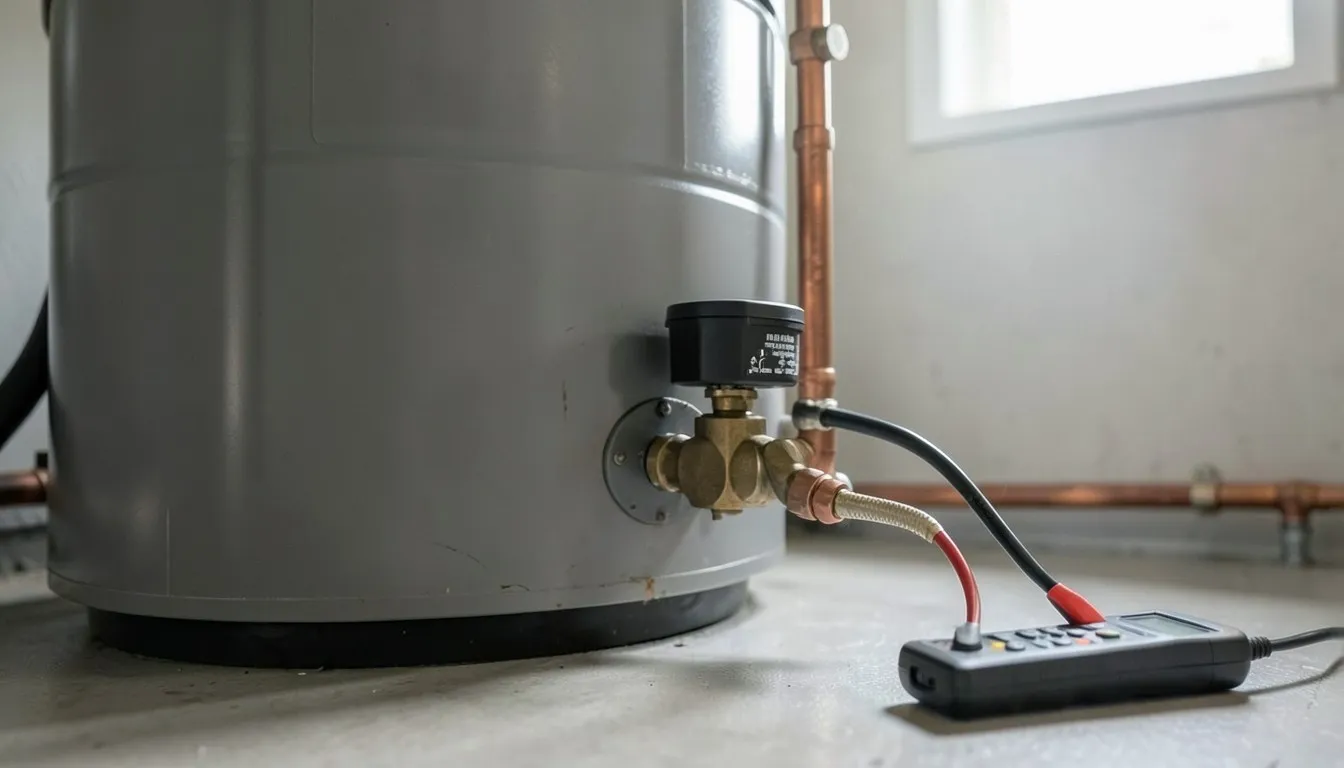
Water heater repair in Aurora starts with isolating the failure mode: a unit producing no hot water usually has a failed heating element or thermostat (electric) or a pilot or gas valve issue (gas); a unit leaking at the base has a failed tank — a repair is not possible and replacement is immediate. Sediment flushing and anode rod replacement extend the life of units under 10 years significantly; units over 12 years are typically beyond economic repair. AlertPlumber routes your request to a Colorado-licensed plumber who diagnoses before recommending repair vs. replacement. Freeze events and frost-depth requirements add pipe insulation, exterior faucet winterization, and burst-risk assessment to service calls in this climate.
Aurora's housing stock spans multiple construction eras — median home age 35 years — meaning pipe materials and failure modes vary significantly by neighborhood and building vintage. An inspection-led approach that confirms pipe material before recommending a service path is standard practice for mixed housing profiles.
Very hard water in Aurora is a primary driver of accelerated appliance failure: water heater anode rods exhaust in 2–3 years instead of 6–8, scale deposits at fixture connections form within months of installation, and tankless heat exchangers accumulate mineral buildup that can reduce lifespan by half without regular descaling. A softener or whole-house conditioner is strongly recommended alongside any appliance service call.
Frost line depth in Aurora means supply lines and outdoor plumbing must be installed below the freeze threshold — typically 36 — to prevent pipe burst during cold events. Exterior hose bibs, irrigation shutoffs, and any exposed pipe runs are the most common winterization service points in freeze-risk markets.

- Median home age
- 35 yrs
- Water hardness
- 12 gpg
- Frost line
- 36 in.
- Permit
- $58
A licensed CO plumber reads these conditions the moment you describe the symptom.
What shapes plumbing demand in Aurora, CO
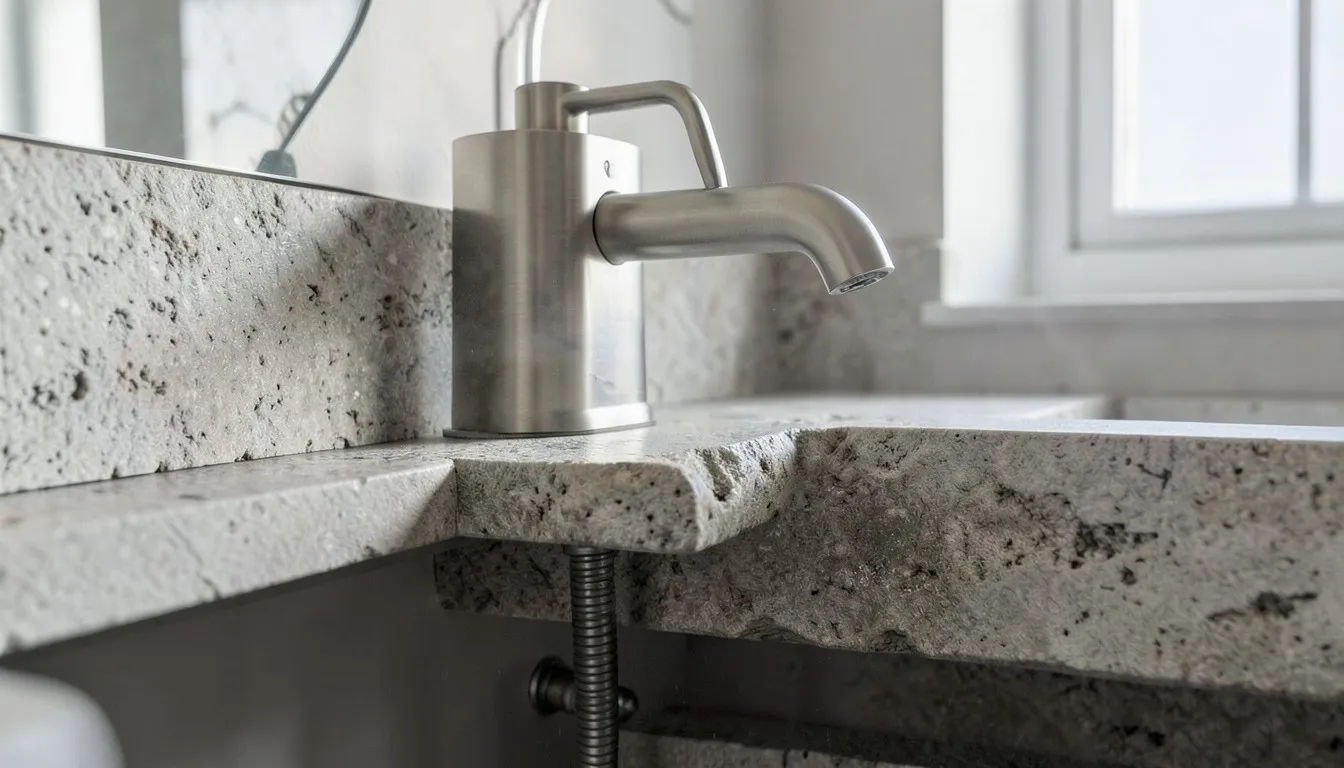
CPVC becomes brittle in the 20–35-year range and snaps under thermal stress or incompatible pipe dopes. Early PEX fittings (pre-2010) may develop chloramine compatibility issues at 15–25 years. The 1980s–1990s housing stock in Aurora is entering its first wave of material-driven service calls — not from neglect, but from normal service-life progression.
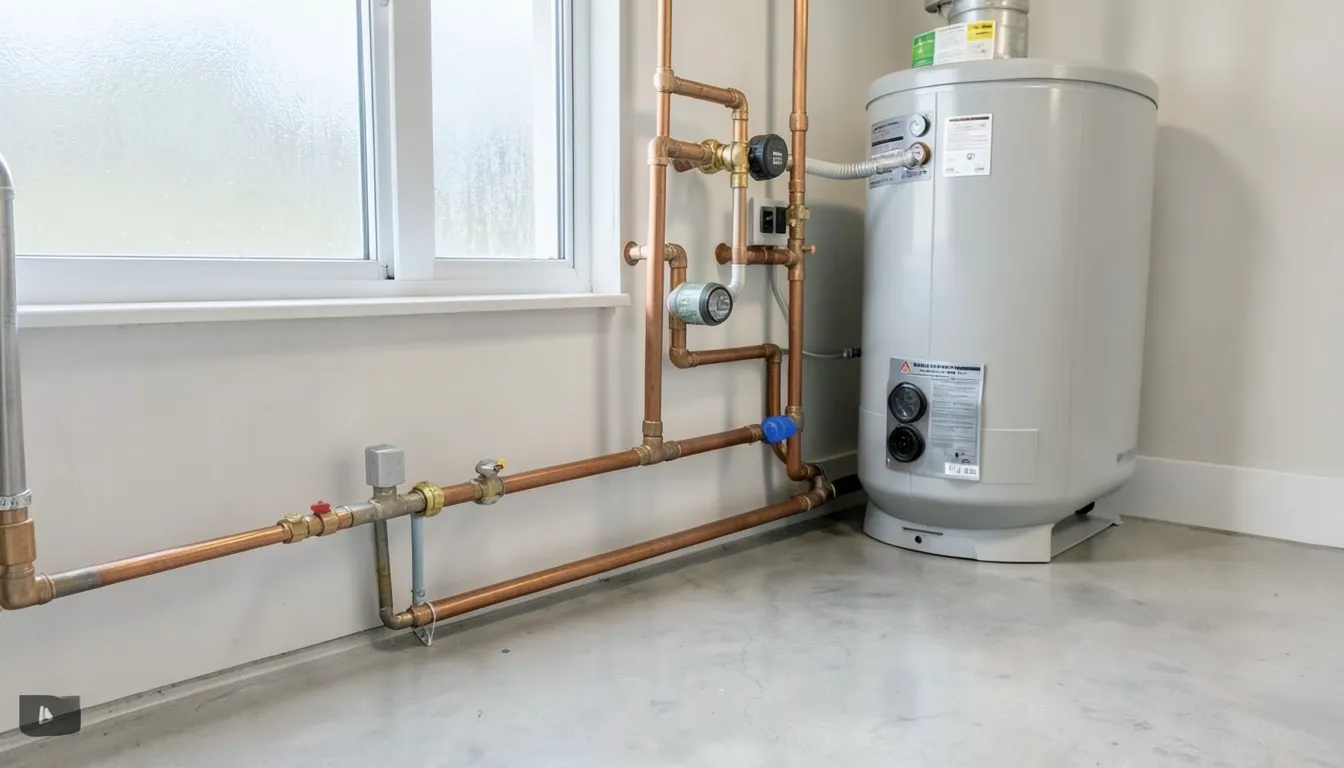
At 15–20+ GPG, calcium scale forces compressed equipment cycles in Aurora: tank heaters average 6–9 years vs. the 10–12-year national benchmark, and tankless units require annual descaling. Anode rods calcify within 12–18 months. Most plumbers here assess heater age against the local scale timeline — not the manufacturer's service life.
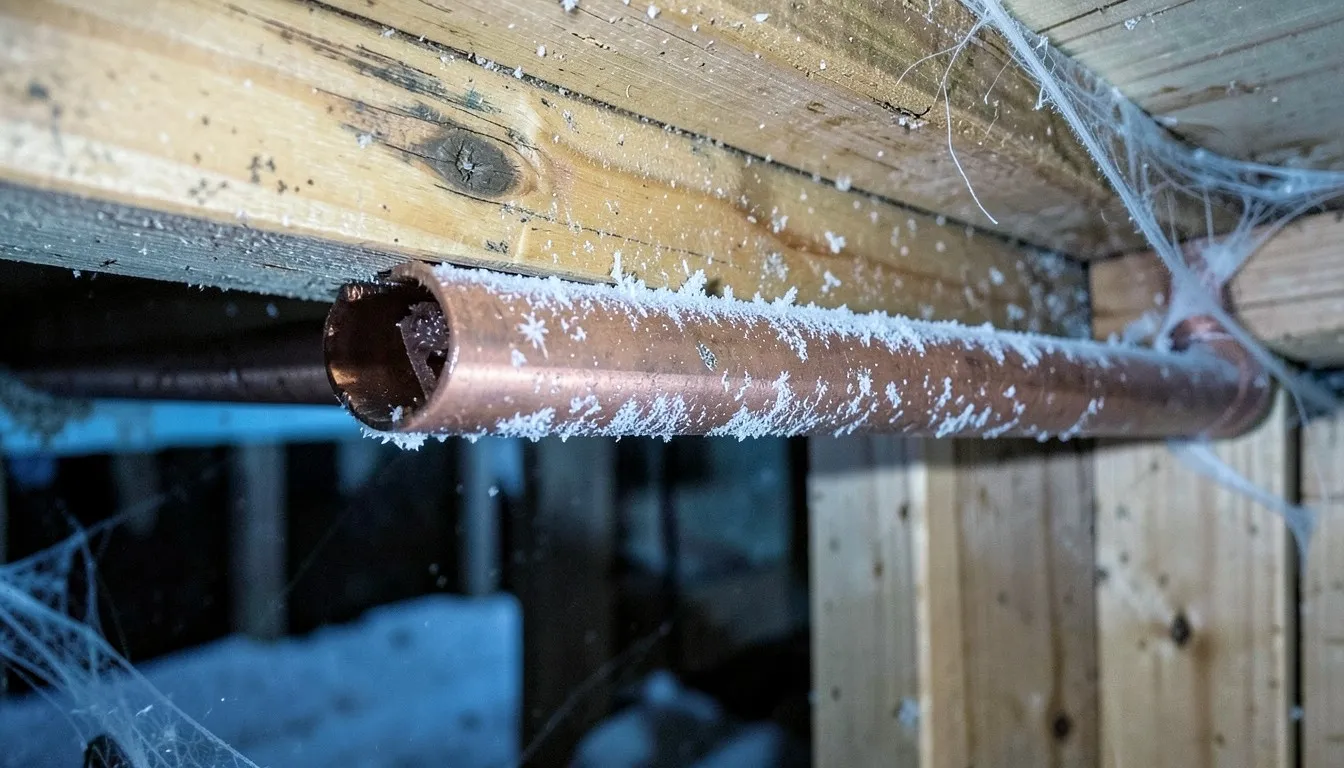
The primary surge in Aurora runs January–March, with a secondary wave at the spring thaw — when pipes that held through the freeze rupture as pressure is restored above 32°F. Scheduling competition peaks exactly when emergency calls are highest. Homeowners who wait for visible damage compete for the same limited plumber slots at the worst possible time.
Active damage in Aurora: contain, assess, restore
Submit your Aurora address and describe the active damage — flooding, failed shutoff, burst or frozen line. AlertPlumber marks the request as priority and a CO-licensed plumber confirms receipt within 15 minutes, without routing through a national call center.
The plumber arrives with a confirmed ETA, locates the nearest shutoff, and maps the damage boundary — affected lines, access points, material condition. You receive a verbal assessment of what requires immediate containment and what can wait until the full repair scope is confirmed.
You approve a written containment and repair scope before any work begins. Temporary isolation is priced separately from full restoration. No phase proceeds without your explicit sign-off.
Water Heater Repair cost calculator — Aurora
Pre-filled for water heater repair in Aurora. Adjust the ZIP for a neighboring area, or change the service to compare. Calculator pulls from the city's scraped permit-fee + state plumber-density data.
Water Heater Repair emergency in Aurora?
Every hour without a repair increases structural risk and remediation cost. A verified plumber calls back with an ETA and a written estimate before any work begins.
Water Heater Repair in Aurora — frequently asked
How much does water heater repair or replacement cost in Aurora, CO?
Aurora water heater work on the Denver east metro plains is priced by tank size, fuel type, and basement-install difficulty. Typical bands: thermocouple or anode rod replacement on a 40-gal gas tank $235–$385; gas valve replacement $385–$685; full 40-gal tank replacement (basement install standard in most Aurora sub-markets) $1,485–$2,485; 50-gal high-recovery for Saddle Rock or Tallyn's Reach larger homes $1,685–$2,885; tankless conversion in a Highline Villages basement retrofit $3,485–$5,885; expansion tank install (code-required on closed system) $185–$365. The $58 City of Aurora Building Division, 2024 plumbing permit attaches to all water-heater replacement scope. AlertPlumber routes to a Colorado DORA Plumbing Board, 2024-credentialed plumber.
Why does 12 gpg Aurora Reservoir trans-basin water shorten tank lifecycle to 5–7 years?
Three drivers specific to Aurora Water's source mix. (1) Carbonate-rich blend. Aurora Water, 2024 blends Aurora Reservoir, South Platte River, and Colorado River trans-basin diversions delivered to 386,261 east-metro residents at roughly 12 grains per gallon — USGS hardness classification: hard. (2) Sediment accumulation. 12 gpg trans-basin minerals precipitate out as scale on the tank bottom every heating cycle, building a layer that insulates the burner from the water above — efficiency drops, the tank cycles longer to reach setpoint, and the heat stress accelerates wear. (3) Anode rod consumption. The sacrificial anode rod in a 12 gpg environment is consumed in 3–5 years versus 5–7 in soft-water markets; once the anode is gone, the tank shell becomes the sacrificial element. National average tank life is 8–12 years; Aurora's trans-basin chemistry pulls that to 5–7. Annual flushing buys back ~1–2 years.
Why is the 157 freeze-day climate a factor for water heater install in Aurora?
Aurora averages 157 annual freeze days per NCEI, 2024 with the coldest stretch in January–February, and the freeze climate affects water-heater install three ways. (1) Basement install is standard. Unlike slab-state markets, almost all Aurora homes outside Saddle Rock and Tallyn's Reach feature full or daylight basements — the tank goes downstairs, protected from freeze exposure. (2) Cold-side inlet temperature. Mid-winter inlet water from buried mains can run 38–42°F, meaning the heater works harder to reach 120°F setpoint than in warm-climate markets — a 50-gal high-recovery makes sense in larger Saddle Rock homes. (3) Garage and crawlspace exposure. A small share of older Original Aurora housing has utility-room or garage installs; those need freeze-protection wraps on the supply and PRV/expansion runs. NWS Boulder, 2024 tracks the freeze cycles.
Are tank or tankless water heaters better for the Denver east metro plains?
Both work — choice depends on sub-market and household. Tank (40–50 gal) is the standard in Aurora basement installs for most Original Aurora pre-1940, Highline Villages 1970s-80s, and Anschutz Medical Campus area mid-century housing. Lower upfront cost ($1,485–$2,885), simpler install, easy to flush annually against 12 gpg trans-basin scale. Tankless makes sense when (a) the home is in Saddle Rock or Tallyn's Reach with modern gas service and adequate gas line sizing, (b) the basement utility room is space-constrained, or (c) the household uses concentrated hot water (multiple simultaneous showers + dishwasher). $3,485–$5,885 install in Aurora. Critical: tankless heat exchangers are more sensitive to 12 gpg scale than tank heat exchangers — a whole-house softener or annual descaling is mandatory to protect the warranty. The credentialed plumber sizes from CFH gas load and hot-water demand profile.
How is Aurora Water's billing structure affecting water heater replacement decisions?
Aurora Water bills at roughly $5.85 per 1,000 gallons (rate varies by tier and season) per Aurora Water, 2024. The billing structure interacts with water-heater decisions two ways. (1) Hidden leak cost. A pinhole leak on the tank inlet or T&P discharge can put 50–150 gallons/day to the floor — that's $10–$30/month in water alone plus potential structural drying. The credentialed plumber checks the expansion tank, T&P valve, and inlet/outlet fittings on every service call. (2) High-efficiency payback. An ENERGY STAR-rated tank or condensing tankless on the 12 gpg trans-basin water pays back faster in Aurora than in soft-water markets because annual gas consumption per gallon delivered is higher when the heat exchanger is fighting scale. The credentialed plumber documents efficiency rating on the install for utility-rebate eligibility.
How fast can an Aurora plumber arrive for an emergency water heater failure?
Most Aurora plumbers in the AlertPlumber network respond within 1–3 hours during business hours and 2–4 hours overnight for an emergency water heater failure (active leak, no hot water with active rupture, gas smell). ETA depends on sub-market — Original Aurora, the Anschutz Medical Campus area, and Highline Villages dispatch faster than outer Tallyn's Reach near E-470 because crew density tracks the older I-225 corridor. Same-day basement replacement on a 40–50 gal tank is the typical scope on a verified mid-week call. Triage protocol: shut off the gas valve (or electrical breaker for electric tanks), shut off the cold-water supply, and call. If gas smell is present, leave the home and call the gas utility before any plumber routing.
Do I need a permit for water heater replacement in Aurora?
Yes. Water heater replacement attaches to the $58 City of Aurora Building Division plumbing permit and the verified plumber pulls it on your behalf. Pure repair (anode rod, thermocouple, gas valve replacement) does NOT attach — that's maintenance under IPC § 707. Tank-to-tankless conversion, fuel-source change, location relocation, or any new gas line work all require the permit and a close-out inspection. The permit covers code compliance on the T&P discharge routing, the expansion tank (mandatory on closed systems), the seismic strapping where applicable, and the venting. 4,200 residential plumbing-touching permits issued by the City of Aurora Building Division, 2024 includes a meaningful share of water heater replacements.
Does the Anschutz Medical Campus area density change install scheduling?
Yes. The Anschutz Medical Campus / Fitzsimons redevelopment zone is the densest plumbing market in Aurora, with mixed mid-century single-family next to 2010s+ infill apartments and student/medical housing. Three scheduling implications. (1) Mid-week dispatch is faster than peak weekend because student/medical professional turnover concentrates hot-water failures around lease cycles. (2) Apartment vertical-stack work requires coordination with the building manager — the credentialed plumber will schedule the shutoff window with the property and may need to coordinate with the unit above and below for vent compliance. (3) Older mid-century single-family in the area sometimes has tight basement utility rooms or garage-converted-to-utility configurations that affect tank size selection — 40 gal often fits where 50 gal won't.
How long does an Aurora water heater install or repair take?
Time-on-site bands by scope on the Denver east metro plains. Anode rod replacement: 60–90 minutes including drain, replacement, refill, leak check. Thermocouple or gas valve repair: 90–150 minutes. Annual flush against 12 gpg trans-basin scale: 60–90 minutes — 1–2 year recommended interval. Like-for-like 40–50 gal tank replacement in a Highline Villages basement install: 3–4 hours including code compliance updates (expansion tank, T&P routing, seismic strap). Tankless conversion: 6–10 hours including gas line resize where required, venting, condensate routing. Apartment vertical-stack install in the Anschutz Medical Campus area: 4–6 hours, scheduled off-peak with building coordination. Permit inspection schedules separately with the City of Aurora Building Division.
Are AlertPlumber-matched plumbers verified for water heater work in Aurora, CO?
The partner network requires every plumber routed through AlertPlumber in Aurora to maintain active Colorado state-credentialed status. Colorado DORA Plumbing Board, 2024 lists 8,400 active CO DORA credentials statewide. AlertPlumber doesn't independently verify each plumber on a per-call basis — homeowners are encouraged to confirm credentials with the state board directly via the link above before authorizing any work. Aurora Water is a separate municipal utility from Denver Water, so make sure the contractor knows the specific east-metro service-area protocols including the expansion-tank requirement on closed systems served by Aurora Water's PRV-equipped service.
Will my Colorado homeowners insurance cover water heater damage in Aurora?
Standard Colorado HO-3 policies typically cover "sudden and accidental" water damage from a water heater rupture — drywall, flooring, contents, structural drying, mold remediation — subject to deductible. They do NOT cover the heater replacement itself (that's classified as wear/maintenance) and they do NOT cover gradual leaks the carrier classifies as deferred maintenance. Documentation is the key: ask the Colorado DORA Plumbing Board–credentialed plumber for the failure-mode invoice (tank shell perforation from 12 gpg trans-basin scale, T&P valve failure, gas valve failure, expansion tank rupture). Verbal diagnoses get denied. File within 30 days. Most Colorado carriers also recommend a water-leak sensor near the basement tank — Original Aurora and Highline Villages basement installs are the highest-payback spots given trans-basin chemistry and pre-1990 housing stock.
Does my Aurora neighborhood's housing stock change the water heater approach?
Yes — five distinct Aurora sub-markets, each with a different water-heater profile. Original Aurora (pre-1940 East Colfax core). Basement install standard, 40 gal typical, some galvanized inlet/outlet retrofit needed. Highline Villages (1970s-80s tract along Highline Canal corridor). Basement install, 40–50 gal, code-compliant expansion tank often missing — verified at replacement. Anschutz Medical Campus area (Fitzsimons redevelopment). Mixed mid-century basement single-family + 2010s+ apartment vertical-stack — coordination dependent. Saddle Rock (1990s-2000s SE Aurora master-planned). Larger homes, 50 gal high-recovery or tankless makes sense; some slab-on-grade product needs garage/utility-room install. Tallyn's Reach (2000s+ master-planned near E-470). Modern utility rooms, tankless viable on adequate gas service. 386,261 residents per U.S. Census Bureau, 2024.
Sixty seconds from now, a plumber can be working your problem.
Call and talk to dispatch, or put your number in the form below — a licensed Colorado plumber calls you back about the water heater repair and gives a written estimate by phone.
Request a water heater repair callback in Aurora
In a meeting, with the kids, or just prefer not to hold? Drop your ZIP and number below. AlertPlumber routes your request to a verified plumber in your area — they’ll call you back directly.
- 1 Submit your info. ZIP, phone, and what kind of work you need.
- 2 AlertPlumber matches you with a verified plumber serving your area.
- 3 The plumber calls you back with a written estimate, no obligation.
Water Heater Repair in Aurora — fast response
Acute plumbing failures cannot wait. AlertPlumber has verified Colorado plumbers available for water heater repair in Aurora — call now or submit the form above for rapid callback.