
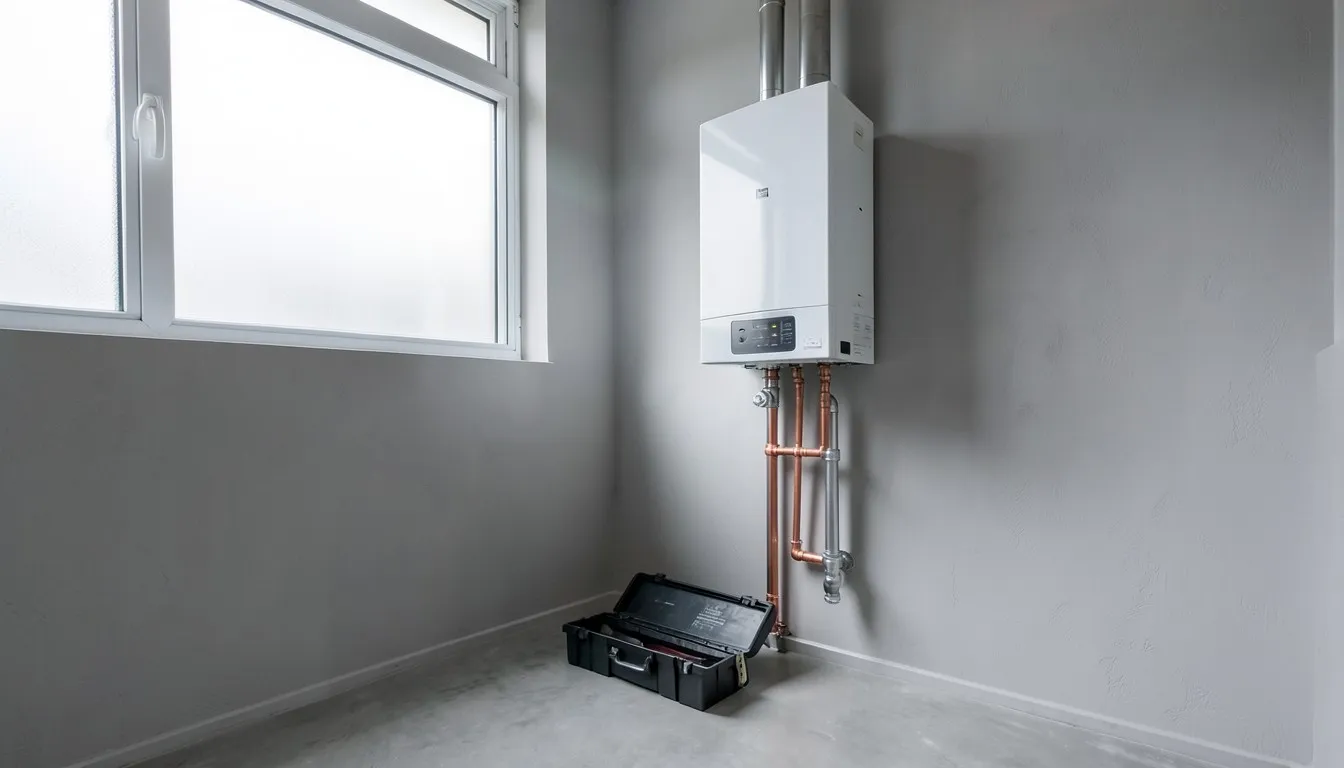
Tankless Water Heater Installation in Clarksville, Tennessee
Tankless Water Heater Installation in Clarksville, Tennessee installs gas or electric tankless water heaters with proper venting. Local conditions in Clarksville: water measured at 11 gpg, a 12 in frost line and a median home age of 35 years.
Permitted, inspected, documented — Clarksville work done right the first time by a licensed TN plumber.
What does the local plumbing data show for Clarksville, TN?
Seeing these conditions at your place in Clarksville? A state-licensed plumber can confirm it over the phone — free, no obligation.
What are the pipe conditions in Clarksville, TN?
Tankless water heater installation in Clarksville requires matching the unit's BTU capacity to the home's peak simultaneous demand — undersized units produce cold sandwiches at full hot draw. Hard water markets require an upstream softener or scale inhibitor to protect the heat exchanger; without it, mineral buildup cuts heat-exchanger life by 30–50%. Gas-powered units need a dedicated large-diameter gas line; electric units require significant electrical panel capacity. AlertPlumber routes your request to a Tennessee-licensed plumber for a load calculation before any unit is specified.
Clarksville's housing stock spans multiple construction eras — median home age 35 years — meaning pipe materials and failure modes vary significantly by neighborhood and building vintage. An inspection-led approach that confirms pipe material before recommending a service path is standard practice for mixed housing profiles.
Hard water in Clarksville accelerates scale buildup inside water heater tanks, on heating elements, and at fixture connections. Sediment accumulation in tank heaters reduces efficiency and shortens element life; visible deposits at aerators and showerheads are an early indicator. A licensed plumber can assess whether a water softener or conditioner is appropriate for the home's service configuration.
- Median home age
- 35 yrs
- Water hardness
- 11 gpg
- Frost line
- 12 in
- Permit
- $110
A licensed TN plumber reads these conditions the moment you describe the symptom.
What shapes plumbing demand in Clarksville, TN?
CPVC becomes brittle in the 20–35-year range and snaps under thermal stress or incompatible pipe dopes. Early PEX fittings (pre-2010) may develop chloramine compatibility issues at 15–25 years. The 1980s–1990s housing stock in Clarksville is entering its first wave of material-driven service calls — not from neglect, but from normal service-life progression.
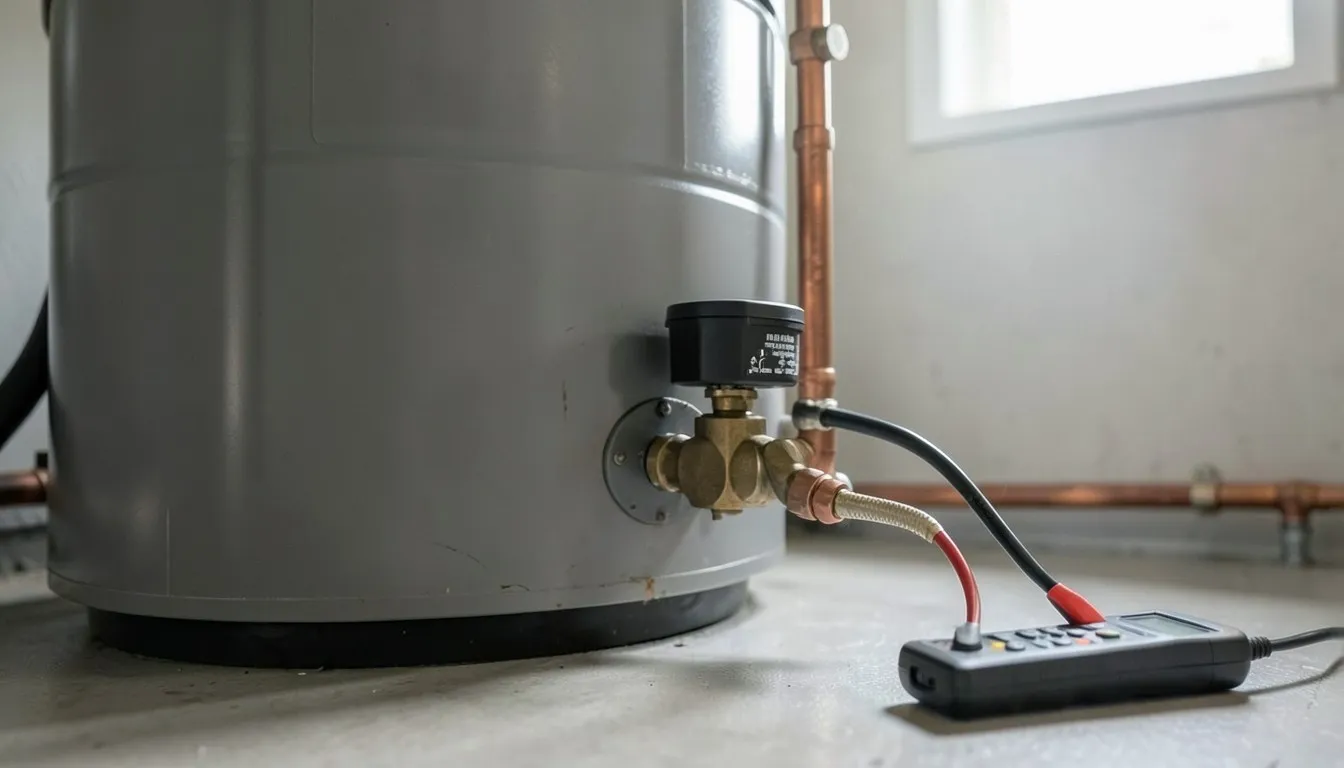
8–14 GPG shortens water heater service life to 8–11 years in Clarksville and drives rolling maintenance demand at aerators, shower cartridges, and heat exchanger ports. Annual flushing prevents premature failure; skipped maintenance cycles push units toward early replacement. Scale-related calls represent a significant share of the annual service workload here.
Without a hard freeze season, demand in Clarksville distributes evenly through the year. Maintenance-driven categories dominate: end-of-life water heater replacement, root intrusion clearing, and fixture repair. Deferred maintenance surfaces gradually as partial failures rather than acute winter emergencies — which means issues compound silently until they become a larger job.
How does permit-required work run in Clarksville, application through certificate?
A Tennessee-licensed contractor prepares the permit application — drawings, specifications, contractor license number — and submits it to the Clarksville building department. Issuance typically takes 3–10 business days. No construction begins until the permit is in hand.
Once Clarksville issues the permit, the contractor notifies affected utilities — gas, water, electrical — as required by the permit scope. Work follows the approved drawings; any scope change requires an amended permit before that portion starts.
The contractor schedules the final inspection with the Clarksville building department inspector. After sign-off, a certificate of completion is issued. All permit documentation is filed with the city; you receive copies for home records and future property disclosure.
Tankless Water Heater Installation cost calculator — Clarksville
Pre-filled for tankless water heater installation in Clarksville. Adjust the ZIP for a neighboring area, or change the service to compare. Calculator pulls from the city's scraped permit-fee + state plumber-density data.

Ready to move forward on tankless water heater installation in Clarksville?
Lead times for equipment and scheduling vary by season. A verified plumber calls back with availability and a written estimate — locking in timing before demand peaks.
What else do people ask about tankless water heater installation in Clarksville?
How much does tankless water heater installation cost in Clarksville, TN?
Tankless installation in Clarksville typically runs $2,250–$4,950 (national $2,500–$5,500 adjusted roughly 10% below national average). The TN TDCI permit floor is $110. Gas-line upsize and new venting add cost when swapping from a tank.
Gas or electric tankless for Clarksville?
Gas tankless handles whole-home demand more economically in Clarksville. Electric suits ADUs and point-of-use. Confirm gas-line capacity (3/4" minimum) with the Tennessee plumber.
Do I need a permit for tankless installation in Clarksville?
Yes. Clarksville requires a TN TDCI permit (floor $110) for any water-heater swap. Gas-line and venting changes also fall under the permit. The matched plumber pulls it on your behalf.
How does Clarksville water quality affect a tankless unit?
Clarksville water is 11 gpg. Hard enough to accumulate scale. Annual descaling flush and an inline filter protect the heat exchanger.
How fast can a tankless installer arrive in Clarksville?
Tankless is scheduled work — most AlertPlumber-matched plumbers in Clarksville book within 2–5 business days. If your existing tank failed and you need hot water sooner, the plumber can often expedite or arrange a temporary solution.
Are there freeze concerns for Clarksville tankless heaters?
Clarksville sees ~25 cold days/yr with 12" frost — exterior-mount units are viable with the unit's built-in freeze protection on a dedicated circuit.
Will my existing gas line and venting work for tankless in Clarksville?
Clarksville's median home age is 35 years (1980s-2000s PVC). Pre-1990 homes often need 1/2" gas branches upsized to 3/4" and B-vent replaced with Category III stainless or PVC concentric venting. The plumber assesses both on the quote visit.
What's the payback period for going tankless in Clarksville?
Tankless units run 22–34% more efficiently than 50-gallon tanks. Payback in Clarksville is typically 10–14 years. The ~20-year service life usually outlasts the payback window.
What venting does tankless installation require in Clarksville?
Condensing tankless uses direct-vent through Schedule 40 PVC or polypropylene to an exterior wall — no chimney needed. TN TDCI code requires 12" clearance from windows/doors and 36" from forced-air intakes. Power-vent (non-condensing) uses Category III stainless.
Are AlertPlumber-matched tankless installers verified in TN?
Yes. Every plumber matched through AlertPlumber for Clarksville tankless work holds an active TN TDCI license. Many also hold manufacturer certifications (Rinnai, Navien, Rheem) required for full warranty coverage.
A written quote costs you nothing. Guessing costs you the job.
The form below takes under a minute — a licensed Tennessee plumber calls back, scopes the tankless water heater installation, and quotes it in writing before anyone rolls a truck.
Need a tankless water heater installation callback in Clarksville?
In a meeting, with the kids, or just prefer not to hold? Drop your ZIP and number below. AlertPlumber routes your request to a verified plumber in your area — they’ll call you back directly.
- 1 Submit your info. ZIP, phone, and what kind of work you need.
- 2 AlertPlumber matches you with a verified plumber serving your area.
- 3 The plumber calls you back with a written estimate, no obligation.
Tankless Water Heater Installation in Clarksville — scope and schedule
AlertPlumber connects you with a verified TN plumber for tankless water heater installation in Clarksville. Written estimate, permit coordination, and no obligation until you approve the quote.