
Tankless Water Heater
An on-demand water heater that heats water directly as it flows through the unit, with no storage tank — delivering hot water only when needed.
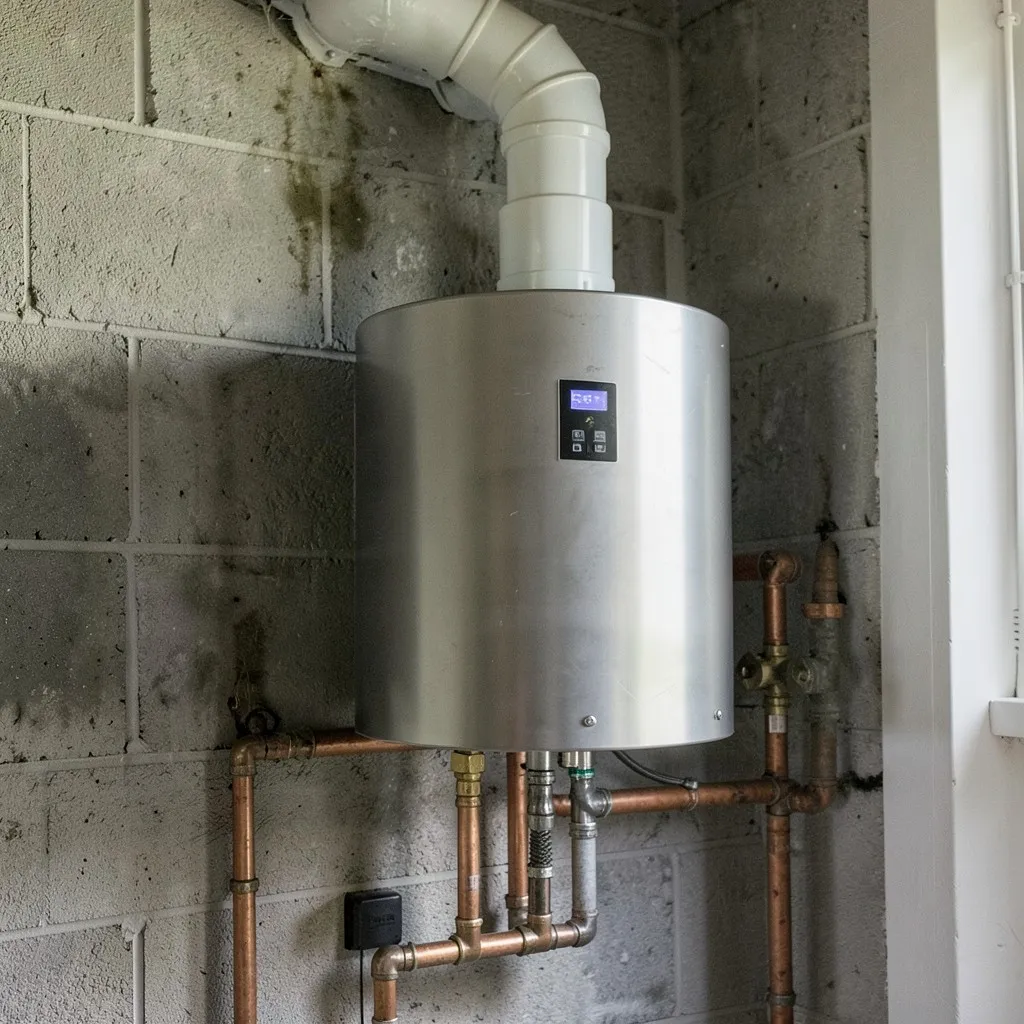
A tankless water heater (also called an on-demand or instantaneous water heater) heats water directly as it flows through the unit rather than storing a pre-heated supply in a tank. When you open a hot-water tap, a flow sensor activates a gas burner or electric heating element that heats the water in seconds — with no standby heat loss.
How does a tankless water heater work?
Cold water enters the unit, passes over a heat exchanger powered by gas burners or electric coils, and exits at the set temperature (typically 110–130 °F). A properly sized unit can deliver 2–5 gallons per minute continuously. Gas-fired tankless heaters have significantly higher flow rates than electric models and are the standard choice for whole-house applications.
What are the advantages over tank water heaters?
- Energy savings: 24–34% more efficient than tank models for homes using under 41 gallons/day (U.S. DOE). The standby heat loss from a 40–50 gal tank can cost $100–$200/year in wasted energy.
- Unlimited hot water: no tank to run out of — useful for large households or back-to-back showers.
- Longer lifespan: 20+ years vs. 8–12 years for a tank unit.
- Space savings: wall-mounted, about the size of a carry-on suitcase.
What are the limitations of a tankless water heater?
A single unit may struggle when multiple fixtures run simultaneously (showering + dishwasher + laundry). The fix is either a larger-capacity unit or two units in parallel. Electric tankless heaters require significant amperage — often a panel upgrade — making gas models preferable in most whole-house retrofits.
What does installation cost?
Installing a gas tankless water heater runs $1,000–$3,500 installed, including venting and gas line work. Electric units cost $800–$1,500 installed but may require an additional $500–$1,500 panel upgrade. Despite higher upfront cost, most homeowners recoup the difference within 6–10 years through energy savings.
What maintenance does a tankless water heater need?
In hard-water areas, scale buildup on the heat exchanger is the #1 cause of premature failure. Annual descaling (flushing with white vinegar) keeps efficiency high and extends service life. A water softener upstream of the heater dramatically reduces maintenance needs.
Researching the term is one thing — hiring for it is another. See tankless water heater installation services for scope, timelines, and what drives the price, or call (888) 530-4445 for a no-cost estimate.
For the full picture — materials, process, timelines and what drives the cost — read Tankless Water Heater Installation: The Complete Guide.
What related terms should you know?
What sources back this up?
Need a verified plumber for tankless water heater installation?
AlertPlumber matches you with a licensed plumber for tankless water heater installation. Written estimate before any work begins.