
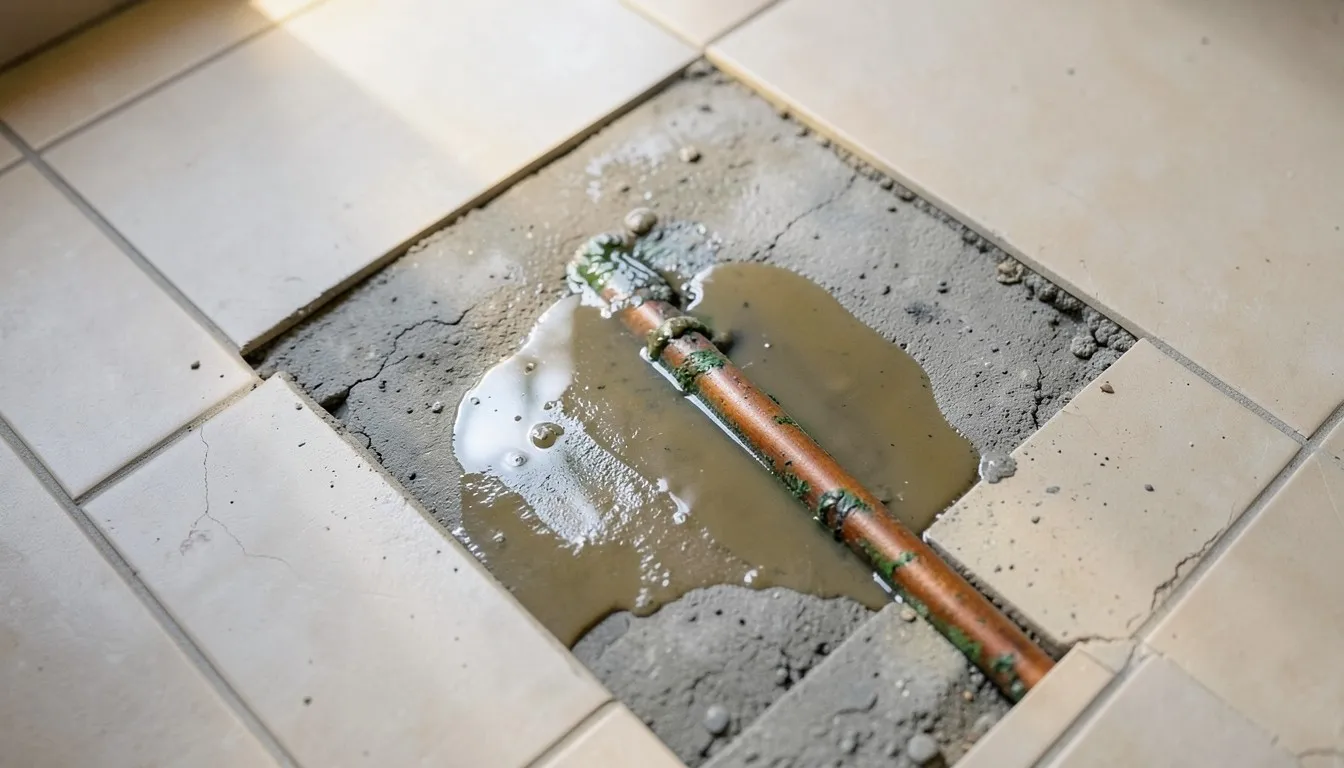
Emergency Slab Leak Repair in Sugar Land, Texas
Slab Leak Repair in Sugar Land, Texas detects and repairs leaks in pipes beneath the concrete slab foundation. Local conditions in Sugar Land: water measured at 7 gpg, a 1 in frost line and a median home age of 30 years.
Camera first, quote second — know exactly what's wrong in your Sugar Land home before you approve a dollar.
Is slab leak repair in Sugar Land, TX the right job?
- Burst Pipe Repair in Sugar Land
- Water is spraying or leaking from a visibly split pipe, and the damaged section needs repair.
- Frozen Pipe Repair in Sugar Land
- A tap has stopped flowing in freezing weather, and a frozen pipe needs to be checked and thawed.
- Water Line Repair in Sugar Land
- Low pressure or water pooling between the meter and the house may point to an incoming water line that needs repair.
- Leak Detection in Sugar Land
- Water is disappearing, a meter keeps moving with taps off, or damp spots keep returning, and the leak's location is unclear.
Who do I call for a slab leak in Sugar Land?
A plumber who does leak detection and slab leak repair. In Sugar Land, as anywhere, ask whether they locate the leak with detection equipment before any concrete is opened. It is urgent when water is coming up through the floor or the leak is near electrical outlets or appliances.
What does the local plumbing data show for Sugar Land, TX?
Seeing these conditions at your place in Sugar Land? Describe them on the call to a state-licensed local plumber — free, no obligation.
What are the pipe conditions in Sugar Land, TX?
Slab leaks form when copper supply lines embedded in the concrete foundation develop pinholes from electrochemical corrosion, high-velocity water erosion, or slab movement. Sugar Land homes built during the 1960s–1980s on post-tensioned slabs face the highest slab-leak risk — copper installed at original construction is approaching or past the 50-year corrosion window. Early signs include warm or wet spots on the floor, unexplained water bill spikes, and the sound of running water when all fixtures are closed. AlertPlumber routes your call to an independent Texas-licensed plumber — ask for acoustic leak location before any slab cutting begins. Persistent marine moisture and seasonal dampness drive above-average demand for leak detection and sump pump service in this region.
Sugar Land's housing stock spans multiple construction eras — median home age 30 years — meaning pipe materials and failure modes vary significantly by neighborhood and building vintage. An inspection-led approach that confirms pipe material before recommending a service path is standard practice for mixed housing profiles. Homes of other eras in Sugar Land may have galvanized pipe, copper pipe or polybutylene supply lines instead; ask the plumber which your home has.
Hard water in Sugar Land accelerates scale buildup inside water heater tanks, on heating elements, and at fixture connections. Sediment accumulation in tank heaters reduces efficiency and shortens element life; visible deposits at aerators and showerheads are an early indicator. Ask a licensed plumber to assess whether a water softener or conditioner is appropriate for the home's service configuration.
- Median home age
- 30 yrs
- Water hardness
- 7 gpg
- Frost line
- 1 in
- Permit
- City fee schedule
Census housing age, Sugar Land city, Texas: median year built 1994; 2.4% of homes built before 1960, 13% before 1980. Source: U.S. Census Bureau, ACS 2020–2024 5-year estimates, tables B25034 and B25035, read 2026-09-30.
Mention these conditions when you describe the symptom to the TX plumber you reach.
What shapes plumbing demand in Sugar Land, TX?
CPVC becomes brittle in the 20–35-year range and snaps under thermal stress or incompatible pipe dopes. Early PEX fittings (pre-2010) may develop chloramine compatibility issues at 15–25 years. The 1980s–1990s housing stock in Sugar Land is entering its first wave of material-driven service calls — not from neglect, but from normal service-life progression.
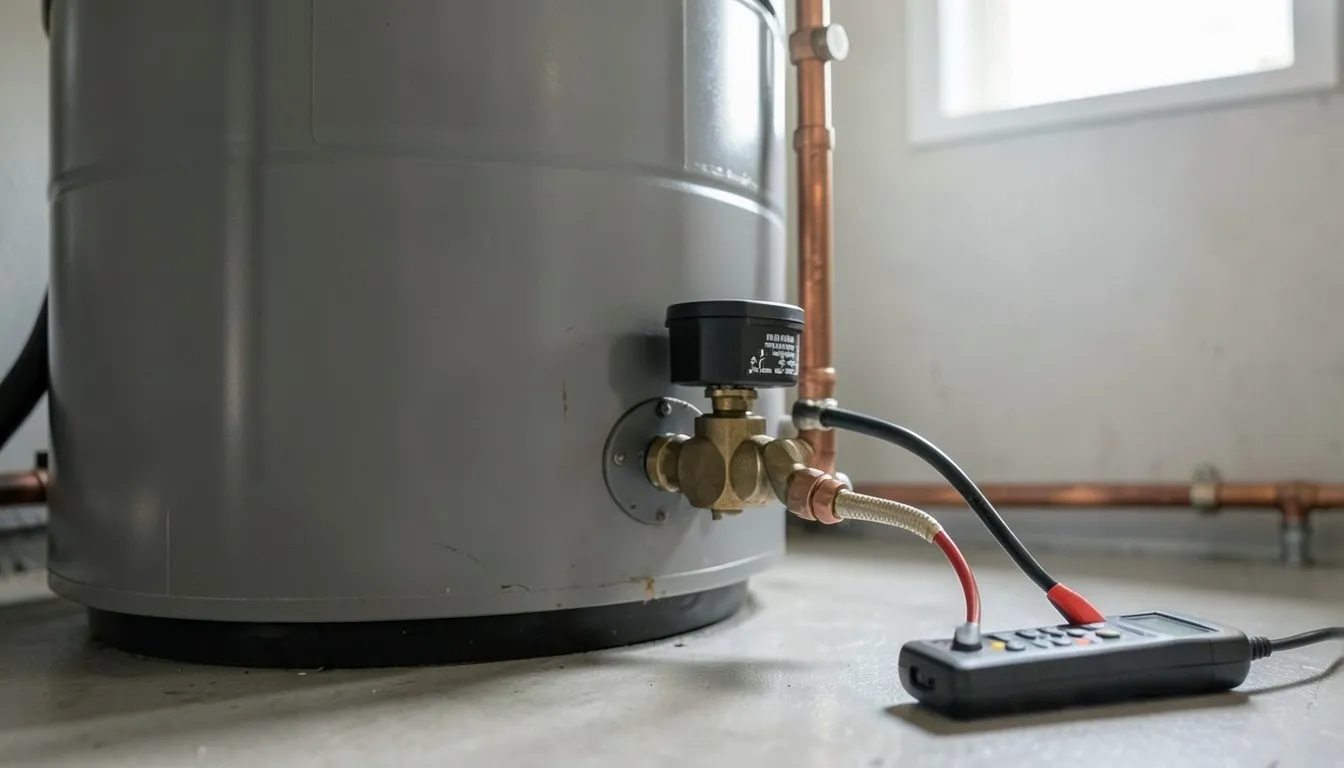
8–14 GPG shortens water heater service life to 8–11 years in Sugar Land and drives rolling maintenance demand at aerators, shower cartridges, and heat exchanger ports. Annual flushing prevents premature failure; skipped maintenance cycles push units toward early replacement. Scale-related calls represent a significant share of the annual service workload here.
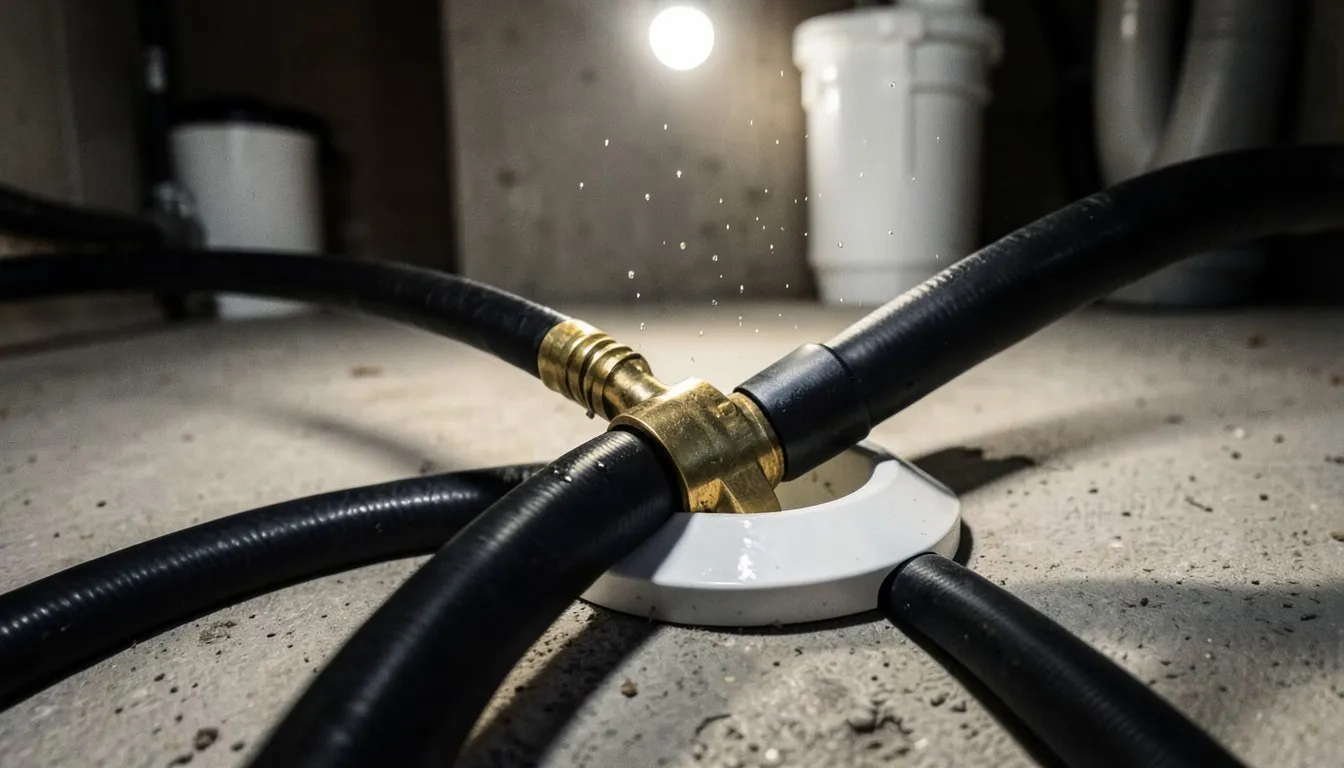
Without a hard freeze season, demand in Sugar Land distributes evenly through the year. Maintenance-driven categories dominate: end-of-life water heater replacement, root intrusion clearing, and fixture repair. Deferred maintenance surfaces gradually as partial failures rather than acute winter emergencies — which means issues compound silently until they become a larger job.
Why diagnose before repairing in Sugar Land?
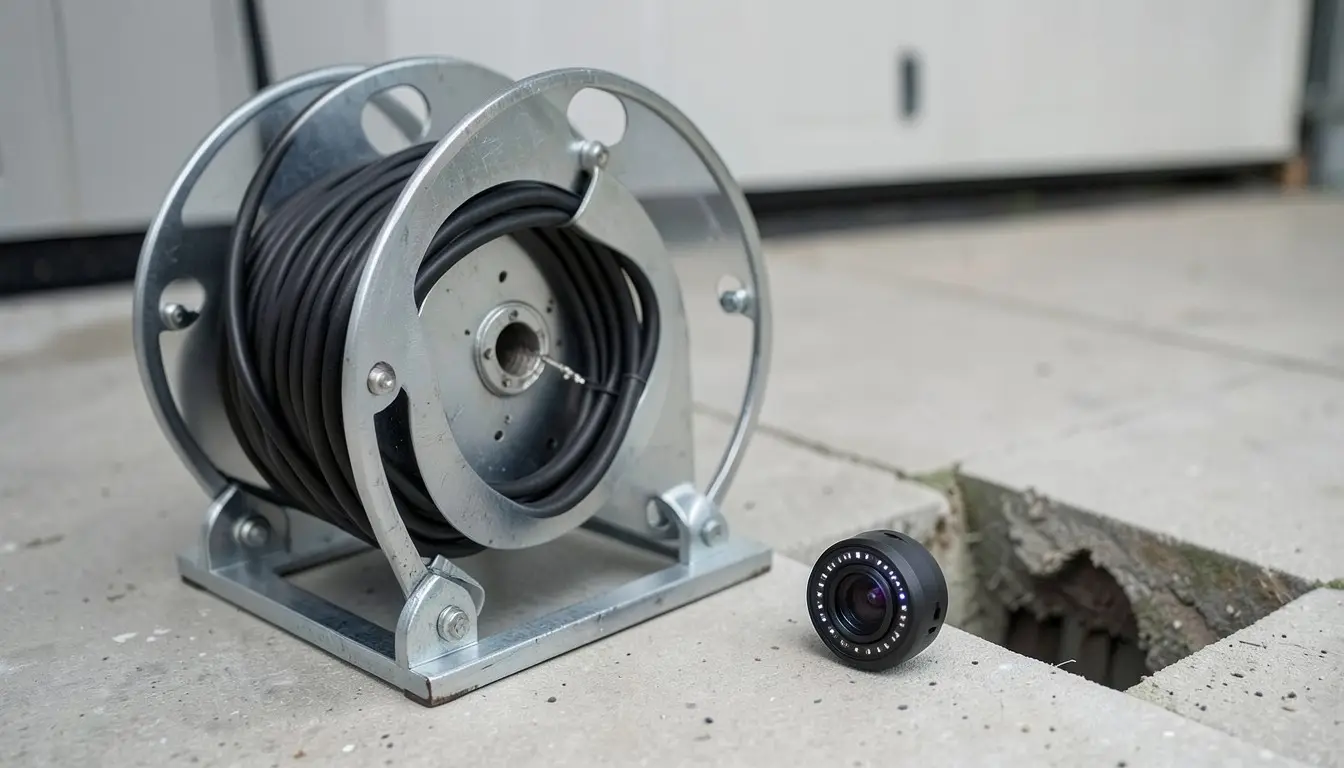
Describe the symptom — not the repair. AlertPlumber routes the call to an independent TX-licensed plumber in its partner's network — ask whether the site visit will use camera tracing, acoustic detection, or hydrostatic pressure testing matched to the reported failure type.
Ask the plumber for a written diagnostic report: confirmed failure location, available repair methods, and tradeoffs — disruption level, material durability, long-term cost, and whether a Sugar Land building permit applies to the selected method.
You select the repair path. Ask for a fixed scope and price on the authorized method before the Texas-licensed plumber proceeds and, where required, who files the permit application to Sugar Land.
Slab Leak Repair cost calculator — Sugar Land
Pre-filled for slab leak repair in Sugar Land. Adjust the ZIP for a neighboring area, or change the service to compare. Calculator pulls from the city's scraped permit-fee + state plumber-density data.

Slab Leak Repair emergency in Sugar Land?
Every hour without a repair increases structural risk and remediation cost. Calls connect to independent local plumbers in our partner's network — ask for an arrival time and a written estimate.
What else do people ask about slab leak repair in Sugar Land?
How much does slab leak repair cost in Sugar Land, TX?
Slab leak repair in Sugar Land runs roughly 7% below the national average for leak detection plus spot repair. A copper-pinhole repair by reroute above-slab costs a scope-based price; a concrete core-drill-and-repair at the leak point costs a scope-based price; a whole-home repipe that eliminates the slab run costs a scope-based price. Insurance often covers the access and repair — see Q6. Price ranges: slab leak repair cost guide.
How are slab leaks detected in Sugar Land?
Slab leak detection in Sugar Land uses acoustic listening equipment to amplify pipe noise through the concrete, thermal imaging cameras to map heat differentials from warm-water leaks, and tracer gas (nitrogen+helium) for cold-water leaks that don't produce thermal signature. The combination typically locates a leak within 6–12 inches of the actual point — accurate enough for a single core drill rather than a long trench. Detection runs a scope-based price in Sugar Land and is usually separate from the repair quote. Price ranges: slab leak repair cost guide.
What causes slab leaks in Sugar Land?
The primary cause in Sugar Land is the alkaline concrete environment reacting with copper pipe — concrete pH of 12+ accelerates external copper corrosion on embedded supply lines over 20–40 years. Seasonal soil movement from Sugar Land's clay/sandy loam (Fort Bend County) shifts the slab slightly, stressing embedded supply line connections over time.
How do I access a slab leak in Sugar Land — core drill or tunnel?
Core drilling (cutting a 4–8" hole through the concrete at the leak point) is fastest and least disruptive — works when the leak is under an accessible floor area with no tile, hardwood, or critical structure above. Tunneling (hand-digging a crawlspace under the slab) is used when drilling would damage finished flooring or the leak is under a load-bearing element. Above-slab reroute (running a new line through walls and ceiling, bypassing the slab run entirely) is the most disruptive but permanently eliminates the embedded pipe — the right approach for homes with widespread corrosion in the 1980s-2000s clay/PVC supply lines.
Do I need a permit for slab leak repair in Sugar Land?
Yes — any pipe repair, reroute, or repipe in Sugar Land requires a TX TDLR plumbing permit including a rough-in inspection before concrete is poured back and a final inspection after fixtures are restored. Ask whether the plumber will pull the permit and schedule both inspections on your behalf. Permit fee ranges: permit fee estimator.
Does homeowners insurance cover slab leaks in Sugar Land?
Standard Texas homeowners policies typically cover the "access" cost (cutting and patching concrete) and the resulting water damage — but NOT the failed pipe itself. This means your policy may pay for jackhammering, drywall repair, flooring restoration, and mold remediation, while the plumber's repair bill comes out-of-pocket or is subject to a service-line endorsement. Notify your carrier as soon as you suspect a slab leak and document with photos before any work starts to preserve the claim.
How long does slab leak repair take in Sugar Land?
Detection: 2–4 hours. Core drill access + spot repair: 4–8 hours (often one visit for most single-point leaks). Reroute repair: 1–2 days. Concrete patching after core drilling: 24–48 hours to cure before foot traffic. Flooring restoration (tile, hardwood) is a separate trade and typically takes 1–2 weeks. Most Sugar Land slab leak repairs restore water service within 24 hours of the plumber's arrival.
Is mold a risk after a slab leak in Sugar Land?
Yes — a slow slab leak that went undetected for weeks can saturate framing, wall cavities, and flooring with enough moisture to germinate mold within 24–48 hours. Sugar Land's high humidity accelerates mold growth once moisture is present. After slab repair, professional moisture mapping and structural drying (commercial dehumidifiers + air movers) are strongly recommended before closing the walls — a moisture reading above 16% in wood framing indicates active risk.
Can the matched plumber tell me if the leak is on the hot or cold side?
Yes — and it matters for repair strategy. Hot-side slab leaks cause a warm or wet spot on the floor and show clearly on thermal imaging. Cold-side leaks are often found acoustically or via tracer gas, and they're more common in older Sugar Land homes where the cold supply runs beneath the slab at lower pressure but higher volume. Hot-side leaks usually point to pinhole copper corrosion; cold-side leaks more often involve joint failures at fitting connections.
How do I check the license of slab leak specialists in TX?
AlertPlumber does not vet plumbers: for slab leak work in Sugar Land, ask for the TX TDLR license number and check it with the state board, and ask whether they carry acoustic + thermal detection equipment. Ask the specialist for camera footage and a written scope-of-work estimate before any concrete cutting begins.
One call puts your problem in front of a local plumber.
Call the number, or put your number in the form below — the request goes to an independent Texas plumber in our partner's network; ask about the slab leak repair and for a written estimate.
Need a slab leak repair callback in Sugar Land?
In a meeting, with the kids, or just prefer not to call? Drop your ZIP and number below. AlertPlumber sends your request to our routing partner — if a participating plumber serves your area, they may call you back directly. For anything urgent, call the number on this page.
- 1 Submit your info. ZIP, phone, and what kind of work you need.
- 2 AlertPlumber passes it on to our routing partner for your area.
- 3 If a participating plumber serves your area, they may call you back. Ask for a written estimate before work starts.
Slab Leak Repair in Sugar Land — when to call
Acute plumbing failures cannot wait. AlertPlumber routes calls about slab leak repair in Sugar Land to independent Texas plumbers in our partner's network — call now or submit the form above for a callback.