
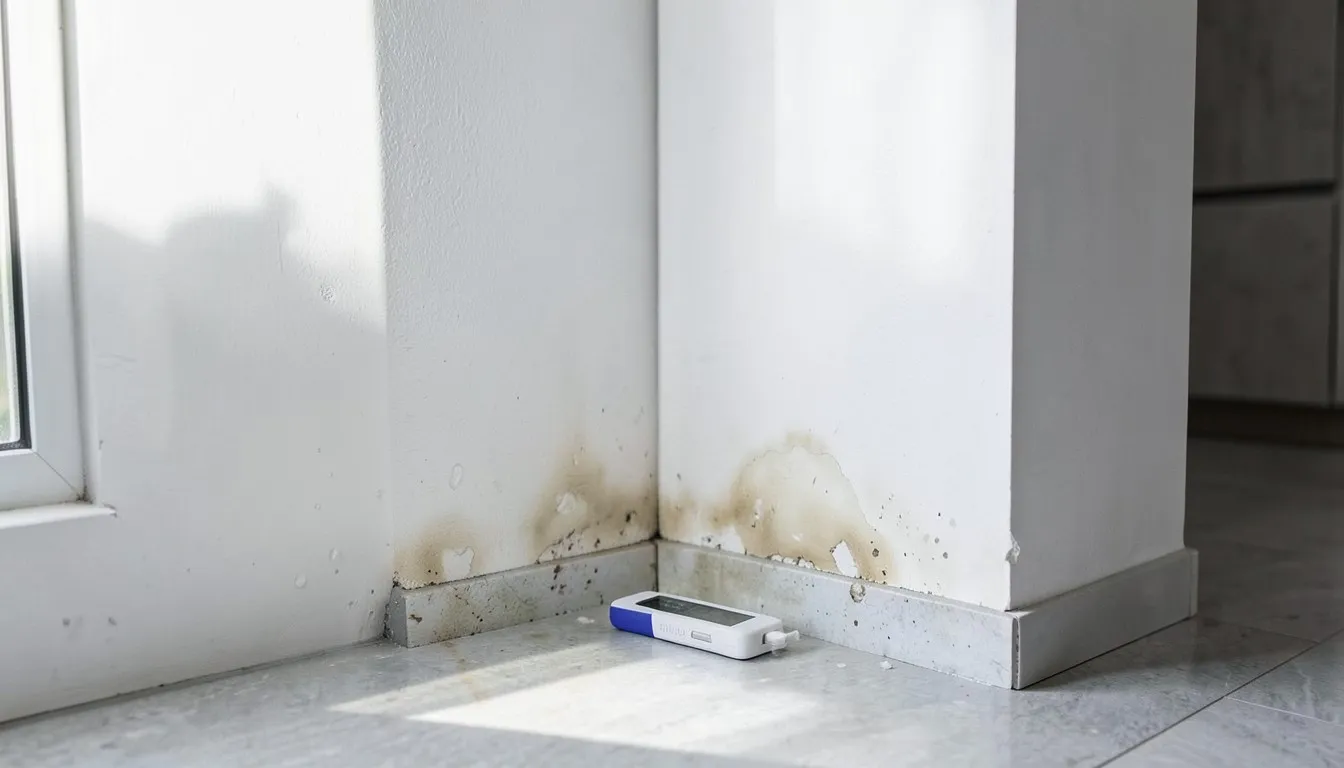
Emergency Leak Detection in Knoxville, Tennessee
Camera first, quote second — know exactly what's wrong in your Knoxville home before you approve a dollar.
Local plumbing data for Knoxville, TN
Seeing these conditions at your place in Knoxville? A state-licensed plumber can confirm it over the phone — free, no obligation.
What are the pipe conditions in Knoxville, TN?
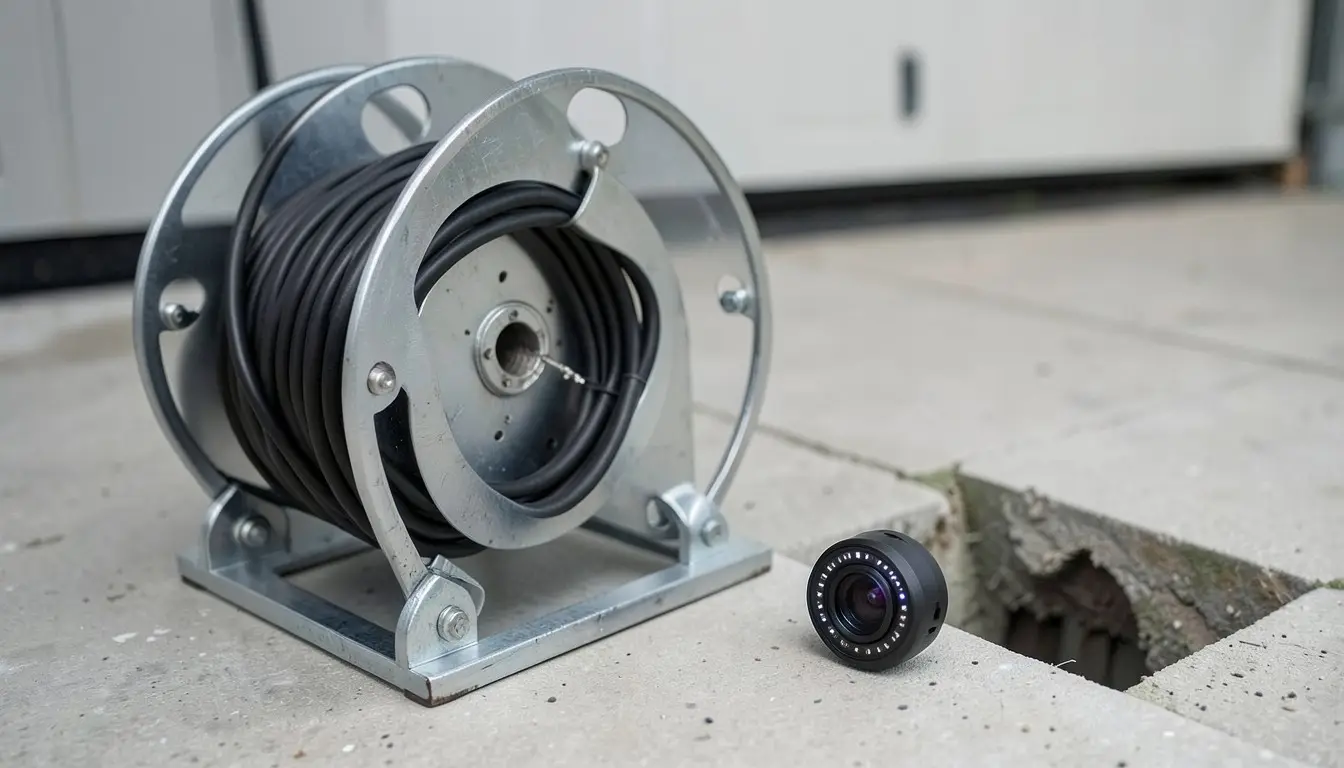
Non-invasive leak detection uses acoustic amplification, thermal imaging, and pressure isolation to locate water loss in supply lines and drain systems without opening walls or floors. Knoxville homes with galvanized or older copper supply runs face the highest pinhole leak incidence — a slow leak inside a wall cavity can cause mold and structural damage for months before becoming visible. A professional leak detection prevents unnecessary demolition by confirming the exact break location before any drywall is cut. AlertPlumber connects you with a Tennessee-licensed plumber who locates first and opens second.
Knoxville's housing stock spans multiple construction eras — median home age 56 years — meaning pipe materials and failure modes vary significantly by neighborhood and building vintage. An inspection-led approach that confirms pipe material before recommending a service path is standard practice for mixed housing profiles.
Hard water in Knoxville accelerates scale buildup inside water heater tanks, on heating elements, and at fixture connections. Sediment accumulation in tank heaters reduces efficiency and shortens element life; visible deposits at aerators and showerheads are an early indicator. A licensed plumber can assess whether a water softener or conditioner is appropriate for the home's service configuration.
Frost line depth in Knoxville means supply lines and outdoor plumbing must be installed below the freeze threshold — typically 18 — to prevent pipe burst during cold events. Exterior hose bibs, irrigation shutoffs, and any exposed pipe runs are the most common winterization service points in freeze-risk markets.
- Median home age
- 56 yrs
- Water hardness
- 8 gpg
- Frost line
- 18 in.
- Lead lines
- Active replacement
- Permit
- $55
A licensed TN plumber reads these conditions the moment you describe the symptom.
What shapes plumbing demand in Knoxville, TN?
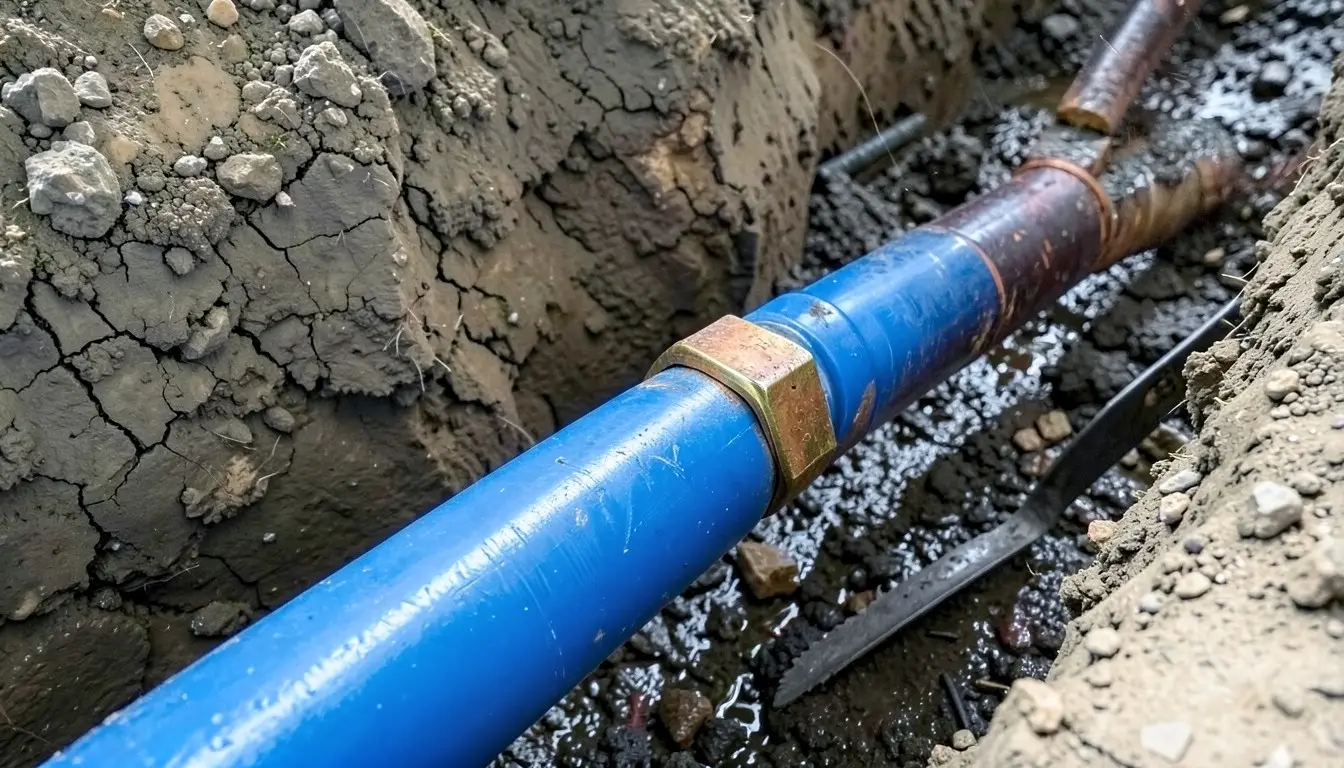
1950s–70s copper supply is now 50–70 years into its service cycle in Knoxville. Thermal fatigue at fittings and slab-on-grade access complexity — common in Sun Belt construction — make repair vs. replacement a live decision on most jobs. This housing cohort is the active primary replacement wave in this market.
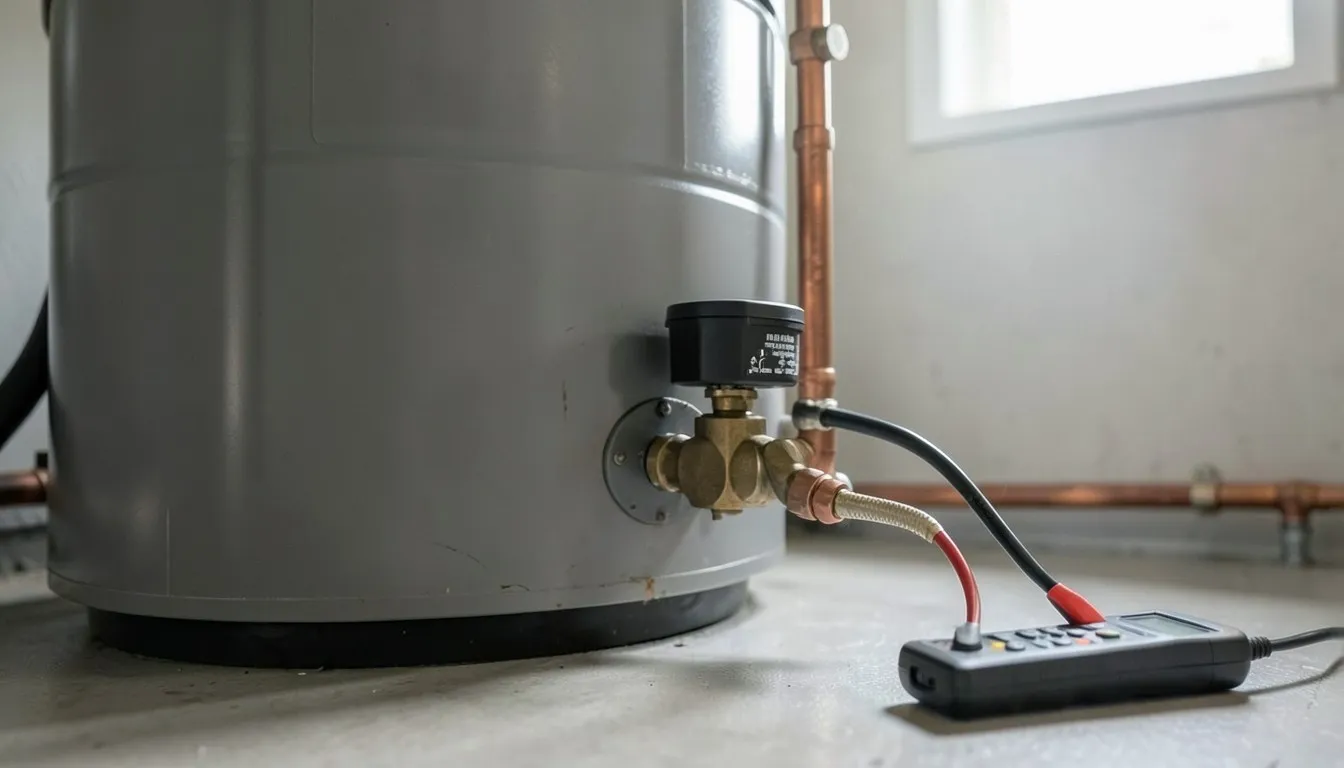
8–14 GPG shortens water heater service life to 8–11 years in Knoxville and drives rolling maintenance demand at aerators, shower cartridges, and heat exchanger ports. Annual flushing prevents premature failure; skipped maintenance cycles push units toward early replacement. Scale-related calls represent a significant share of the annual service workload here.
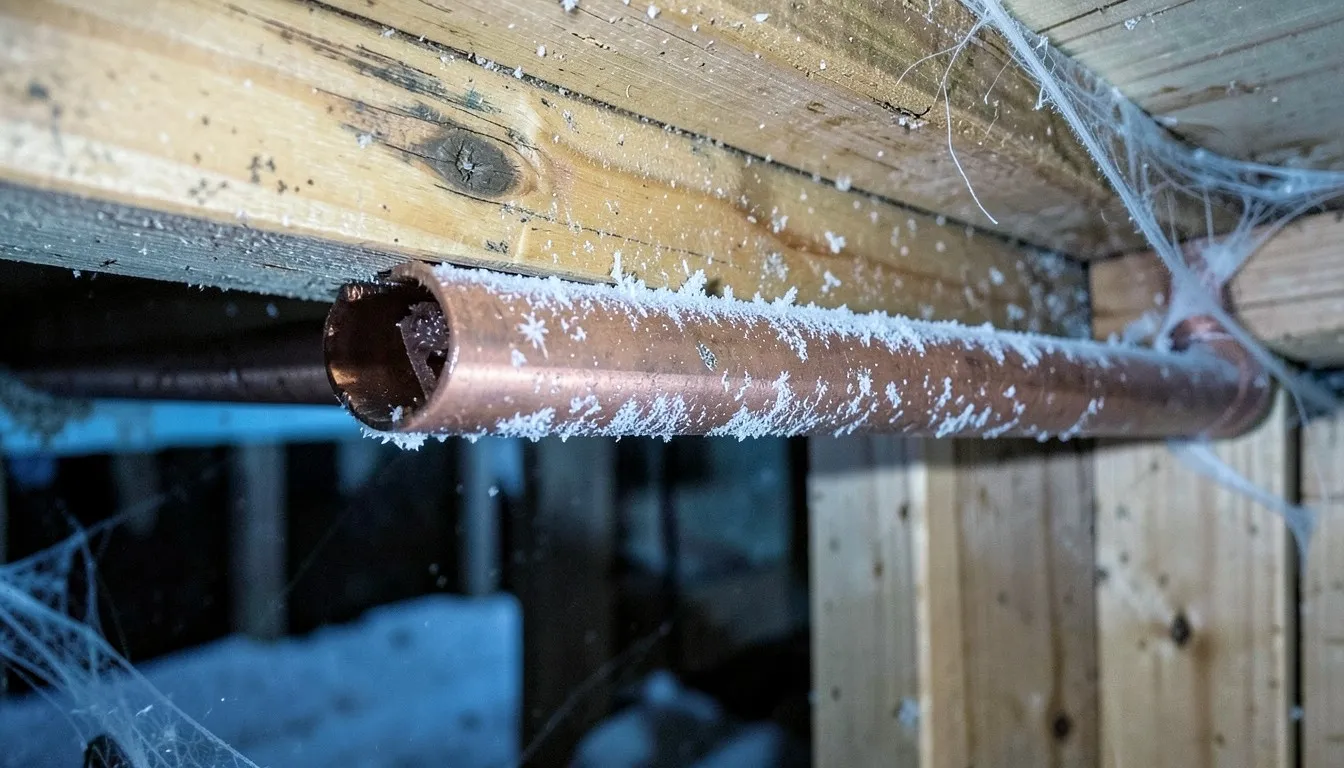
The primary surge in Knoxville runs January–March, with a secondary wave at the spring thaw — when pipes that held through the freeze rupture as pressure is restored above 32°F. Scheduling competition peaks exactly when emergency calls are highest. Homeowners who wait for visible damage compete for the same limited plumber slots at the worst possible time.
Why diagnose before repairing in Knoxville?
Describe the symptom — not the repair. AlertPlumber routes to a TN-licensed plumber trained in diagnostics. The site visit uses camera tracing, acoustic detection, or hydrostatic pressure testing — matched to the reported failure type.
The plumber delivers a written diagnostic report: confirmed failure location, available repair methods, and tradeoffs — disruption level, material durability, long-term cost, and whether a Knoxville building permit applies to the selected method.
You select the repair path. The Tennessee-licensed plumber proceeds on the authorized method with a fixed scope and price. Where required, the permit application to Knoxville is handled by the contractor.
Leak Detection cost calculator — Knoxville
Pre-filled for leak detection in Knoxville. Adjust the ZIP for a neighboring area, or change the service to compare. Calculator pulls from the city's scraped permit-fee + state plumber-density data.

Leak Detection in Knoxville — the longer it runs, the more it costs.
Slow failures compound: soft pipe walls, root penetration, mineral buildup. A verified plumber calls back with a scope-first estimate before anything is dug up.
Leak Detection in Knoxville — frequently asked
How much does professional leak detection cost in Knoxville?
Non-destructive leak detection in Knoxville typically runs $265–$495 for a single-suspect workup and $385–$725 for a multi-area scan across a Sequoyah Hills 1920s Tudor or Bearden 1950s slab ranch. The fee covers static pressure-isolation on the supply manifold, FLIR thermal scanning calibrated for East TN Ridge-and-Valley 60%+ summer humidity, and acoustic ground-microphone listening tuned for the karst limestone substrate underlying most of Knox County. The detection fee is typically credited toward repair when you book the same matched plumber. Repair scope is priced separately — Bearden slab spot repair on 1950s copper runs $1,750–$3,400, hidden-wall pinhole behind Old North Knoxville plaster-and-lath runs $485–$1,150, and Farragut 1990s+ PEX manifold barb replacement runs $295–$625. The $112 City of Knoxville Plans Review permit attaches only when detection crosses into a wall or slab opening. AlertPlumber routes to a Tennessee CMC-A credentialed plumber who explains the diagnostic plan by phone before dispatch.
How do I know I have a hidden leak in my Knoxville home?
Symptoms split sharply by neighborhood era. Old North Knoxville / Fourth & Gill 1880s-1910s Queen Anne and Italianate stock with galvanized supply: rust-tinted hot-water draw, low pressure on second-floor fixtures, and faint hissing at floor registers when the house is quiet. Sequoyah Hills 1920s-30s Tudor Revival along Cherokee Boulevard: damp plaster behind picture rails, mildew bloom in crawlspace corners, and KUB water bill jumping 20%+ on two consecutive cycles. Bearden 1950s ranch on slab along Kingston Pike: warm spot on the slab near the kitchen island, hairline crack tracking a hot-water line, baseboard lifting along an exterior wall. Farragut / Hardin Valley 1990s+ West Knox subdivisions: ceiling halo under upstairs bathrooms (manifold barb leak) or pinhole drips at the wall-mount tankless. Across all four: KUB meter low-flow indicator moves with every fixture off. In East TN 60%+ summer humidity, mold smell appears faster than in arid markets — schedule the detection before drywall damage forces emergency pricing.
What detection methods does a Knoxville plumber actually use?
The Ridge-and-Valley karst limestone substrate underlying Knox County reshapes underground acoustic detection — sound transmits well through dense limestone but disperses around karst seams and solution voids, so the technician runs tighter sensor spacing and a baseline pass on a known-dry section before scoring leak hits. Standard sequence:
- Static pressure-isolation: 80 PSI held 15 min on hot-only, cold-only, and full-system loops to confirm a leak exists and isolate side
- FLIR thermal imaging: calibrated for 60%+ Smoky Mountain foothill humidity, scanned at the coolest interior part of the day
- Acoustic ground-microphone: karst-tuned sensor spacing with a comparison scan on dry substrate as a humidity baseline
- Electronic line-tracing: maps the supply route before any saw-cut over a Bearden ranch slab
Will Tennessee homeowners insurance cover Knoxville leak detection?
Most Tennessee HO-3 policies cover the detection fee plus tear-out access when the underlying loss reads as "sudden and accidental" — a pinhole that ruptured, not a slow seep the homeowner has watched since 2019. Carriers typically pay slab cutting, wall opening, and the matched plumber's written detection report with FLIR captures and pressure-test readings. Repair of the failed pipe itself is usually excluded as wear-and-tear, though water-damage cleanup downstream is covered. Tennessee policies handle gradual seepage strictly — submit the matched plumber's written diagnostic naming the failure mode (4 gpg-driven copper pinhole, karst seam shallow-line crack, Bearden slab thermal-cycling failure) to support the "sudden" classification. Verbal "looks like a leak" calls get denied. Confirm specifics with your carrier — TN HO-3 form language varies between Farm Bureau, State Farm, and Erie. Mold endorsements are separate and often excluded; ask before you sign.
How does KUB billing flag a leak before damage shows?
Knoxville Utilities Board (KUB) meters every gallon crossing the property line, whether it ends in the dishwasher or under your slab. A pinhole leak running at 60 PSI releases roughly 70–150 gallons per day, invisible at the surface but a 2,100–4,500 gallon monthly addition. At KUB's $5.18 per 1,000 gallon residential rate plus matched sanitary sewer charge, that translates to $35–$95 in extra monthly utility cost before drywall damage surfaces. The diagnostic threshold most Knoxville plumbers use: a 20%+ unexplained spike across two consecutive billing cycles with no household change (no new dishwasher, no extra residents, no irrigation start). Pull six months of KUB statements before calling for detection — the trend curve tells the technician which loop to isolate first. KUB's online portal publishes consumption history at the daily level.
Can a Knoxville homeowner narrow down a leak before calling?
You can confirm a leak exists on your own — shut every fixture and watch the KUB meter's low-flow indicator (small triangle or red dial). Any movement over 15 minutes with everything off means water is escaping somewhere on your side of the line. You can also isolate hot vs cold: shut the water-heater cold inlet for 30 min and re-read the meter — if it stops, the leak is on the hot side. What you cannot do at home is locate the leak. Consumer-grade IR thermometers lack spatial resolution to distinguish a hot slab leak from sun-warmed grout, and rental moisture meters cannot read through 4 inches of concrete or the Ridge-and-Valley karst substrate beneath a Bearden slab. Pre-narrowing (leak side + meter trend + neighborhood era) cuts the matched plumber's diagnostic time and lowers your detection fee.
Why are Bearden 1950s ranch slab copper pinholes the dominant call?
Bearden along Kingston Pike was built out 1948–1965 as Knoxville's primary postwar slab-on-grade ranch district. The Type M copper supply embedded in those slabs has now run 60–75 years on KUB Tennessee River source water testing at roughly 4 grains/gallon — moderate by US standards but enough to drive electrochemical pinhole pitting at the hot-side branch over decades. Hot-water lines fail first because 130–145°F heater-loop temperatures accelerate the corrosion reaction, and Bearden's slab construction means the failure surfaces as a warm spot on tile or LVP before any visible water. Acoustic detection at static pressure plus FLIR on the suspect branch typically localizes within 12–18 inches. The matched Tennessee CMC-A plumber confirms with electronic line-tracing before any saw-cut over a Bearden slab — guessing into a 1950s pour rarely costs less than the $145–$225 line-trace fee.
How does Knoxville's 12-inch frost line drive shallow-line winter leaks?
Knoxville's 12-inch frost depth and 18 freeze days per year per NOAA NCEI climate normals create a narrow but real shallow-line failure window. Service laterals and irrigation feeds installed at or above 10 inches risk freeze-burst during the January cold snaps that drive single-digit overnight lows from the Cumberland Plateau airmass. Detection in February through April commonly localizes a thaw-driven slow leak on a Cherokee Boulevard Sequoyah Hills shallow irrigation tie-in or an Old North Knoxville pre-1920 service entrance where the original installation predates current burial code. The diagnostic uses acoustic listening at the meter pit, ground-microphone scanning along the suspected lateral path, and a tracer-gas overpressure if soil saturation masks the acoustic signature. NWS Morristown/Knoxville winter advisories flag the high-risk overnight windows.
How does KUB's lead service line replacement program affect detection?
KUB carries roughly 8,400 lead service lines under the federal Lead and Copper Rule Revisions inventory — one of the higher LSL counts among comparable Southeast utilities. KUB's active replacement program means crews are excavating service connections across Old North, Fourth & Gill, Mechanicsville, and parts of Sequoyah Hills, and that work disturbs adjoining supply geometry. Two practical effects on leak detection: (1) post-replacement pressure can briefly shift across a neighborhood block, exposing previously-marginal pinholes on adjacent properties; (2) when a KUB crew has recently worked near your home, narrow the diagnostic question to whether the leak is on your private side of the meter or on the public side. Detection signature does not change, but the matched CMC-A plumber asks about recent KUB activity during the phone triage before dispatching the workup.
How accurate is FLIR in 60%+ Smoky Mountain foothill humidity?
Calibration matters. A FLIR T-series camera localizes a hot-line slab leak within an 18-inch radius about 80–86% of the time on the first scan in Knoxville's East TN ambient humidity — slightly lower than arid-market hit rates because high humidity narrows thermal contrast between leak signature and saturated subgrade. The Tennessee River and French Broad confluence keeps under-slab soil moister than Cumberland Plateau elevations west, so a leak that has been running 72+ hours may read as a broad warm zone rather than a tight hot point. Skilled techs offset this by (a) running the FLIR scan at the coolest interior part of the day, (b) confirming every thermal hit with acoustic ground-microphone before recommending a concrete cut, and (c) running a baseline scan on a known-dry section as a humidity reference. For cold-side slab leaks, FLIR alone is unreliable here — acoustic plus pressure-isolation carries the workup.
Should I get a system-wide pressure test on a Sequoyah Hills or Bearden home?
Yes if the home is in the 1948–1975 build window and you have already had one copper pinhole repaired. A system-wide static pressure test ($175–$310) isolates each branch (hot, cold, irrigation, hose bibs) and holds 80 PSI for 15 minutes — any pressure drop signals an additional weak segment. Knoxville-area matched plumbers report that Bearden 1950s ranch homes with one confirmed hot-side slab leak run a 32–48% probability of a second pinhole within 36 months on the same hot manifold. Sequoyah Hills Tudor stock from the 1920s-30s shows the pattern less aggressively because much of that branch supply runs through crawlspaces rather than embedded slab, but the test still flags weakening joints. KUB's 4 gpg moderate hardness does not drive aggressive corrosion the way 16 gpg Edwards Aquifer does in San Antonio, but combined with 18 freeze-day thermal cycling and a 51-year median Knoxville build age, cumulative cycling fails the manifold. A pre-repair system test is lower-cost than a second emergency call six months later.
Are AlertPlumber-matched plumbers verified for leak detection in TN?
Every plumber routed through AlertPlumber for Knoxville leak detection holds active Tennessee state credentialing. TN Board for Licensing Contractors, 2024 lists roughly 3,400 active CMC-A credentialed plumbing contractors statewide — verify your technician's status via the board lookup before authorizing concrete cuts or wall openings. Leak detection requires specialty equipment (FLIR T-series, acoustic ground-microphones, pressure-isolation kits) and trained operator experience tuned for Ridge-and-Valley karst limestone substrate and Smoky Mountain foothill humidity calibration. Local context. 198,716 Knoxville residents per US Census Bureau, 1974 median build, 18 freeze days at 12-inch frost, 4 gpg moderate hardness from KUB Tennessee River intake at $5.18 per 1,000 gallons, 8,400 LSL under federal LCRR inventory, $112 City of Knoxville Plans Review permit for opened-wall work. Old North Knoxville 1880s-1910s Queen Anne, Fourth & Gill 1890s-1920s Italianate, Sequoyah Hills 1920s Tudor along Cherokee Boulevard, Bearden 1950s ranch, and Farragut 1990s+ West Knox subdivisions each show distinctive leak signatures — matched detection plumbers calibrate first, cut second.
What ZIP codes around Knoxville does AlertPlumber cover for leak detection?
AlertPlumber covers all City of Knoxville ZIP codes (379xx prefix covering downtown, Old North Knoxville and Fourth & Gill north of the river, Mechanicsville west of downtown, Sequoyah Hills along Cherokee Boulevard, Bearden along Kingston Pike, and the Farragut / Hardin Valley West Knox subdivisions) plus surrounding Knox County and Anderson, Blount, and Loudon County communities — Oak Ridge, Maryville, Alcoa, and the Smoky Mountain foothill fringe. KUB service-area calls and adjacent-utility addresses both route through the same intake form. East TN Ridge-and-Valley karst substrate, French Broad and Tennessee River confluence position at ~900ft elevation, and the Bays Mountain ridge climate context produce a Knoxville detection signature distinct from Middle TN Cumberland Plateau cities or Memphis Mississippi-delta markets.
The fix gets cheaper the sooner a plumber sees it.
Degradation problems compound quietly. Call now, or use the form below and a licensed Tennessee plumber calls you back with a no-obligation estimate for the leak detection.

Request a leak detection callback in Knoxville
In a meeting, with the kids, or just prefer not to hold? Drop your ZIP and number below. AlertPlumber routes your request to a verified plumber in your area — they’ll call you back directly.
- 1 Submit your info. ZIP, phone, and what kind of work you need.
- 2 AlertPlumber matches you with a verified plumber serving your area.
- 3 The plumber calls you back with a written estimate, no obligation.
Leak Detection in Knoxville — catch it early
Degradation-driven failures worsen over time and cost more to fix the longer they run. A verified TN plumber in Knoxville diagnoses your specific condition and provides a written scope before any work begins.