
Water Softener Installation Guide
How water softeners work, how to size one correctly, ion exchange vs. salt-free systems, installation requirements, maintenance, and cost breakdown.
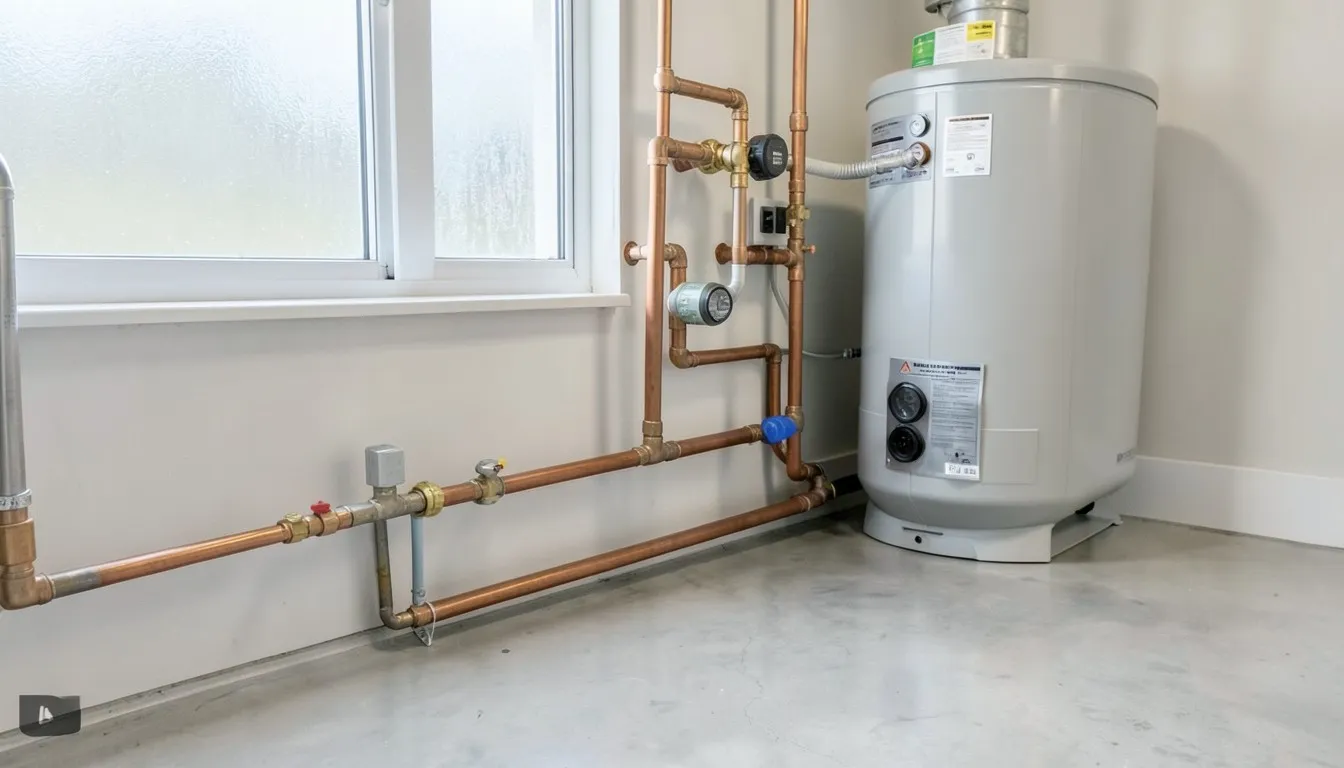
A water softener removes calcium and magnesium ions (the minerals that cause scale) from your water supply through an ion exchange process, replacing them with sodium ions. For a 3-bedroom home in a hard-water market (10+ GPG), a 32,000–48,000-grain capacity softener is appropriate per AWWA residential water softener sizing guidance. Installation cost ranges from $800–$3,000 including the unit and licensed plumber labor per BuildZoom water softener installation cost data. Water hardness above 7 GPG is where scale buildup begins measurably affecting appliance lifespan, pipe efficiency, and energy bills per USGS water hardness data and scale formation thresholds.
How does water hardness work, and what does a softener do?
Water hardness is caused by dissolved calcium (Ca²⁺) and magnesium (Mg²⁺) ions that enter groundwater as it passes through limestone, chalk, and dolomite formations. These ions are not harmful to human health at typical residential concentrations — but they cause significant problems for plumbing systems, appliances, and energy efficiency over time.
The hardness scale: GPG and PPM
Water hardness is measured in grains per gallon (GPG) or milligrams per liter (mg/L, equivalent to parts per million / PPM). The conversion: 1 GPG = 17.1 mg/L. Hardness classification per USGS water hardness classification standards:
- Soft — 0–1 GPG (0–17 mg/L) — no scale formation, soap lathers easily
- Slightly hard — 1–3.5 GPG (17–60 mg/L) — minimal scale, usually not worth treating
- Moderately hard — 3.5–7 GPG (60–120 mg/L) — noticeable soap scum, beginning of scale in water heater and pipes
- Hard — 7–10.5 GPG (120–180 mg/L) — meaningful scale accumulation, reduced appliance efficiency, water heater sediment buildup measurable
- Very hard — Over 10.5 GPG (180+ mg/L) — significant scale formation, reduced water heater efficiency, premature appliance failure, visible deposits on fixtures and glassware
| Classification | Hardness Range (GPG) | What It Means |
|---|---|---|
| Soft | 0–1 | No scale formation; soap lathers easily |
| Slightly hard | 1–3.5 | Minimal scale; usually not worth treating |
| Moderately hard | 3.5–7 | Noticeable soap scum; scale begins in water heater and pipes |
| Hard | 7–10.5 | Meaningful scale accumulation; reduced appliance efficiency, measurable water heater sediment |
| Very hard | Over 10.5 | Significant scale formation, reduced water heater efficiency, premature appliance failure, visible deposits |
Per USGS national water hardness distribution data, approximately 85% of US homes are supplied with hard water — but hardness varies dramatically by region. The American Southwest, Mountain West, and parts of the Midwest see hardness levels of 15–25+ GPG from limestone aquifers. The Pacific Northwest, New England, and parts of the Southeast have significantly softer water (often 0–5 GPG). Finding your local hardness: your municipal water utility publishes annual water quality reports with hardness data per EPA Safe Drinking Water Act annual water quality report requirement, or you can test your well water with a $15–$30 mail-in hardness test.
What hardness actually does to your home
The impact of hard water is cumulative and largely invisible until late-stage damage occurs:
- Water heater sediment — Calcium and magnesium precipitate from solution when water is heated, settling as scale (CaCO₃) on the water heater tank floor and heating elements. A 1/4-inch scale layer on a gas water heater reduces efficiency by approximately 25% per DOE Energy Saver: water heater scale and efficiency data. For an electric water heater, scale on the heating element creates a hot-spot that can fail the element prematurely.
- Supply pipe restriction — Over years, scale accumulates inside copper and steel supply pipes, reducing internal diameter and flow rate. Homes with 25+ years of hard water service in 15+ GPG markets often show measurable pressure reduction at fixtures due to accumulated scale per AWWA pipe scale accumulation and flow restriction data.
- Appliance lifespan reduction — Scale accumulates in dishwashers (spray arms, heating element), washing machines (pump, solenoid valves), and ice makers. Per EPA ENERGY STAR appliance lifespan data, appliances in hard-water markets (15+ GPG, untreated) show an average 30–50% reduction in expected service life versus soft-water markets.
- Soap and detergent inefficiency — Calcium and magnesium react with soap to form calcium stearate (soap scum) rather than lather. Hard water requires significantly more soap, shampoo, and detergent to achieve the same cleaning result — and leaves soap scum deposits on showers, tubs, and fixtures.
- Water heating cost — The 25% efficiency penalty from scale in a water heater running 3 hours per day translates to measurable annual energy cost increase per EIA residential energy consumption survey data.
What a water softener does
A salt-based water softener uses ion exchange to remove calcium and magnesium ions from the water supply before it enters the home's distribution system. The softener contains a resin tank filled with negatively charged ion exchange resin beads coated with sodium (Na⁺) ions. As hard water passes through the resin, calcium and magnesium ions — which carry a stronger positive charge — displace the sodium ions on the resin, binding to the beads. The water exiting the resin tank contains sodium in place of calcium and magnesium — "soft" water.
When the resin beads are saturated with calcium and magnesium, the softener goes through a regeneration cycle: concentrated sodium chloride (salt) brine from the brine tank is flushed through the resin, displacing the calcium and magnesium and restoring the sodium ions. The waste brine — containing the removed hardness minerals — is flushed to the drain. The softener is then ready for another service cycle per AWWA ion exchange water softening process documentation.
Do you need a water softener? What are the signs of hard water?
Hardness above 7 GPG warrants serious consideration of softening. These specific signs indicate hard water is already affecting your home:
Visible mineral deposits on fixtures
White or off-white crusty buildup around faucet aerators, showerheads, toilet bowl rims, and where water sits and evaporates. This is calcium carbonate scale — the same material that accumulates inside pipes and appliances. Visible scale on fixtures at 7 GPG; obvious, thick deposits at 15+ GPG.
Reduced showerhead flow
Showerhead orifices are small enough that scale accumulation measurably reduces flow within 1–2 years in hard-water markets. If your showerhead was stronger 3 years ago and hasn't been cleaned, scale buildup is the likely cause. Cleaning with vinegar temporarily restores flow — but the scale returns immediately in hard water without a softener upstream.
Soap scum and film on shower walls
Hard water's reaction with soap forms calcium stearate — the white/gray film that coats shower walls, tub surrounds, and glass shower doors. This residue requires acidic cleaners (CLR, vinegar-based products) to remove because it doesn't dissolve in water alone. The amount of cleaning labor involved in maintaining a bathroom in a 15+ GPG market is a reliable indicator of softener payback per AWWA residential hard water impact on cleaning costs.
Water heater making sediment sounds
A water heater in a hard-water market that makes rumbling or popping sounds during heating cycles has accumulated scale on the tank floor. Water trapped beneath the scale layer superheats and vaporizes, creating the sound. This is a sign that water heater efficiency has already been compromised and scale removal or replacement is needed in addition to softener installation. See the water heater replacement guide for the decision framework.
Spots on glassware and dishes from the dishwasher
Mineral deposits visible on glassware and dishes after drying indicate hard water reaching the dishwasher. White spotting on glass is calcium carbonate etching — at sufficient concentration, this is permanent cosmetic damage to glass surfaces. High-performance dishwasher detergents and rinse aids are partially effective, but they address the symptom rather than the source.
Itchy skin or dry hair after showering
Calcium and magnesium ions react with skin's natural oils similarly to how they react with soap — leaving a mineral film on skin. Many people in hard-water markets experience dry, itchy skin and dull hair that improves noticeably when they travel to soft-water areas. While not a health risk, this is a significant quality-of-life driver for softener adoption per AWWA residential water quality and quality-of-life survey data.
How do you test your water hardness?
Before sizing a softener, know your hardness level in GPG. Several testing approaches are available at different cost and precision levels.
Municipal water quality report (free)
If you're on city water, your utility publishes an annual Consumer Confidence Report (CCR) per EPA Safe Drinking Water Act: Consumer Confidence Report requirement that includes hardness data, typically expressed in mg/L or GPG. This report is available online at the utility's website or mailed annually to customers. The limitation: the CCR measures water at the treatment plant or distribution system — your home's hardness may be slightly different depending on how far you are from the treatment point and the condition of the distribution mains between you and the plant.
USGS water hardness lookup (free)
The USGS National Water Information System water hardness data publishes regional hardness maps and groundwater quality data. This is useful for general region-level hardness context, though it's not as precise as a site-specific test.
At-home test strips ($10–$20)
Single-use colorimetric test strips dipped in a water sample and compared to a color chart. Accuracy: ±1–2 GPG. Sufficient for determining whether softening is warranted (and approximately at what grain capacity to size), but not precise enough for fine-tuning regeneration cycles. Available at hardware stores and online. Best practice: test the water from the cold tap at the kitchen faucet (representative of the main supply entering the home).
Mail-in laboratory test ($20–$60)
A collected sample mailed to a certified water testing laboratory returns a full mineral analysis including calcium (mg/L), magnesium (mg/L), iron (mg/L), manganese, pH, and calculated hardness in GPG. This is the most accurate approach and is recommended if your water also has iron or manganese content (which affects softener selection and regeneration programming). Per EPA guidance on certified water testing laboratories, use a state-certified laboratory for reliable results.
Iron in the water — a critical factor
Water with iron content above 0.3 mg/L (the EPA secondary standard per EPA secondary drinking water standard for iron) requires a softener specifically rated for iron removal, or a separate iron filter upstream of the softener. Untreated iron "fouls" the ion exchange resin — iron compounds coat the resin beads, reducing their capacity and requiring chemical cleaning (iron-out treatment). If your water has a metallic taste, orange or rust-colored staining on fixtures, or reddish-brown water at the cold tap, test for iron before selecting a softener.
Water softener types: ion exchange, salt-free, dual-tank
The term "water softener" is sometimes used loosely to describe several different treatment systems. Understanding the differences is important for selecting the right system for your water chemistry and household needs.
Salt-based ion exchange (the standard softener)
The only technology that actually removes hardness minerals from the water. Uses ion exchange resin and sodium chloride (or potassium chloride) salt for regeneration. Produces genuinely soft water — typically 0–1 GPG output. Prevents scale formation in all downstream applications. The limitations: requires regular salt refilling (25–50 lb bags, every 4–8 weeks depending on usage and hardness); requires a drain connection for regeneration waste; adds sodium to the water (relevant for low-sodium diets — see below); produces a brine waste stream that some municipalities restrict per AWWA brine discharge guidance for softener installations.
Salt-free "conditioners" (not true softeners)
Template-assisted crystallization (TAC) and nucleation-assisted crystallization (NAC) systems change the crystalline form of calcium and magnesium in the water without removing them. The minerals remain in solution but form micro-crystals that are less likely to adhere to pipe walls and heating surfaces. The important distinction: water chemistry tests will still show high hardness (the minerals are still present); scale formation is reduced but not eliminated; performance is highly dependent on water chemistry and temperature. These are "conditioners," not softeners — they do not produce soft water and do not provide the soap lathering, skin feel, and appliance protection benefits of true ion exchange softening. Per AWWA salt-free conditioner performance data, TAC/NAC systems are most appropriate for households with low-sodium diet requirements or where brine discharge is prohibited, not as a full substitute for softening in high-hardness markets.
Dual-tank (twin-tank) softeners
A standard single-tank softener is offline during regeneration cycles (typically 30–90 minutes, programmed for off-peak hours). For households with continuously high water demand (large families, commercial applications, irrigation systems), a dual-tank system keeps one tank in service while the other regenerates — providing uninterrupted soft water 24/7. Cost premium: $400–$800 over a comparable single-tank system per BuildZoom dual-tank vs. single-tank softener cost comparison. Justified for households that exhaust a standard softener's capacity between regenerations (daily water use above 200–300 gallons in a 15+ GPG market).
Demand-initiated regeneration (DIR) vs. timer-based
Older softeners regenerate on a fixed timer (every X days regardless of actual water use). Modern demand-initiated softeners measure actual water volume processed and regenerate only when needed. DIR systems use 40–60% less salt per EPA WaterSense: demand-initiated regeneration efficiency data — a significant ongoing cost saving in high-hardness, high-use households. Per EPA WaterSense water softener certification program, WaterSense-certified softeners meet minimum salt efficiency standards (4,000 grains of capacity removed per pound of salt used). Specify WaterSense-certified when selecting a system.
Potassium chloride as salt substitute
Potassium chloride (KCl) can be used in place of sodium chloride (NaCl) as the regenerant. Advantages: adds potassium rather than sodium to the treated water (relevant for individuals on sodium-restricted diets); potassium is a beneficial mineral. Disadvantages: KCl costs 3–5× more than NaCl per pound; some softeners require programming adjustment for KCl (slightly lower regeneration efficiency); KCl is heavier and harder to source in some markets. Per AWWA guidance: potassium chloride vs. sodium chloride in water softening, both are effective regenerants — the choice is a cost-health tradeoff based on the household's dietary context.
How do you size a water softener?
Oversized softeners waste salt by regenerating when not needed. Undersized softeners fail to remove hardness between regenerations. Correct sizing is a straightforward calculation based on three inputs.
The sizing formula
Daily grains of hardness to remove = Water hardness (GPG) × Daily water use (gallons)
Softener capacity needed = Daily grains × Days between regenerations (typically 7 days)
Standard daily water use per person
Per EPA daily residential water use data, the average US resident uses approximately 80–100 gallons of water per day, including all indoor uses (toilet, shower, faucet, laundry, dishwasher). For softener sizing, use 75 gallons per person as a conservative residential estimate.
Example sizing calculation
Household: 4 people. Water hardness: 12 GPG. Regeneration frequency target: once per week.
- Daily water use: 4 × 75 = 300 gallons/day
- Daily grains of hardness: 300 × 12 = 3,600 grains/day
- Weekly grains to remove: 3,600 × 7 = 25,200 grains
- Add 20% safety margin: 25,200 × 1.2 = 30,240 grains
- Minimum softener capacity: 30,000 grains (round up to next standard size)
Standard capacity tiers and their applications
- 24,000 grains — 1–2 person household, moderate hardness (7–12 GPG)
- 32,000 grains — 2–3 person household, moderate to hard (7–15 GPG); or 4-person household in lower hardness markets (7–10 GPG)
- 48,000 grains — 3–4 person household, hard water (12–18 GPG); or 5–6 person household in moderate hardness markets
- 64,000 grains — 4–6 person household, very hard water (18+ GPG); or high-demand household
- 80,000+ grains — Large households, commercial, or irrigation applications
| Softener Capacity | Household Size | Water Hardness |
|---|---|---|
| 24,000 grains | 1–2 people | Moderate hardness (7–12 GPG) |
| 32,000 grains | 2–3 people (or 4 in lower-hardness markets) | Moderate to hard (7–15 GPG) |
| 48,000 grains | 3–4 people (or 5–6 at moderate hardness) | Hard water (12–18 GPG) |
| 64,000 grains | 4–6 people, or high-demand household | Very hard water (18+ GPG) |
| 80,000+ grains | Large households, commercial, or irrigation | Any, sized to demand |
Iron adjustment
If your water contains dissolved iron, add 5 GPG to your hardness calculation for each 1 mg/L of iron. Example: 10 GPG hardness with 2 mg/L iron = effectively 20 GPG for sizing purposes per AWWA iron compensation in softener sizing. This ensures the softener capacity accounts for resin being used to remove iron as well as calcium and magnesium.
What does water softener installation involve?
Water softener installation is a plumbing job that involves cutting into the main supply line, adding a bypass assembly, connecting the drain, and programming the system. In most states, a licensed plumber is required.
Installation location requirements
The softener must be installed on the main supply line AFTER the meter (and PRV if present) but BEFORE the line splits to serve the hot water heater and cold water distribution. This ensures all water entering the home is treated. Typical installation locations: utility room, basement mechanical room, or garage. Requirements:
- Floor drain or utility sink within a few feet for the regeneration waste discharge
- Electrical outlet within reach for the control valve (standard 110V)
- Level surface capable of supporting the filled system weight (32,000-grain unit filled with salt and water: 150–200 lbs)
- Clearance above the salt tank for adding salt (standard bags are 40–50 lbs)
- Temperature above 35°F — softener resin is damaged by freezing per AWWA softener resin freeze damage documentation
Bypass valve — a critical requirement
Every properly installed softener must include a bypass valve assembly that allows the main supply to bypass the softener entirely. The bypass is needed for: softener regeneration maintenance, salt bridge correction, resin cleaning, or repair. A softener installed without a bypass valve is not serviceable without shutting off the entire home's water supply. Per IPC § 608: water softener installation standards, most codes require bypass valves on water treatment equipment. If a bid doesn't mention a bypass valve, ask specifically — it's an inexpensive component but a critical installation requirement.
Where the softened water should and shouldn't go
Some homeowners choose to bypass outdoor irrigation from the softener — soft water is not harmful to plants, but there's no benefit to softening irrigation water (no scale in outdoor pipes, no appliance efficiency benefit), and it wastes salt. If the outdoor hose bibbs and irrigation manifold branch off BEFORE the softener, they receive unsoftened water — saving significant salt consumption in high-irrigation markets. Similarly, if a dedicated drinking water line is run before the softener (or if you prefer the taste of mineral water), one cold tap in the kitchen can be unsoftened. Discuss these branching configurations with your plumber during the installation quote.
The plumber's installation scope
- Shut off the main water supply
- Cut into the main supply line at the installation location
- Install the bypass valve assembly on the supply line
- Connect inlet and outlet of the softener to the bypass
- Run the drain line from the softener's control valve to the floor drain or utility sink (maximum drain line length typically 25–30 feet per manufacturer)
- Plug in the control valve to 110V
- Add the initial salt charge to the brine tank
- Program the control valve: hardness setting, regeneration time, and salt dose
- Open the bypass, restore water, check all connections for leaks
- Run a manual regeneration cycle to verify proper operation
Installation time: 2–4 hours for a standard installation with no unusual access complications per BuildZoom water softener installation labor time data.
What's NOT included in the plumber's scope
- The softener unit itself (typically purchased separately, or supplied by the contractor — confirm in the quote)
- Electrical work if no outlet is present in the installation location
- Additional plumbing if the supply line configuration requires significant rerouting
- Salt delivery (a recurring cost managed by the homeowner)
How much sodium does softened water contain?
One of the most common concerns about water softeners is the sodium added during the ion exchange process. Understanding the actual numbers helps evaluate this appropriately.
How much sodium does softening add?
Ion exchange replaces each calcium or magnesium ion with two sodium ions (due to charge balancing). The amount of sodium added depends on the water's original hardness:
- 10 GPG hardness water: softening adds approximately 20 mg/L of sodium per AWWA sodium addition calculation for ion exchange softening
- 20 GPG hardness water: softening adds approximately 40 mg/L of sodium
- 30 GPG hardness water: softening adds approximately 60 mg/L of sodium
For context: the FDA daily sodium reference intake for adults is 2,300 mg per FDA sodium dietary reference intake. An 8-oz glass of water softened from 20 GPG hardness contains approximately 9.5 mg of sodium — roughly the same as one slice of bread. For most people, this is negligible. For individuals on physician-prescribed sodium-restricted diets (typically below 1,500 mg/day), the sodium from softened water is worth discussing with their physician, and potassium chloride regenerant is a reasonable alternative.
Drinking water alternatives for sodium-conscious households
- Unsoftened drinking water tap — Have one cold-water tap (typically the kitchen sink cold) plumbed before the softener in the line sequence. This tap supplies unsoftened water for drinking and cooking; all other taps and appliances receive softened water.
- Reverse osmosis under the kitchen sink — An RO unit installed under the kitchen sink removes virtually all dissolved minerals, sodium included, from drinking water. RO + softener is a common combination in high-hardness markets: the softener protects appliances and pipes, the RO provides mineral-free drinking water.
- Potassium chloride regenerant — As noted, KCl-regenerated softeners add potassium rather than sodium, which avoids the dietary sodium concern entirely (at higher salt cost).
How do you maintain a water softener?
A water softener is a low-maintenance system but does require regular attention to three items: salt level, salt bridging, and periodic resin cleaning. Neglected softeners fail gradually — the water appears normal but scale begins re-accumulating in pipes and appliances as the resin becomes depleted.
Salt refilling: intervals and best practices
The brine tank should be checked monthly and refilled when salt level drops below half-full. Approximate salt consumption by household and hardness:
- 2-person household, 10 GPG: 15–25 lbs of salt per month
- 4-person household, 15 GPG: 40–60 lbs per month (one 40-lb bag plus additional)
- 4-person household, 20 GPG: 60–80 lbs per month
Salt types and their differences:
- Sodium chloride pellets — Most common; clean, low-impurity; lowest bridging tendency. Preferred by most manufacturers. Available in 40-lb bags at hardware stores, approximately $6–$10/bag per BuildZoom softener salt market pricing.
- Solar salt (evaporated salt crystals) — High purity, slightly lower cost. Can cause more bridging than pellets in high-humidity conditions.
- Rock salt — Lowest cost; contains more impurities including calcium sulfate that accumulates in the brine tank and reduces efficiency. Not recommended for most softeners per AWWA salt type guidance for residential softeners.
Salt bridging: what it is and how to fix it
A salt bridge is a hardened crust of salt that forms across the top of the brine tank, creating a hollow void beneath. The control valve can't draw brine from below the bridge — so regeneration cycles run, but the resin isn't cleaned with brine, and the water stops being softened. Detection: press down on the salt in the tank. If it feels hollow below the surface and the tank has no water at the bottom, a bridge has formed. Fix: use a broom handle to break up the bridge gently; remove salt chunks that fall to the bottom. Prevention: keep humidity low around the brine tank and don't overfill — keeping salt at or below half-tank reduces bridging frequency.
Resin bed cleaning
Over years, iron, manganese, and organic matter can foul the resin bed, reducing capacity. Symptoms: water has a noticeable hardness feel between regenerations (shorter time to re-hardening), orange staining returning to fixtures, or water has a slight iron smell. Resin cleaner (iron-out or a softener-specific resin cleaner) is poured directly into the salt tank and allowed to work through a regeneration cycle. This should be done at initial installation (to condition new resin) and annually in water with iron content above 0.5 mg/L per AWWA resin maintenance interval guidance.
Control valve inspection and resin replacement
The control valve (the "brain" of the softener — the motorized head that controls service and regeneration cycles) should be serviced every 5–10 years. Signs of a failing control valve: error codes on the display, failure to regenerate on schedule, water bypassing the resin (no softening even with fresh salt). Resin bed replacement is needed approximately every 10–15 years in normal operation per AWWA softener resin expected lifespan data. Fouled resin (from iron or chlorine damage) may need replacement sooner. A plumber or water treatment professional can assess whether the issue is the valve, the resin, or both.
Seasonal considerations: vacation homes and extended absence
For homes left unoccupied for more than 2–3 weeks, put the softener in bypass mode to avoid unnecessary regeneration cycles with no water use. When returning, run a manual regeneration cycle before resuming normal service — the resin may have partially reverted to hardness during the bypass period.
What does water softener installation cost?
Water softener installation cost varies based on system capacity, brand tier, site complexity, and regional labor rates. Understanding the cost components helps evaluate contractor quotes accurately.
Equipment cost by capacity
- 24,000-grain system (entry level) — $300–$600 for the unit. Brands: Morton, Whirlpool, GE. Suitable for 1–2 person households in moderate hardness markets.
- 32,000-grain system (most common) — $400–$800 for the unit. Brands: Fleck, Morton, Rheem, Waterboss. Covers most 2–4 person households to 15 GPG.
- 48,000-grain system — $500–$1,200. Brands: Fleck 5600SXT, Clack, Pentair. Appropriate for 4–6 person households or higher hardness markets.
- 64,000+ grain system — $700–$2,000+. High-demand or commercial-residential hybrid applications.
Per BuildZoom water softener unit pricing by capacity. Price ranges above are for equipment only.
Installation labor cost
- Standard installation (existing main line access, drain within 10 feet) — $400–$800 labor per BuildZoom softener installation labor cost
- Complex installation (rerouting supply, long drain run, slab penetration) — $600–$1,500 labor
- Adding unsoftened drinking water tap in kitchen — $150–$300 additional
Total installed cost ranges
- 32,000-grain system, standard installation — $900–$1,800 all-in
- 48,000-grain system, standard installation — $1,200–$2,500 all-in
- 48,000-grain + iron filter + standard installation — $1,800–$3,500 all-in
- Salt-free TAC conditioner, standard installation — $1,000–$2,500 all-in
Ongoing operating costs
- Salt (sodium chloride pellets) — $80–$200 per year for a 4-person household at 12 GPG with WaterSense-certified softener
- Potassium chloride (if used instead) — $250–$600 per year (same household)
- Water for regeneration — 50–75 gallons per regeneration cycle; 2–4 cycles per month; adds $2–$8/month to water bill per EPA WaterSense softener water use data
- Electricity — Softener control valve uses minimal power (< $5/year)
Return on investment
A water softener's economic return comes from three sources: extended appliance lifespan (water heater, dishwasher, washing machine), reduced energy cost (water heater efficiency improvement), and reduced soap/detergent use. Per DOE Energy Saver hard water efficiency cost analysis, a gas water heater with scale accumulation from 15 GPG hard water uses approximately 25% more energy than one operating with soft water — a $50–$100/year energy penalty depending on usage and local gas rates. Appliance replacement cycles extended by 3–5 years each represent the largest dollar value in the ROI calculation. At typical cost, softener payback for a household in a 15+ GPG market is 3–7 years per BuildZoom water softener ROI analysis.
What permits does water softener installation require?
Water softener installation involves cutting into the main supply line — which, in most jurisdictions, requires a licensed plumber and a plumbing permit.
Permit requirements
Per IPC § 608: water treatment equipment permit requirements, installation of water treatment equipment connected to the supply system requires a permit in most jurisdictions. The permit process ensures the installation is inspected for: proper bypass valve, correct drain connection (air gap to prevent cross-contamination of the main supply with brine backflow), secure mounting, and compliant plumbing connections. Some jurisdictions treat softener installation as permit-exempt maintenance; others require a full permit with inspection. Your licensed plumber should know the local requirement and pull the permit if required.
Drain connection code requirements
The softener's drain line (where brine waste and regeneration water discharge) must have an air gap at the connection point — the drain line outlet must discharge above the rim of the drain receptor (floor drain or utility sink) or include an approved air gap device. This prevents a scenario where a drain backup could siphon brine waste into the softener and back into the supply system. Per IPC § 608.1: water softener drain and air gap requirements, this is a code requirement in all IPC-adopting jurisdictions.
Brine discharge restrictions
Some water districts, particularly in California's Central Valley, Arizona, and parts of Texas, restrict or require permits for softener brine discharge to municipal sewer systems due to downstream salinity effects on water reclamation per AWWA brine discharge impact on water reclamation data. Before purchasing and installing a softener in these markets, verify local brine discharge regulations. Your water utility's website or a call to your building department will confirm. In markets with restrictions, WaterSense-certified high-efficiency softeners (which use significantly less salt and produce less brine) may comply where standard softeners don't.
License requirements
Supply line connection work requires a licensed plumber in most states. Water treatment dealer-only installation (DIY or by unlicensed dealer technician) may void manufacturer warranties and is non-compliant in most jurisdictions. Always verify plumber license status:
- California: CSLB C-36 license verification
- Texas: TSBPE license verification
- Florida: DBPR plumbing license search
- Arizona: Arizona ROC contractor search
- Minnesota: Minnesota DLI plumber license lookup
Need a water softener installation callback?
ZIP, phone, kind of work. AlertPlumber routes to a verified plumber for an over-phone estimate.
Water Softener Installation by city
City-specific pricing, code references, climate-driven pathology, and frequently-asked questions for the 12 cities where AlertPlumber ships water softener installation pages today.
- Water Softener Installation in Boston, MA →
- Water Softener Installation in Phoenix, AZ →
- Water Softener Installation in Minneapolis, MN →
- Water Softener Installation in Atlanta, GA →
- Water Softener Installation in Seattle, WA →
- Water Softener Installation in New York, NY →
- Water Softener Installation in Los Angeles, CA →
- Water Softener Installation in Chicago, IL →
- Water Softener Installation in Dallas, TX →
- Water Softener Installation in Houston, TX →
- Water Softener Installation in Philadelphia, PA →
- Water Softener Installation in San Jose, CA →
What else do people ask about water softener installation guide?
How do I know if I need a water softener?
What size water softener do I need?
How much does a water softener installation cost?
How much sodium does a water softener add to the water?
What is the difference between a water softener and a water conditioner?
How often should I add salt to my water softener?
Can I install a water softener myself?
My softener is using salt but the water still seems hard — what's wrong?
Does soft water affect plants or gardens?
How long does a water softener last?
Do I need a water softener if I have well water?
Is softened water safe to drink?
Sources
- USGS — Water Hardness Classification Standards and National Distribution Data
- USGS — National Water Information System: Regional Hardness Data
- EPA — Safe Drinking Water Act: Consumer Confidence Report Requirement
- EPA — Safe Drinking Water Act: Daily Residential Water Use Data
- EPA — Secondary Drinking Water Standard: Iron (0.3 mg/L)
- EPA — Guidance on Certified Water Testing Laboratories
- EPA WaterSense — Demand-Initiated Regeneration Efficiency Data
- EPA WaterSense — Water Softener Certification Program Standards
- EPA WaterSense — Water Softener Regeneration Cycle Water Use Data
- EPA ENERGY STAR — Appliance Lifespan Data: Hard vs. Soft Water Markets
- AWWA — Ion Exchange Water Softening Process Documentation
- AWWA — Residential Water Softener Sizing Guidance
- AWWA — Pipe Scale Accumulation and Flow Restriction Data
- AWWA — Salt-Free Conditioner Performance Data vs. Ion Exchange
- AWWA — Brine Discharge Guidance for Residential Softener Installations
- AWWA — Brine Discharge Impact on Water Reclamation in Regulated Districts
- AWWA — Sodium Addition Calculation for Ion Exchange Softening
- AWWA — Potassium Chloride vs. Sodium Chloride in Water Softening
- AWWA — Residential Hard Water Impact on Cleaning Costs
- AWWA — Salt Type Guidance for Residential Softeners
- AWWA — Resin Maintenance Interval Guidance
- AWWA — Softener Resin Expected Lifespan Data
- AWWA — Softener Resin Freeze Damage Documentation
- AWWA — Iron Compensation in Softener Sizing
- AWWA — Residential Water Quality and Quality-of-Life Survey
- International Plumbing Code (IPC) — § 608: Water Treatment Equipment Standards
- International Plumbing Code (IPC) — § 608.1: Water Softener Drain and Air Gap Requirements
- DOE Energy Saver — Water Heater Scale and Efficiency: 25% Penalty Data
- DOE Energy Saver — Hard Water Efficiency Cost Analysis
- EIA — Residential Energy Consumption Survey: Water Heating Cost Data
- BuildZoom — Water Softener Installation Cost Data 2024
- BuildZoom — Water Softener Unit Pricing by Capacity
- BuildZoom — Softener Installation Labor Cost and Time Data
- BuildZoom — Dual-Tank vs. Single-Tank Softener Cost Comparison
- BuildZoom — Water Softener ROI Analysis: 3–7 Year Payback Data
- BuildZoom — Softener Salt Market Pricing: Sodium Chloride Pellets
- BLS — Plumber Wage and Labor Market Data
- CSLB — California C-36 Plumbing Contractor License Verification
- Texas State Board of Plumbing Examiners — License Verification
- Florida DBPR — Plumbing License Search
- Arizona ROC — Contractor License Search
- Minnesota DLI — Plumber License Lookup