
Frozen Pipe
A water pipe in which the water inside has frozen solid, blocking flow and risking a rupture. Frozen pipes are the leading cause of winter property damage in cold climates.
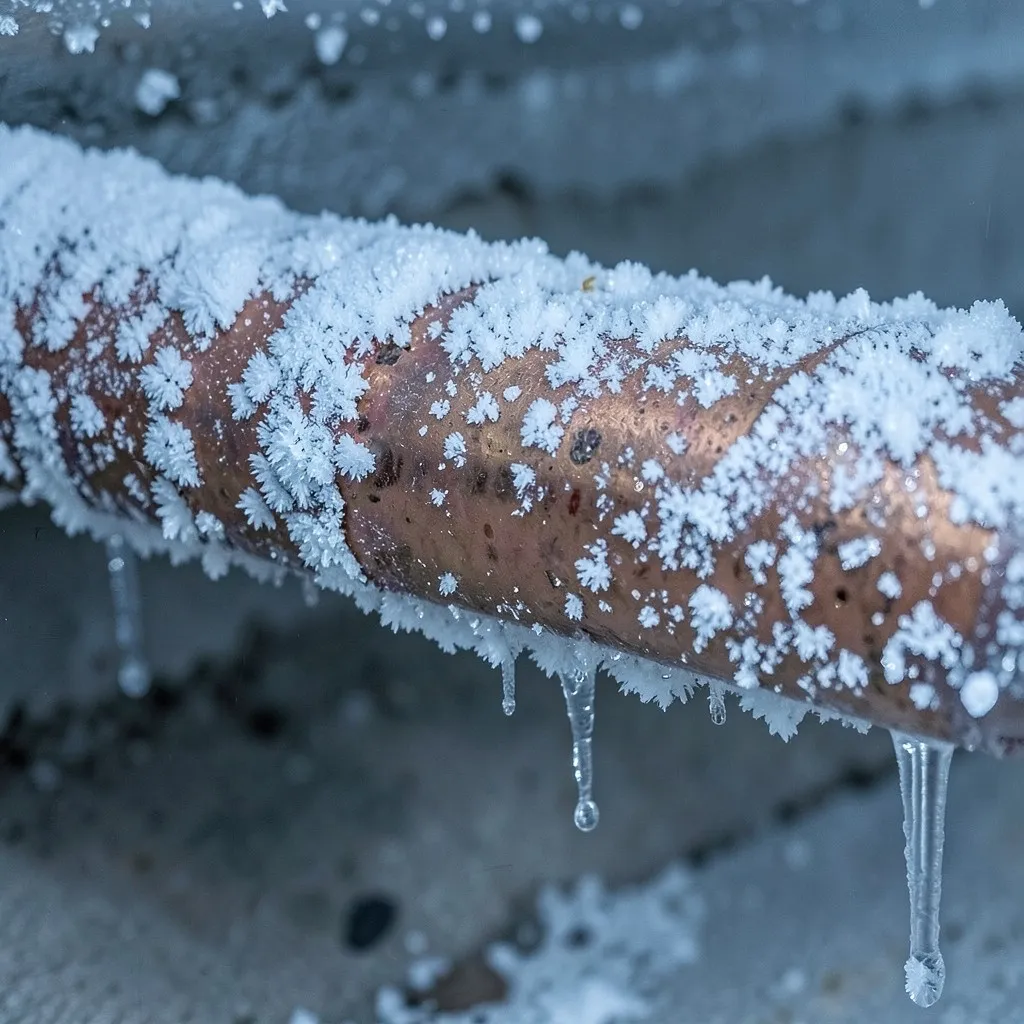
A frozen pipe is a supply pipe in which the water inside has frozen solid, blocking water flow to fixtures and creating pressure that can crack or burst the pipe when it thaws. The Insurance Institute for Business and Home Safety identifies frozen and burst pipes as one of the most common — and most costly — sources of winter property damage, with average claims among the largest a homeowner files; repair ranges are in the frozen pipe repair cost guide.
Where do pipes freeze?
Pipes freeze in locations that reach 32°F or below. High-risk zones:
- Exterior walls with inadequate insulation
- Unheated crawl spaces, garages, and attics
- Pipes near the foundation rim joist (the band of wood at the slab edge)
- Supply lines running through cabinet spaces under sinks on exterior walls
- Vacant homes with heating turned off or failed
- Outdoor hose bibs and irrigation lines not drained for winter
How do you safely thaw a frozen pipe?
If you turn on a faucet and no water comes out in freezing weather, you likely have a frozen pipe. First, open the affected faucet — this releases pressure when the ice melts. Then apply gentle heat from the faucet toward the freeze location:
- Hair dryer on low — the safest method for accessible pipes
- Heating pad wrapped around the pipe
- Warm towels soaked in hot water
- Space heater aimed at the pipe area (keep away from flammables)
Never use: open flames (propane torch), heat guns at close range, or any device that can scorch the pipe or surrounding materials. Never thaw a pipe you can't see — if the pipe is inside a wall, call a plumber.
What should you do if the pipe has burst?
Water utilities advise: “Know where the main valve shut off is for your home. This valve is often found in a crawl space or basement on the wall near the front outside spigot or near the hot water heater in homes on a slab. If you have a pipe burst in your home, immediately close this valve to shut off the water supply to your home and help prevent further water damage.” — Clayton County Water Authority (Georgia), read 2026-09-29
A burst pipe typically doesn't reveal itself until the ice melts — so a frozen pipe that seemed fine can flood within minutes of thawing. After shutting off the water, call a plumber to replace the damaged section.
How do you prevent frozen pipes?
Pipe insulation, heat tape, and maintaining interior temperatures above 55°F are the primary defenses. Drip outdoor-facing faucets during extreme cold to maintain slight flow (moving water resists freezing). Drain irrigation systems and hose bibs before the first hard freeze.
Researching the term is one thing — hiring for it is another. See frozen pipe repair services for scope, timelines, and what drives the price, or call (888) 530-4445 to talk to a local plumber about the job.
For the full picture — materials, process, timelines and what drives the cost — read Frozen Pipe Repair: Complete Guide.
What related terms should you know?
What sources back this up?
Need a plumber for frozen pipe repair?
Calls are connected to independent licensed local plumbers in our partner's network for frozen pipe repair. Ask for the license number and a written estimate before any work begins.