
Hose Bib
Outdoor faucet on a buildings exterior wall used for garden hoses; freeze-prone unless installed as a frost-free model.
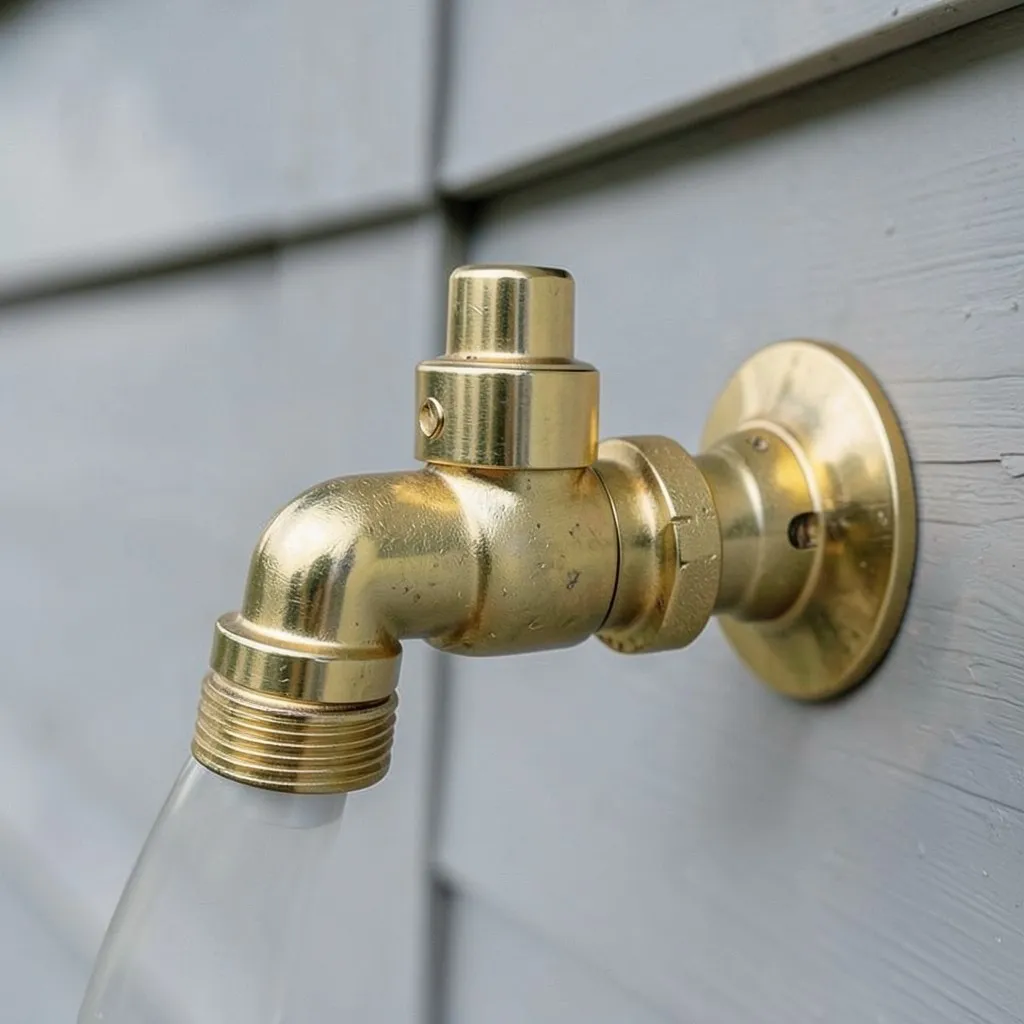
A hose bib, also called a sillcock, spigot, or outdoor faucet, is a threaded valve mounted on the exterior wall of a building that supplies water for hoses, irrigation, and outdoor cleaning. The valve body has a 3/4-inch male hose thread on the outlet side and connects to the house supply piping with either a 1/2 or 3/4-inch fitting on the inlet side. A handwheel on the front opens and closes the valve. In a typical residential install, the hose bib is supplied by a dedicated branch line that tees off the cold-water main and runs through the rim joist or stem wall to reach the outside of the building.
Two construction styles dominate. The traditional compression hose bib has the valve seat and stem at the wall — the entire water column between the shutoff and the spigot lives in the exterior pipe, freezing solid in cold weather and bursting the body if the hose is not disconnected before winter. The frost-free or freeze-proof hose bib relocates the valve seat 6 to 18 inches inside the heated building envelope, with a long internal stem extending out through the wall to the spigot. When the valve is closed, water in the exterior pipe gravity-drains out the spout, leaving the freeze-prone section empty. Frost-free models are required by code in most northern jurisdictions and are widely specified even in mild climates because the labor cost difference is small.
The two most common failures are freeze-burst and packing-nut leaks. Freeze-burst occurs when a hose is left attached to a frost-free spigot through a hard freeze: the trapped water cannot drain, so the long stem freezes and splits inside the wall, hidden until the next time the valve is opened and water sprays into the basement. The fix is replacing the entire frost-free body, typically a 250 to 600 dollar job depending on access. Packing-nut leaks (water dripping from behind the handle) are far simpler — tighten the nut a quarter turn, and if dripping persists, replace the rubber or graphite packing for a few dollars in parts.
Code requirements include backflow protection. Both the IPC § 608 and the UPC chapter 6 require a hose-bib vacuum breaker on every outdoor spigot to prevent contaminated hose water from being siphoned back into the potable supply during a pressure drop. Many modern hose bibs include the vacuum breaker integral to the body; older bibs need a screw-on backflow preventer added at the spout. Installing or replacing a hose bib without a vacuum breaker is a code violation in nearly every US jurisdiction and is a routine flag during home inspections.
For winter shutdown in cold climates, the right sequence is: disconnect every hose, close the interior shutoff valve on the branch line that feeds the bib (most code-compliant installs include one), open the outdoor spigot to drain residual water, then leave the spigot open through winter. Frost-free bibs that are properly installed with a slight downward slope to the outside drain on their own when the hose is removed; non-frost-free bibs require the interior shutoff to be effective. Skipping this 10-minute fall task is the single most common cause of January burst-pipe service calls in any northern market.
Researching the term is one thing — hiring for it is another. See faucet & fixture installation services for scope, timelines, and what drives the price, or call (888) 530-4445 for a no-cost estimate.
What related terms should you know?
What sources back this up?
Need a verified plumber for faucet & fixture installation?
AlertPlumber matches you with a licensed plumber for faucet & fixture installation. Written estimate before any work begins.