
Water Hammer
Loud banging or thudding noise in pipes when a valve closes suddenly, caused by a pressure shockwave hitting the pipe wall.
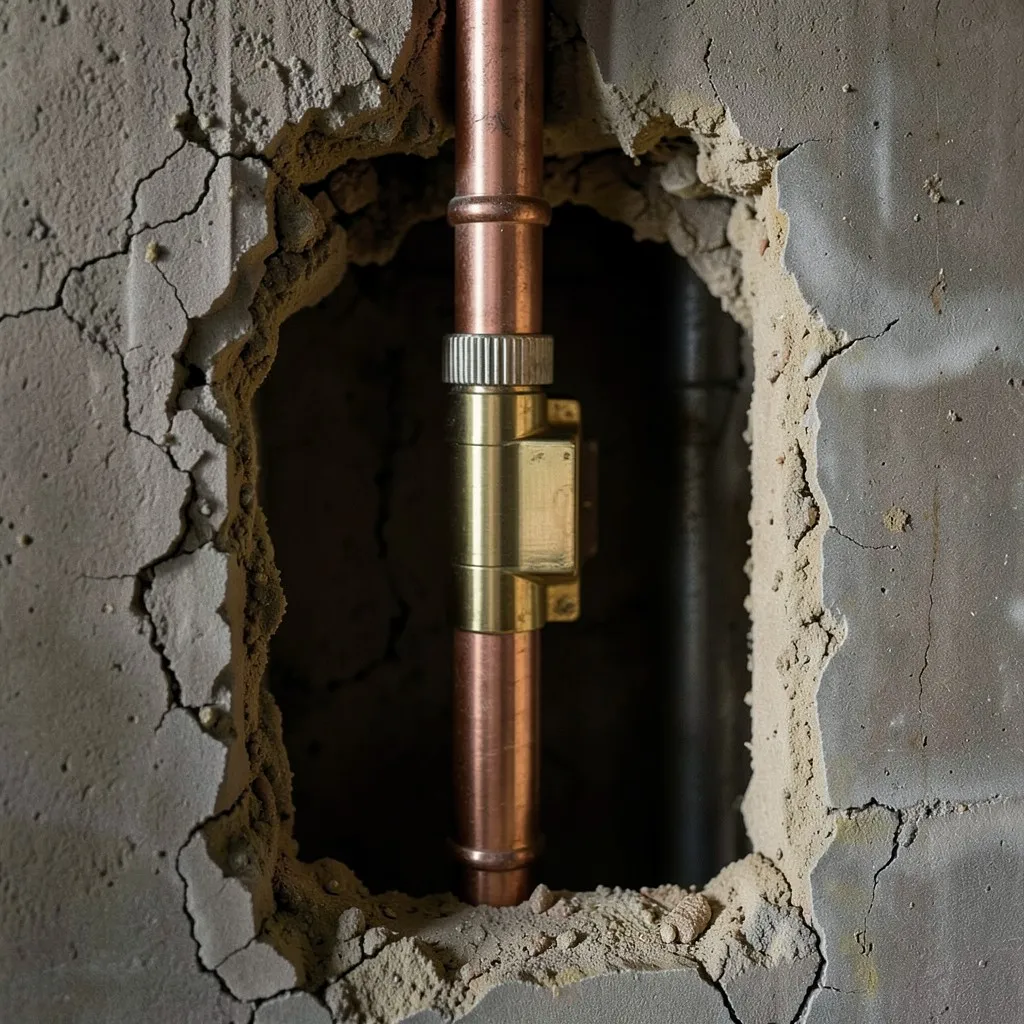
Water hammer, technically known as hydraulic shock, is the banging, thudding, or hammering sound that travels through household pipes the instant a valve, faucet, or appliance shuts off the flow of water. The noise is not water in the pipes, it is the pipes themselves vibrating from a pressure spike. When moving water is suddenly stopped, the kinetic energy in the column has nowhere to go and converts into a high-pressure shockwave that slams into the closed valve, then ricochets back through the supply lines. In long horizontal runs of copper or PEX, that shockwave can spike pressure to two or three times the normal static line pressure of 50 to 80 psi.
The most common triggers are quick-closing solenoid valves on washing machines, dishwashers, ice makers, and modern single-handle faucets. Older multi-turn compression faucets close gradually and rarely cause hammer, while a one-eighth-turn ceramic disc cartridge can stop a flowing column in milliseconds. Loose pipe straps, undersized supply lines, and unusually high municipal pressure all amplify the effect.
Failure signs and warning symptoms include:
- Sharp banging immediately after a toilet finishes filling or a washer changes cycles
- Rattling pipes inside walls or above ceilings during normal water use
- Loosening compression fittings or repeated leaks at supply stops
- Cracked solder joints on copper pipe over months or years of repeated shock
- Damage to washing machine inlet valves and refrigerator water lines
The standard fix is to install a water hammer arrestor, a small sealed cylinder containing a spring-loaded piston or air bladder that absorbs the pressure spike. Arrestors are screwed onto the supply line just behind the appliance or faucet, with separate units required for hot and cold lines. Brand-name mini arrestors run $25 to $40 each in 2026, and full-size whole-system models for installation at the main supply cost $60 to $120. The 2024 IPC § 604.9 requires arrestors on quick-closing valves in commercial installations and recommends them in residential settings.
Secondary remedies address pipe support. Loose pipes that flex during a pressure spike amplify the noise, so adding plastic isolation clamps every six feet on horizontal runs eliminates much of the audible banging even before an arrestor is installed. If the home was built before 1985, the original air chambers, vertical capped stubs of pipe installed for the same purpose, may have water-logged and lost their cushion. Draining the entire system by closing the main and opening every faucet will recharge them, though this is a temporary fix. Whole-house pressure above 80 psi should be addressed with a pressure-reducing valve at the main, typically $200 to $450 installed.
Researching the term is one thing — hiring for it is another. See whole-home repipe services for scope, timelines, and what drives the price, or call (888) 530-4445 for a no-cost estimate.
For the full picture — materials, process, timelines and what drives the cost — read Whole-Home Repipe: The Complete Guide.
What related terms should you know?
What sources back this up?
Need a verified plumber for whole-home repipe?
AlertPlumber matches you with a licensed plumber for whole-home repipe. Written estimate before any work begins.