
Slip Coupling
A coupling fitting with no internal stop that can slide fully over a pipe, allowing it to be positioned over a repaired section — the key to making in-line pipe repairs without cutting extra pipe.
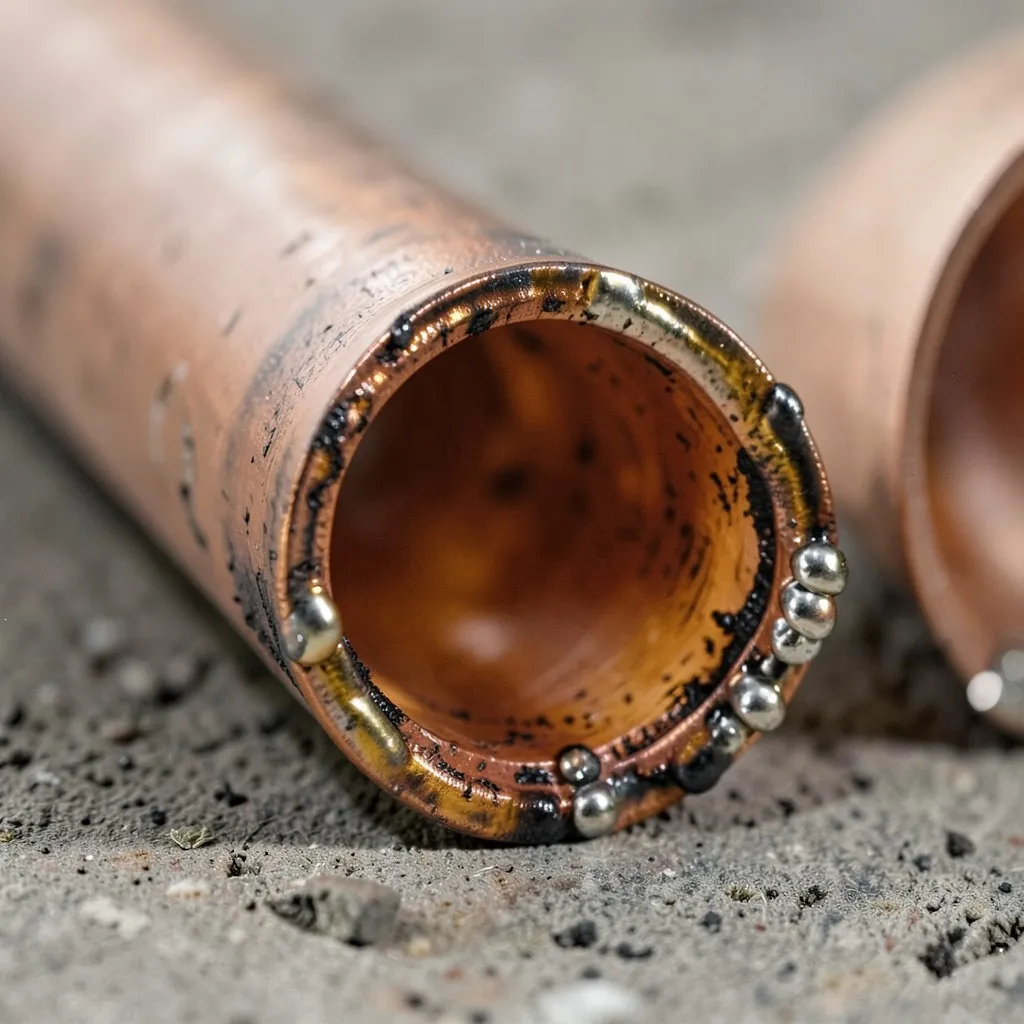
A slip coupling (also called a repair coupling or slip-fit coupling) is a pipe coupling that has no internal stop ridge. Standard couplings have a stop in the center that prevents the pipe from sliding all the way through — useful for joining two new pipe sections, but impossible to use for in-line repairs where you can't slide the pipe ends apart. A slip coupling slides completely over one pipe section, allowing the repair to be made in place.
How does the repair coupling technique work?
When a section of pipe has a crack, pinhole, or joint failure, the standard repair is to cut out the bad section and insert a new piece. With rigid pipe (copper, CPVC, steel), this requires:
- Cut out the damaged section, leaving a gap slightly shorter than the repair piece.
- Slide a slip coupling fully onto one cut end (the coupling slides past where it will ultimately sit).
- Insert the repair pipe section between the two cut ends.
- Slide the slip coupling back to center it over the joint and secure it (soldering, glue, or with push-fit slip couplings, just slide to position).
- Repeat with a second slip coupling on the other end.
How do push-fit slip couplings work?
Push-fit versions (like SharkBite slip couplings) are the fastest way to make an in-line repair without a torch. Slide the coupling over the pipe, cut out the damage, insert the repair section, and push the slip coupling over the joint — it locks immediately with no tools required. Compatible with copper, CPVC, and PEX.
What are Fernco flexible rubber couplings?
For drain pipes (ABS, PVC, cast iron, clay), Fernco rubber couplings are the standard repair coupling — a flexible rubber sleeve with hose clamps. They bridge pipe ends of equal or different materials without the need for glue or solder, and are forgiving of minor misalignment. Essential for making cast iron to PVC transitions in drain system repairs.
Researching the term is one thing — hiring for it is another. See whole-home repipe services for scope, timelines, and what drives the price, or call (888) 530-4445 to talk to a local plumber about the job.
For the full picture — materials, process, timelines and what drives the cost — read Whole-Home Repipe: The Complete Guide.
What related terms should you know?
What sources back this up?
Need a plumber for whole-home repipe?
Calls are connected to independent licensed local plumbers in our partner's network for whole-home repipe. Ask for the license number and a written estimate before any work begins.