
Wax Ring
Soft wax gasket that seals the toilet base to the floor flange, blocking sewage and sewer gas from leaking around the bowl.
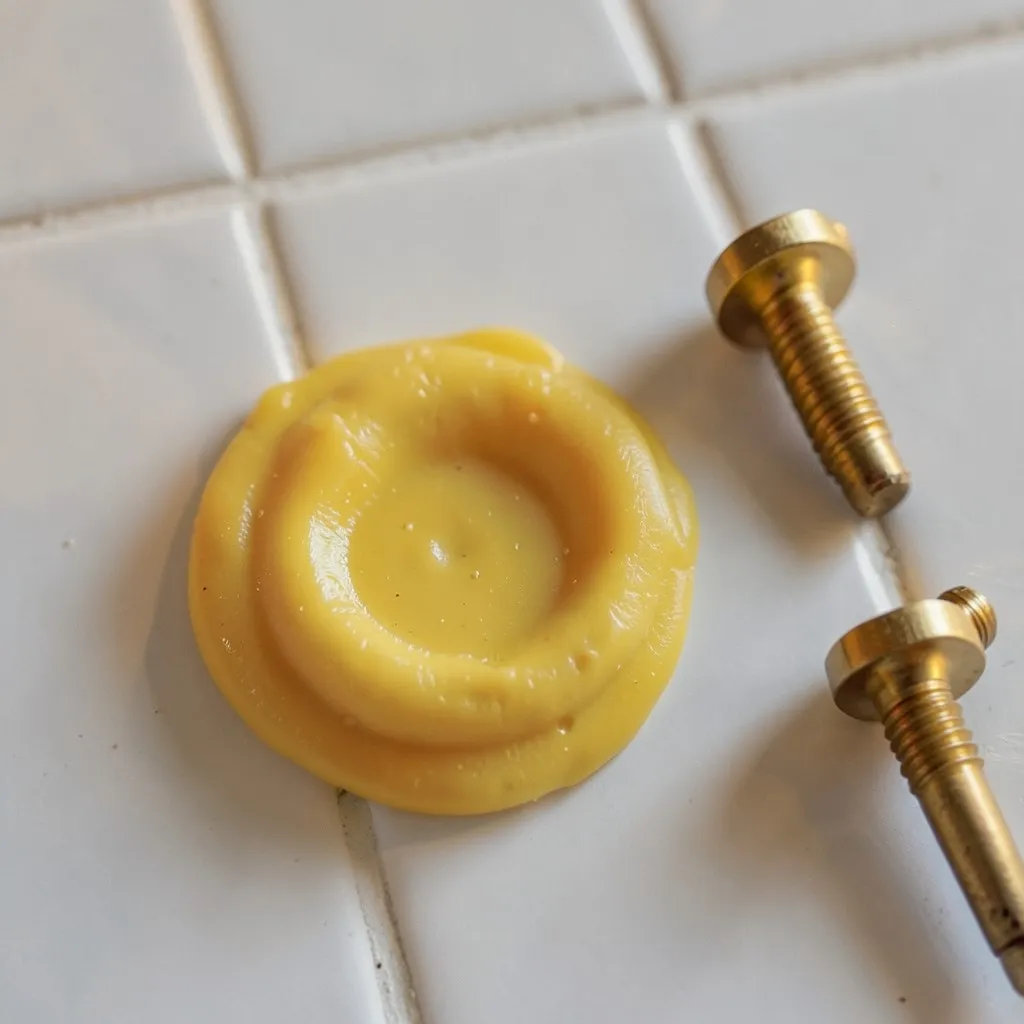
A wax ring is the doughnut-shaped seal of pliable petroleum or beeswax wax that sits between the underside of a toilet bowl and the closet flange bolted to the floor. When the toilet is set in place and tightened down with the closet bolts, the bowl's discharge horn compresses the wax, forming a watertight and airtight seal between the toilet trapway and the drain pipe below. Despite costing only $4 to $12 at any hardware store, the wax ring is one of the most failure-prone components in residential plumbing because it relies on physical compression rather than mechanical fastening.
How it works is straightforward. Wax stays soft enough at room temperature to mold around minor irregularities in the flange and porcelain, yet stiff enough to hold its compressed shape for decades. Some modern variants include an integrated polyethylene horn that extends down into the drain for added security, useful when the flange sits below finished floor level. A properly installed ring lasts twenty to thirty years.
Failure produces unmistakable warning signs:
- A persistent sewer gas odor in the bathroom that does not come from the drain
- Brown, yellow, or rust-colored staining on the floor at the base of the toilet
- Soft, spongy, or visibly water-damaged flooring around the toilet base
- Water seeping out from under the bowl after every flush
- A toilet that rocks slightly when sat on, which crushes and breaks the wax seal
- Visible water stains on the ceiling of the room directly below an upstairs toilet
Replacement is a routine job. The supply line is shut off at the wall stop, the tank drained, the closet bolts unscrewed, and the toilet lifted straight up off the flange. The old wax is scraped off both the flange and the bowl horn with a putty knife, a fresh ring is set on the flange, and the toilet is lowered back down with steady pressure to compress the new seal. The 2024 IPC § 405.4 requires the closet flange to sit on top of the finished floor, not below it, and requires that all joints in the flange-to-drain connection be airtight.
Total replacement cost runs $150 to $300 in 2026 for a straightforward swap. The bill climbs to $400 to $700 if the closet flange itself is cracked, broken, or rotted and needs to be replaced, which is common in older homes with cast iron drains or where the original flange was set too low. If the subfloor under the toilet has been water-damaged from a long-term wax ring failure, sub-floor repair adds another $300 to $1,200 depending on the extent of rot. A wobbling toilet should be shimmed and tightened immediately rather than ignored, because every rocking motion accelerates wax compression failure.
Researching the term is one thing — hiring for it is another. See toilet repair services for scope, timelines, and what drives the price, or call (888) 530-4445 for a no-cost estimate.
What related terms should you know?
What sources back this up?
Need a verified plumber for toilet repair?
AlertPlumber matches you with a licensed plumber for toilet repair. Written estimate before any work begins.