
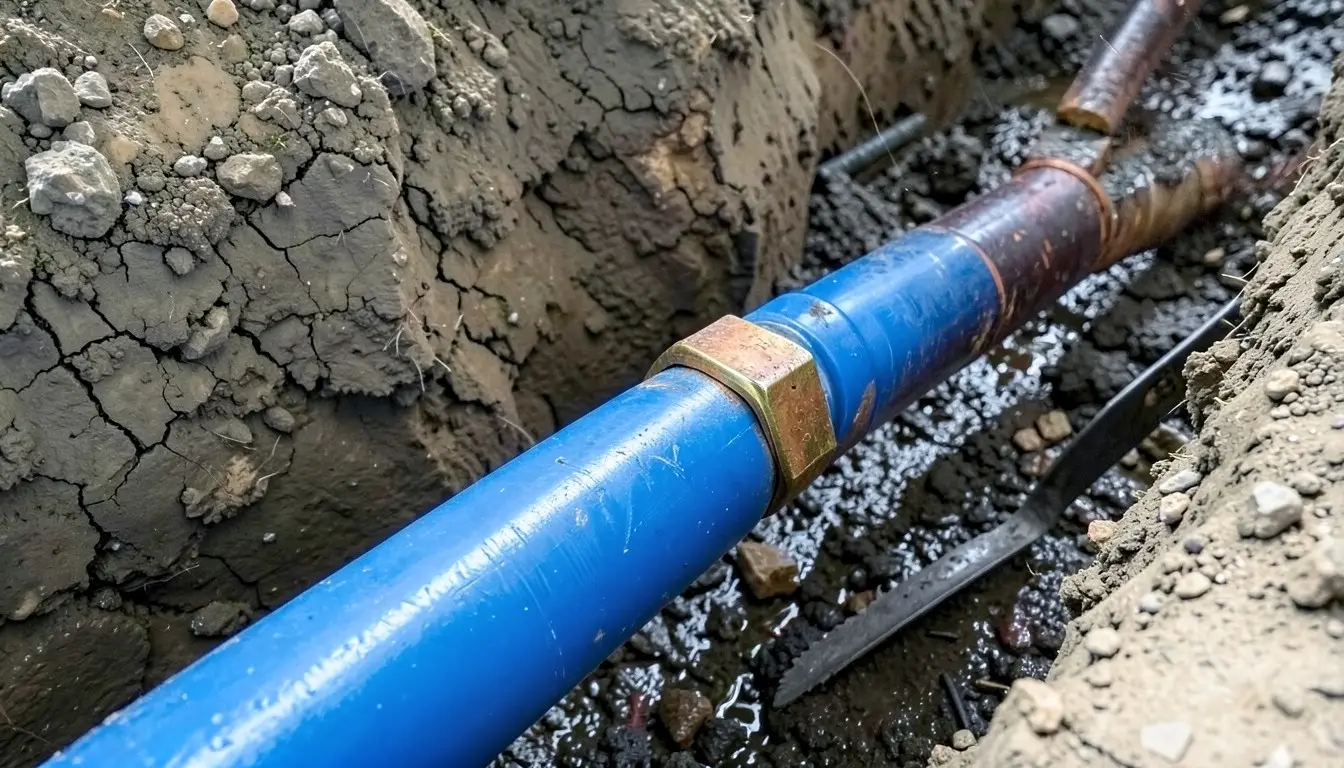
Emergency Water Line Repair in San Antonio, Texas
Water Line Repair in San Antonio, Texas repairs breaks, pinhole leaks, and corrosion failures on the main water service line from the street meter to the home. Local conditions in San Antonio: water measured at 16, a 4 frost line and a median home age of 39 years.
Active water damage compounds by the hour — a licensed TX plumber is on call for San Antonio right now.
What does the local plumbing data show for San Antonio, TX?
Seeing these conditions at your place in San Antonio? A state-licensed plumber can confirm it over the phone — free, no obligation.
What are the pipe conditions in San Antonio, TX?
Water service line failures in San Antonio range from a pinhole in an interior copper run to a complete main-line break requiring excavation from the meter to the foundation. Acoustic leak detection locates most exterior breaks within a 3–5 foot segment before excavation begins — avoiding unnecessary trench length and surface restoration cost. PEX is the current standard for buried exterior replacement; copper remains preferred for interior runs where chloramine resistance matters. AlertPlumber routes your request to a Texas-licensed plumber to pressure-test the line and locate the break before opening the ground.
San Antonio's housing stock spans multiple construction eras — median home age 39 years — meaning pipe materials and failure modes vary significantly by neighborhood and building vintage. An inspection-led approach that confirms pipe material before recommending a service path is standard practice for mixed housing profiles.
Very hard water in San Antonio is a primary driver of accelerated appliance failure: water heater anode rods exhaust in 2–3 years instead of 6–8, scale deposits at fixture connections form within months of installation, and tankless heat exchangers accumulate mineral buildup that can reduce lifespan by half without regular descaling. A softener or whole-house conditioner is strongly recommended alongside any appliance service call.
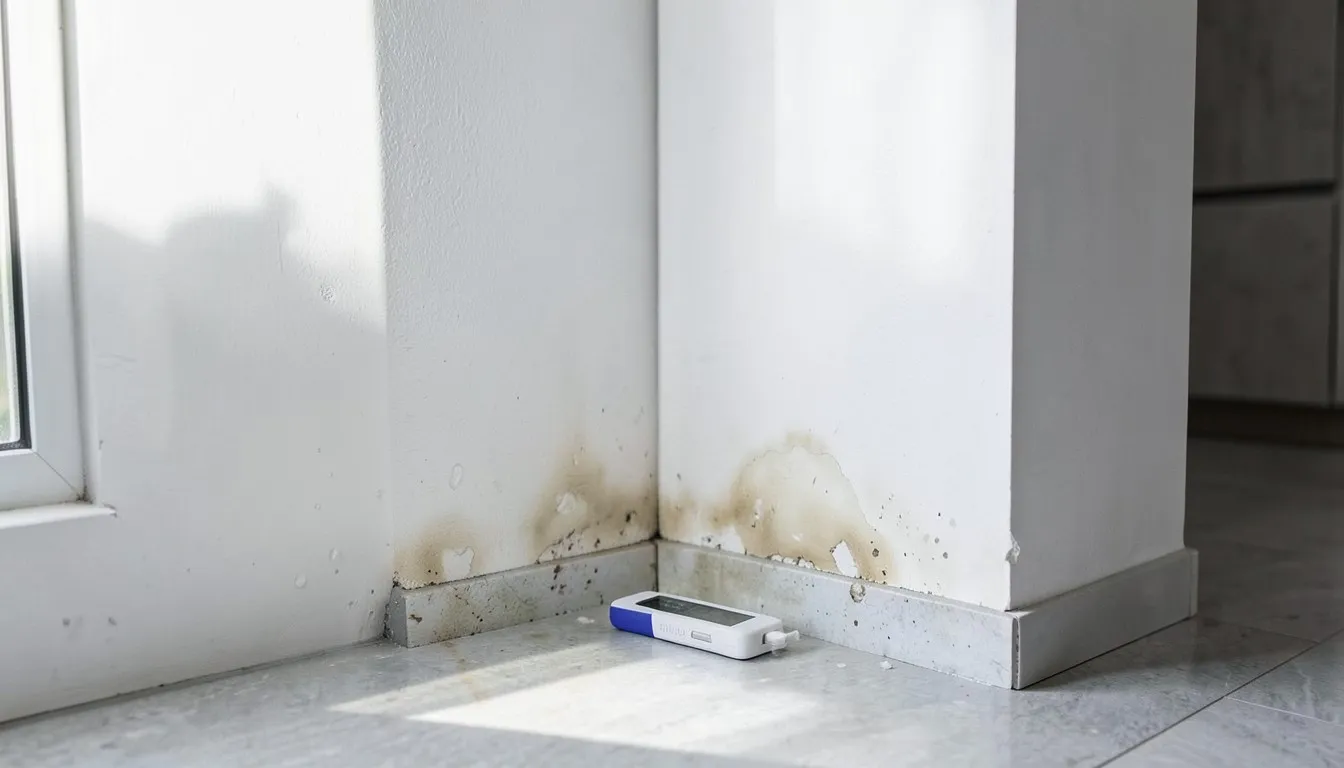
- Median home age
- 39 yrs
- Water hardness
- 16 gpg
- Frost line
- 4 in.
- Permit
- $120
A licensed TX plumber reads these conditions the moment you describe the symptom.
What local infrastructure shapes Water Line Repair in San Antonio?
Expansive clay dominates the soil column here, swelling through wet springs and shrinking hard in drought, and a buried water service rides that cycle every year. Shear loads concentrate where the line is fixed in place — at the meter yoke near the curb and at the foundation penetration — which is where most breaks surface. With a frost requirement of only 4 inches, services sit almost entirely within the active clay movement zone rather than safely below it.
Supply drawn from the Edwards Aquifer arrives at 16 grains per gallon — very hard, limestone-derived water — and copper services in housing stock with a median age of 39 years accumulate interior scale while the clay works on them from outside. Pressure loss at fixtures often shows up before any visible leak does, because scale narrows the bore long before corrosion breaches the wall.
A permit for the work costs $120, and the recorded lead service line count of 1,200 is modest for a city approaching 1.5 million residents, so replacement here is driven by breakage rather than material mandates. The state licenses 27,810 plumbing contractors. Shallow burial keeps open-trench replacement fast on short runs, while pull-through trenchless methods preserve established yards where the distance from curb stop to foundation stretches longer.
What shapes plumbing demand in San Antonio, TX?
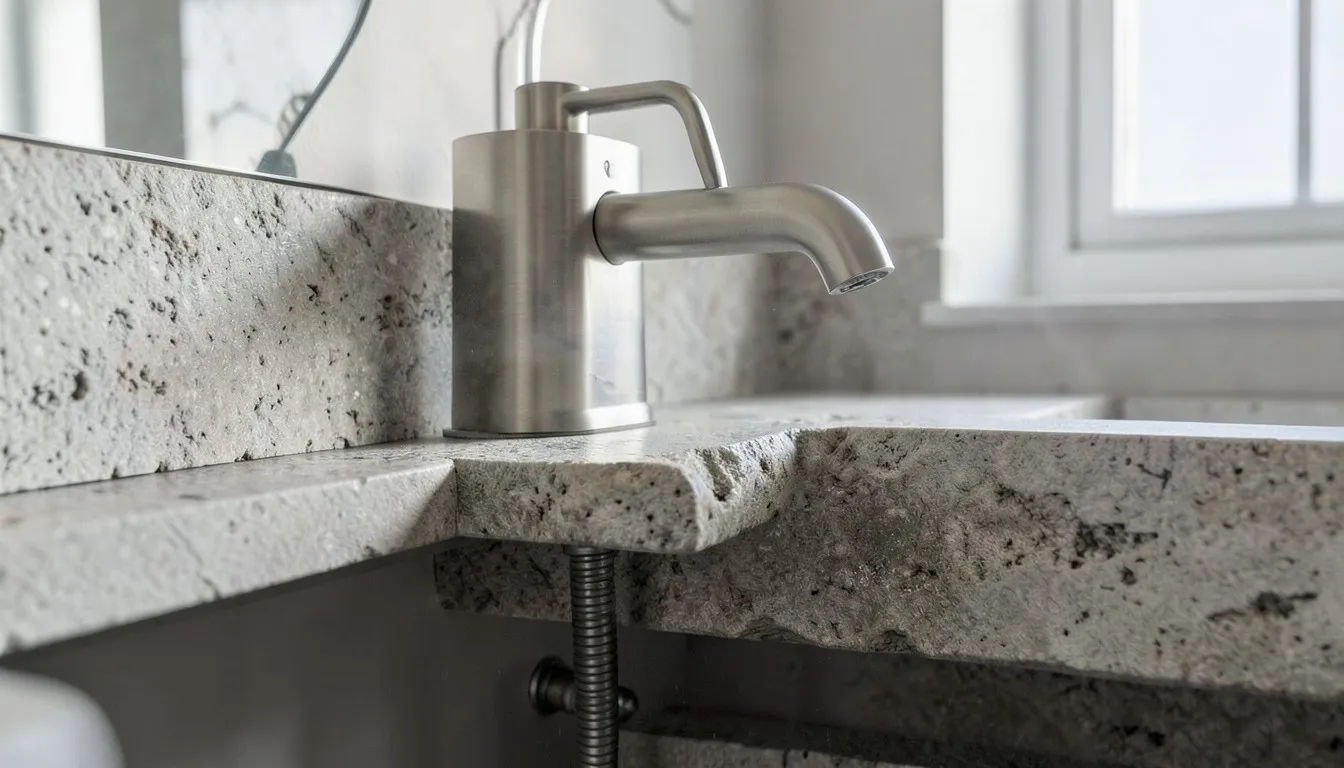
CPVC becomes brittle in the 20–35-year range and snaps under thermal stress or incompatible pipe dopes. Early PEX fittings (pre-2010) may develop chloramine compatibility issues at 15–25 years. The 1980s–1990s housing stock in San Antonio is entering its first wave of material-driven service calls — not from neglect, but from normal service-life progression.
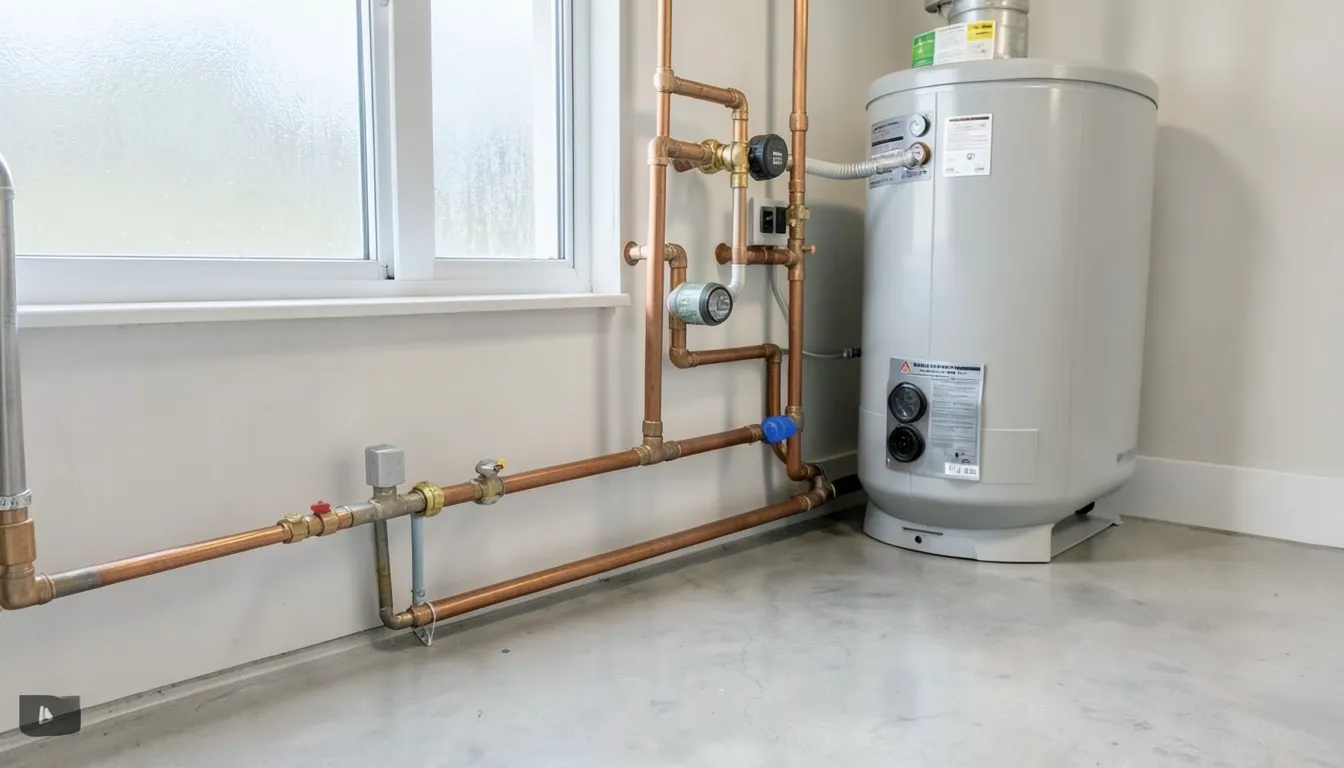
At 15–20+ GPG, calcium scale forces compressed equipment cycles in San Antonio: tank heaters average 6–9 years vs. the 10–12-year national benchmark, and tankless units require annual descaling. Anode rods calcify within 12–18 months. Most plumbers here assess heater age against the local scale timeline — not the manufacturer's service life.
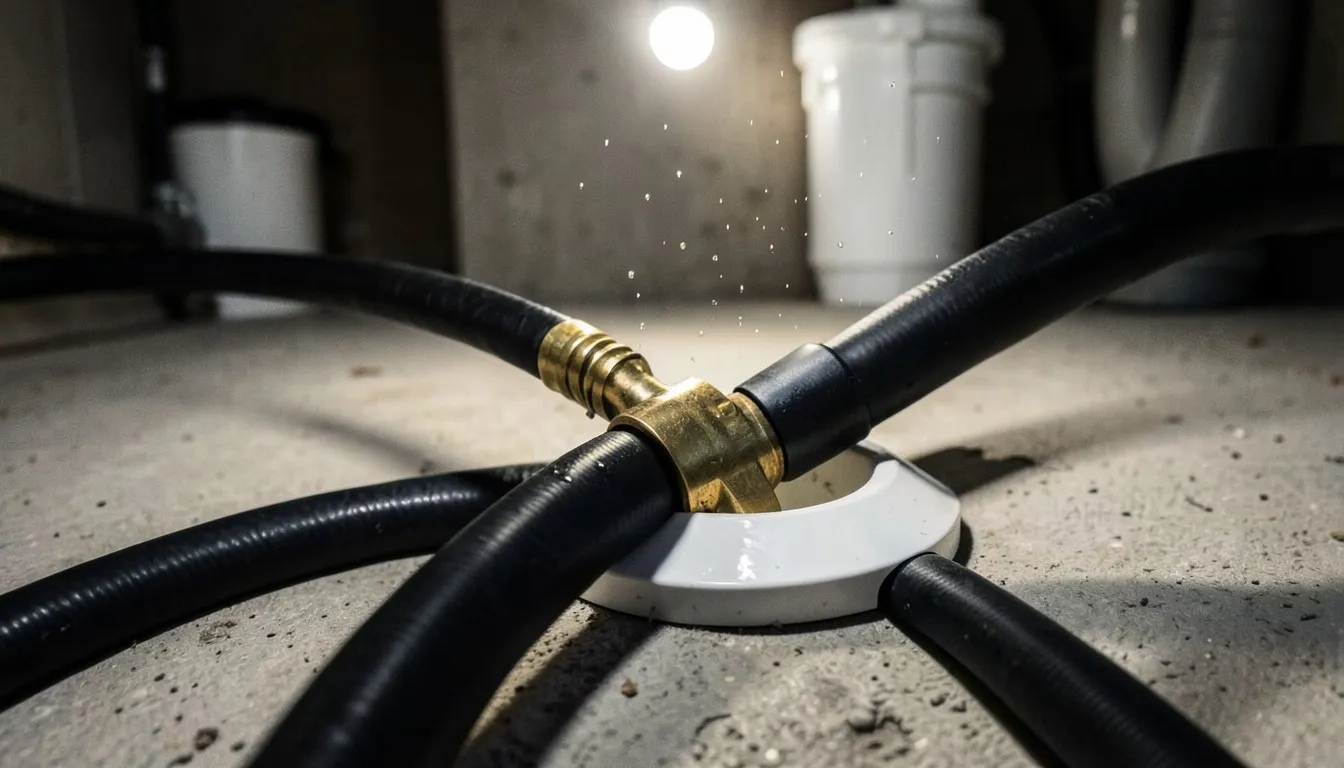
Without a hard freeze season, demand in San Antonio distributes evenly through the year. Maintenance-driven categories dominate: end-of-life water heater replacement, root intrusion clearing, and fixture repair. Deferred maintenance surfaces gradually as partial failures rather than acute winter emergencies — which means issues compound silently until they become a larger job.
Active damage in San Antonio — how is it contained, assessed and restored?
Submit your San Antonio address and describe the active damage — flooding, failed shutoff, burst or frozen line. AlertPlumber marks the request as priority and a TX-licensed plumber confirms receipt within 15 minutes, without routing through a national call center.
The plumber arrives with a confirmed ETA, locates the nearest shutoff, and maps the damage boundary — affected lines, access points, material condition. You receive a verbal assessment of what requires immediate containment and what can wait until the full repair scope is confirmed.
You approve a written containment and repair scope before any work begins. Temporary isolation is priced separately from full restoration. No phase proceeds without your explicit sign-off.
Water Line Repair cost calculator — San Antonio
Pre-filled for water line repair in San Antonio. Adjust the ZIP for a neighboring area, or change the service to compare. Calculator pulls from the city's scraped permit-fee + state plumber-density data.
Water Line Repair emergency in San Antonio?
Every hour without a repair increases structural risk and remediation cost. A verified plumber calls back with an ETA and a written estimate before any work begins.
What else do people ask about water line repair in San Antonio?
What causes water line breaks in San Antonio?
The primary causes depend on pipe material and local conditions. Galvanized steel lines corrode from the inside out — a slow process that accelerates above 10 GPG water hardness; San Antonio's water supply characteristics affect how quickly this progresses. Polybutylene pipe (installed 1978–1995) has a documented failure mode at the acetal fittings; the pipe body may look intact while the fitting connections are failing. Copper lines develop pinholes from chloramine attack (the residual disinfectant in treated municipal water) or from stray electrical current in improperly grounded systems. Ground movement — freeze-thaw cycles, clay soil expansion, root pressure — can break any material at joints.
How do I know if my water line is failing in San Antonio?
Signs of main water line failure: unexplained wet spots in the yard along the water line path (often with unusually green grass over the line), visible water staining or efflorescence on the foundation where the line enters, a water bill spike without an identified cause, reduced water pressure at all fixtures simultaneously (not just one fixture), or the sound of running water when no fixtures are open. A plumber can conduct a pressure test on the service line to confirm whether a leak exists and approximately where. Immediate excavation without a pressure test is an oversell — most plumbers can locate a break within a 3–5 foot segment using acoustic equipment.
What pipe material replaces old water lines in San Antonio?
Copper remains the standard for interior service line replacement due to durability and proven performance under municipal water chemistry. PEX (cross-linked polyethylene) is increasingly used for buried exterior service lines — it is flexible enough to withstand freeze-thaw ground movement, resistant to chloramine attack, and easier to install in a single run without joints. Lead service lines, if present, must be replaced with copper per EPA Lead and Copper Rule requirements; some utilities provide partial or full cost assistance for lead line replacement. The plumber specifies the replacement material based on local water chemistry, code requirements, and burial depth conditions.
How much does water line repair cost in San Antonio?
Water line repair costs in San Antonio depend on scope and access. A pinhole leak repair on an accessible interior supply line runs $150–$350. A spot repair on the exterior service line (small excavation, 2–4 feet of pipe) runs $400–$900 including backfill. Full service line replacement — from the meter to the house, typically 20–80 feet — runs $1,500–$5,000+ depending on line length, burial depth, and surface restoration (lawn restoration, sidewalk or driveway cuts add $500–$2,000). If the existing line is lead, some San Antonio utilities share replacement costs — ask the plumber to check current utility assistance programs before scoping full replacement.
How long does water line repair take in San Antonio?
An interior supply line spot repair takes 1–3 hours. An exterior service line spot repair with small excavation (hand-dig or mechanical) takes 4–8 hours including backfill. Full exterior service line replacement (trench the full run from meter to foundation) takes 1–2 days for an average residential lot, plus 1–2 days for concrete or asphalt restoration if required. Water service is shut off during the repair and restored the same day in most cases. The plumber coordinates with the water utility for meter shutoff if the shutoff valve at the meter is non-functional — plan for a 1–2 hour utility response window.
Does water line repair require a permit in San Antonio?
Exterior water service line work in San Antonio typically requires a plumbing permit, especially when the work involves the service line from the meter to the home. The permit triggers an inspection to verify the pipe material, depth, and connection to the meter. Interior supply line repairs (within the home) may or may not require a permit depending on scope — a like-for-like repair often does not, while full repiping does. The plumber pulls the permit as part of the job; permit fees are included in the written estimate. Unpermitted water line work can create disclosure obligations at resale and may void homeowner's insurance coverage for subsequent water damage.
How does San Antonio's water hardness (16) affect water line repair?
San Antonio water is very hard at 16 — in this range, scale accumulation is rapid and destructive. Tankless water heaters without a softener typically fail their heat exchanger warranty within 5–8 years. Water heater sediment buildup is accelerated, reducing efficiency and tank life. A whole-home softener is effectively required to maintain plumbing appliance warranties and prevent premature failure in San Antonio homes.
How does San Antonio's freeze risk (4 frost line) affect water line repair in this market?
San Antonio averages 20 days below freezing per year, which requires pipe burial below the 4 frost line for outdoor and foundation-edge supply runs. Freeze-thaw cycling stresses underground pipe joints and can crack fittings at the thermal boundary (where heated space ends and unheated space begins).
What do lead service lines mean for water line repair decisions in San Antonio?
San Antonio has a documented lead service line inventory (1,200). Any disturbance to the service line or interior supply connections in a home with lead pipe should include documentation of materials and discussion of LSL replacement options with the city. San Antonio's utility department can confirm whether your specific address is scheduled for replacement.
What affects the cost of water line repair in San Antonio, TX?
Pipe material (copper, galvanized steel, or polybutylene), depth of the service line, length of the section requiring replacement, and excavation and surface restoration requirements are the main cost drivers. Municipal permit fees and meter shutoff coordination are included in the scope. Pipe depth and material are confirmed before excavation pricing is set. A verified plumber provides a written estimate covering price, scope, and permit requirements before any work begins.
Are AlertPlumber-matched plumbers verified in Texas?
Yes. Every plumber matched through AlertPlumber holds an active Texas state contractor license. The Texas licensing database is checked at each routing — not just at initial signup — so the status reflects current standing, including any recent disciplinary actions, renewals, or insurance lapses. Active Texas licensure requires documented proof of bonding, liability coverage, and continuing education current as of the routing date.
Does AlertPlumber charge a fee for connecting me with a plumber in San Antonio?
AlertPlumber does not charge homeowners. The referral fee is paid by the plumber when they accept a qualified call — it is their customer-acquisition cost, not an added charge to you. The plumber provides a written price assessment before any work begins; if the quote doesn't fit your situation, you can decline at any point.
Sixty seconds from now, a plumber can be working your problem.
Call and talk to dispatch, or put your number in the form below — a licensed Texas plumber calls you back about the water line repair and gives a written estimate by phone.
Need a water line repair callback in San Antonio?
In a meeting, with the kids, or just prefer not to hold? Drop your ZIP and number below. AlertPlumber routes your request to a verified plumber in your area — they’ll call you back directly.
- 1 Submit your info. ZIP, phone, and what kind of work you need.
- 2 AlertPlumber matches you with a verified plumber serving your area.
- 3 The plumber calls you back with a written estimate, no obligation.
Water Line Repair in San Antonio — fast response
Acute plumbing failures cannot wait. AlertPlumber has verified Texas plumbers available for water line repair in San Antonio — call now or submit the form above for rapid callback.