
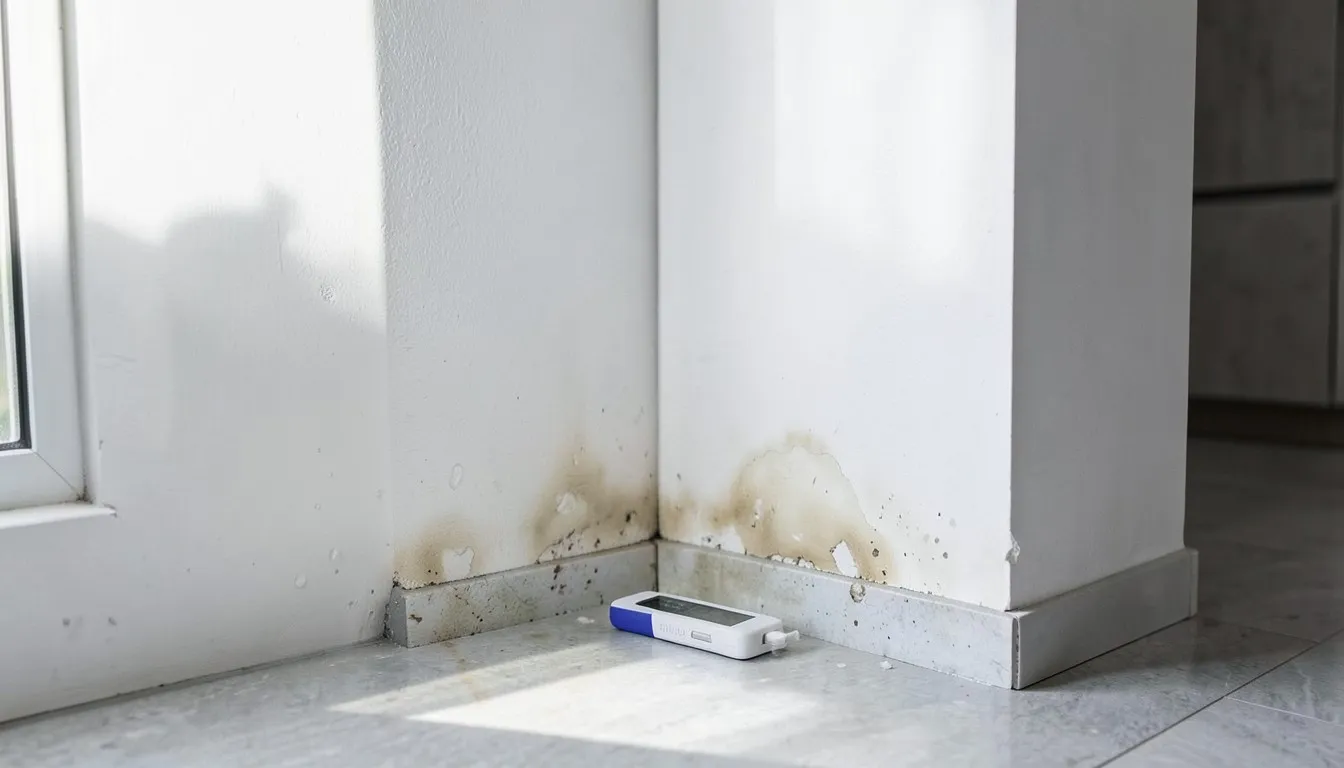
Emergency Leak Detection in Louisville, Kentucky
Leak Detection in Louisville, Kentucky locates hidden water and gas leaks using acoustic and thermal equipment. Local conditions in Louisville: water measured at 9, a 30 frost line and a median home age of 60 years.
Camera first, quote second — know exactly what's wrong in your Louisville home before you approve a dollar.
What does the local plumbing data show for Louisville, KY?
Seeing these conditions at your place in Louisville? A state-licensed plumber can confirm it over the phone — free, no obligation.
What are the pipe conditions in Louisville, KY?
Non-invasive leak detection uses acoustic amplification, thermal imaging, and pressure isolation to locate water loss in supply lines and drain systems without opening walls or floors. Louisville homes with galvanized or older copper supply runs face the highest pinhole leak incidence — a slow leak inside a wall cavity can cause mold and structural damage for months before becoming visible. A professional leak detection prevents unnecessary demolition by confirming the exact break location before any drywall is cut. AlertPlumber connects you with a Kentucky-licensed plumber who locates first and opens second.
Louisville's housing stock spans multiple construction eras — median home age 60 years — meaning pipe materials and failure modes vary significantly by neighborhood and building vintage. An inspection-led approach that confirms pipe material before recommending a service path is standard practice for mixed housing profiles.
Hard water in Louisville accelerates scale buildup inside water heater tanks, on heating elements, and at fixture connections. Sediment accumulation in tank heaters reduces efficiency and shortens element life; visible deposits at aerators and showerheads are an early indicator. A licensed plumber can assess whether a water softener or conditioner is appropriate for the home's service configuration.
Frost line depth in Louisville means supply lines and outdoor plumbing must be installed below the freeze threshold — typically 30 — to prevent pipe burst during cold events. Exterior hose bibs, irrigation shutoffs, and any exposed pipe runs are the most common winterization service points in freeze-risk markets.
- Median home age
- 60 yrs
- Water hardness
- 9 gpg
- Frost line
- 30 in.
- Lead lines
- Active replacement
- Permit
- $95
A licensed KY plumber reads these conditions the moment you describe the symptom.
What shapes plumbing demand in Louisville, KY?
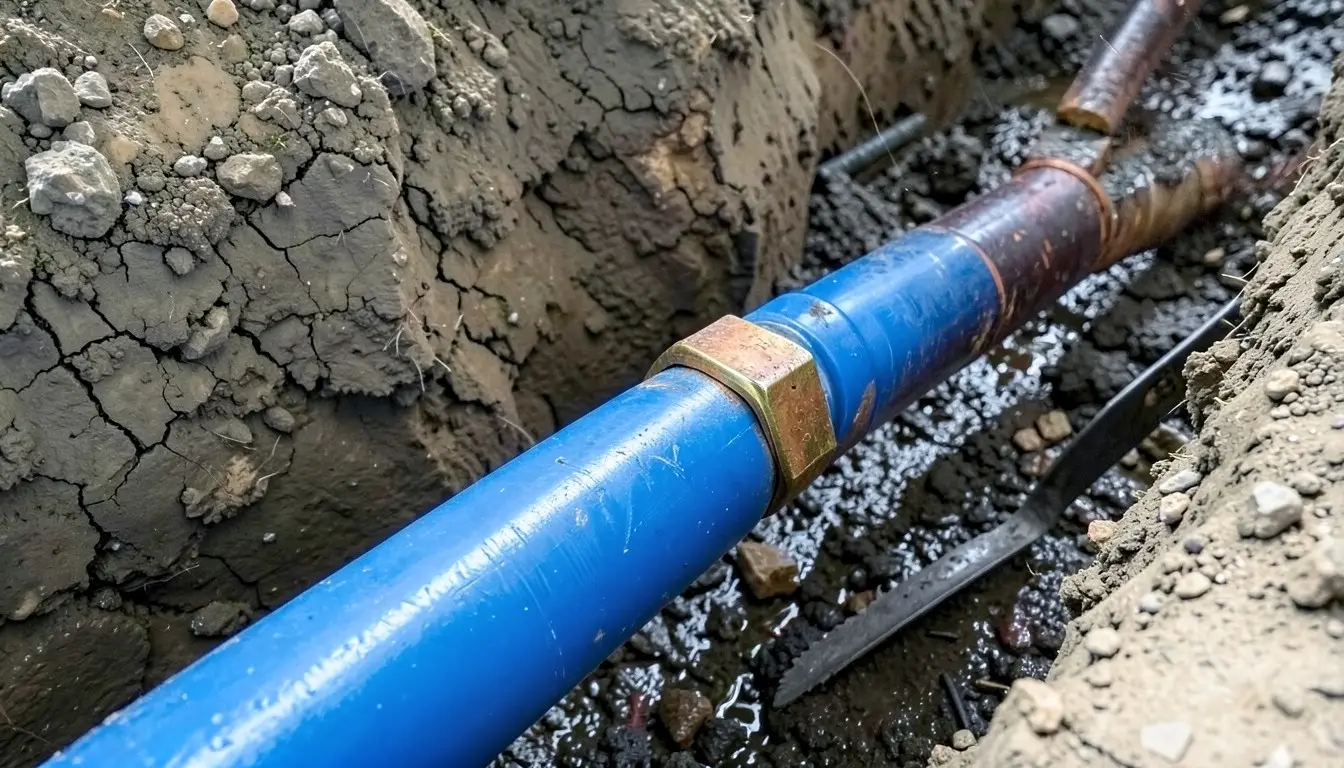
1950s–70s copper supply is now 50–70 years into its service cycle in Louisville. Thermal fatigue at fittings and slab-on-grade access complexity — common in Sun Belt construction — make repair vs. replacement a live decision on most jobs. This housing cohort is the active primary replacement wave in this market.
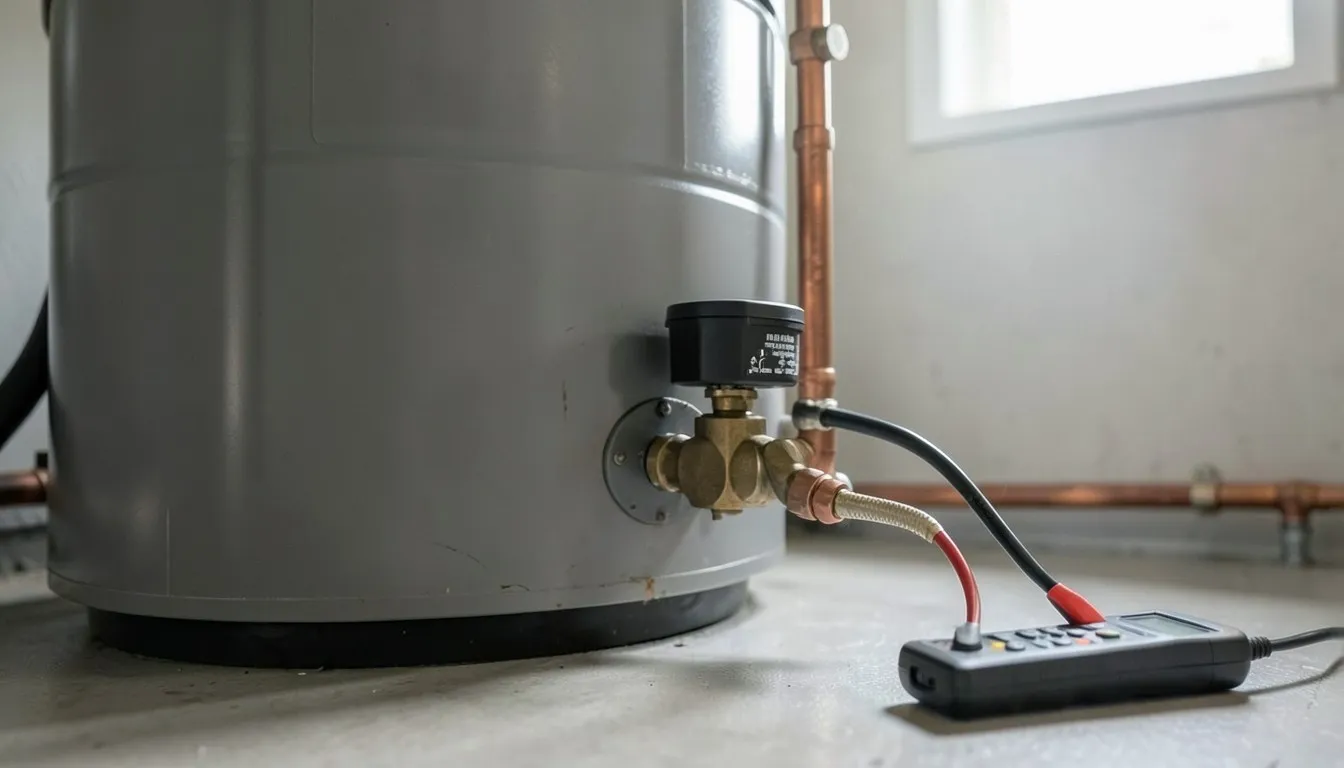
8–14 GPG shortens water heater service life to 8–11 years in Louisville and drives rolling maintenance demand at aerators, shower cartridges, and heat exchanger ports. Annual flushing prevents premature failure; skipped maintenance cycles push units toward early replacement. Scale-related calls represent a significant share of the annual service workload here.
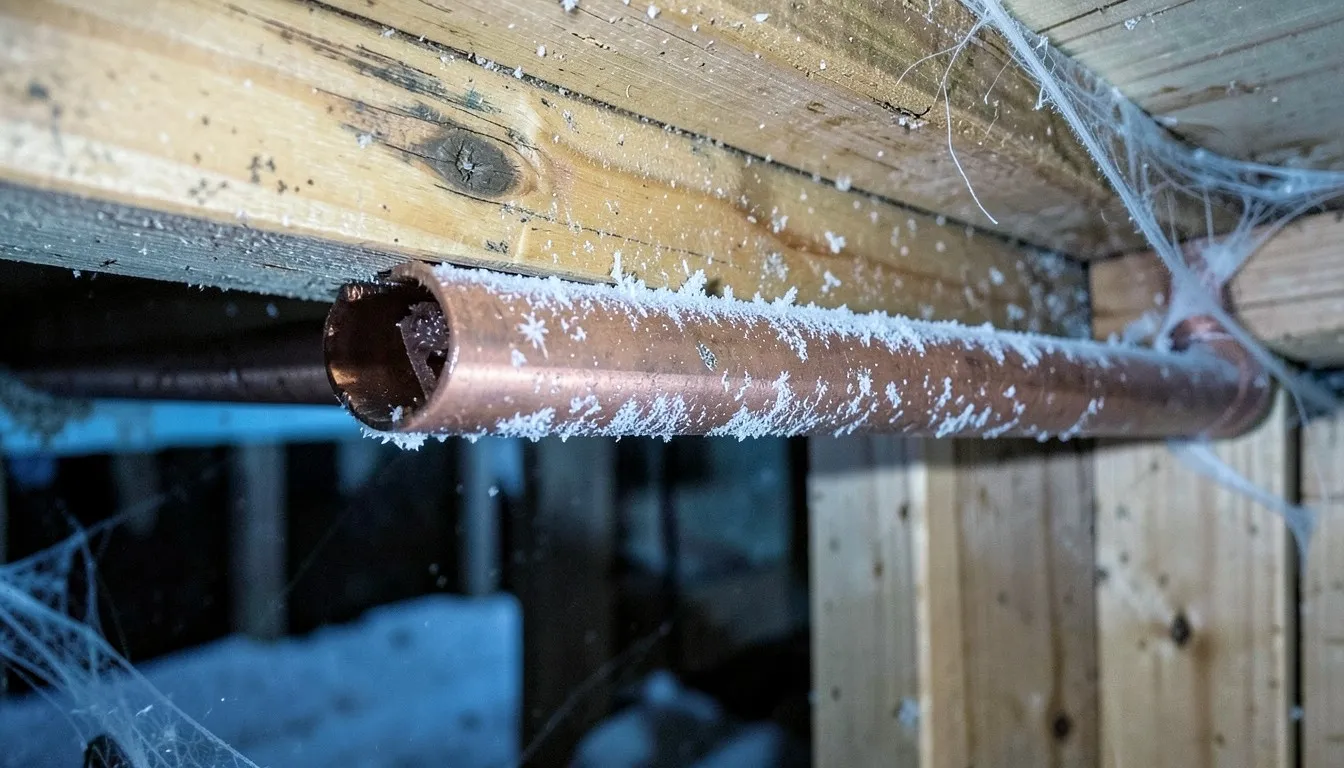
The primary surge in Louisville runs January–March, with a secondary wave at the spring thaw — when pipes that held through the freeze rupture as pressure is restored above 32°F. Scheduling competition peaks exactly when emergency calls are highest. Homeowners who wait for visible damage compete for the same limited plumber slots at the worst possible time.
Why diagnose before repairing in Louisville?
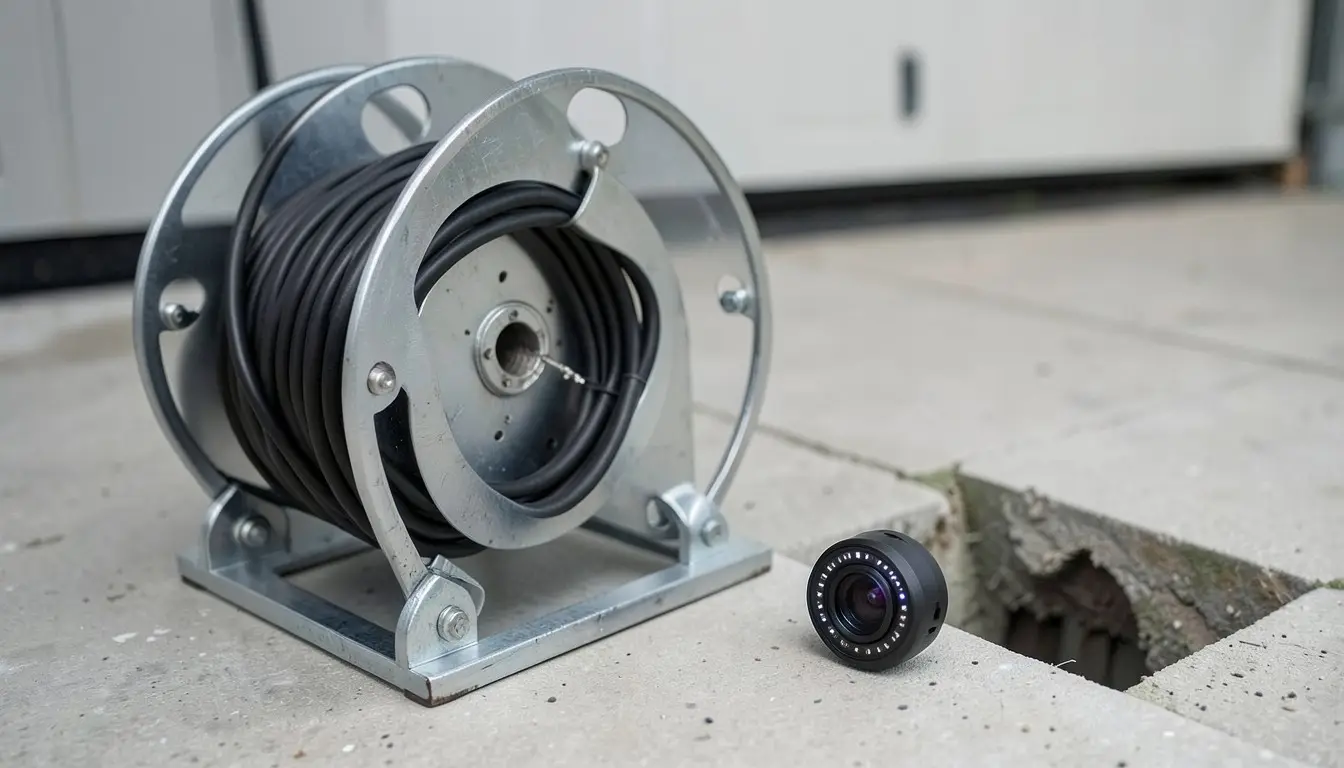
Describe the symptom — not the repair. AlertPlumber routes to a KY-licensed plumber trained in diagnostics. The site visit uses camera tracing, acoustic detection, or hydrostatic pressure testing — matched to the reported failure type.
The plumber delivers a written diagnostic report: confirmed failure location, available repair methods, and tradeoffs — disruption level, material durability, long-term cost, and whether a Louisville building permit applies to the selected method.
You select the repair path. The Kentucky-licensed plumber proceeds on the authorized method with a fixed scope and price. Where required, the permit application to Louisville is handled by the contractor.
Leak Detection cost calculator — Louisville
Pre-filled for leak detection in Louisville. Adjust the ZIP for a neighboring area, or change the service to compare. Calculator pulls from the city's scraped permit-fee + state plumber-density data.
Leak Detection in Louisville — the longer it runs, the more it costs.
Slow failures compound: soft pipe walls, root penetration, mineral buildup. A verified plumber calls back with a scope-first estimate before anything is dug up.
What else do people ask about leak detection in Louisville?
How much does professional leak detection cost in Louisville?
A non-destructive leak detection workup in Louisville's Old Louisville Victorian + Highlands craftsman + South Louisville ranch tract housing mix typically runs $265–$510 flat, billed before any repair quote. The fee covers FLIR thermal scanning calibrated for Mid-South 65%+ humidity, acoustic listening on the supply manifold, and a static pressure-isolation test on Louisville Water Company Ohio-River-source 7–9 gpg moderate supply. Detection fees credit toward repair if you book the same KY Master Plumber. Repair pricing splits sharply by Louisville housing era — Old Louisville / Cherokee Triangle 1880s–1910s Victorian plaster-wall access runs $485–$1,485 (cast-iron + galvanized hybrid + plaster-lath demolition + horsehair plaster repair), Crescent Hill / Clifton 1900s–30s craftsman wall-opening $385–$985, South Louisville 1950s–70s ranch tract slab spot repair $1,485–$3,385, East Louisville / St. Matthews / Anchorage 1960s–80s suburban slab $1,585–$3,485. Ohio River basin alluvial soil + 90+ freeze days mid-South continental drives 35–50% repeat-leak probability within 36 months on the same hot manifold. Louisville Codes & Regulations permit (~$85) + KY Master Plumber credential are included in the workup invoice.
How do I know if I have a hidden leak in my Louisville home?
Symptoms split sharply by Louisville housing era — the matched KY Master Plumber's intake checklist runs each pattern against Old Louisville / Cherokee Triangle / Highlands 1880s–1910s Victorian first, then Crescent Hill / Clifton 1900s–30s craftsman + tudor, then South Louisville 1950s–70s ranch tract, then East Louisville / St. Matthews / Anchorage 1960s–80s suburban.
- Old Louisville Victorian (1880s–1910s): brown staining bleeding through original horsehair plaster ceilings + buckling original heart-pine flooring + musty smell behind cast-iron radiator risers (galvanized supply at 110+ years past service life)
- Cherokee Triangle / Highlands Victorian: efflorescence on limestone foundation walls + moisture wicking up baseboards in basement-rec-room conversions + sycamore + sweetgum root intrusion in clay laterals
- Crescent Hill / Clifton craftsman + tudor: cracks in original tile-grout matrix + warm spots on hardwood-over-pier-and-beam crawlspace + hose-bib silcock leaks behind exterior brick veneer
- South Louisville ranch tract (1950s–70s): warm slab spot at 7–9 gpg Louisville Water Company supply (hot-side copper pinhole), 70–150 gal/day under 60 psi line pressure
- St. Matthews / Anchorage suburban (1960s–80s): meter low-flow indicator movement with every fixture off + freeze-burst weeping at rim joists post 90+ freeze-day winter
- Universal Louisville signal: Louisville Water Company bill jumps 20%+ across two consecutive cycles with no usage change
What detection methods does a Louisville plumber actually use?
The standard Louisville sequence adapts to Ohio River basin alluvial soil + 50-year median build + Old Louisville Victorian plaster-wall construction: (1) static pressure-isolation test on the Louisville Water Company supply manifold confirms a leak exists and isolates hot vs cold side at 60–80 psi typical Louisville street pressure, (2) FLIR T-series thermal imaging localizes warm anomalies on slab (South Louisville / St. Matthews ranch + suburban) or behind plaster (Old Louisville / Cherokee Triangle Victorian), (3) acoustic ground-microphone listening triangulates within 12–18 inches — recalibrated for Ohio River basin alluvial moisture-attenuation that differs from Cumberland Plateau limestone bedrock signal-propagation patterns, (4) electronic line-tracing maps the original galvanized-to-copper retrofit route before any plaster-lath cut or slab core. Louisville's 7–9 gpg moderate Ohio-River-source water + 50-year median home age + 90+ freeze days determines which method runs first. For pre-1920 Old Louisville Victorian homes the workflow starts with plaster-scanning + cast-iron drain inspection; for 1950s–70s South Louisville ranch tract the workflow starts with hot-side slab pinhole detection. Copper Development Association documents pinhole-corrosion failure curves at 50–60 years for copper supply paired with moderate-hardness municipal water.
Will Kentucky homeowners insurance cover Louisville leak detection?
Most Kentucky HO-3 policies (State Farm, Allstate, Kentucky Farm Bureau, USAA, Liberty Mutual) cover the DETECTION fee when the Louisville leak is classified as "sudden and accidental" — not gradual seepage that's been ongoing for months in Ohio River basin alluvial soil. Standard KY HO-3 pays for tear-out + access (slab core in St. Matthews ranch, plaster-lath opening in Old Louisville Victorian, horsehair-plaster repair, detection report with moisture-mapping) but excludes repair of the failed pipe itself (treated as wear-and-tear, especially on 110+ year galvanized in Cherokee Triangle / Highlands). Old Louisville / Cherokee Triangle pre-1910 Victorian carriers sometimes require a Section 7 endorsement for plaster + heart-pine flooring restoration that exceeds standard ACV limits. Submit the KY Master Plumber's written report with FLIR moisture-mapping + Louisville Codes & Regulations permit number for the strongest claim case. Verbal diagnosis alone is denied. EPA Safe Drinking Water Act documentation supports water-quality-correlated pipe-failure claims when Louisville Water Company chloramine + Ohio-River-source treatment chemistry is cited.
Why does the Louisville Water Company bill spike when there is a hidden leak?
Louisville Water Company meters every gallon of Ohio-River-source treated water that crosses the property line at 60–80 psi typical Louisville street pressure, whether it ends up in the dishwasher or the alluvial soil under your South Louisville ranch slab. A pinhole leak under 60 psi line pressure on 7–9 gpg moderate Louisville Water Company supply releases roughly 70–150 gallons per day — invisible at the surface but a 2,100–4,500 gal/month addition to the bill. On a typical Louisville Water Company bill that translates to $38–$92 in extra water + matching MSD wastewater + sewer-credit-eligibility paperwork. Louisville Water Company offers a leak-adjustment credit if you submit the KY Master Plumber's repair invoice within 60 days of bill date — Old Louisville / Cherokee Triangle Victorian homeowners with original galvanized see this scenario most often as 100+ year supply lines reach failure. A 20%+ unexplained Louisville Water Company spike for two consecutive cycles is the standard threshold for ordering detection. Bourbon distillery + Old Louisville restaurant grease commercial service has separate metering + commercial leak protocols.
Can a Louisville homeowner locate the leak without calling a plumber?
You can confirm a leak EXISTS on your own — shut every fixture in your Old Louisville Victorian or South Louisville ranch, watch the Louisville Water Company meter low-flow indicator. Any movement over 15 minutes with everything off means Ohio-River-source treated water is escaping somewhere into Ohio River basin alluvial soil. You cannot reliably LOCATE the Louisville leak yourself. Consumer-grade IR thermometers don't have spatial resolution to distinguish a hot-side slab pinhole from a sun-warmed grout line in a Highlands craftsman. Rental moisture meters can't see through 4 inches of post-tension Anchorage suburban slab or original 1880s heart-pine flooring + horsehair plaster + cast-iron lath in Old Louisville. Mid-South 65%+ humidity creates ambient false-positives on every consumer device. The clearest DIY narrowing is the meter-isolation method: shut the supply at the curb, watch for pressure drop on a $25 hose-bib gauge over 30 minutes — a drop confirms a supply-side leak (vs drainage), but localization requires a credentialed KY Master Plumber with calibrated FLIR + acoustic + pressure-isolation gear.
What's the most common type of leak in Louisville homes by neighborhood?
Louisville's leak signature splits hard by housing-era + neighborhood + Ohio River basin alluvial position:
- Old Louisville / Cherokee Triangle / Highlands (1880s–1910s Victorian): 110+ year original galvanized supply pinhole + cast-iron drain rust-through + horsehair-plaster ceiling staining + sycamore / sweetgum root intrusion in original clay laterals (mature Highlands tree canopy)
- Crescent Hill / Clifton (1900s–30s craftsman + tudor): 90–120 year galvanized-to-copper retrofit failure points + pier-and-beam crawlspace freeze-burst (90+ freeze-day winters) + hose-bib silcock leaks behind brick veneer
- South Louisville (1950s–70s ranch tract): hot-side copper pinhole through 7–9 gpg moderate Louisville Water Company supply at peak 50–70 year corrosion window + slab spot leaks in Ohio River basin alluvial settlement zones
- East Louisville / St. Matthews / Anchorage (1960s–80s suburban): CPVC + early-PEX fitting failures + water-heater pan drips in attached-garage installs + freeze-burst at exterior rim joists
- Bourbon distillery + Old Louisville restaurant corridor: commercial grease-trap line failures + high-volume pre-rinse stations
How does Ohio River basin alluvial soil affect leak detection in Louisville?
Ohio River basin alluvial soil is the load-bearing variable that distinguishes Louisville leak detection from neighboring Mid-South cities like Nashville (Cumberland Plateau limestone bedrock) or Memphis (Memphis Sand aquifer). Louisville sits on Ohio River floodplain alluvium — sand + silt + clay layered overburden 30–80 feet deep above limestone bedrock. That alluvial profile saturates fast under a hot-side slab pinhole and disperses the moisture plume laterally rather than vertically, so Old Louisville / South Louisville moisture-mapping must scan a 6–8 foot radius from the FLIR thermal hit (vs 18-inch radius on Cumberland Plateau bedrock). Acoustic ground-microphone listening attenuates faster through wet alluvial silt than through limestone, so the matched KY Master Plumber compensates with higher-gain settings + longer dwell time per scan grid. Flood-prone neighborhoods near the Ohio River + Beargrass Creek (Old Louisville west edge, Butchertown, Portland) require additional sub-slab moisture differentiation to separate active leak from groundwater intrusion. USGS Kentucky Water Science Center publishes Ohio River basin alluvial-soil hydrology relevant to Louisville leak-detection workflow.
How accurate is FLIR thermal imaging in Louisville's Mid-South humidity?
For a hot-line slab leak in a South Louisville / St. Matthews ranch or suburban tract, a properly calibrated FLIR T-series camera localizes the leak within an 8-inch radius about 82–88% of the time on the first scan — Mid-South 65%+ humidity + Ohio River basin alluvial saturation reduce thermal contrast 5–8 points below Cumberland Plateau bedrock cities. Accuracy drops further if (a) the leak is on the cold side (no thermal contrast against ambient 50–55°F slab in 90+ freeze-day winters), (b) the floor finish is original heart-pine over hot-water radiant in Old Louisville Victorian (radiant masks pinhole signature), (c) Ohio River basin alluvial soil has saturated the entire under-slab plume to a uniform thermal profile, or (d) Old Louisville plaster ceiling has cast-iron lath that creates thermal-bridging false-positives. Skilled Louisville KY Master Plumbers follow the thermal hit with acoustic confirmation + pressure-isolation cross-check before recommending where to cut concrete or open horsehair plaster. NOAA NWS Louisville (weather.gov/lmk) Mid-South humidity readings calibrate the FLIR baseline before each Louisville scan.
Should I get a system-wide pressure test on my Louisville home?
Yes if your Louisville home is in the 1880–1995 build window and you've had one leak repaired. The Louisville split: (1) Old Louisville / Cherokee Triangle / Highlands 1880s–1910s Victorian — system-wide static pressure test ($165–$310) isolates each original galvanized branch + cast-iron drain stack, holds 80 psi for 15 minutes, any drop signals a 110+ year pipe at end-of-life; (2) Crescent Hill / Clifton 1900s–30s craftsman — pressure test on galvanized-to-copper retrofit junctions; (3) South Louisville 1950s–70s ranch tract — hot-side copper manifold isolation; (4) St. Matthews / Anchorage 1960s–80s suburban — CPVC + early-PEX fitting integrity. Louisville-area KY Master Plumbers report homes with one detected slab leak in the 1950s–70s South Louisville housing band have a 35–50% probability of a second pinhole within 36 months on the same hot manifold (7–9 gpg moderate Louisville Water Company water + Ohio River basin alluvial settlement + 90+ freeze-day thermal cycling drives the secondary failures). The pressure test is lower-cost than a second emergency call + Louisville Codes & Regulations re-permit + KY HO-3 deductible.
Are AlertPlumber-matched plumbers verified for leak detection in Louisville?
The partner network requires every plumber routed through AlertPlumber for leak detection in Louisville to maintain active KY Master Plumber credentialing through the Kentucky Board of State Plumbing Examiners — Kentucky uses different credentialing from neighboring states (TN Board for Contractors, OH state-licensure board). Kentucky Board of State Plumbing Examiners (kbsbpf.ky.gov) publishes the KY Master Plumber license roster + Louisville-Jefferson County jurisdictional permits. Louisville Codes & Regulations (~$85 typical permit) requires KY Master Plumber sign-off on any detection-driven slab cut or supply-line replacement. Leak detection requires specialty equipment (FLIR T-series + acoustic ground-microphone + pressure-isolation manifold + line-tracing transmitter) calibrated for Mid-South 65%+ humidity + Ohio River basin alluvial signal-attenuation. Local context. Louisville's ~615,000 population spans Old Louisville / Cherokee Triangle / Highlands 1880s–1910s Victorian + Crescent Hill / Clifton 1900s–30s craftsman + South Louisville 1950s–70s ranch tract + East Louisville / St. Matthews / Anchorage 1960s–80s suburban + Bourbon distillery + Old Louisville restaurant commercial corridor. 50-year median home age + 7–9 gpg moderate Louisville Water Company Ohio-River-source water + 90+ freeze days mid-South continental + Ohio River basin alluvial soil produces a distinctive Louisville leak signature different from Cumberland Plateau Nashville or Memphis Sand aquifer Memphis — verified KY Master Plumber credentials + Louisville-specific detection workflow are what the matched AlertPlumber plumber delivers.
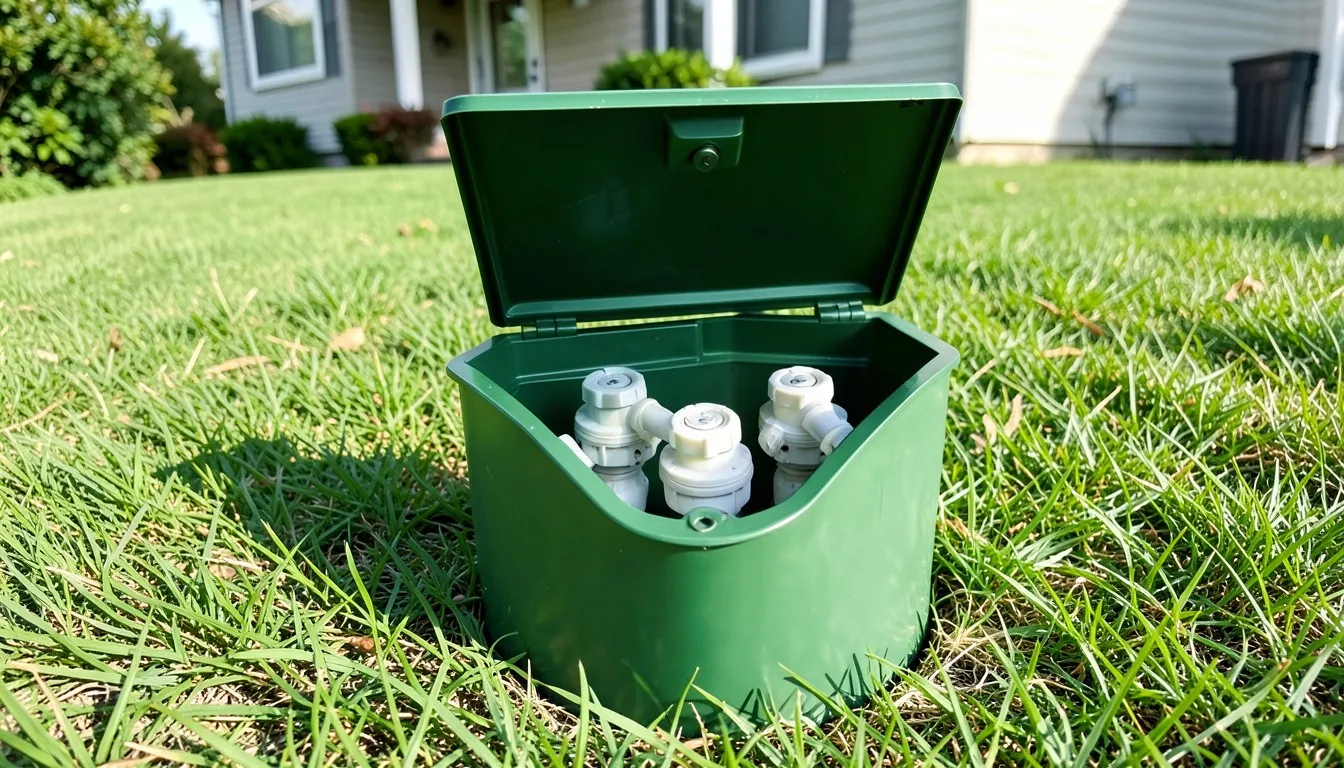
The fix gets cheaper the sooner a plumber sees it.
Degradation problems compound quietly. Call now, or use the form below and a licensed Kentucky plumber calls you back with a no-obligation estimate for the leak detection.

Need a leak detection callback in Louisville?
In a meeting, with the kids, or just prefer not to hold? Drop your ZIP and number below. AlertPlumber routes your request to a verified plumber in your area — they’ll call you back directly.
- 1 Submit your info. ZIP, phone, and what kind of work you need.
- 2 AlertPlumber matches you with a verified plumber serving your area.
- 3 The plumber calls you back with a written estimate, no obligation.
Leak Detection in Louisville — catch it early
Degradation-driven failures worsen over time and cost more to fix the longer they run. A verified KY plumber in Louisville diagnoses your specific condition and provides a written scope before any work begins.